The former Chief Secretary of Odisha and retired 1989-batch IAS officer, PK Jena, looks back at his early years in Kalahandi, where he challenged corruption, redesigned welfare delivery and showed how honest administration begins by listening to people.
When PK Jena began his career in the Indian Administrative Service, he could hardly have imagined how deeply his first field posting would shape his understanding of governance. As a young officer in Kalahandi, one of Odisha’s poorest districts, he encountered hunger, weak public services, corruption and a system that often failed the people it was meant to serve.
But he also discovered something that would guide him throughout his career. The smallest administrative changes could make a real difference to people’s lives, provided officers were willing to question established practices and take responsibility for their decisions.
Jena, a retired 1989-batch IAS officer and former Chief Secretary of Odisha, recalls those early years as a defining period. From ensuring that food reached schools and villages to taking action against officials who neglected their duties, his approach was rooted in a simple principle: administration must work for the people, especially those with the least power to demand accountability.
In a conversation with Indian Masterminds, he reflected on the experiences that shaped his career, the mentors who influenced him and the difficult choices that came with standing up for what he believed was right.
An Unexpected Journey into the IAS
Jena’s entry into the civil services was not the result of a lifelong ambition to become an IAS officer. He was studying geology at Utkal University when the idea first took shape. Several students from his academic circle, including geologists, had entered the civil services. A senior from his university also encouraged him to try.
Also Read – From Manuscripts to AI: How Technology Is Opening India’s Knowledge Heritage to the World
As more of his friends began preparing for the examination, Jena’s own preparation became more serious. He eventually entered the IAS in 1989, beginning a career that would span more than three decades.
His early posting in Kalahandi proved particularly important. There, he worked under PH Kurian, an IAS officer from the Kerala cadre who was serving in Odisha on deputation. Jena remembers him as a mentor who introduced him to the values of pro-poor administration, participatory development and direct engagement with disadvantaged communities.
The lessons were practical rather than theoretical. An officer had to understand how government benefits reached the last person in a village. It was not enough to issue orders from an office or assume that a scheme was functioning because the records said so.
Watch the Interview Here :
When Welfare Failed at the Last Mile
Kalahandi presented Jena with difficult questions about how government schemes actually worked. The district was associated with severe poverty and hunger, and even basic welfare delivery faced problems.
One example involved the supply of food grains to Anganwadi centres and schools. The transport allowance provided to workers was sometimes insufficient to cover the cost of carrying supplies from distant block headquarters to villages. Workers could end up selling part of the grain to meet these expenses, compromising the very programme meant to feed children.
Jena began questioning why the administration could not deliver the entire allocation directly to the intended beneficiaries. He introduced arrangements under which supplies could be transported to villages on designated days, with local people able to witness the distribution.
The idea was straightforward: reduce the gaps between allocation and delivery, and make it harder for supplies to disappear along the way.
A similar problem affected pension distribution. Poor beneficiaries sometimes received less than their entitled amount, while the process of disbursement lacked transparency. Jena pushed for pensions to be distributed in village panchayats on fixed days, in the presence of elected representatives, rather than leaving vulnerable people dependent on intermediaries.
These were modest administrative changes, but they addressed a fundamental problem. When the government provided a benefit, the intended recipient had to receive it in full.
Taking on the PDS Cartel
The public distribution system presented a more difficult challenge. In Kalahandi, some ration dealers were politically influential, making reform particularly sensitive.
Jena recalls cancelling the licences of 1,269 public distribution system retailers in one sweeping action. He wanted ration distribution to be handled through women’s self-help groups or gram panchayats so that households could receive their monthly quota without interference from entrenched interests.
The objective was to ensure that people did not lose their entitlement simply because a dealer withheld supplies or exploited their dependence.
He also worked to improve awareness of minimum wages among labourers. Workers in remote villages often had little information about the wages they were legally entitled to receive. The administration therefore had to go beyond issuing notifications and ensure that people understood their rights and could claim them.
For Jena, these experiences reinforced a central lesson of field administration.
“You have to go to the people, talk to them and understand their problems directly.”
A School That Existed Only on Paper
One incident in Kalahandi revealed how deeply official records could differ from reality.
During a village visit, Jena began asking residents about their school. An elderly man identified himself as the president of the village education committee. When Jena asked about the school’s functioning, the man described how officials had allegedly obtained signatures and moved on without ensuring that teaching was taking place.
The official inspection records, however, painted a very different picture. They reported regular teachers, satisfactory school functioning and a properly operating midday meal programme.
Jena decided to investigate further. He returned to the village and examined the situation more closely. The school lacked basic infrastructure, and children were not receiving the education that official reports claimed they were getting.
The problem was not simply an absent teacher. It was a chain of administrative failures in which inspections, records and accountability mechanisms had become disconnected from the lives of villagers.
Jena took action against the officials found responsible, including the suspension of teachers. Despite political pressure to reverse the action, he refused to withdraw his orders.
The episode also forced a larger question: if the government had been reporting that the school functioned well, why had the village remained without effective schooling for years?
The answer lay in the absence of genuine verification. Records had been accepted without checking whether public services were reaching the people.
Making Information a Tool of Accountability
Jena’s response went beyond disciplinary action. He wanted villagers to have the information necessary to question the administration themselves.
During his tenure, he promoted the public display of details about government works, including the names of officials and contractors, the funds allocated and the materials expected to be used. Information about school facilities, staff and salaries could also be shared so that residents could compare official claims with what they saw around them.
He encouraged people to raise concerns while work was still underway, when poor construction or irregularities could be corrected. Waiting until a project was complete often meant that the opportunity to prevent waste had already passed.
This approach anticipated the wider emphasis on public transparency that would later gain momentum through the Right to Information movement.
For Jena, however, accountability did not have to wait for a new law or a sophisticated technology platform. Much could be achieved by making information accessible, inviting people to question officials and ensuring that complaints led to action.
The Cost of Standing Firm
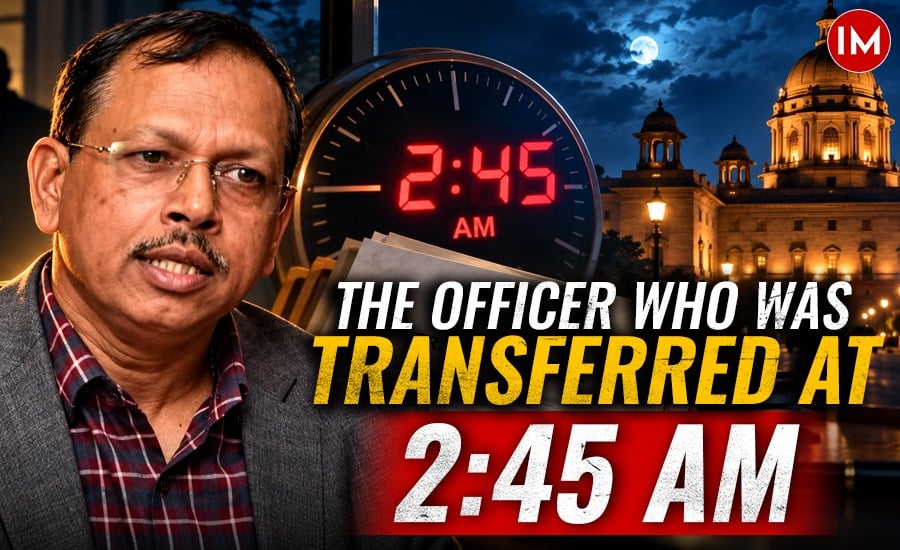
His decisions did not come without consequences. Jena recalls being transferred from Kalahandi at around 2:45 a.m., following tensions over his actions against officials and local power structures.
The episode illustrated the difficult position of district administrators. They were expected to implement government policy while also dealing with political demands, entrenched interests and resistance from those who benefited from weak oversight.
Yet Jena’s account also points to the importance of maintaining professional boundaries. A bureaucrat’s relationship with a political executive, he believed, had to remain rooted in official responsibility rather than personal obligation.
His experience in Kalahandi left him with a lasting conviction that officers must be willing to make difficult decisions when public interest demands it.
“If you are conscientious and you want to do something, possibly you cannot download the system.”
The remark captures the challenge of reforming administration from within. Rules and procedures matter, but they cannot replace an officer’s judgment, willingness to take responsibility and determination to address problems on the ground.
Leadership Begins with Listening
Looking back, Jena’s early years in Kalahandi were not defined by grand projects or sweeping policy announcements. They were shaped by practical questions: Was the pensioner receiving the full amount? Were children getting their meals? Were teachers attending school? Was the ration reaching the household for which it was intended?
His methods relied on direct engagement with villagers, verification of official claims and changes to the systems through which benefits were delivered.
As his career progressed through senior administrative responsibilities, including serving as Odisha’s Development Commissioner and Chief Secretary, these early experiences remained an important part of his understanding of governance.
For young civil servants, his journey offers a lesson in the difference between administering a system and making it work. A scheme may look successful on paper, but its true measure lies in the lives it changes.
“Whatever benefits the government gives, the challenge is to ensure that they finally reach the hands of the poor.”
For Jena, that was the real purpose of public service. It required officers to leave their offices, listen to people, question comfortable assumptions and stand by decisions taken in the public interest.
In Kalahandi, these principles were tested in difficult circumstances. The experience showed him that effective governance does not always begin with more money, more rules or more technology. Sometimes, it begins with an officer walking into a village, asking the right questions and refusing to accept that a problem has been solved simply because a file says so.
Also Read – How IAS Dhatri Reddy Is Turning Andhra Pradesh into a Launchpad for India’s Next Big Ideas