For centuries, India’s knowledge travelled through handwritten pages.
Astronomy, mathematics, medicine, Ayurveda, yoga and many other subjects found their way into manuscripts written in different languages and scripts. These fragile pages survived across libraries, institutions, private collections and even outside India. But finding a particular piece of knowledge in this vast repository was often difficult. A manuscript could be preserved safely and still remain largely inaccessible to the world. That is now beginning to change.
Through the Gyan Bharatam Mission, the Ministry of Culture is trying to take manuscript preservation beyond scanning and storage. The larger ambition is to use artificial intelligence to read, organise, search and interpret this enormous body of knowledge, while making it accessible to people who may not even be able to read the original scripts.
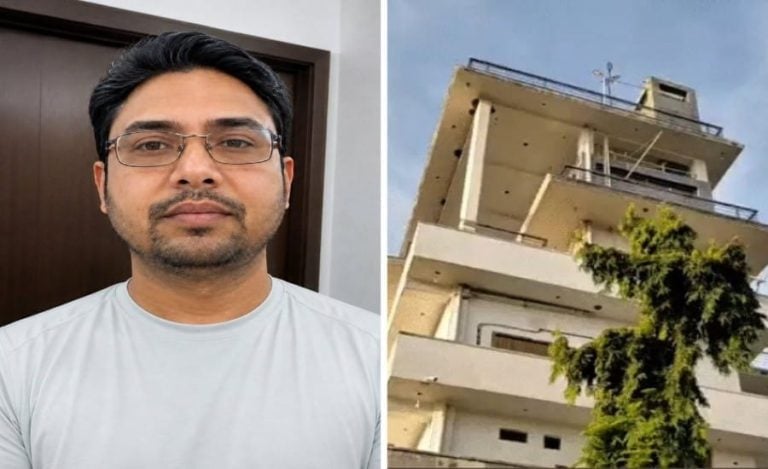
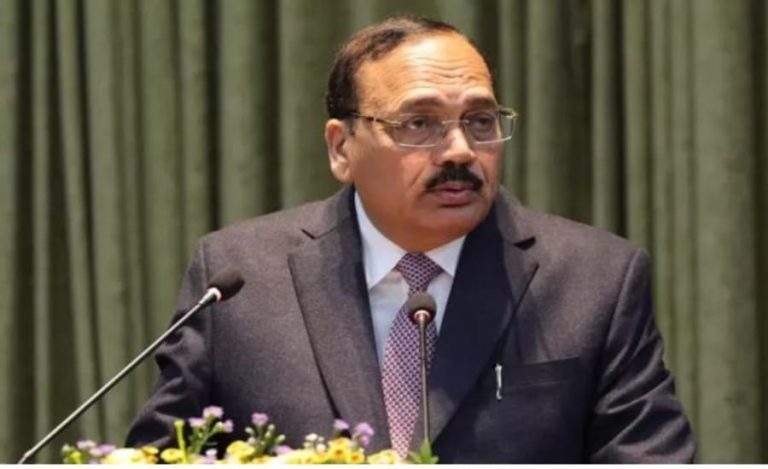
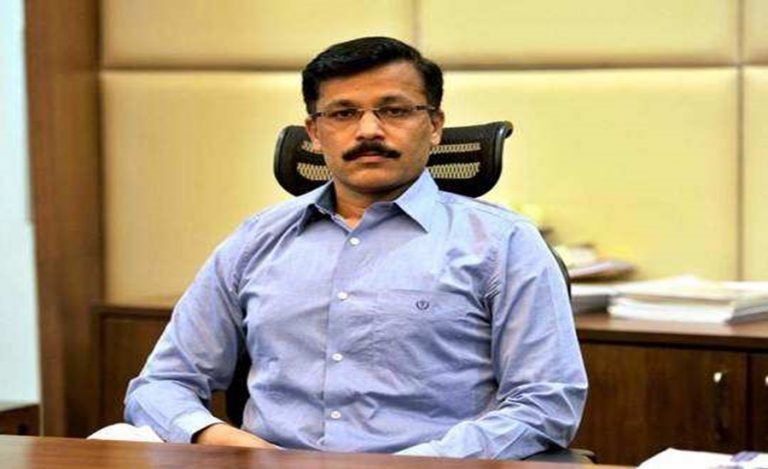
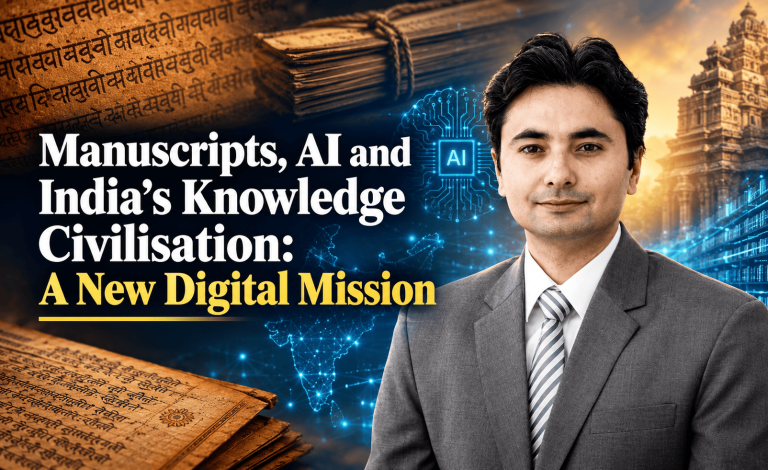
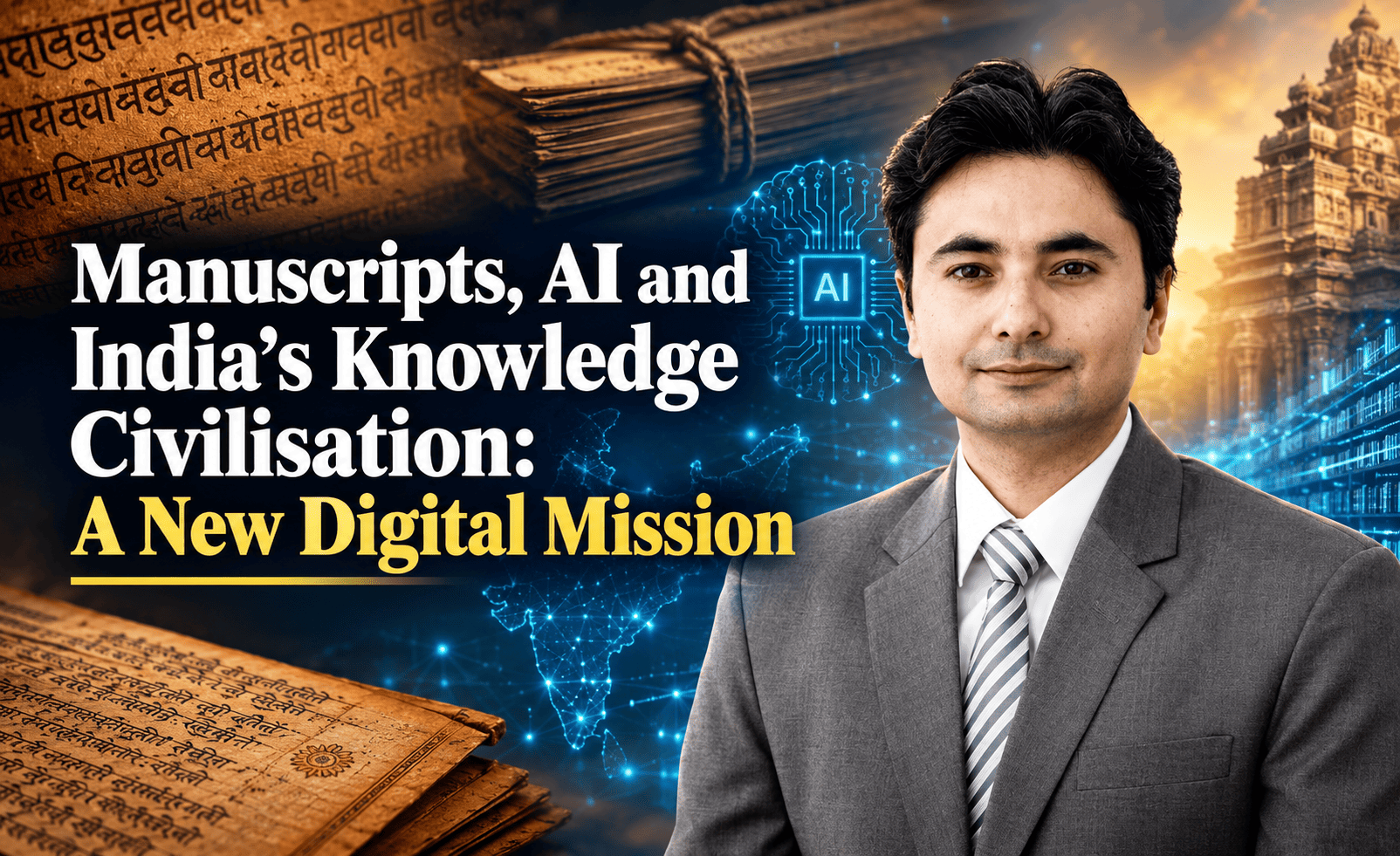
At the centre of this effort is Inderjeet Singh, IAS, Director, Ministry of Culture, Government of India, an officer of the 2010 batch of the Rajasthan cadre.
For Singh, the project is not simply about technology. It is about bringing together India’s knowledge heritage and making it available to future generations.
“This is a very important national mission driven by the Government of India at the highest level,” Singh says, describing the larger vision behind the initiative during a conversation with Indian Masterminds.
FROM DIGITISING MANUSCRIPTS TO BUILDING A KNOWLEDGE PLATFORM
The Gyan Bharatam Mission was announced in the 2025 Budget, and the Prime Minister inaugurated it on 12 September 2025. Its primary mandate is to digitise manuscripts in India and abroad and create a digital repository that can preserve them for future generations. But as the work progressed, the team began asking a larger question: what if these manuscripts could also be made searchable and understandable through technology? That question led the team towards artificial intelligence.
Also Read – From Wildlife Day to Wildlife Week: The Origins of India’s Conservation Movement
The project was selected as one of the leading use cases at the India AI Summit. It eventually emerged among the top three submissions in the country and was presented before the Prime Minister and other world leaders.
The demonstration was designed as a conversational system. Instead of simply looking at a scanned page, a user could interact with the knowledge contained in it.
“The kind of solution we were able to showcase was like a conversational system,” Singh explains.
The presentation received strong appreciation and subsequently brought support from the Ministry of Electronics and Information Technology and other government departments. The project has now moved towards developing an indigenous model for Indian manuscripts, scripts and languages, with work expanding across numerous scripts.
WHEN ANCIENT TEXTS MEET ARTIFICIAL INTELLIGENCE
A digitised manuscript is more than an image on a computer screen. It can contain references to people, places, scientific ideas, medical practices, mathematical concepts and philosophical traditions. Traditionally, finding such information could require experts to manually examine and index large collections.
AI has the potential to change that.
The technology being developed can examine digitised manuscripts, work with metadata and help index and identify information within them. What could earlier take extensive manual effort can potentially be done within seconds. The ambition, therefore, is much larger than creating another chatbot.
“It is not just the chat solution. There is a transformational opportunity here. It is about the ecosystem,” Singh says.
That ecosystem could eventually connect manuscripts, libraries, researchers, students and ordinary citizens through one technology-enabled knowledge network.
ACCURACY IS THE BIGGEST TEST
Yet there is one issue that cannot be compromised: accuracy. The National Mission for Manuscripts, which began in 2003, has already undertaken years of work to identify, document and preserve India’s manuscript heritage. The new technology has to build on that foundation without introducing errors or distortions.
The challenge begins at the ground level.
Manuscripts are spread across institutions, libraries and collections. They need to be surveyed, documented and verified. Information such as photographs, GPS locations and samples can be collected through digital tools. State and central government teams, surveyors and other stakeholders are part of this process. The scale makes the task even more difficult.
Early AI experiments produced accuracy levels of around 60–70 per cent in some areas. That may be impressive for an early-stage experiment, but it is not enough when dealing with civilisational knowledge. “When you are presenting at those levels and putting it in the public domain, nothing below 100 per cent is the ideal solution,” Singh says. The system has since improved and is now crossing the 90–95 per cent range in its developing capabilities. But even that, Singh stresses, is not considered good enough.
BREAKING THE BARRIER OF LANGUAGE AND SCRIPT
One of the most exciting possibilities is accessibility. A large part of India’s manuscript heritage is written in scripts and languages that most modern readers cannot understand. Even someone deeply interested in ancient Indian knowledge may be unable to read the original text.
Technology can create a bridge. Through OCR, transliteration and translation, users can potentially move from an original manuscript to a language they understand. The platform is being developed to support Indian as well as other languages.
A person who cannot read Sanskrit could therefore interact with the contents of a Sanskrit manuscript. The information could potentially be read in another Indian language or even listened to. This changes the meaning of preservation. A manuscript is no longer simply something kept safely in an archive. It becomes something people can discover and experience.
WHY INDIA NEEDS INDIGENOUS AI
There is another reason why Singh believes an indigenous model is important. Artificial intelligence learns from data. If India’s civilisational knowledge is absent or poorly represented in global systems, future generations could receive an incomplete understanding of the country’s intellectual heritage.
The concern is subtle, but significant.
“If we do not have our own indigenous LLMs and LSMs, our generations will keep thinking that probably this never existed,” Singh says. For the Ministry of Culture, therefore, building Indian language and script models is not only a technological exercise. It is also an effort to ensure that India’s knowledge traditions are represented through their own sources.
FROM PRESERVING THE PAST TO PRESENTING EVIDENCE
The larger purpose is to show India as a knowledge civilisation through evidence. The Bakhshali manuscript, for instance, is cited as an important source in the history of mathematics and the use of zero. Such material can help demonstrate India’s intellectual contributions through documented evidence rather than simply through claims.
The same approach can be seen in the growing global study of yoga. A practice once viewed largely through the lens of tradition is increasingly examined through scientific frameworks involving exercise, meditation and wellbeing. Technology can bring such evidence together and make it accessible to a much wider audience. “We are trying to showcase to the world that India was a knowledge civilisation,” Singh says.
MUSEUMS AS THE NEXT WINDOW TO INDIA’S CIVILISATION
Singh’s work in the Ministry of Culture also extends to the Archaeological Survey of India, bringing another dimension to the same idea. Museums and heritage sites, he believes, should not merely display old objects. They should help people understand how Indian civilisation lived, built cities, managed water and developed sophisticated systems thousands of years ago.
The government is also working on world-class museums at important civilisational sites, including Dholavira, associated with the Indus Valley civilisation. The objective is to allow younger generations to see the evidence for themselves and understand the scale of India’s historical achievements. In this larger journey, AI and museums may appear to belong to different worlds. But their purpose is increasingly similar: to bring India’s knowledge and heritage closer to people.
The manuscript may have begun as a handwritten page centuries ago. Today, it is becoming data. That data is becoming searchable knowledge. And with AI, the hope is that knowledge will become accessible to millions. For Singh, that is the real promise of technology — not replacing history, but helping a new generation discover it.
Also Read – From Policy to People, From Reform to Results: India’s Journey of Transformative Governance