For generations, Indian Railways has been more than a means of transportation. It has carried people, connected distant corners of the country, supported commerce, witnessed historic moments and, in many ways, travelled alongside India’s own transformation. From the whistle of the first steam train in 1853 to the speed and sophistication of Vande Bharat Express, the story of Indian Railways is also a story of technological change, national development and millions of human journeys.
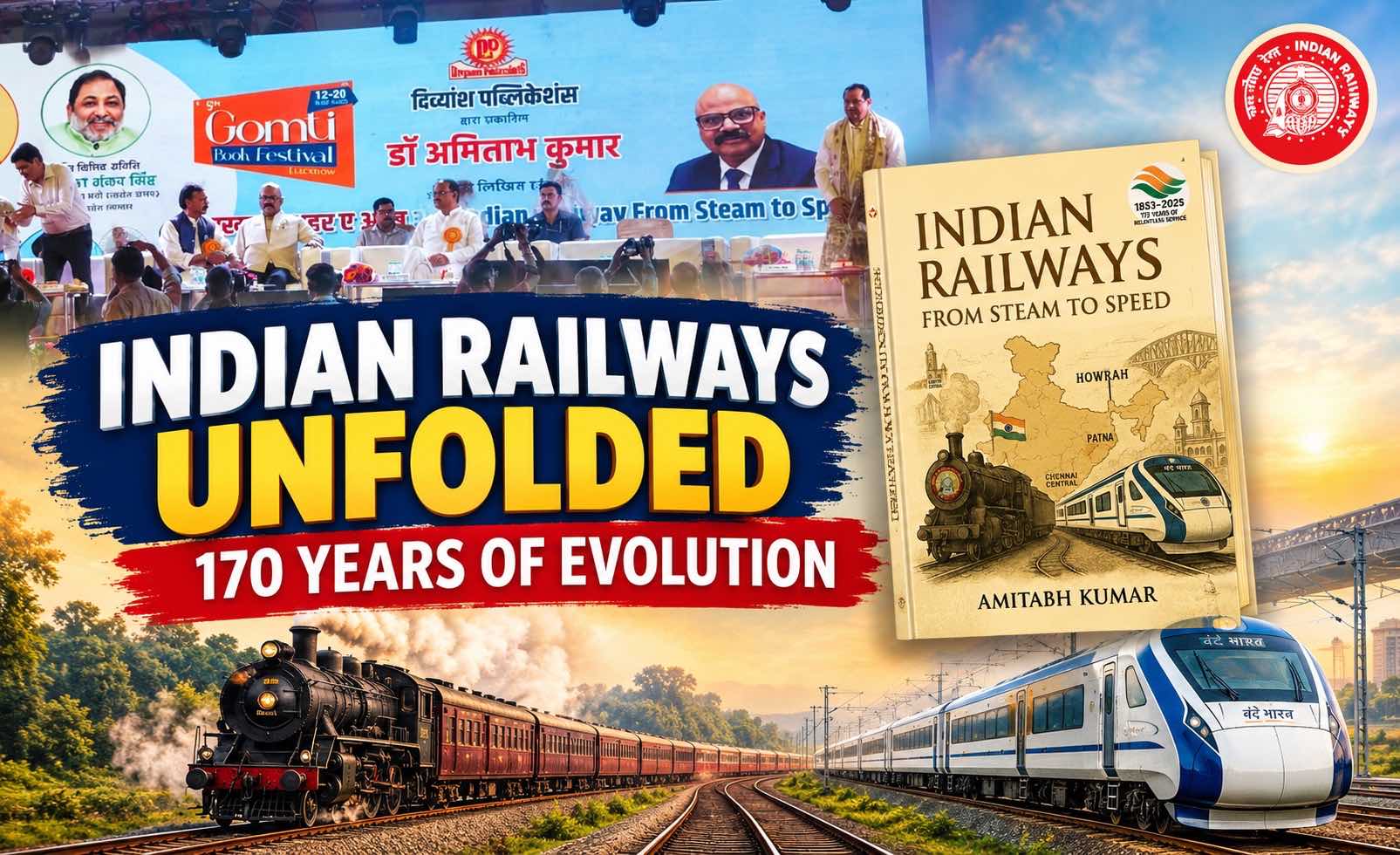
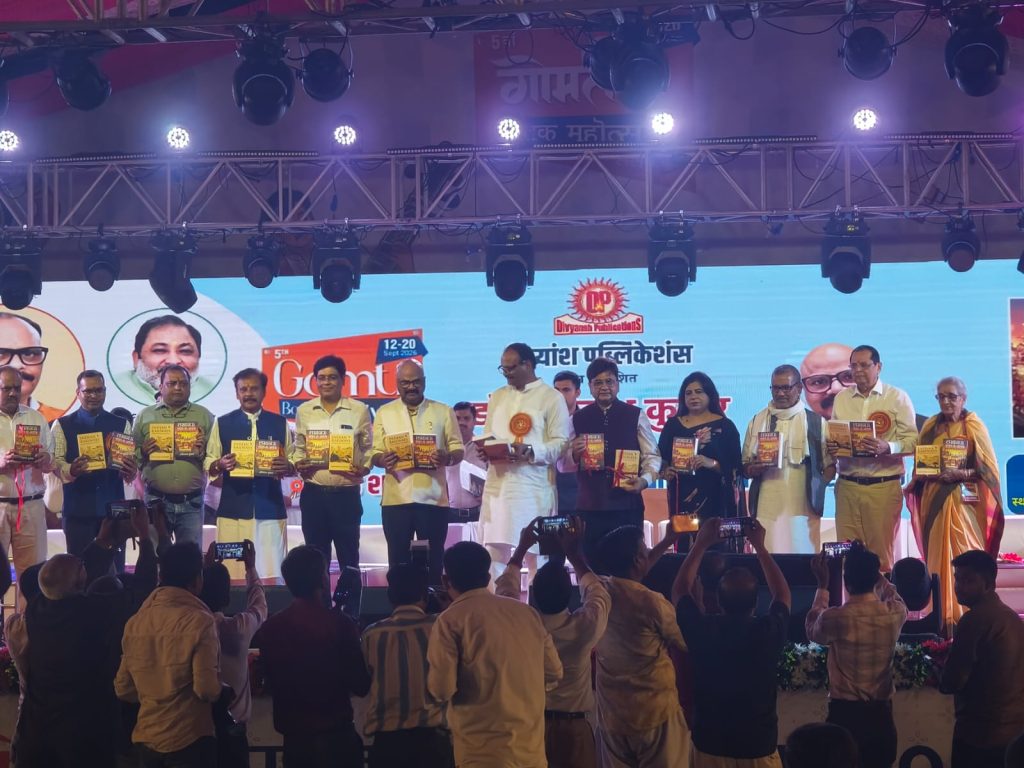
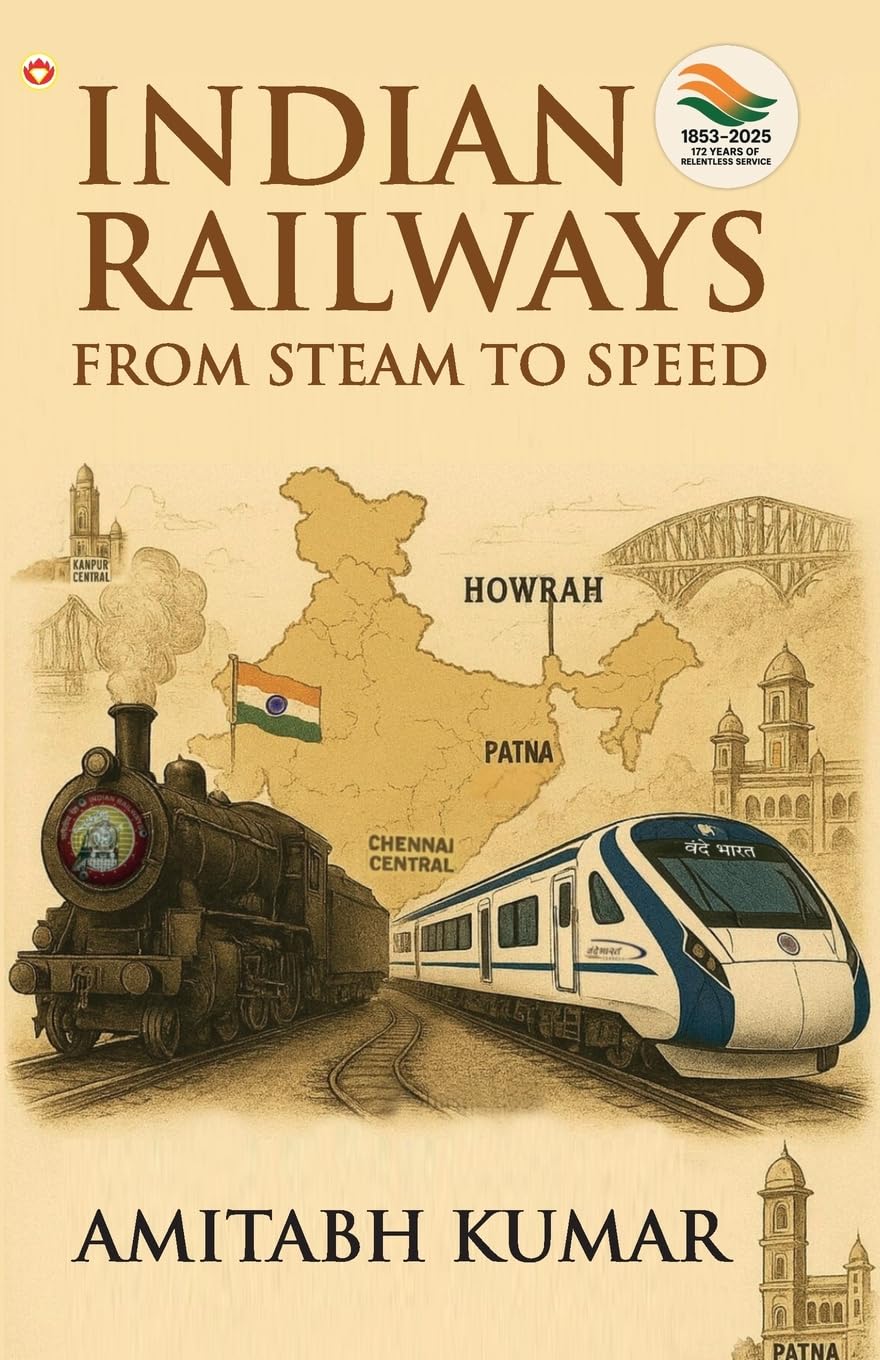
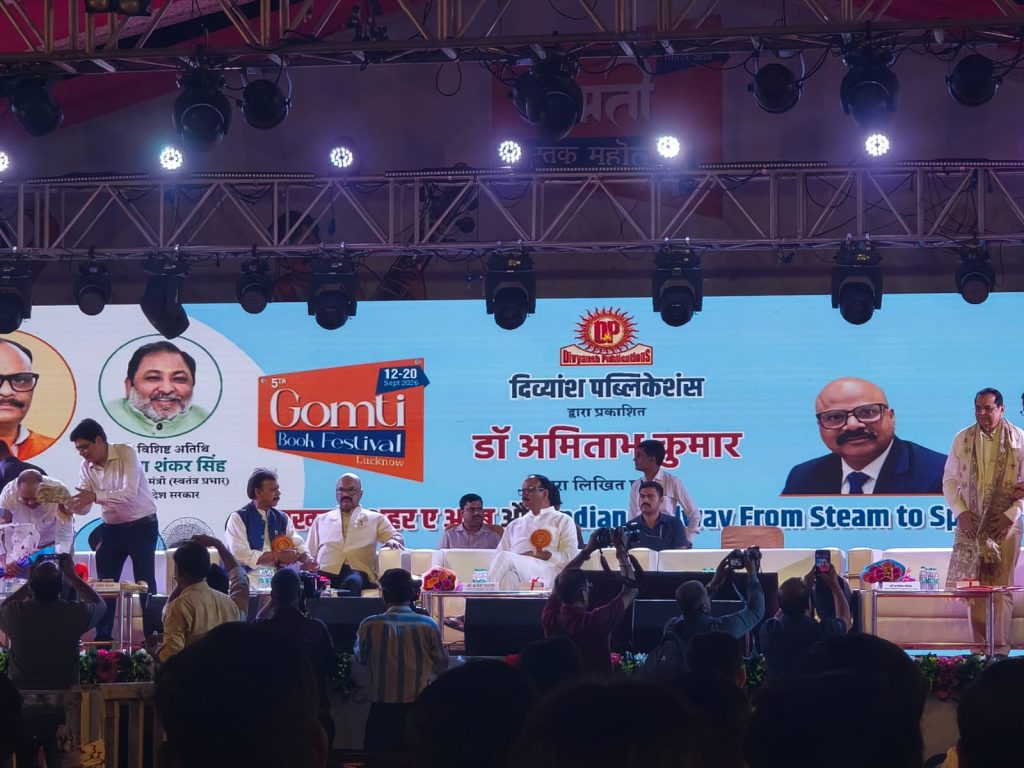
Capturing this extraordinary evolution is ‘Indian Railways: From Steam to Speed Chronicles’, a recently launched book by the 1996 batch Indian Railway Traffic Service (IRTS) officer and author Dr Amitabh Kumar. The book, officially launched on September 20, 2026, during the 5th Gomti Book Festival at Lucknow University, takes readers through the history, functioning, technological transformation and future possibilities of one of the world’s largest railway networks.
Written after years of research and work, the 568-page book attempts to bring together the many dimensions of Indian Railways – from its colonial beginnings and early steam engines to electrification, modern coaches, digital services, artificial intelligence, high-speed rail and the proposed bullet train era.
For Dr Kumar, however, the book is not merely about machines, tracks and trains. It is also a tribute to the approximately 12 lakh railway employees whose daily efforts keep the vast network moving. Indian Masterminds interacted with Dr Kumar to know more about his book, the inspiration behind it and his literary journey.
How It Started: Writing About a Profession He Has Lived
For Dr Kumar, the idea of writing about Indian Railways emerged naturally from his own professional journey. An IRTS officer of the 1996 batch, he has spent decades working within the railway system and observing its functioning from close quarters.
He believes that being a railway officer gave him an unusual perspective while writing the book.
Explaining the inspiration behind the work, IRTS Kumar told Indian Masterminds, “I am an officer in the railway and this is my profession. I have seen everything, so I felt that if I am a writer, I should write about my profession.”
That experience allowed him to look beyond the familiar image of trains and stations. He delved into the evolution of different railway departments, their technologies, working systems and changing practices.
From engineering and signalling to operations and modern passenger services, the book attempts to explain how the railway system evolved over time.
From Wooden Sleepers to Modern Coaches
One of the distinctive features of the book is its focus on the transformation of railway technology.
Mr Kumar explains that the changes become particularly visible when one looks at the system from the perspective of different departments. The engineering systems, for instance, have changed dramatically over the decades.
The book explores how tracks were constructed and maintained in earlier times, how wooden sleepers were used, how manual labour once played a much larger role and how machines gradually transformed railway infrastructure.
The transformation is equally visible in railway coaches. Wooden coaches and older designs have gradually given way to modern technologies, including Linke Hofmann Busch (LHB) coaches.
For Mr Kumar, these changes represent much more than technological upgrades.
They tell the larger story of how Indian Railways has continuously adapted itself to changing requirements.
Explaining Railways Beyond the Train Journey
The book also seeks to make Indian Railways easier to understand for ordinary passengers and railway users.
According to Kumar, the book contains information about rules and procedures that passengers frequently encounter but may not always understand.
“It is for everyone,” he explains, pointing out that the book covers railway history as well as rules and regulations.
Readers can find information on subjects such as ticketing, refunds, goods booking, railway facilities and various passenger services.
The book also explores different railway-related digital platforms, websites and applications that have emerged as technology has become increasingly integrated into railway operations.
For people involved in the transportation of goods, the book also explains various aspects of freight and railway booking.
Whether it is booking wagons, coaches or other railway services, Kumar has attempted to bring the relevant information together in one place.
From History to Modernisation-and the Future
At its heart, Indian Railways: From Steam to Speed Chronicles is a journey through transformation.
The narrative begins with the first commercial steam train in 1853 and moves through the colonial expansion of the railway network, the changes brought after Independence and the gradual transformation of the railways into a crucial component of India’s economy and public infrastructure.
The book examines the transition from steam to diesel and then electric traction, the expansion of electrification, modern railway infrastructure, metro systems and the country’s ambitions for high-speed rail.
The emergence of Vande Bharat Express represents another important milestone in this journey, symbolising the shift towards faster and more technologically advanced train services.
The book also looks ahead, examining digitalisation, artificial intelligence, high-speed corridors and sustainability.
With Indian Railways pursuing extensive electrification and cleaner forms of transportation, Kumar presents the railway not simply as an institution with a long history, but as a system continuing to evolve.
A Book for Railway Employees, Aspirants and Passengers
Another important aspect of the book is its practical usefulness.
Kumar believes it can serve multiple audiences. Railway employees preparing for internal examinations and promotional tests can use it to understand the history and functioning of the organisation.
At the same time, railway passengers can use it to learn about rules, facilities and services that directly affect their journeys.
For competitive-exam aspirants too, the historical and institutional information contained in the book can provide useful background.
This broad approach appears deliberate. Rather than writing an exclusively academic history of the railways, Kumar has attempted to create a book that can be read by railway professionals as well as ordinary users.
How He Found Time to Write
Writing a 650-page book while continuing with a demanding career in public service required sustained effort.
Kumar spent around two years researching and writing the book. His professional association with Indian Railways made access to knowledge and first-hand understanding easier, but the scale of the subject also demanded considerable work.
For him, writing has become more than a literary pursuit. It is also a way of dealing with the pressures of professional life.
“The stress we have throughout the day goes away when we write,” Mr Kumar says.
He believes writing helps him manage the pressures that come with a demanding career.
“The more I write, the better it is for me to manage my stress,” he adds, while making an important distinction: “Stress can only be managed. It can never be eliminated.”
That philosophy has helped him continue writing alongside his professional responsibilities.
His 17th Book and a Diverse Literary Journey
Indian Railways: From Steam to Speed Chronicles is the 17th book in Kumar’s literary journey.
A Lucknow University alumnus, he has written across a remarkably diverse range of subjects. His works include Sarpanch, Operation Log Out, Samadhi Se Rajyoga Tak, Bloody Merit Scholars, Mahant: The Godfather, Rainbow in White Shroud, Gen Z: Love Lost in Transactions, Kumbh Diaries and Aghori and Manikarnika: The Cosmic Dance of Death, among others.
His writing has explored rural governance, spirituality, social issues, contemporary relationships, history and socio-political themes.
Another recent work, Shahar-e-Adab, explores Lucknow’s history and cultural character, reflecting his continuing interest in the city and its literary traditions.
His subjects may differ widely, but there is a common thread: an attempt to understand institutions, communities and people through stories.
More Than a History of Indian Railways
What makes ‘Indian Railways: From Steam to Speed Chronicles‘ significant is its attempt to look at Indian Railways from multiple perspectives.
It is a historical account, but it is also a guide to the railway system, a record of technological change and a glimpse into its future.
Most importantly, the book places people alongside technology. Behind every modern train, electrified route, digital service and ambitious high-speed project are thousands of railway employees working across departments and locations.
By documenting the journey from steam to speed, Kumar has attempted to capture not just how trains have changed, but how an institution of enormous scale has continuously adapted to the changing needs of India.
And perhaps that is the larger story the book seeks to tell: Indian Railways has never remained still. Like the country it serves, it has kept moving—with time, technology and changing aspirations.
Read Also: IRTS Officer Dr Amitabh Kumar’s Two Books Launched at 5th Gomti Book Festival in Lucknow