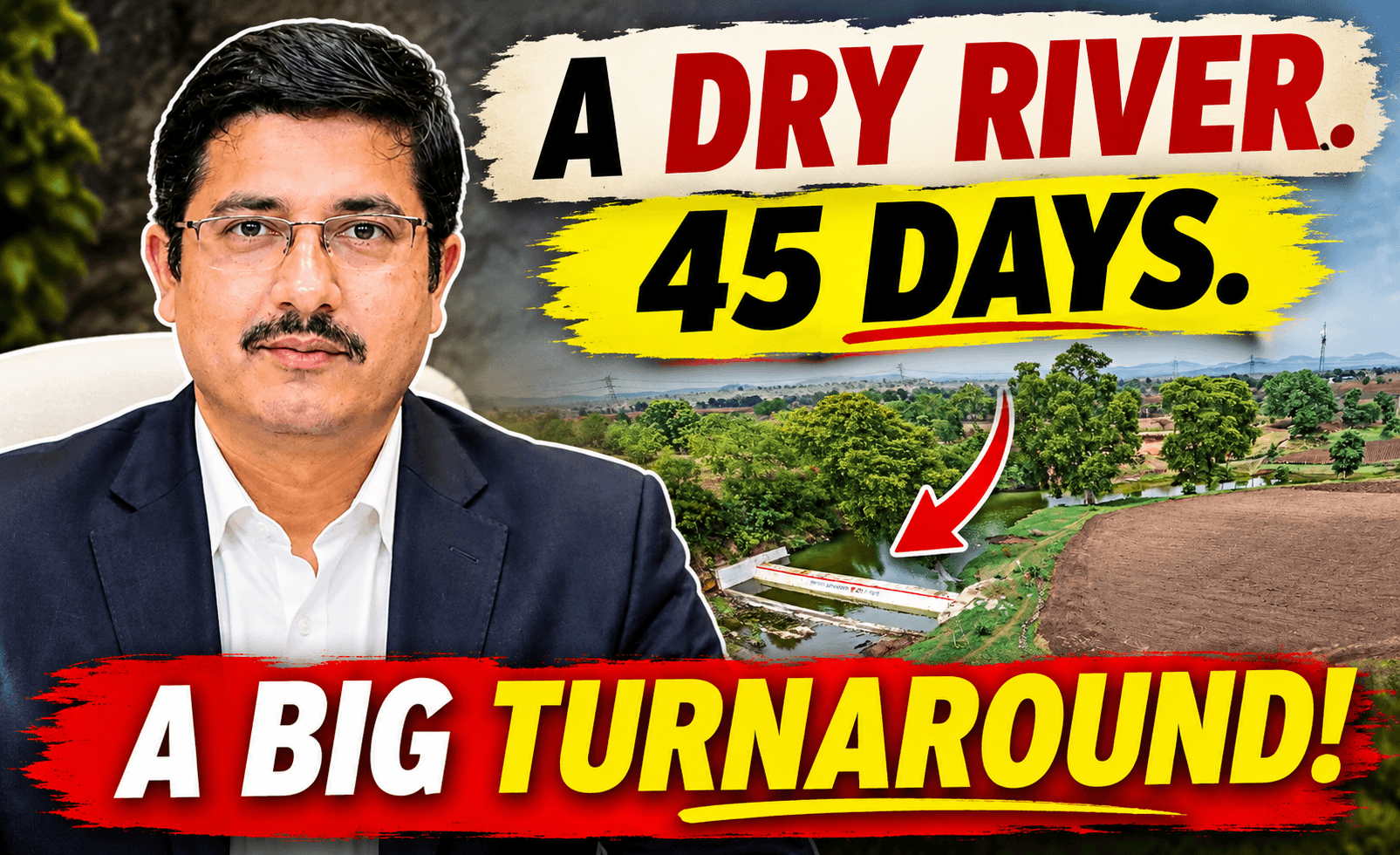
For years, the Roshani River in Madhya Pradesh‘s Khandwa district had little to offer beyond a dry, cracked and eroded riverbed. For the villages along its course, water scarcity was not an occasional inconvenience but a part of everyday life, affecting farms, livestock and households.
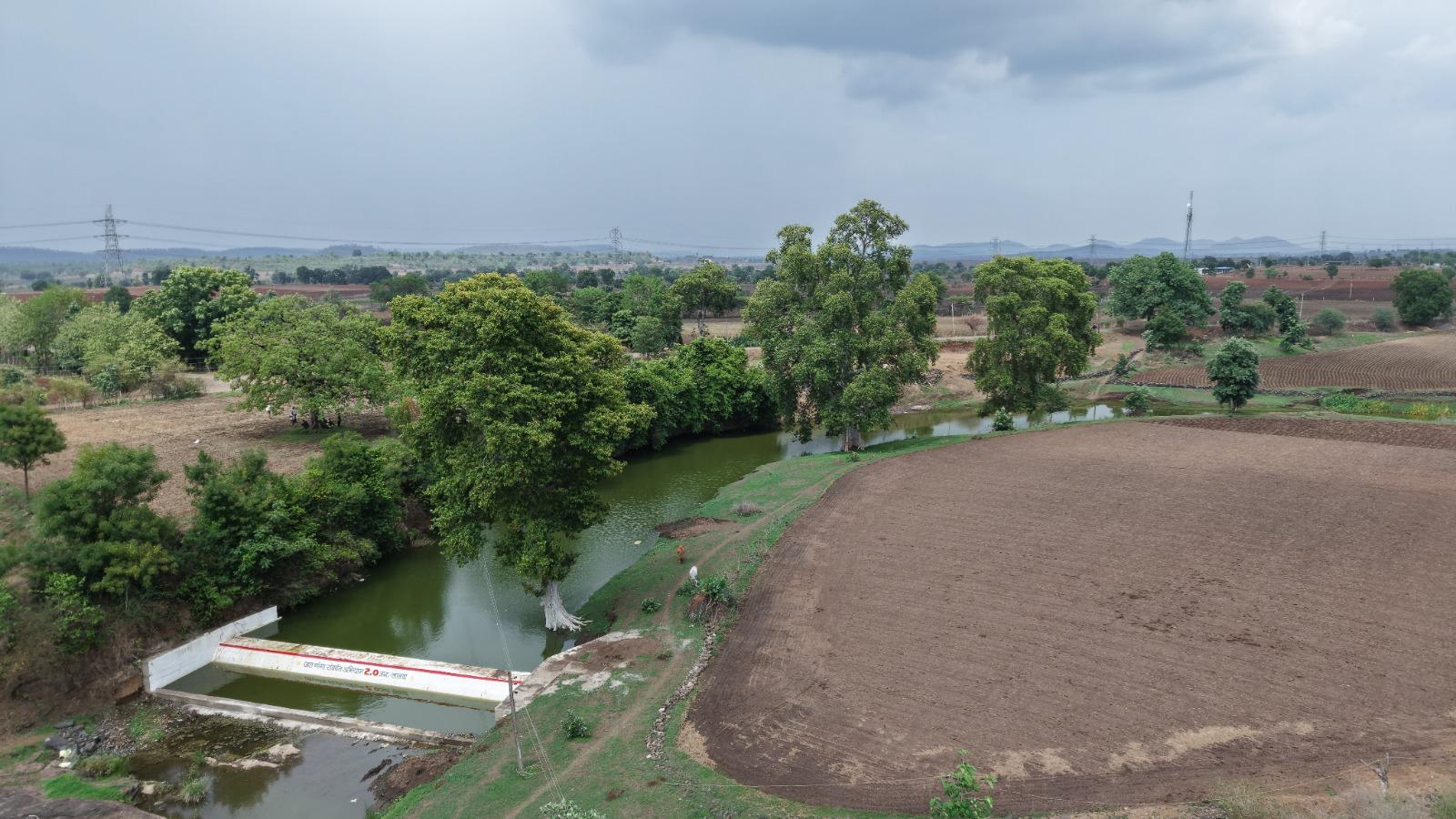
Today, that picture has changed. Across its entire 14-km stretch, the river has been brought back to a water-saturated state, with visible water flow at multiple points.
Behind this transformation is a carefully planned rejuvenation initiative led by Khandwa District Collector IAS Rishav Gupta, a 2014-batch Madhya Pradesh cadre officer. Rather than treating the river as an isolated channel that needed desilting, the administration approached it as an interconnected water system, addressing the catchment from its highest points down to the river itself.
The initiative, undertaken between February 15 and March 30, 2026, has brought together engineering innovation, traditional watershed techniques and community participation, about which the officer shared exclusive details with Indian Masterminds.
Also read: How IAS Ravindra Kumar Put Azamgarh at the Top in UP’s CM Yuva Scheme, Helping 6,745 Young Entrepreneurs
Treating the River From the Ridges Down
The Roshani River flows through Mohalkhedi, Roshni, Bojudhana and Salidhana Gram Panchayats in Khalwa Block before joining the Ghoda Pachhad River. The region is predominantly tribal, rain-fed and particularly vulnerable to water scarcity.
The administration adopted a ridge-to-valley approach, which essentially means capturing and conserving rainwater at higher elevations before allowing it to rush downhill and escape through the river channel.
The work began with GIS-based surveys and mapping to identify suitable locations for water-harvesting structures. Instead of undertaking scattered construction, the team planned interventions across the entire catchment in a systematic sequence.
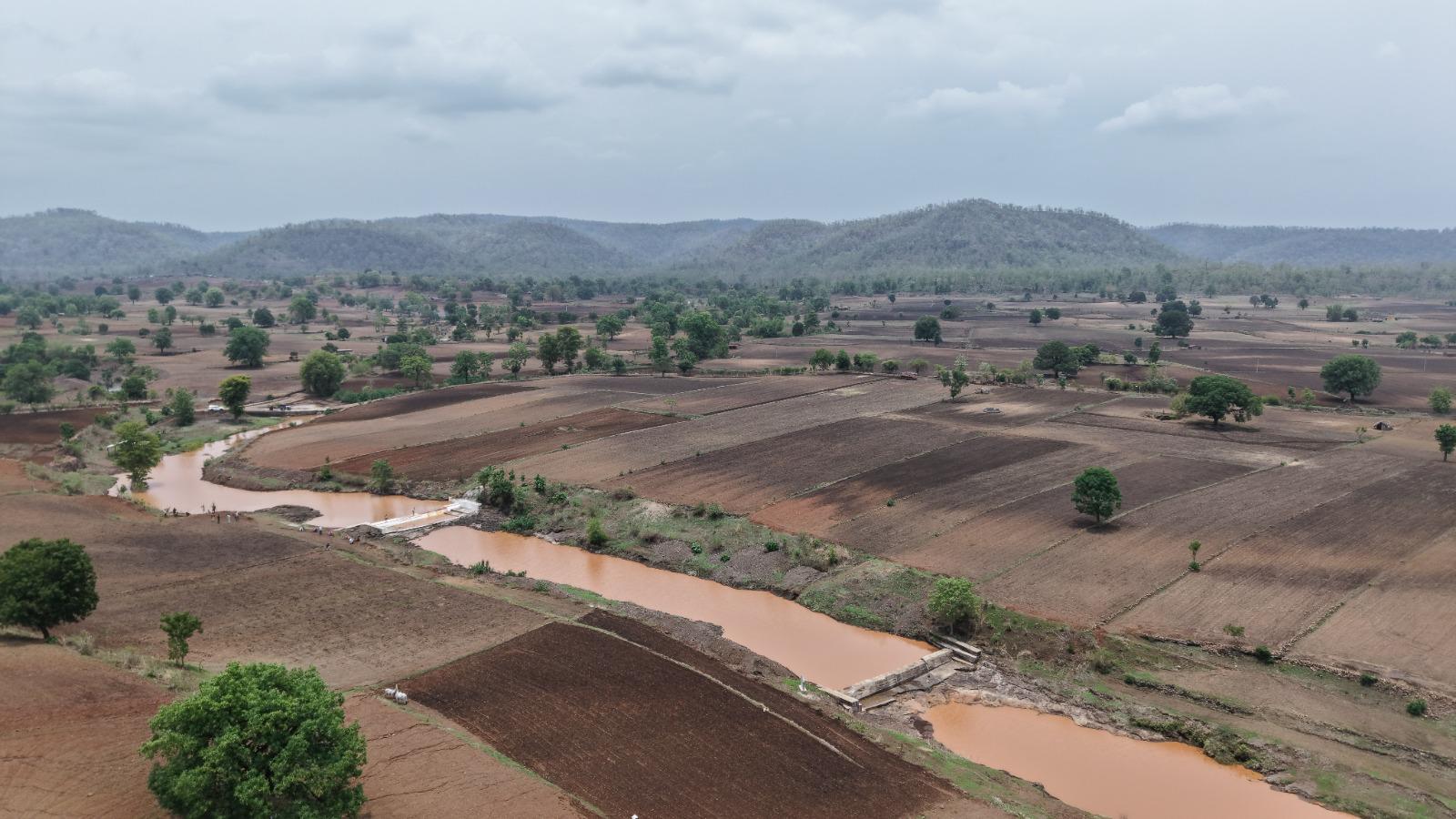
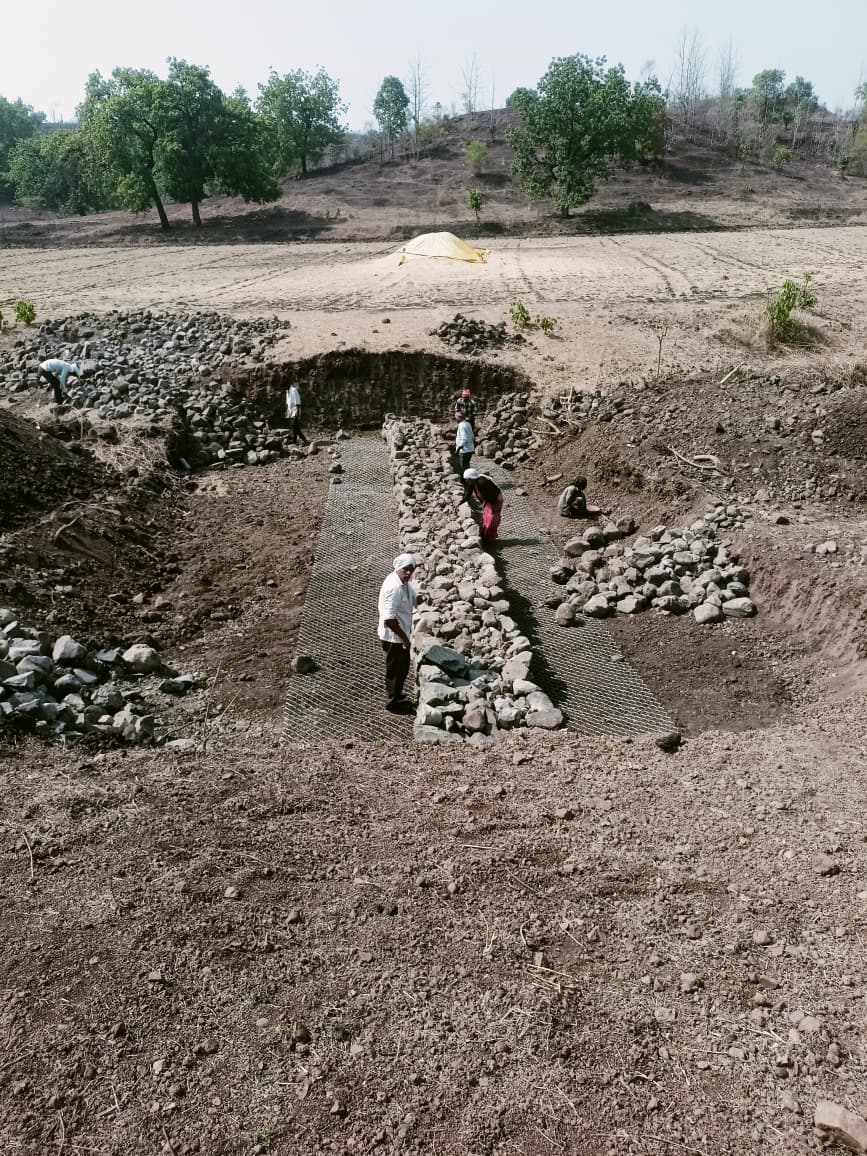
A total of 1,500 contour trenches were constructed to slow surface runoff and improve groundwater infiltration. Nine new check dams were built, while 11 existing check dams and stop dams were renovated. Eight loose boulder structures and two specially designed Khandwa Hydraulic Structures (KHS) were also constructed.
Around nine kilometres of the river channel were desilted and deepened to improve its water-carrying capacity.
Explaining the thinking behind the intervention, Gupta says, “A river cannot be revived by working only on its channel. The entire catchment has to be treated as one connected system. Our focus was to slow down rainwater, allow it to percolate into the ground and ensure that the benefits of water conservation reach the river as well as the villages dependent on it.”
The Khandwa Innovation That Makes Check Dams Cheaper
One of the most interesting aspects of the project is the Khandwa Hydraulic Structure (KHS), a low-cost check dam design developed within the district.
Conventional cement concrete check dams can be expensive, particularly when their full structural strength is not required. The KHS addresses this by using a cement concrete outer shell while keeping the internal core hollow and filling it with large boulders.
This hybrid design retains the outer structure’s strength while reducing the volume of concrete required. It is intended for low-force streams, such as sections of the Roshani River, where constructing a completely solid concrete structure would involve unnecessary expenditure.
The innovation reflects an attempt to match engineering solutions to actual site conditions instead of relying on expensive, standardised structures everywhere.
10,000 Saplings and a Community That Took Charge
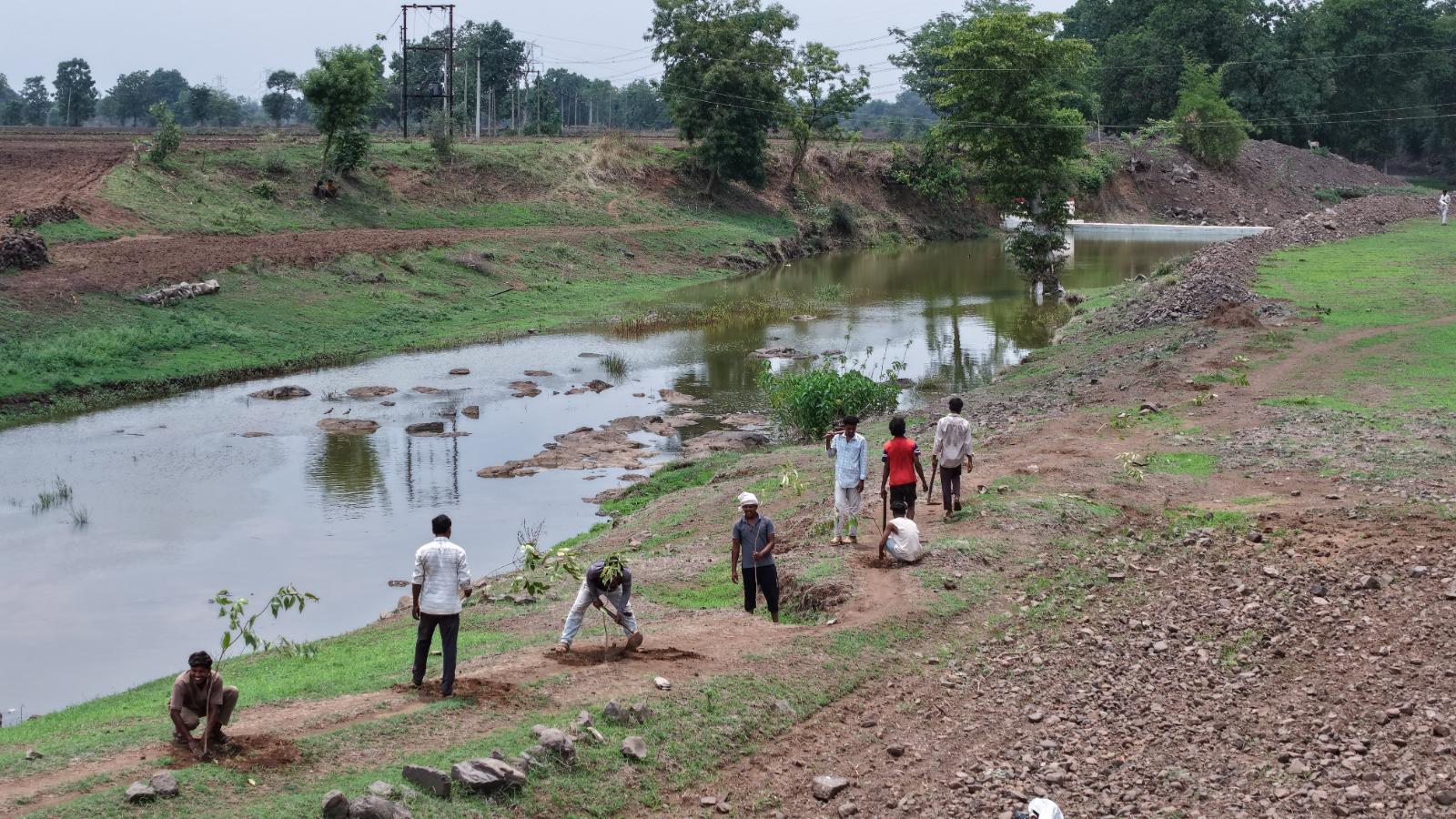
The administration’s approach extended beyond construction. A large-scale plantation drive saw 10,000 saplings planted along the river, with Gram Panchayat Roshni and local residents playing an active role.
Hundreds of men and women, largely landowners from both banks of the river, participated in digging and planting instead of leaving the work entirely to contractors.
According to Gupta, “Water conservation cannot remain the responsibility of the administration alone. The people living along a river have the greatest stake in its future. We wanted the community to participate in creating and protecting these assets so that the work becomes a shared responsibility.”
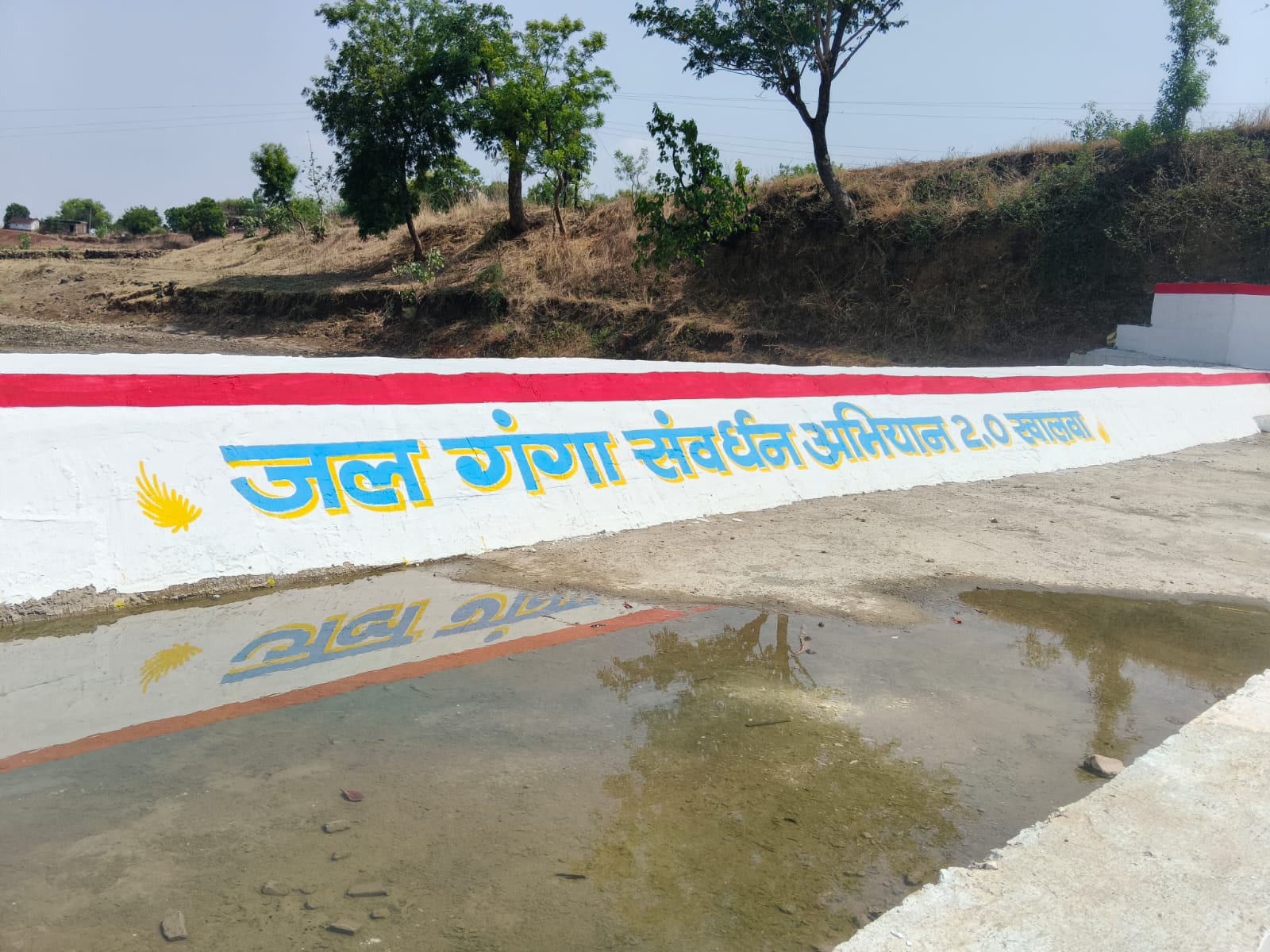
The initiative was implemented under the Madhya Pradesh government’s Jal Ganga Samvardhan Abhiyan and the Ministry of Jal Shakti’s Jal Sanchay Janbhagidari 2.0 campaign. Khandwa had also received an incentive of Rs 2 crore for its performance under the earlier Jal Sanchay Jan Bhagidari 1.0 campaign, providing further momentum for the district’s water-conservation work.
From Roshani to Ghoda Pachhad
The results extend beyond the visible return of water. The rejuvenation has improved groundwater availability, created better prospects for year-round irrigation, enhanced drinking-water access for livestock and helped control soil erosion along the treated stretch.
The project also builds on Khandwa’s earlier work on the 33-km Ghoda Pachhad River, a tributary of the Narmada, which was revived using the same ridge-to-valley methodology.
Importantly, Roshani is not a disconnected waterway. It joins the Ghoda Pachhad River at the end of its 14-km course. Rejuvenating it therefore strengthens the upstream water system of a river that has already undergone restoration.
For Gupta, the larger objective is to make water conservation a continuous district-wide effort: “Our aim is not to create isolated structures or celebrate individual projects. We want to restore the natural water system in a way that benefits villages, agriculture and livestock over the long term. The Roshani River is part of that larger effort.”
From 1,500 contour trenches and 22 new or restored check-dam structures to 10,000 saplings and a revived 14-km river stretch, the Roshani initiative demonstrates what coordinated watershed planning can achieve.
More importantly, it has brought water back into the everyday landscape of four villages that depend on it. And because Roshani eventually feeds the Ghoda Pachhad, the benefits of its revival do not stop where the project ends.
Also read: How IFS Officer Stylo Mandavi Turned Her Childhood Dream Into Reality