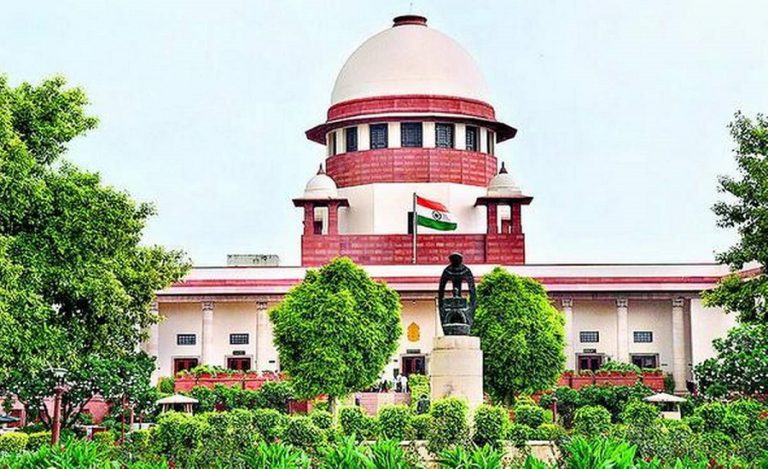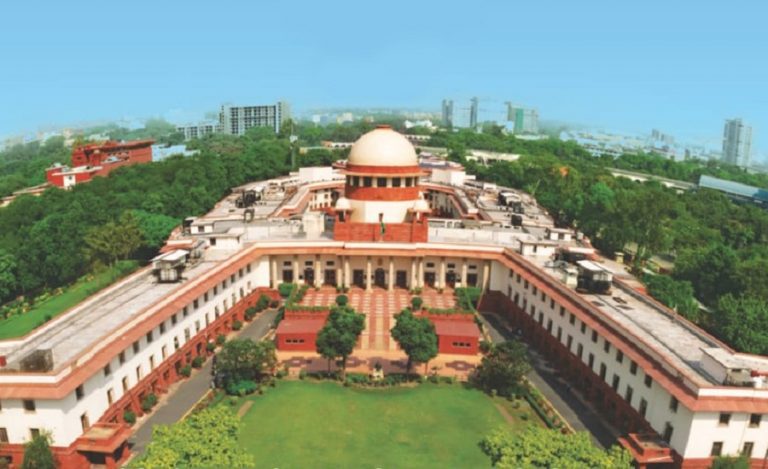
New Delhi: The Supreme Court on Yamuna pollution has raised serious concerns over the river’s worsening condition, saying that pollution has increased despite huge amounts of money being spent on its cleaning. The court has warned that states, Union Territories (UTs) and districts may face financial penalties if they fail to prevent water pollution.
In an order dated November 4, 2026, a bench of Justices Manoj Misra and Manmohan also directed the Central Pollution Control Board (CPCB) to introduce stricter monitoring of the Yamuna’s water quality and sewage treatment plants.
Supreme Court Seeks Accountability For Yamuna Pollution
The Supreme Court observed that the poor condition of the Yamuna reflects the failure of civic administration in towns, cities and villages located along its banks.
Read also: India’s Air Pollution Problem: Why Does Clean Air Remain a Seasonal Promise?
The court also highlighted that around 520 drains discharge wastewater into the river. It said that spending large amounts of money has not improved the river’s condition.
The bench made it clear that authorities cannot avoid responsibility by blaming other states or departments.
It proposed a system under which every state, UT and district would be held responsible for any deterioration in water quality within its jurisdiction.
Yamuna Pollution: States And UTs May Face Financial Penalties
The Supreme Court directed the CPCB to monitor water quality at the points where the Yamuna and major drains enter and exit different states, UTs and districts.
The monitoring will cover important water quality parameters, including:
- Biochemical Oxygen Demand (BOD): Measures the oxygen required by microorganisms to break down organic waste.
- Chemical Oxygen Demand (COD): Measures the amount of oxygen needed to chemically break down pollutants.
- Faecal Coliform: Indicates contamination from human or animal waste.
- Total Suspended Solids (TSS): Measures solid particles present in water.
If water quality deteriorates while passing through a particular jurisdiction, the concerned state, UT or district may be held accountable and penalised.
The CPCB has also been asked to suggest a formula for calculating environmental compensation. The collected amount will be deposited with the Supreme Court Registry.
States and UTs will be allowed to recover the penalty from polluters and officials responsible for negligence after conducting an inquiry.
Supreme Court Orders Strict Monitoring Of Sewage Treatment Plants
The court observed that constructing more sewage treatment plants (STPs) alone will not solve the Yamuna pollution problem.
Industrial waste and untreated sewage must be controlled at their source. Where immediate prevention is not possible, sewage must be collected and treated before entering the river. The court issued several directions to improve the monitoring of treatment facilities. Key directions include:
- All sewage treatment plants (STPs), common effluent treatment plants (CETPs) and government-commissioned biogas plants must install tamper-proof smart energy meters within one month.
- Treatment plants must upload live operational and discharge-quality data.
- The CPCB must conduct surprise inspections and water sampling at least once every quarter.
- IITs, NITs and accredited laboratories may assist with independent inspections and testing.
- Inspection results must be published within 30 days.
- Environmental compensation may be recovered for every day of non-compliance.
The court also directed authorities to provide CPCB officials with unrestricted access to treatment plants, records and installations for inspections.
Court Flags Problems In Delhi’s Sewage Treatment System
The Supreme Court also raised concerns about the condition of sewage treatment plants and water bodies in Delhi. It highlighted differences between the claims made in the Yamuna Action Plan and information provided by the Delhi Government.
The plan stated that 35 water bodies and wetlands in Delhi’s Zone ‘O’ were free from encroachment. However, an annexure submitted by the Delhi Government reportedly marked all 35 as encroached.
The court also referred to CPCB findings that none of Delhi’s 37 existing sewage treatment plants met all prescribed standards. It stressed that untreated sewage from unauthorised colonies, settlements near drains and areas along the riverbed must be addressed.
The court said that removal of illegal structures must follow the law and include rehabilitation of eligible occupants.
Supreme Court Calls For Protection Of Yamuna Floodplain
The bench called for protecting Delhi’s Zone ‘O’, which is designated as a green zone under the Delhi Master Plan 2047.
It said that the zone should be protected and, if feasible, extended along the Yamuna from its source to its meeting point with the Ganga.
The court also stated that permanent structures should not be allowed in this area, except green parks and essential public infrastructure.
Existing structures should be removed in accordance with the law, with alternative accommodation provided to people entitled to rehabilitation.
The court also stressed that the Yamuna must be treated as one continuous river ecosystem rather than separate sections belonging to different states.
Yamuna Pollution Is A Shared Responsibility
The Supreme Court referred to the principle of Common But Differentiated Responsibilities.
Under this principle, all states sharing the Yamuna have a common responsibility to protect the river. However, their individual responsibilities should depend on how much pollution they contribute and their ability to control it. The court made it clear that a state cannot limit its responsibility to the section of the river flowing through its territory.
The Yamuna passes through Uttarakhand, Himachal Pradesh, Haryana, Delhi and Uttar Pradesh. Therefore, cooperation between these regions is important for controlling pollution.
Supreme Court Sets Deadline For Government Officials
The court directed the Chief Secretaries of Yamuna basin states and UTs, along with Secretaries of the concerned Central Ministries, to appoint senior nodal officers.
These officers must be of at least Special Secretary rank and must be appointed within two weeks.
Their responsibilities will include coordinating with the CPCB, removing administrative delays and ensuring that government departments follow the court’s directions.
The officer responsible for every treatment plant and major drain must also be identified on a public portal. The matter is scheduled for its next hearing on January 13, 2027.
FAQs
Yes. The Supreme Court has proposed financial penalties for states, Union Territories and districts if water quality deteriorates while the river passes through their jurisdictions.
The Supreme Court warned states because Yamuna pollution has increased despite huge amounts of money being spent on cleaning the river. It said authorities must be held accountable for worsening water quality.
The court ordered stricter monitoring of water quality, surprise inspections of treatment plants, installation of smart energy meters, live data reporting and action against authorities responsible for pollution.