Success is often seen as the ultimate destination of life. Years of hard work, sacrifices and determination are directed towards achieving a dream, earning recognition and reaching a position that society considers prestigious. But what happens when someone finally achieves everything they once wished for, only to discover that something within remains unfulfilled? What if reaching the destination does not bring the happiness one had imagined?
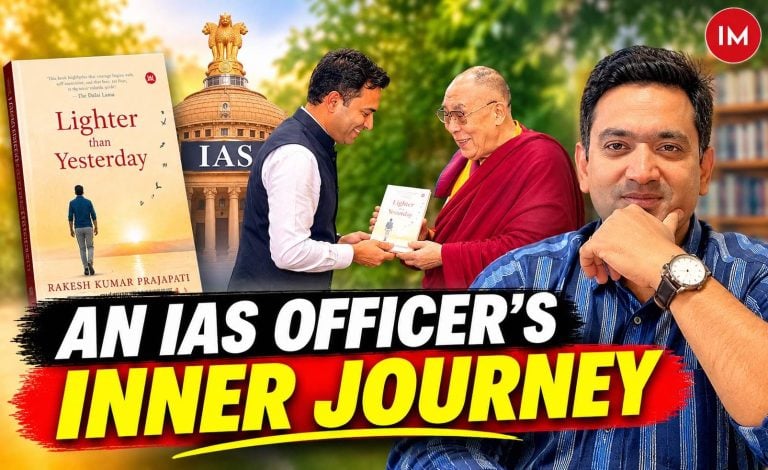
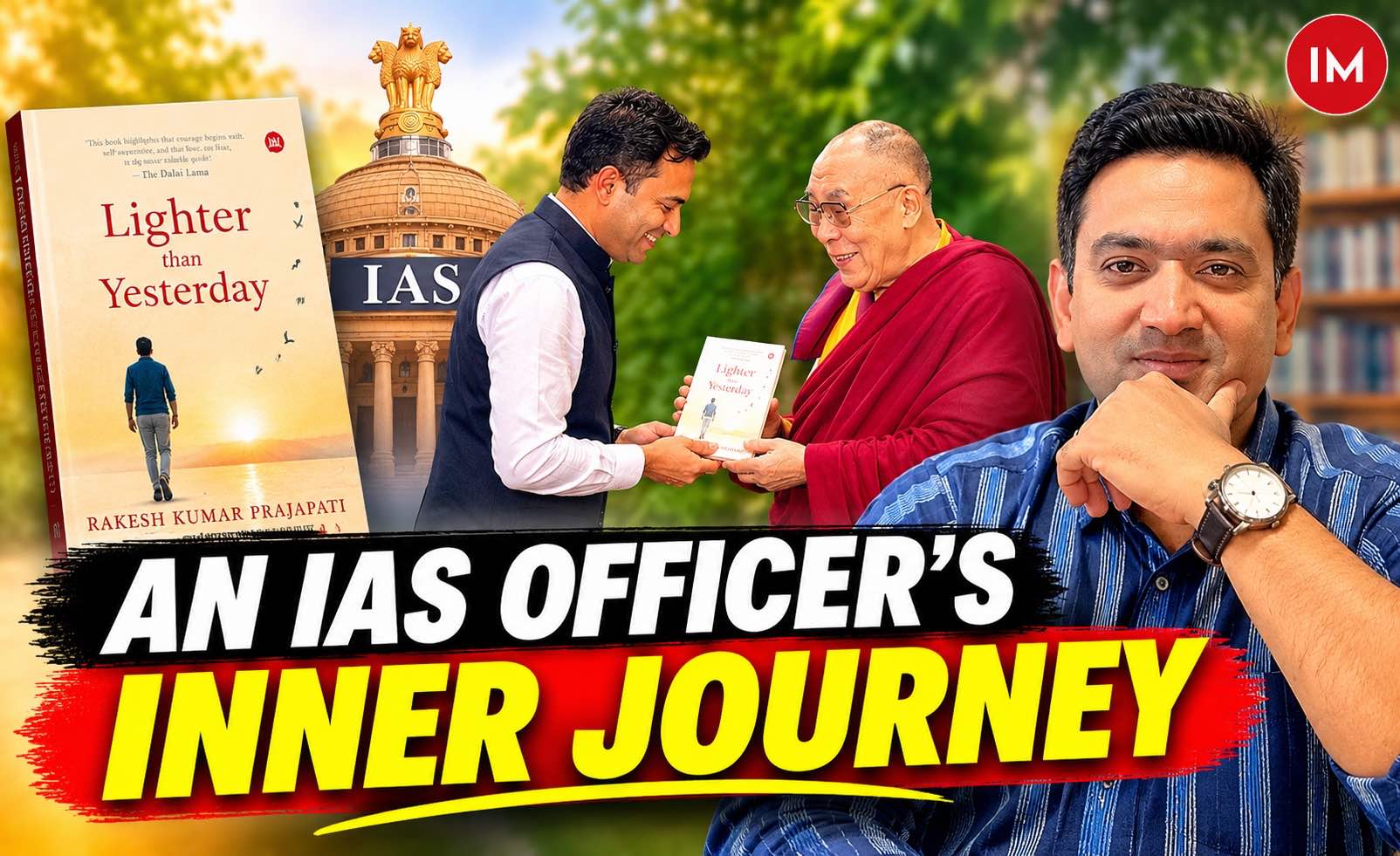
This is the deeper question explored in Lighter than Yesterday, the debut novel by 2012-batch IAS officer Rakesh Kumar Prajapati, currently serving as Director in the Department for Promotion of Industry and Internal Trade (DPIIT). Through the fictional journey of Jai, a young man who clears one of India’s toughest competitive examinations and enters the Indian Administrative Service, Prajapati examines the delicate relationship between ambition, family expectations, love, grief and the search for meaning.
Moving beyond the conventional idea of success, the novel explores what happens when external achievements fail to answer the questions of the human heart. It is a story about inherited dreams, the emotional influence of grandparents, and the difficult process of discovering whether the life we pursue is truly the life we want.
In an especially memorable moment in his literary journey, Prajapati presented his debut novel to His Holiness the Dalai Lama on October 16, 2026, in the presence of his family.
In an interaction with Indian Masterminds, IAS Prajapati opened up about the inspiration behind the novel, its characters, his grandfather’s influence, the Dalai Lama’s blessings, and how he balanced the demanding responsibilities of public administration with his passion for writing.
How It Started: An Idea That Took 18 Years to Become a Book
For Prajapati, Lighter than Yesterday was not an idea that emerged overnight. Its roots go back to 2008, when he first began developing the story. It took nearly 18 years of reflection, experiences and creative effort for the narrative to finally take the shape of a novel.
The inspiration came from a combination of personal memories and a larger question about contemporary society: why do people continue searching for happiness even after achieving what they once considered the greatest success of their lives?
The civil services, in particular, offered an interesting backdrop for exploring this contradiction. Every year, thousands of young aspirants dedicate years of their lives to clearing the UPSC examination. For many, becoming an IAS officer represents not only personal achievement but also the fulfilment of their family’s long-held aspirations.
However, some individuals, after reaching this coveted destination, begin questioning their understanding of happiness and purpose.
Prajapati found himself drawn to this deeper human question.
“I did not want to write a book about leaving the civil services. I wanted to write about what happens when a person achieves everything he once wanted, and then begins asking what he truly needs,” he explains.
Gradually, these questions came together with his emotional attachment to his grandfather, laying the foundation for Jai’s character and the novel’s central narrative.
About the Book: When Achievement Is Not Enough
Lighter than Yesterday revolves around Jai, a young man whose life is shaped by a dream inherited from his grandfather.
Coming from humble beginnings, Jai grows up carrying the hopes and aspirations of someone who believes deeply in the power of education. With his grandfather’s faith and his own discipline, he eventually cracks one of India’s toughest competitive examinations and enters the Indian Administrative Service.
His journey takes him from crowded railway platforms and hostel corridors to the prestigious environment of the civil services. He achieves the professional recognition, authority and status that millions aspire to.
Yet, after reaching this milestone, he begins experiencing an unexpected emptiness.
The question that gradually takes over his mind is simple but profound: Is this all there is?
As the story progresses, Jai begins moving away from the conventional pursuit of achievement towards a more introspective journey. He starts examining his relationships, memories, inherited expectations and his own understanding of happiness.
Tender and deeply reflective, the novel explores love, grief, memory and the invisible emotional burdens people carry while trying to become who they believe they are meant to be.
For Prajapati, the book is ultimately a meditation on awakening, drawing equally from Eastern thought and Western existentialism.
Jai and His Grandfather: The Emotional Heart of the Story
One of the most significant aspects of the novel is the relationship between Jai and his grandfather. The grandfather is not simply a character who inspires the protagonist during childhood; his presence continues to influence Jai’s decisions, ambitions and understanding of personal responsibility.
This relationship also has a deeply personal connection with the author’s own life.
Prajapati’s late grandfather was a farmer whose understanding of success was shaped by hard work, rural realities and an extraordinary belief in education.
“My grandfather was a farmer. His understanding of success was shaped by the dignity of hard work, the limitations of rural life and an extraordinary faith in education,” he shares.
He believes grandparents often dream for their grandchildren what circumstances never allowed them to dream for themselves. Their aspirations are rooted in love, sacrifice and the hope that the next generation will have opportunities they could not access.
Jai’s ambition, therefore, is not merely about securing a prestigious career. It is also about honouring someone he loves unconditionally.
However, the emotional complexity emerges when Jai realises that fulfilling an inherited dream and finding lasting contentment are not necessarily the same thing.
Prajapati explains that gratitude towards loved ones should not become a lifelong obligation to follow every expectation attached to their dreams.
“Loving his grandfather does not mean he must remain imprisoned within the dream that brought him into the civil services,” he reflects.
The novel is also dedicated to Prajapati’s grandfather, making this emotional connection one of its most personal dimensions.
The Burden of Expectations: Learning to Become Lighter
The title Lighter than Yesterday carries the central philosophy of the novel. According to Mr Prajapati, the greatest burden Jai carries is not failure or disappointment, but the belief that his life must constantly justify the expectations attached to it.
His grandfather’s dream gives him direction and determination, but gradually, the same aspiration becomes inseparable from his sense of personal worth. Jai begins measuring his existence through achievements, believing that he must keep reaching new milestones to honour the faith placed in him.
Explaining the significance of the title, Mr Prajapati says, “To become lighter than yesterday is not to erase the past. It is to carry its love without continuing to carry its weight.”
He believes that society teaches people how to acquire success but rarely teaches them how to live with it. The novel encourages readers to understand that letting go of unnecessary emotional burdens does not mean forgetting the people or experiences that shaped them.
It means learning to preserve the love, values and memories while allowing oneself the freedom to discover a personal definition of happiness.
The Dalai Lama Effect: A Memorable Family Moment
One of the most special moments in Prajapati’s journey as an author came on the morning of October 16, 2026, when he had the privilege of presenting Lighter than Yesterday to His Holiness the Dalai Lama in the presence of his family.
Recalling the experience, he describes it as a moment when words seemed inadequate to express the emotional depth of the occasion.
What particularly impressed him was the Dalai Lama’s warmth and simplicity. Despite being a globally revered spiritual leader, His Holiness interacted with the family with the natural affection of a grandfather.
He congratulated Prajapati on the book, wished him well and also recalled his humanitarian work during the Covid-19 pandemic when he was serving as Deputy Commissioner of Kangra.
For the IAS officer, this recognition was particularly meaningful because it came from someone whose life has been devoted to compassion.
However, the most precious memories of the meeting were associated with his daughters. His Holiness blessed the family and bestowed a Tibetan name upon his younger daughter. His elder daughter had earlier received the extraordinary blessing of sitting in his lap when she was barely a year old.
“There was also a beautiful coincidence. My novel is fundamentally about the emotional bond between a grandfather and his grandson. And there I was, watching my daughters receive the affection of someone who embodies that same unconditional love,” he recalls.
He believes the Dalai Lama’s teachings on happiness, self-awareness, love and compassion closely resonate with the philosophy of his novel.
According to Prajapati, lasting happiness cannot simply be acquired through external circumstances. It requires an understanding of one’s own mind and heart.
He adds that professional accomplishment and inner peace need not be competing aspirations. The real challenge is to bring compassion into achievement and awareness into action.
For IAS Prajapati, the meeting was much more than a literary milestone. It brought together his identities as a civil servant, writer, grandson and father.
How Public Administration Shaped the Story
Although Lighter than Yesterday is a work of fiction, IAS Prajapati’s experiences in public administration have significantly influenced its emotional landscape.
Over more than a decade in the IAS, he has worked closely with people from different social and economic backgrounds. These interactions have helped him understand the emotions and struggles that often remain invisible behind official records.
He explains that a file may describe financial hardship, a medical emergency or a family dispute, but behind every such case lies an entire human story filled with anxiety, dignity, love, helplessness and hope.
The Covid-19 pandemic further strengthened his understanding of human resilience, sacrifice and compassion.
However, he is careful to clarify that the novel is not a disguised administrative memoir. Its characters and incidents belong to an imagined world, even though their emotional truths have been informed by lived experiences.
“Behind every public problem lies a private human story, and behind every human story lies a longing to be understood,” he says.
Balancing IAS Responsibilities and the Passion for Writing
Balancing the demanding responsibilities of public administration with creative writing was not always easy.
IAS Prajapati describes administration and literature as two seemingly different worlds. While administration requires decisions, deadlines and constant engagement with external realities, writing demands patience, solitude and reflection.
As an officer, his days were often occupied with files, public responsibilities and situations requiring immediate attention. Consequently, writing did not always follow a fixed schedule.
Instead, he found inspiration in everyday experiences: conversations with elderly villagers, families displaying dignity during adversity and unexpected acts of kindness.
He believes that public service provided him with experiences, while moments of solitude allowed him to explore their deeper meaning.
For him, writing was never an escape from administration. It became another way of understanding the human condition.
A Message for UPSC Aspirants: Dream Big, But Don’t Lose Yourself
Through Jai’s journey, Prajapati also hopes to offer young civil services aspirants a perspective on ambition and personal fulfilment.
He does not discourage young people from aspiring to join the civil services. Having cleared the examination on his first attempt, he understands the discipline, determination and sacrifices involved.
However, he believes aspirants must distinguish between the desire to serve society and the desire merely to possess a prestigious designation.
“Dream ambitiously. Work relentlessly. Respect the sacrifices of those who believe in you. But do not postpone your entire happiness until the announcement of a result,” he advises.
He also reminds young aspirants that clearing the UPSC examination is not the final destination of life. The real examination begins afterwards, when qualities such as compassion, humility, integrity and emotional resilience become equally important.
The chapters set at the Lal Bahadur Shastri National Academy of Administration (LBSNAA) and during the early years of field service explore this transition from aspiration to responsibility.
About the Author
Rakesh Kumar Prajapati is a 2012-batch IAS officer of the Himachal Pradesh cadre, currently serving as Director in DPIIT.
He is a dual graduate in Computer Science and Mechanical Engineering from BITS Pilani and also had a stint at INSEAD, Fontainebleau. He joined the IAS on his first attempt and has served for more than a decade, earning recognition from the President of India for his contributions to public service.
During the Covid-19 pandemic, India Today counted him among its ‘New Action Heroes’ for his work as an administrator.
His values, he says, come from his late grandfather, a farmer, while his discipline was shaped by his father, a retired soldier of the Indian Army.
His debut novel, Lighter than Yesterday, brings together these personal influences and his reflections on ambition, relationships and the meaning of life.
Ultimately, the book leaves readers with a thought that extends far beyond the journey of its fictional protagonist: success should enlarge our lives, not confine our identities to a single achievement.
As Mr Prajapati’s own reflections suggest, the true measure of a meaningful life may not lie in how much recognition or authority one accumulates, but in the compassion one demonstrates, the relationships one nurtures and the positive difference one makes to others.
And perhaps becoming lighter than yesterday is simply learning to carry life’s memories with love, without allowing their weight to prevent us from discovering who we truly are.