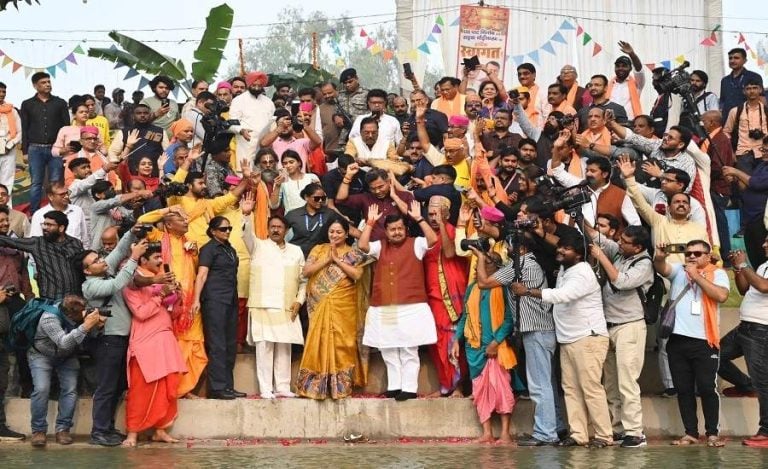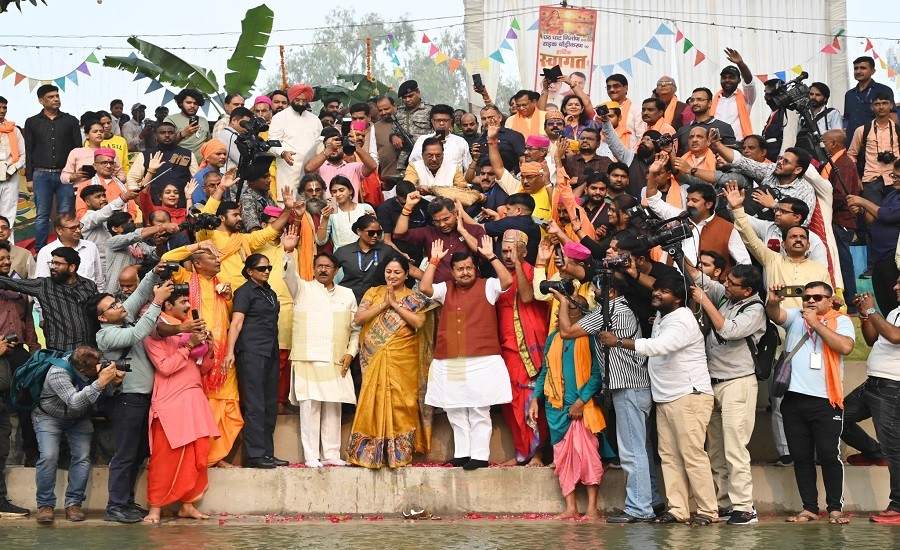
New Delhi: Preparations for Chhath Puja are in full swing across the national capital, with the Delhi government making arrangements at thousands of ghats to ensure that devotees can celebrate the festival in a clean and safe environment.
The BJP government led by Chief Minister Rekha Gupta has prepared 1,482 ghats at 996 locations across Delhi. The four-day festival is being celebrated from November 13 to 16, with the administration focusing on cleanliness, drinking water, sanitation, lighting, crowd management and security.
The arrangements have also brought the BJP and the Aam Aadmi Party (AAP) face to face politically. The BJP has accused the previous AAP government of neglecting Chhath ghats and failing to fulfil its promises to clean the Yamuna, alleging that devotees were left to deal with polluted water and inadequate facilities.
The Rekha Gupta government, meanwhile, is highlighting its infrastructure projects and improved arrangements as part of its efforts to provide better facilities to devotees.
Delhi Prepares 1,482 Chhath Ghats Across 996 Locations
According to the Delhi government, a total of 1,482 Chhath ghats have been prepared at 996 locations across the national capital. The number is higher than last year.
The ghats include:
- 81 permanent ghats
- 1,372 temporary ghats
- 29 ghats along the Yamuna
The government has arranged basic facilities such as drinking water, toilets, changing rooms, lighting and proper access roads. Civic agencies have also been instructed to maintain cleanliness at the ghats and surrounding areas throughout the festival.
These arrangements are particularly important for families who gather near water bodies to offer prayers to the setting and rising Sun during Chhath Puja.
The government has said its priority is to ensure that devotees can perform their religious rituals without facing difficulties due to a lack of basic facilities.
Read also: IITF 2026: CM Rekha Gupta Inaugurates Delhi Pavilion as 62 Stalls Showcase Heritage and Development
11-Km Chhath Ghat Developed Along Munak Canal
One of the major infrastructure projects highlighted by the BJP government is an 11-kilometre-long Chhath ghat along the Munak Canal. The stretch extends from Shalimar Bagh to Inderlok.
According to the government, the area had remained neglected for nearly two decades. Before the development work began, approximately 1,400 truckloads of garbage, debris and silt were removed. Encroachments were also cleared to improve the area.
The project was developed at an estimated cost of Rs 115.29 crore and includes several facilities for devotees.
These include:
- Permanent steps along both banks of the canal.
- Paved roads for easier access.
- Changing rooms and public toilets.
- Street lighting and CCTV cameras.
- Benches and fountains.
- Green spaces and improved public areas.
The ghat was inaugurated by BJP National President Nitin Nabin and Chief Minister Rekha Gupta. It can accommodate more than 30,000 people at a time and is expected to benefit residents across five Assembly constituencies.
The Delhi Jal Board (DJB) is also supplying water to the canal from the Haiderpur Water Treatment Plant to support the Chhath arrangements.
Yamuna Pollution Remains a Major Concern During Chhath Puja
Despite the government’s preparations, pollution in the Yamuna continues to remain a major concern during Chhath Puja.
Thousands of devotees traditionally gather along the riverbanks to offer prayers during the festival. However, pollution across several stretches of the river has repeatedly raised concerns about water quality and the condition of the Yamuna.
To address the immediate requirements of devotees, the government has arranged artificial and filtered-water ghats at locations where the river remains heavily polluted. Vasudev Ghat is among the locations where such arrangements have been made.
Chief Minister Rekha Gupta has claimed that approximately 26 kilometres of the Yamuna have been cleaned over the past 20 months. BJP MP Manoj Tiwari has separately claimed that nearly 30 kilometres of the river stretch have been cleaned.
In October, the Centre launched Yamuna-cleaning projects worth approximately Rs 8,941 crore. These projects include new sewage treatment plants, decentralised treatment facilities and sewer networks.
The Chief Minister has also participated in cleanliness drives at 70 ghats under the ‘Chalo Yamuna’ campaign. She has appealed to residents to become ‘Yamuna Praharis’ and contribute towards keeping the river clean.
Drinking Water, Toilets and Round-the-Clock Cleaning Arrangements
Apart from developing ghats, the Delhi government has focused on providing essential facilities to devotees.
The Municipal Corporation of Delhi (MCD) and the New Delhi Municipal Council (NDMC) have been assigned responsibilities for cleaning the ghats and surrounding areas. Dedicated sanitation teams will remain on duty round the clock, with special cleaning drives continuing even after the festival.
The Delhi Jal Board is arranging water tankers and drinking water facilities. The electricity department has also been directed to ensure adequate lighting at the ghats and approach roads.
Other arrangements include mobile toilets, tents, bamboo barricades and safety railings. Roads at selected locations have been widened to make it easier for devotees to reach the ghats.
Cultural platforms and colourful murals have also been added to enhance the festive atmosphere.
The government has further instructed civic agencies to ensure proper waste disposal and submit compliance reports supported by photographs.
More Than 5,000 Police Personnel Deployed for Chhath Security
Security arrangements have been strengthened across Delhi to manage the large gatherings expected during the festival.
More than 5,000 police personnel have been deployed at different locations to maintain law and order and manage crowds. CCTV cameras and watchtowers are also being used to monitor important ghats.
The administration has made arrangements for traffic management, parking and emergency routes to prevent congestion around the ghats.
Medical teams and ambulances will remain available at designated locations, while hospitals have also been included in the emergency response arrangements.
Chief Minister Rekha Gupta and ministers, including Parvesh Sahib Singh, have inspected various ghats and directed officials to ensure that facilities remain operational throughout the festival.
November 16 has also been declared a public holiday to facilitate participation in the celebrations.
BJP Accuses Previous AAP Government of Neglecting Chhath Ghats
The preparations for Chhath Puja have triggered a political debate between the BJP and AAP over the condition of public spaces and the Yamuna.
The BJP has accused the previous AAP government of neglecting Chhath ghats and failing to fulfil repeated promises to clean the river. According to the BJP, devotees had to face polluted water, poorly maintained ghats and inadequate facilities despite several announcements about improving the situation.
The Rekha Gupta government is presenting the 1,482 prepared ghats, the Munak Canal development project, sanitation arrangements and security measures as evidence of its focus on improving facilities for devotees.
The BJP has also criticised the previous administration for allegedly prioritising advertisements and political announcements over long-term improvements in the condition of the river and public infrastructure.
Yamuna Cleaning Remains a Long-Term Challenge for Delhi
The condition of the Yamuna remains one of the biggest environmental challenges facing Delhi. Despite repeated announcements and cleaning initiatives over the years, untreated sewage, waste and pollution continue to affect several stretches of the river.
The issue becomes particularly prominent during Chhath Puja, when thousands of devotees gather near the river to offer prayers to the Sun.
The need to arrange artificial and filtered-water ghats at polluted locations highlights the continuing challenges associated with the river’s condition.
While the BJP government is highlighting its recent cleaning drives and infrastructure projects, the larger challenge will be to ensure sustained improvements in the Yamuna’s water quality throughout the year.
For devotees, the issue goes beyond political differences. Access to clean water, properly maintained ghats and essential facilities is important for celebrating the festival safely and with dignity.
The latest preparations have brought improvements in infrastructure and public facilities into focus. However, the long-term success of these efforts will depend on whether the cleanliness and maintenance of the ghats and the Yamuna can be sustained beyond the four-day festival.