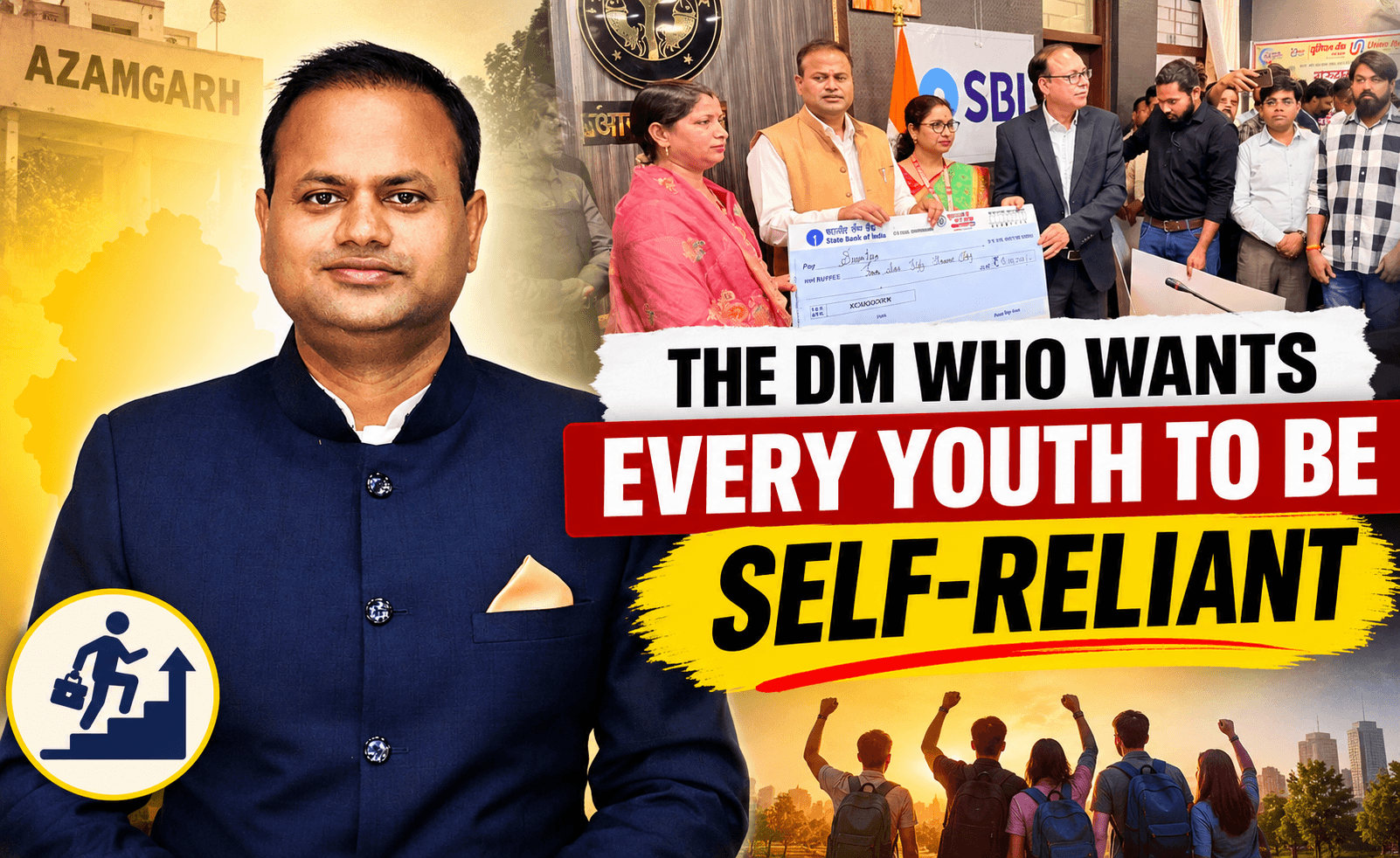
In a district where opportunities for young people to start their own businesses can often be limited by money, paperwork and access to banks, IAS officer Ravindra Kumar decided to tackle all three problems together.
As District Magistrate of Azamgarh, the 2011-batch Uttar Pradesh cadre officer was looking at a government scheme that offered young people something many aspiring entrepreneurs struggle to obtain: a loan of up to ₹5 lakh without interest or collateral.
But having a scheme on paper and getting its benefits into people’s hands are two very different things. Applications could be filed, but they still had to pass through banks. Young applicants often struggled with documentation, bankers had their own concerns, and loan disbursement became a hurdle.
Rather than treating these as separate problems, Kumar brought everyone into the same room. The result has been a remarkable improvement in Azamgarh’s performance under the Chief Minister Yuva Udyami Vikas Abhiyan (CM Yuva), with the district securing the first position in Uttar Pradesh with 72 per cent progress.
And for Kumar, the ranking is only part of the story.
Also read: India’s Air Pollution Problem: Why Does Clean Air Remain a Seasonal Promise?
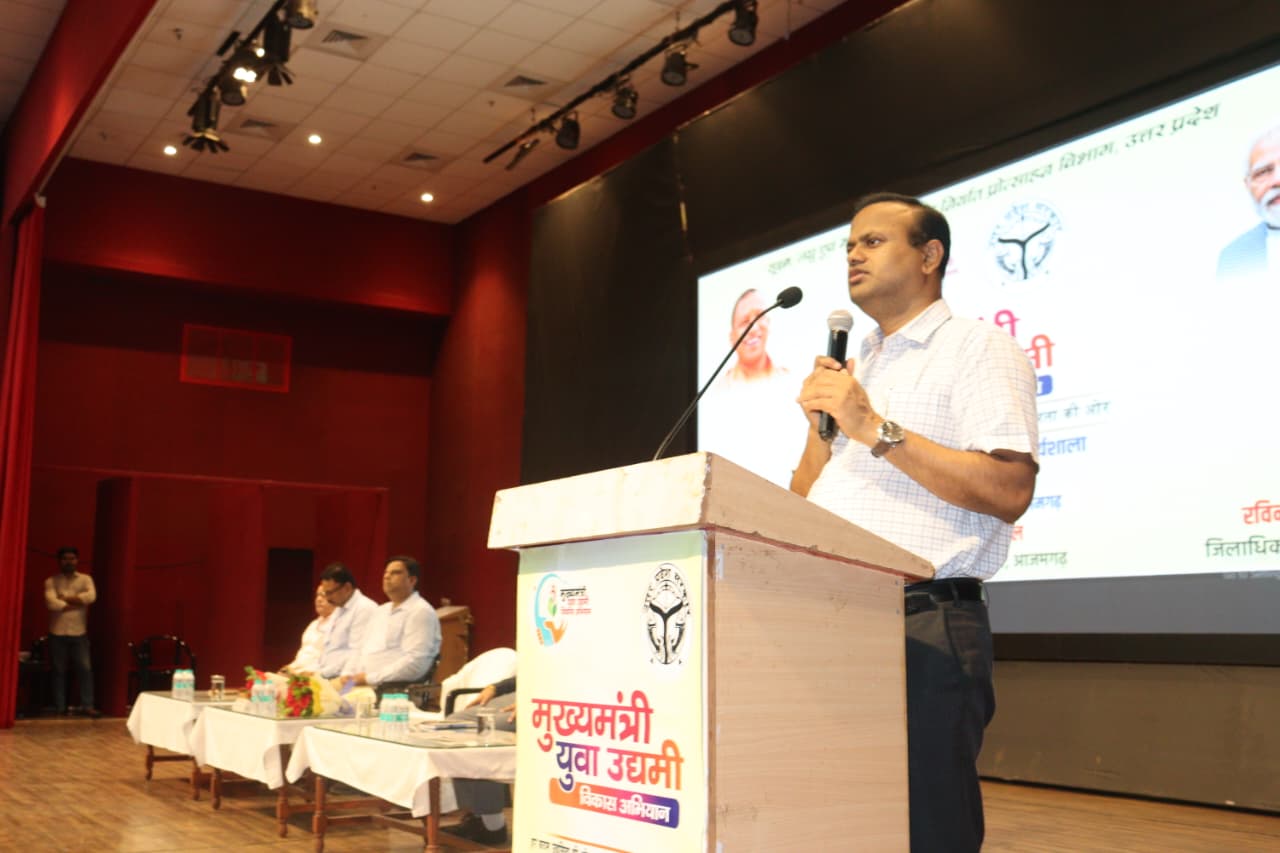
From a Government Scheme to a Young Person’s First Business
The CM Yuva scheme aims to encourage self-employment by helping young people establish their own enterprises. Eligible applicants who have passed at least Class 8 can obtain interest-free and collateral-free loans of up to ₹5 lakh. The interest-free benefit is available for the first four years.
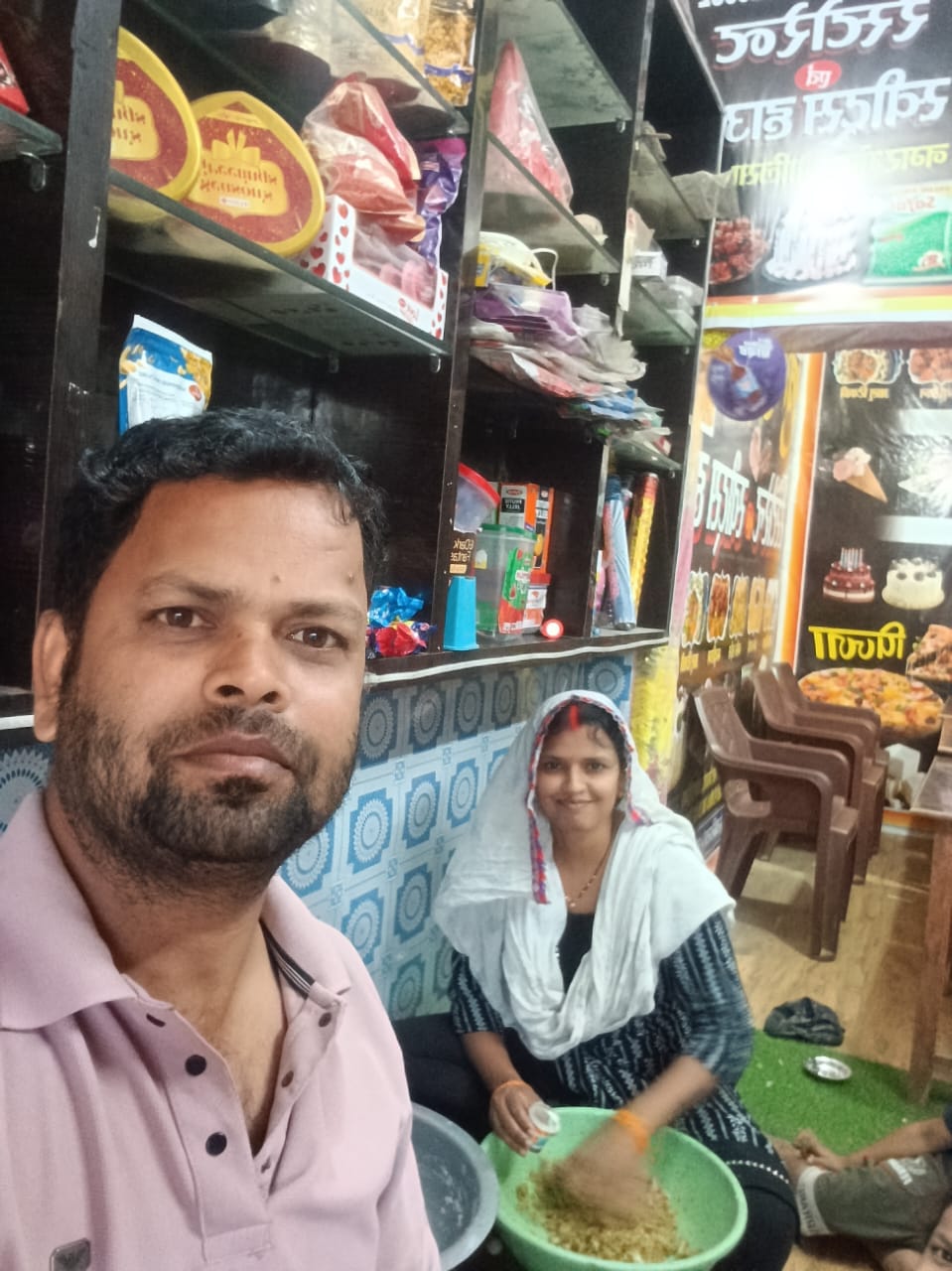
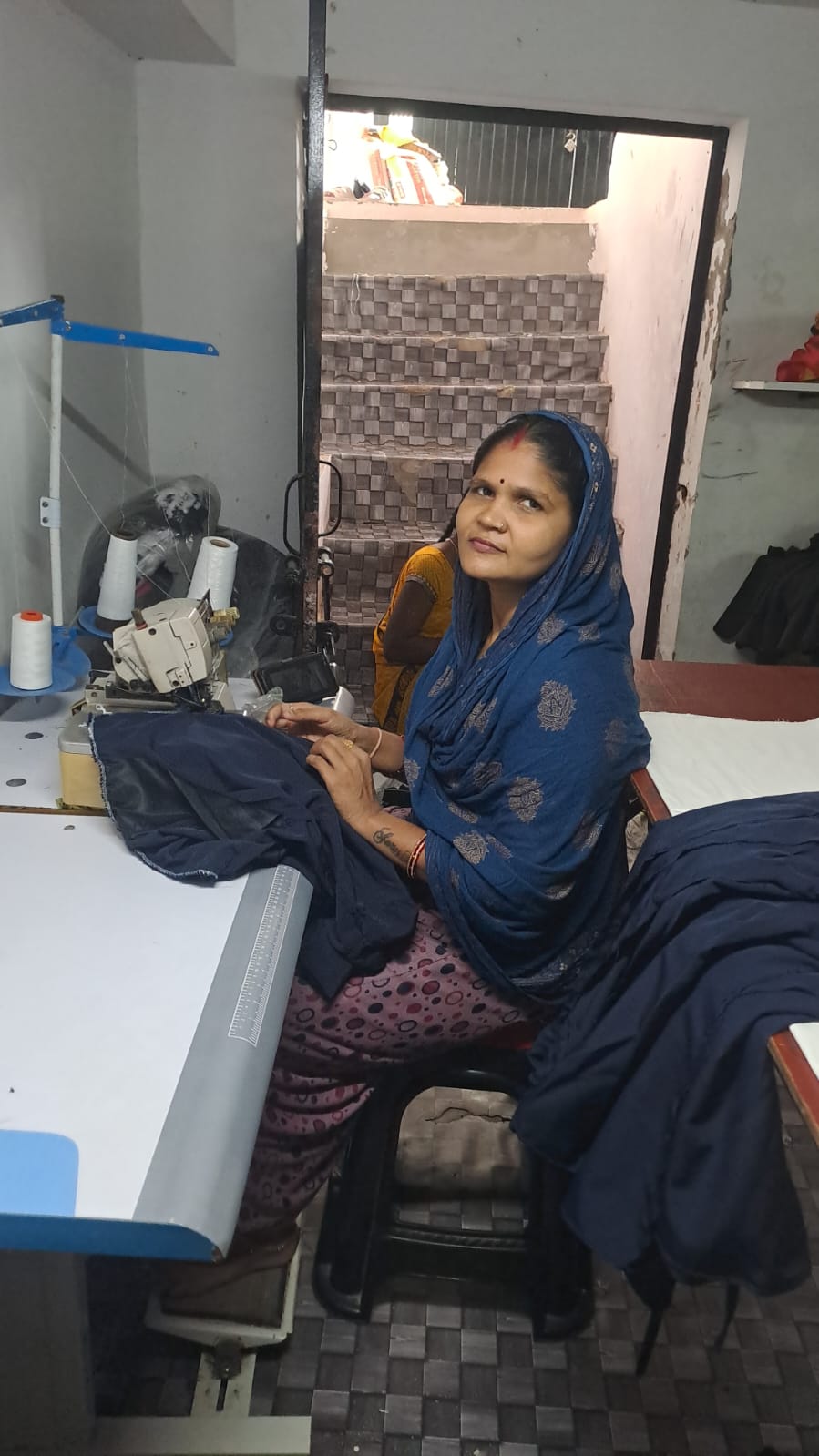
The possibilities range from tailoring and beauty parlours to fast-food businesses, printing presses and other small enterprises.
Kumar understood that the first challenge was making sure young people knew the scheme existed. His administration took its message beyond government offices, using newspapers, social media, village pradhans and government functionaries working at the grassroots level to spread awareness and encourage applications.
But generating applications was only the beginning. The real test was getting those applications converted into sanctioned and disbursed loans.
Bringing Bankers and Applicants to the Same Table
One of the biggest obstacles was the communication gap between applicants and banks.
Bankers complained that applicants were not submitting complete documents. Applicants, meanwhile, maintained that they had already provided everything requested, only to be sent back for additional paperwork.
Kumar decided to address this through direct interaction.
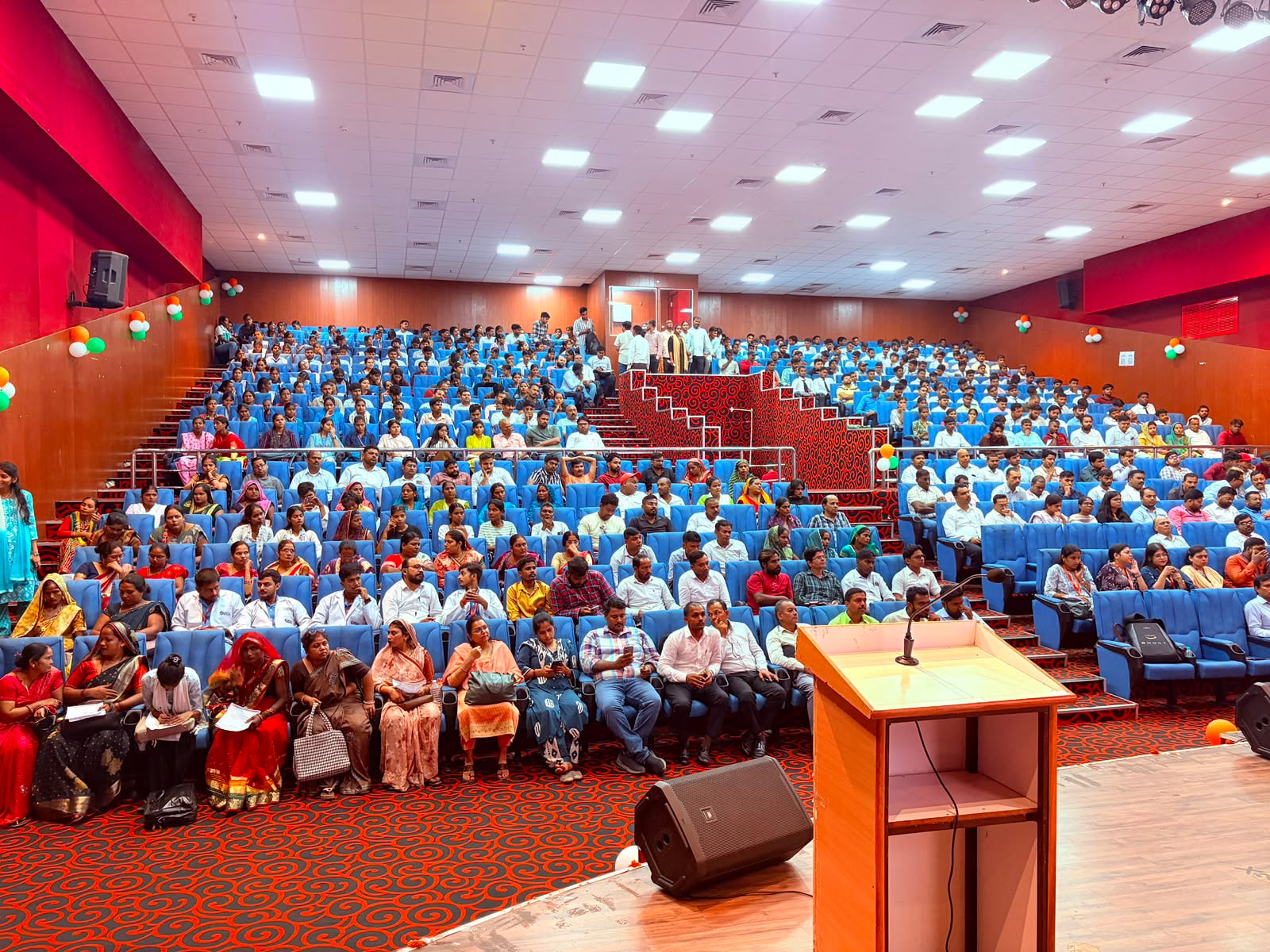
His administration began organising district-level workshops, bringing applicants, bankers, district officials and agencies supplying equipment and materials for different businesses together. Groups of around 500 applicants were called for these workshops, and several such sessions were organised.
The administration also took the exercise to the block level, where applicants and bank representatives could meet and resolve pending issues without having to repeatedly travel to the district headquarters.
Explaining the thinking behind this approach, Kumar told Indian Masterminds, “We realised that the problem was often not the absence of an eligible applicant or a willing bank, but the gap in communication between the two. When applicants and bankers were made to sit across the same table, they could clearly identify which documents were still missing and what needed to be done. This simple exercise helped remove many unnecessary delays.”
Instead of allowing applications to remain stuck in files, the administration made their resolution a shared responsibility.
Motivating Banks, Not Just Beneficiaries
Kumar’s strategy did not stop with applicants. He recognised that banks were equally important to the success of the scheme. If bankers were to prioritise these applications, they also needed encouragement and institutional support.
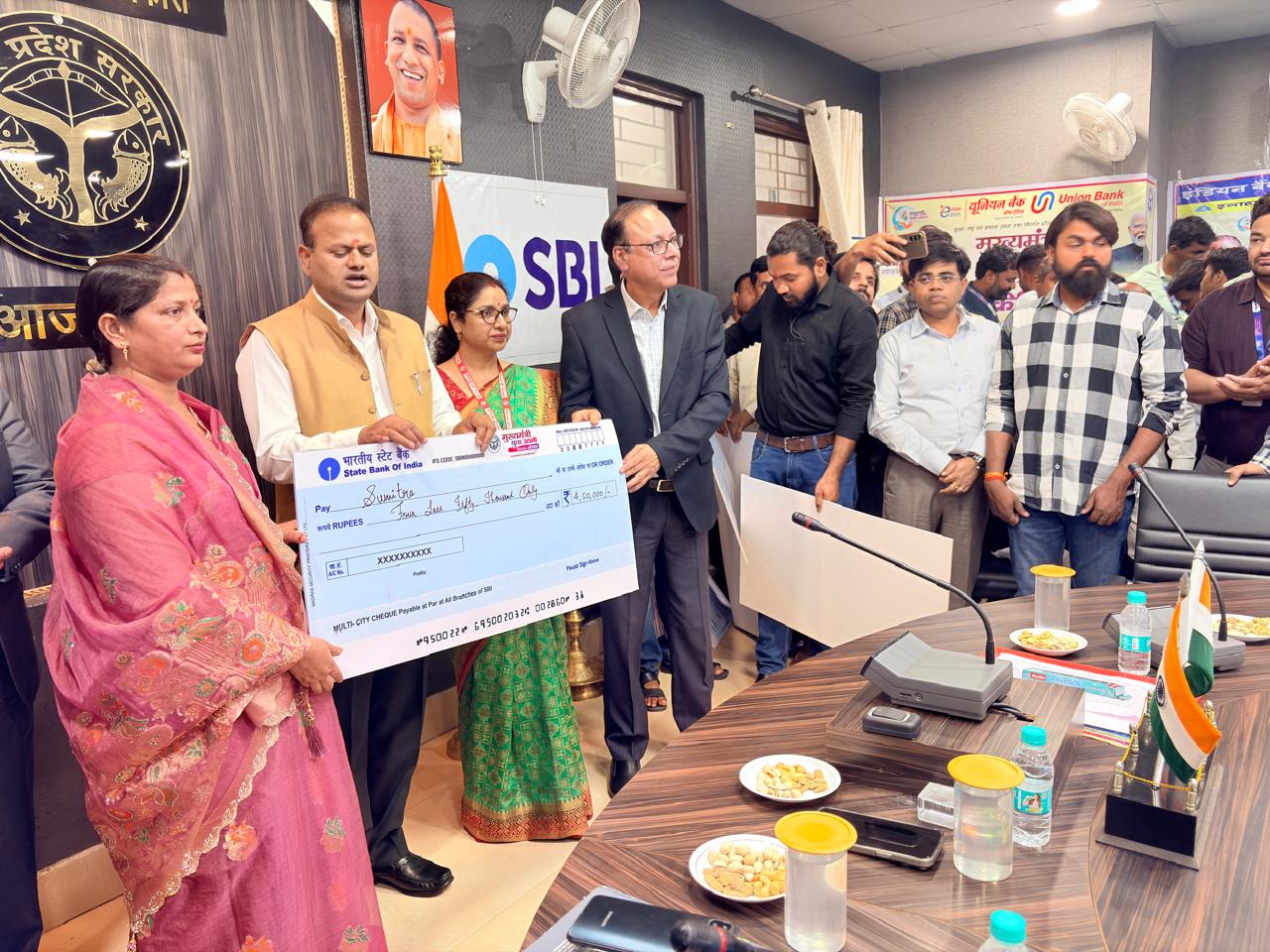
The district administration began organising cheque distribution programmes, where beneficiaries received cheques corresponding to their sanctioned and disbursed loan amounts. These events also served another purpose: seeing fellow young people receive financial assistance encouraged others to apply.
The administration also started recognising the best-performing banks during Independence Day and Republic Day celebrations.
The State Bank of India emerged as the best-performing bank. Kumar personally made an effort to support its participation in the scheme. Banks performing well were also offered additional institutional support, including opportunities to handle government scheme accounts.
It was an unusual but practical way of building cooperation: recognising banks that contributed to the district’s employment goals and encouraging others to follow their example.
6,745 Young People Have Received Loans
The impact of these combined efforts is visible in the numbers.
Against a district target of 2,900 beneficiaries for the current financial year, Azamgarh has already facilitated loan disbursement to 2,037 young people, achieving approximately 70 per cent of its target.
Since the scheme was launched, a total of 6,745 beneficiaries in the district have received loans.
Kumar has set a much larger informal ambition for the banking system and administration: to extend the scheme’s benefits to at least one lakh young people.
He points to Azamgarh’s population and its more than 34 lakh voters aged 18 and above as an indication of the scale of opportunity. Even reaching five per cent of the eligible population would mean opening entrepreneurial opportunities for around 90,000 people.
“I do not want to limit our ambition to the target assigned by the government or to competing with another district. My aim is to bring as many young people as possible into self-employment. If someone can start a tailoring business, a beauty parlour or a small food enterprise with this assistance, that is an opportunity not just for that individual but for the entire family,” he says.
The Work Does Not End With Disbursing a Loan
Another important aspect of the administration’s approach is ensuring that financial assistance is used for the business it was intended to establish.
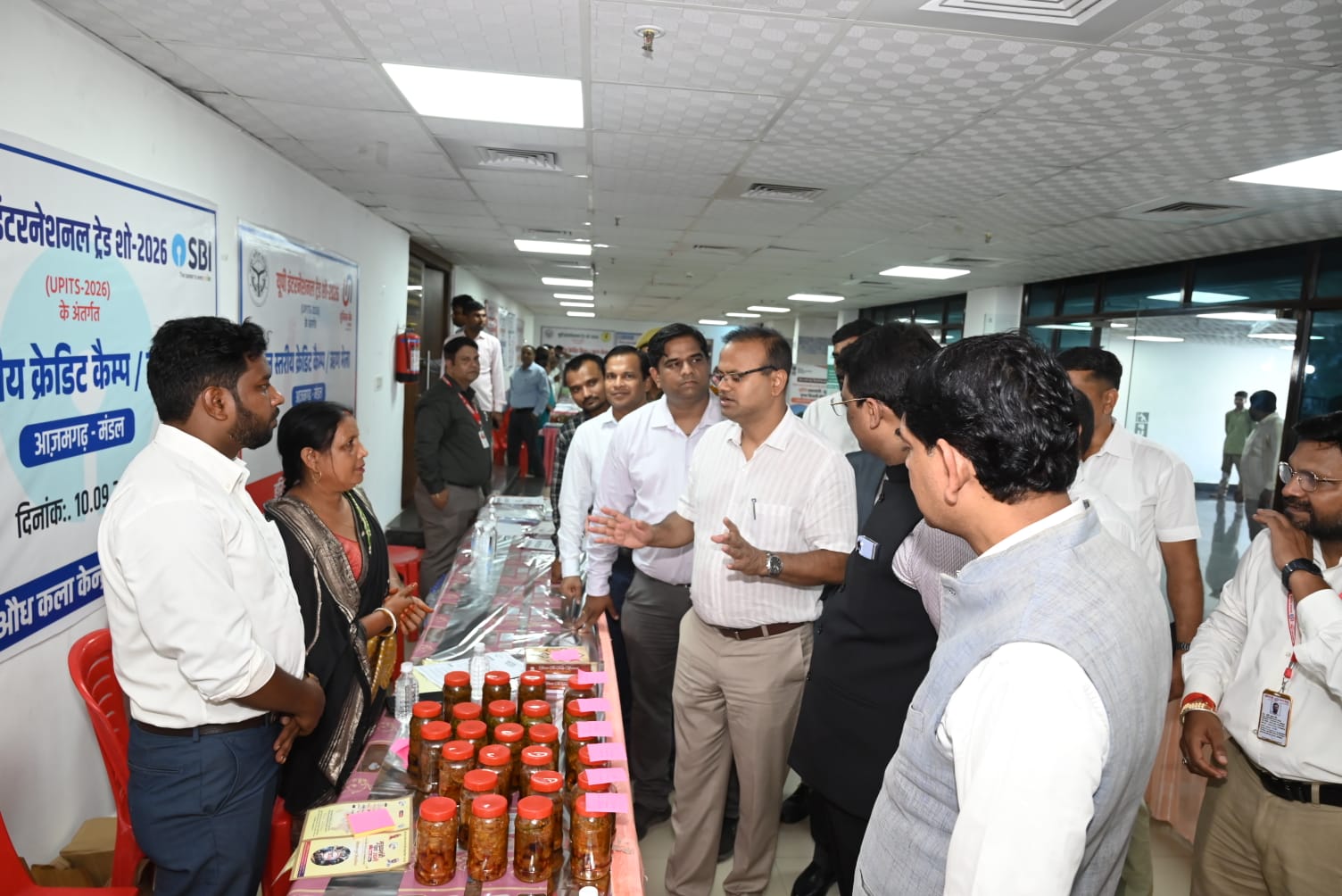
Banks sometimes disburse loans directly to equipment or material suppliers to ensure that the money reaches the intended business activity. The General Manager of the District Industries Centre (GM-DIC) also serves as the nodal officer for the scheme at the district level, helping oversee its implementation.
For beneficiaries looking to expand their businesses later, Kumar points to other government programmes, including the One District One Product (ODOP) scheme, the Prime Minister’s Employment Generation Programme and the Mukhyamantri Yuva Swarozgar Yojana. These offer further avenues of assistance, including opportunities for additional financial support under applicable schemes.
For Kumar, therefore, the real measure of success is not simply how many cheques are distributed, but how many young people manage to establish sustainable sources of income.
He told Indian Masterminds, “The government’s objective is to make people self-dependent by encouraging employment-generating activities. Through this scheme, we want young people to establish their own businesses, increase their family incomes and become active contributors to the state’s economic growth. Our larger goal is to help Uttar Pradesh achieve its one-trillion-dollar economic ambition.“
In Azamgarh, the idea is straightforward: make banks accessible, remove the paperwork bottlenecks, encourage young people to take the first step and ensure that financial assistance translates into actual businesses.
The first-place ranking may have put the district in the spotlight, but Kumar’s larger ambition goes beyond a position on a state leaderboard. It is to make entrepreneurship an accessible possibility for thousands of young people who might otherwise never have considered starting a business.
Also read: How IFS Officer Stylo Mandavi Turned Her Childhood Dream Into Reality