Few Indian cities have been written about as extensively as Lucknow. Yet, despite generations of historians, writers and chroniclers documenting its Nawabi legacy, architecture, cuisine, poetry and famed tehzeeb, the city continues to reveal newer layers to those willing to look beyond its familiar landmarks.
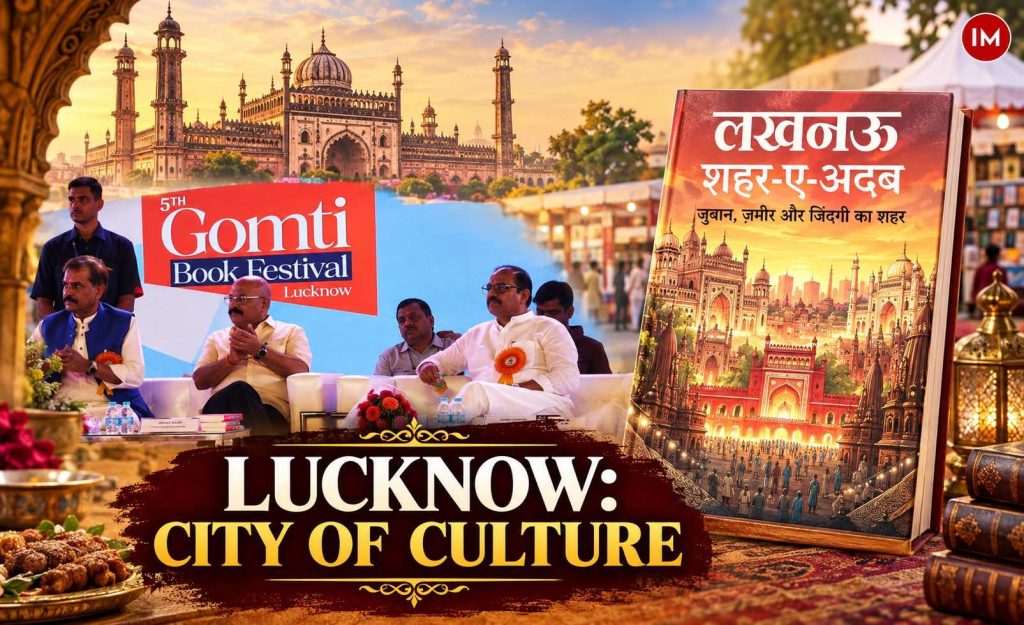
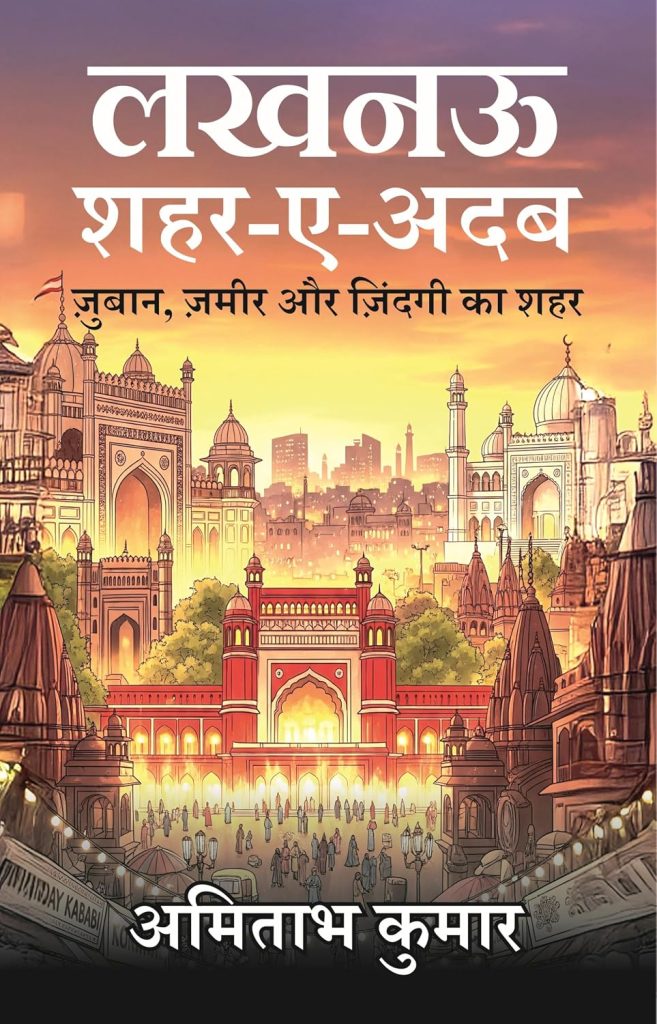
It is this enduring fascination with Lucknow that lies at the heart of Dr Amitabh Kumar’s latest book, Lucknow: Shahar-e-Adab — Zuban, Zameer aur Zindagi ka Shahar. Rather than restricting itself to a conventional historical account, the nearly 500-page book attempts to bring together the many identities of Lucknow – its heritage, literature, food, architecture, social traditions, changing urban landscape and composite Ganga-Jamuni culture.
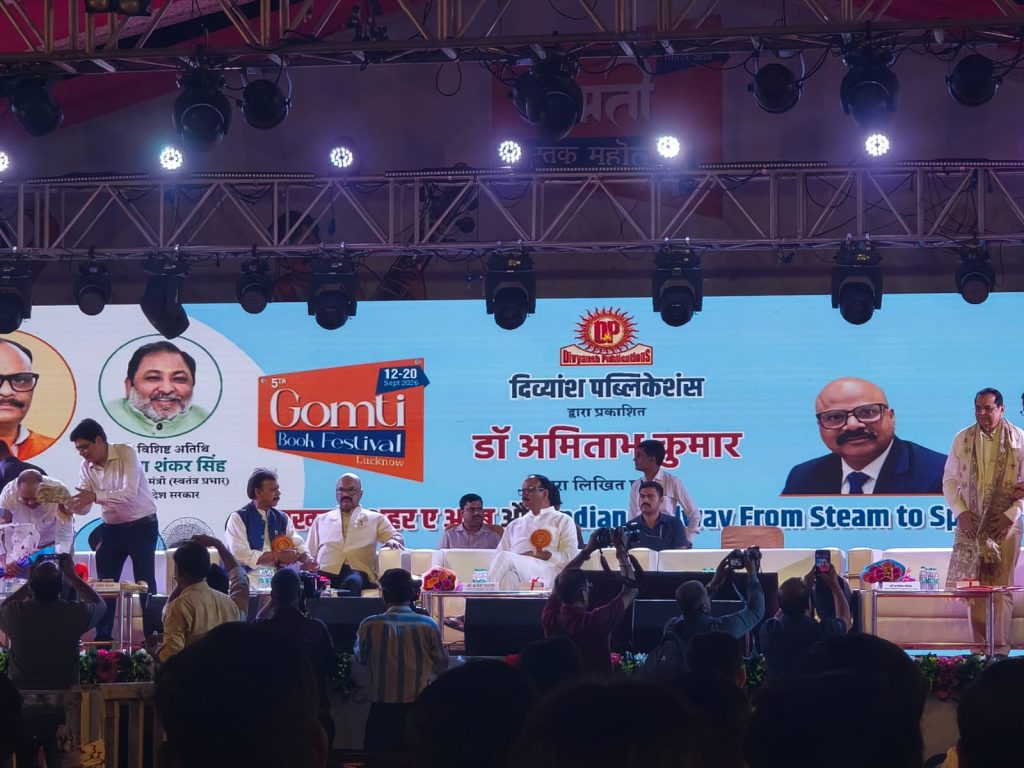
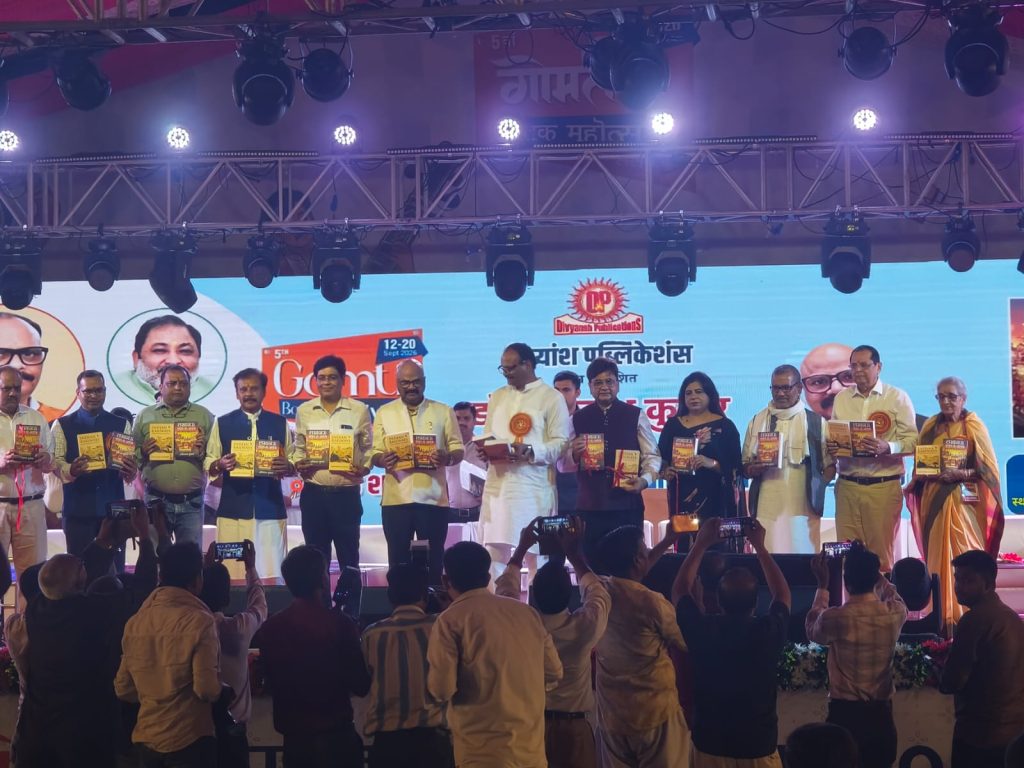
An Indian Railway Traffic Service (IRTS) officer of 1996 batch, author and Lucknow University alumnus, Dr Kumar spent around two years researching and writing the book. Published by Divyansh Publications, it was launched on 20 September 2026 during the 5th Gomti Book Festival at Lucknow University. The work is his 18th book.
But for Kumar, this is not simply another book about a famous Indian city. It is a personal engagement with a place he was born in, studied in and has continued to observe closely. Indian Masterminds interacted with Dr Amitabh Kumar to know more about his book, the inspiration behind it and his literary journey.
How It Started: A Long-Standing Desire to Write About Lucknow
For Dr Kumar, the idea of writing a comprehensive book on Lucknow had been developing for a long time. However, turning that desire into a book required extensive collection of material and research.
Speaking with Indian Masterminds, he recalled that he began working seriously on the project around two years ago.
“I wanted to write a lot. I have written a lot. But I had to collect some material,” he said.
Read Also: IRTS Officer Dr Amitabh Kumar’s Two Books Launched at 5th Gomti Book Festival in Lucknow
His research began with the history of Lucknow before gradually expanding into its culture, traditions, architecture, food and contemporary development.
“I started from the history of Lucknow to other things, to collect data on all these things. It took time,” he explained.
The result is an attempt to look at Lucknow not through a single historical period but as a city that has continuously evolved.
One Book, Many Faces of Lucknow
One of the distinctive features of Shahar-e-Adab is its attempt to bring together different dimensions of the city in one volume.
Mr Kumar acknowledges that many accomplished writers and historians have already written extensively about Lucknow. He particularly recognises the contribution of noted historian and writer Yogesh Praveen and others who have documented different aspects of the city.
But Dr Kumar’s approach was to bring these diverse dimensions together.
“The other people who have written on Lucknow are great writers. They have a lot of knowledge about Lucknow. They have written a lot about Lucknow. But we have tried to give everything in one book,” he said.
The book therefore moves from the old Lucknow of traditions and cultural practices to the contemporary city.
It touches upon old customs and activities, including Murga Pitai, Patan Baji and Ikka Daur, while also exploring the city’s tabayak culture and heritage.
At the same time, Mr Kumar has deliberately made space for the Lucknow of today.
From Chowk to Gomti Nagar: A City That Keeps Changing
Lucknow’s identity cannot be frozen in its Nawabi past. The city has changed dramatically, and Kumar attempts to capture that transformation.
The book moves from the old lanes of Aminabad and Chowk to Hazratganj and the expanding modern landscape of Gomti Nagar. It also looks at contemporary institutions, educational establishments, hospitals and newer developments.
Dr Kumar points to examples such as the way festivals and traditions continue to evolve.
He also examines Bada Mangal, looking not only at how it is celebrated today but also at its origins.
“We have given the whole of Lucknow,” he said, explaining that the final portions of the book also look at educational institutions, engineering colleges, hospitals and other developments.
“Lucknow cannot be summarized in a single book,” he observed.
That statement perhaps captures the challenge behind the project: the more one explores Lucknow, the more layers emerge.
History, Food, Architecture and Culture
The book takes readers through the city’s cultural and physical landscape.
Its themes include Lucknow’s famous tehzeeb and adab, its composite Ganga-Jamuni cultural traditions, architecture, music, dance and culinary heritage.
The culinary journey includes iconic foods and traditions associated with Awadh, including Kulcha-Nihari, Tunday Kababs, Sheermal, Bakarkhani and Makkhan Malai. Its architectural exploration includes the city’s celebrated Imambaras and other landmarks.
But the book does not treat these merely as tourist attractions. They become entry points into understanding the social history of the city.
Lucknow emerges as a place where heritage and modernity exist side by side – where old neighbourhoods continue to carry memories while new institutions and infrastructure reshape the city.
Writing Amid a Demanding Railway Career
Writing a nearly 500-page book while holding a demanding government position is itself a story of discipline.
Dr Kumar is a 1996-batch IRTS officer and is currently posted as Director/Traffic Psycho-Technical at the Research Designs and Standards Organisation (RDSO) in Lucknow. His professional career has run parallel with an extensive literary journey.
So how does he find the time?
His answer is strikingly simple: he sacrifices leisure.
“People have a lot of stress. I go out of the city somewhere, but I don’t like to roam there. I like to sit in the cupboard and write,” he said with a touch of humour.
For him, writing is not merely another task squeezed into an already busy schedule. It is also a way of dealing with the pressures of professional life.
Writing as Stress Management
Perhaps the most revealing part of the conversation came when Kumar described what writing means to him personally.
“The stress we have throughout the day goes away when we write,” he said.
For the officer-author, writing has become a form of stress management. “The more I write, the better it is for me to manage my stress,” he explained.
He also offered a practical observation about stress itself: it cannot simply be eliminated from life; it has to be managed.
“Stress can only be managed. It can never be eliminated,” he said.
That philosophy perhaps explains how he has managed to sustain such a prolific literary career alongside public service.
One-and-a-Half Years of Writing
Although the broader project involved around two years of research and writing, Kumar estimates that the actual writing process for the book took approximately a year and a half.
The process involved collecting historical material, researching different facets of Lucknow and then bringing them together into one narrative.
The challenge was not merely finding information but deciding how to represent a city that has too many stories to fit neatly into one framework.
Why Should Readers Read It?
Asked to explain in one line why readers should buy and read the book, Kumar kept his answer straightforward.
“You should know the history of Lucknow. And you should know the culture of Lucknow,” he said.
That simplicity reflects the larger purpose of the book.
Shahar-e-Adab attempts to introduce readers not just to the Lucknow of Nawabs and monuments, but to the living city — its people, habits, food, celebrations, institutions, memories and changing identity.
From ‘Sarpanch’ to ‘Kumbh Diaries’: A Prolific Author
Lucknow: Shahar-e-Adab is only the latest addition to Dr Amitabh Kumar’s literary journey.
His body of work spans subjects as varied as rural governance, spirituality, contemporary society, socio-political themes, history and Indian Railways.
His books include ‘Sarpanch’, ‘Operation Log Out’, ‘Samadhi se Rajyoga Tak’, ‘Bloody Merit Scholars’, ‘Mahant: The Godfather’, ‘Rainbow in White Shroud’, ‘Gen Z: Love Lost in Transactions’, ‘Kumbh Diaries’, ‘Indian Railway: From Steam to Speed’ and ‘Aghori and Manikarnika: The Cosmic Dance of Death’, among others.
His writings reflect the same curiosity visible in Shahar-e-Adab: an interest in understanding institutions, communities, social change, spirituality and the human stories behind larger events.
A Literary Portrait of a Living City
Lucknow has never been just a geographical location. Its identity has been built over centuries through language, manners, music, food, architecture, poetry and shared cultural traditions.
Dr Amitabh Kumar’s Lucknow: Shahar-e-Adab attempts to bring these strands together while also acknowledging that the city is constantly changing.
For an officer who has spent his professional life dealing with the demands of administration and his personal life pursuing literature, the book represents another kind of public service — documenting the cultural memory of a city and making its many stories accessible to readers.
In Kumar’s Lucknow, the past is not abandoned, and the present is not ignored. The Nawabi heritage, old traditions, contemporary institutions and expanding urban landscape all become parts of one continuing story.
And perhaps that is why, despite the countless books already written about Lucknow, there is still room for another one.
Read Also: 14 Sanskrit Texts That Reveal India’s Ancient Knowledge Across Science, Arts and Statecraft