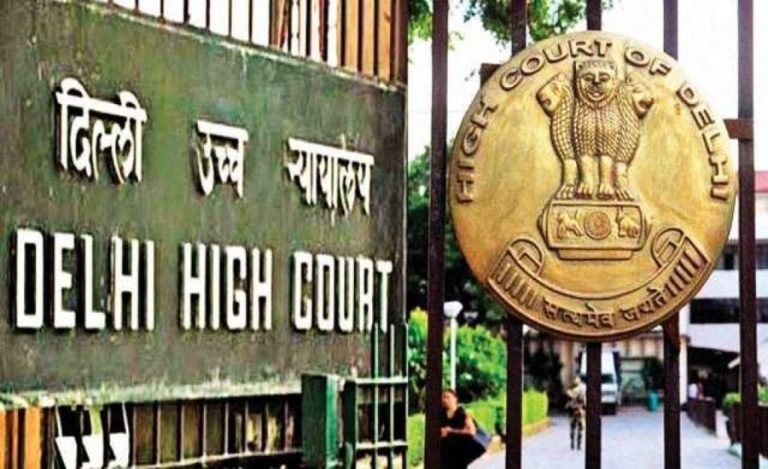
New Delhi: The Delhi High Court has directed the Union Public Service Commission (UPSC) to initiate recruitment for more than 1,000 vacant posts in Delhi government hospitals without waiting for its regular annual recruitment schedule.
The direction was issued by a Division Bench of Justices Prathiba M. Singh and Manmeet Pritam Singh Arora on October 30, in proceedings concerning the functioning and facilities of 38 government hospitals across the national capital.
The court asked the Delhi government to submit revised recruitment requisitions for vacant General Duty Medical Officer (GDMO) and non-teaching staff positions to the UPSC within two weeks. The Commission has been directed to begin the recruitment process as an exceptional measure, instead of waiting for its usual January-March 2027 submission cycle.
The directions came after the Delhi government submitted figures showing substantial vacancies across medical, non-teaching and paramedical categories.
Over 1,000 Medical and Non-Teaching Posts Vacant
According to the status report submitted by the Delhi government, 1,051 posts of General Duty Medical Officers and non-teaching staff remain vacant in government hospitals.
Read Also: Delhi CM Rekha Gupta Announces Healthcare Expansion, 820 MBBS Seats and ₹503 Crore Hospital Projects
The vacancy position presented before the court was:
- General Duty Medical Officers (GDMOs): 1,785 sanctioned posts, of which 1,140 are filled and 645 remain vacant.
- Non-Teaching Staff: 926 sanctioned posts, with 520 filled and 406 vacant.
- Paramedical Staff: 4,462 sanctioned posts, of which 3,658 are filled and 804 remain vacant.
Total: 7,173 sanctioned posts, 5,318 filled and 1,855 vacant positions.
The recruitment process for GDMOs and non-teaching staff is handled by the UPSC, while paramedical appointments are made through the Delhi Subordinate Services Selection Board (DSSSB).
The government informed the court that it had earlier sent requisitions to the UPSC for 654 GDMO and 417 non-teaching staff positions. However, the Commission raised certain observations, following which the government had proposed resubmitting the requisitions during the regular recruitment window in early 2027.
The High Court directed that the process should not be delayed until then.
Why Have the Vacancies Persisted?
The Delhi government attributed the continuing vacancies to several factors, including:
- Shortage of eligible candidates for the advertised positions.
- Selected candidates not joining after receiving appointment offers.
- Employees resigning after joining the department.
- The UPSC recommending fewer candidates than the number of vacancies reported.
The status report also highlighted gaps in the previous recruitment cycle.
Against 279 non-teaching staff vacancies, the UPSC had forwarded only 154 candidate dossiers. Similarly, against 234 GDMO and 279 non-teaching staff positions, only 161 doctors and 82 non-teaching employees eventually joined the Delhi Health Department.
Taking note of the recruitment shortfall, the court directed the authorities to maintain adequate waiting lists during future recruitment exercises so that vacancies can be addressed when selected candidates do not join.
Contractual Recruitment Ordered as an Interim Measure
While directing the UPSC to begin regular recruitment, the court also ordered immediate steps to address staffing shortages.
Medical Superintendents and Medical Directors of government hospitals have been asked to engage contractual employees against vacant GDMO and non-teaching staff positions, following applicable guidelines.
The recruitment process for these contractual positions is to be completed within two months.
The court also directed the Dean of Maulana Azad Medical College, Dr Munisha Aggarwal, who heads the recruitment board constituted for this purpose, to coordinate the process and submit a status report on the appointments made.
For paramedical staff, the respective hospital administrations have been directed to take steps to engage contractual employees against vacant positions within two months. The DSSSB has also been asked to submit a status report on regular recruitment to these posts.
Radiology Staff Shortage Leaves Ultrasound Machines Unused
The court also examined the shortage of qualified personnel in radiology departments, which has affected the utilisation of diagnostic equipment in several government hospitals.
A status report placed before the court indicated that machines were lying unused or being only partially utilised in at least nine of Delhi’s 38 government hospitals because of inadequate specialist availability.
The list included ultrasound machines at hospitals such as Dr BR Sur Hospital, Chacha Nehru Bal Chikitsalaya, Chaudhary Brahm Prakash Ayurvedic Charak Sansthan, Deep Chand Bandhu Hospital and Aruna Asaf Ali Hospital.
The report also highlighted that:
- Dr BR Sur Hospital had an ultrasound machine but no radiologist.
- Chacha Nehru Bal Chikitsalaya had two ultrasound machines, with radiologist availability limited to three days a week through staff diverted from GTB Hospital.
- Deep Chand Bandhu Hospital had one functional ultrasound machine, but it was being used for gynaecological patients rather than general patients because of the absence of a radiologist.
- Guru Gobind Singh Government Hospital had four ultrasound machines under condemnation.
- Deen Dayal Upadhyay Hospital had one CT scanner and four ultrasound machines, with 13 vacancies among its 42 radiographer posts, including both radiodiagnosis specialist positions.
The court asked the medical superintendents and directors of all 38 hospitals to hold a joint meeting and prepare a common report suggesting measures to ensure the availability of equipment and qualified personnel.
Hospitals Asked to Assess Equipment Requirements
The court has also directed five major government hospitals to prepare lists of required and underutilised medical equipment and submit their requisitions to the Delhi government by November 30.
The five hospitals are:
- Lok Nayak Jai Prakash (LNJP) Hospital
- Guru Teg Bahadur (GTB) Hospital
- Deen Dayal Upadhyay (DDU) Hospital
- G.B. Pant Hospital
- Sanjay Gandhi Memorial Hospital
The Health Secretary has been asked to examine the requirements and hold a meeting with the hospital heads to consider approval of the necessary equipment.
The court also asked the Health Secretary to assess the expenditure incurred on outsourcing diagnostic services, including MRI scans, ultrasound examinations and other radiology tests.
The government has been asked to examine whether increasing contractual salaries could help attract more qualified candidates to fill specialist vacancies.
Court Sets Deadlines for Hospital Leadership and Patient Support
Apart from recruitment and equipment, the October 30 order addressed administrative and patient-support arrangements across government hospitals.
The court issued directions on the following matters:
- Medical Superintendents and Medical Directors: The government was directed to complete appointments in two hospitals lacking these positions by November 30, 2026.
- Society-run hospitals: Regular appointments of Medical Superintendents or Medical Directors in seven hospitals were to be completed by November 25.
- ICU helpline: The Delhi government was directed to increase the existing 30-line helpline capacity to 40 lines, with additional manpower for round-the-clock operations, within four weeks.
- Referral coordinators: Contact details of referral coordinators working across three shifts in hospitals are to be published on the Delhi government’s website to help patients seeking ICU beds and other assistance.
The court has listed the matter for further hearing on December 17, 2026, when the UPSC and other authorities will be required to report on the progress of the recruitment and related directions.
Read Also: MCD Teacher Recruitment: Why Delhi High Court Denied 10-Year Age Relaxation