New Delhi: India’s Health Ministry has reviewed the progress of two major healthcare programmes, Ayushman Bharat Pradhan Mantri Jan Arogya Yojana (AB PM-JAY) and Ayushman Bharat Digital Mission (ABDM).
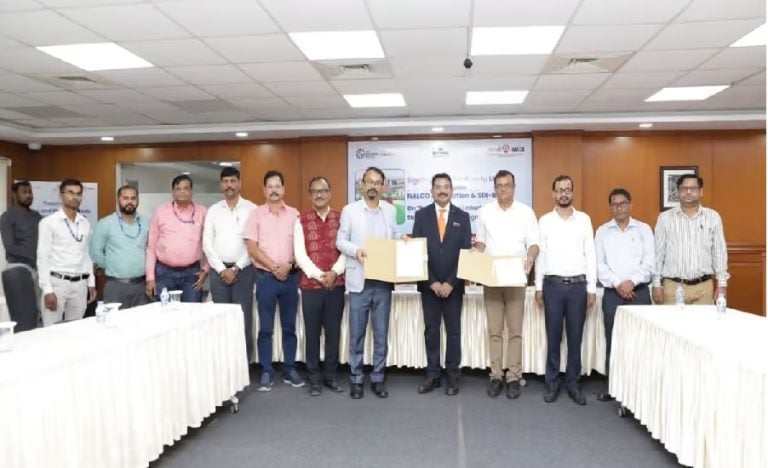
The two-day meeting was held in Kolkata on November 5–6, 2026. The government discussed ways to improve healthcare access, expand beneficiary coverage, strengthen financial protection and speed up digital healthcare services across the country.
Health Ministry Holds Two-Day National Review Meeting
The National Health Authority (NHA), under the Ministry of Health and Family Welfare, organised the National Review Meeting in Kolkata.
Senior officials from different States and Union Territories attended the meeting to review the progress of both healthcare programmes.
The main aim was to identify problems, share experiences and develop better strategies for the next phase of implementation.
The discussions focused on improving healthcare delivery, increasing awareness among eligible beneficiaries and using technology to make government healthcare services more effective.
Officials also highlighted the growing role of Artificial Intelligence (AI), data analytics and automation in improving healthcare management.
West Bengal Reports Progress Under Ayushman Bharat PM-JAY
West Bengal’s implementation of AB PM-JAY was one of the important topics discussed during the meeting.
According to Narayan Swaroop Nigam, Principal Secretary of the Department of Health and Family Welfare, Government of West Bengal, the state joined the national AB PM-JAY platform as the 36th participating State.
Since the scheme was launched in West Bengal on August 16, 2026, around 4.2 crore beneficiaries have been enrolled.
Additionally, approximately 2.2 lakh people have received treatment under the scheme.
Officials said that the next priority should be to convert this wider coverage into better access to quality healthcare and improved health outcomes.
Ayushman Bharat: Government Focuses On Wider Healthcare Coverage And Fraud Prevention
The meeting highlighted the need to ensure that every eligible beneficiary receives the benefits of AB PM-JAY.
Officials discussed improving public awareness so that people understand how to access healthcare services under the scheme.
Another important area was strengthening the claims settlement process and preventing fraud.
The National Anti-Fraud Unit (NAFU) and auto-adjudication systems were discussed as important tools for improving claim processing.
Auto-adjudication uses automation to support the checking and settlement of healthcare claims.
The government also stressed the need for regular fraud reviews, better monitoring and stronger State Anti-Fraud Units.
These measures aim to improve transparency, reduce unnecessary delays and ensure proper use of public funds.
Ayushman Bharat: Artificial Intelligence To Support Digital Healthcare Services
Artificial Intelligence was another major focus of the national review meeting.
Prof. Phaneendra Yalavarthy of TANUH, IISc Bengaluru, presented the Benchmarking Open Data Platform for Health AI (BODH).
The platform helps evaluate and compare AI-based healthcare models using Indian datasets.
States were encouraged to use BODH before adopting AI solutions in their healthcare systems.
This approach can help government departments identify suitable technologies and make better decisions when purchasing AI-based healthcare solutions.
The meeting also reviewed the National Health Analytics and Artificial Intelligence Unit (HAAU).
The unit presented its findings on data quality and highlighted the importance of data analytics for better healthcare planning.
States also committed to developing dedicated analytics and AI teams to support evidence-based decisions.
National Health Claims Exchange To Improve Hospital Claim Processing
The meeting reviewed the operationalisation of the National Health Claims Exchange (NHCX).
The platform aims to support the digital exchange of healthcare claims information between different stakeholders.
Officials highlighted the importance of integrating ABDM-enabled Hospital Information Systems with AB PM-JAY empanelled hospitals.
Better integration can help speed up claims processing and improve the accuracy of claim verification.
The government also discussed improving digital systems so that hospitals and technology providers can work together more efficiently.
Sandbox 2.0 Uses Agentic AI To Speed Up Digital Integration
The National Health Authority also demonstrated Sandbox 2.0, which includes enhanced agentic AI capabilities.
The demonstration showed how AI-assisted tools can make the integration of digital healthcare systems easier and faster.
During the demonstration, an ABDM Milestone 1 integration for ABHA creation was successfully completed in real time.
This showed how AI can reduce the technical work and time required to connect healthcare technology systems.
The initiative is expected to help technology partners and Hospital Information System providers join the ABDM ecosystem more quickly. It may also reduce their dependence on manual technical support.
AI-Based Voice Scribe To Reduce Doctors’ Workload
Another important technology demonstrated during the meeting was the National Health Authority’s Ambient AI-enabled Voice Scribe.
This technology can convert conversations between doctors and patients into structured medical records.
It supports multiple Indian languages, making it useful for healthcare facilities serving people from different language backgrounds.
The generated records are reviewed and approved by doctors before being linked to ABHA.
The technology could reduce paperwork for doctors, improve clinical documentation and make hospital workflows more efficient.
Ayushman Bharat: States Discuss Better Healthcare Financing And Digital Integration
On the second day, officials discussed healthcare financing models, digital integration and cooperation between different government health schemes.
Dr. Darez Ahamed, Secretary of Health and Family Welfare, Government of Tamil Nadu, shared the state’s experience with insurance and assurance-based healthcare models.
The discussions highlighted the importance of selecting a healthcare financing model according to the type of risks and needs being addressed.
Officials also discussed using the National Health Authority’s IT platform to support State healthcare schemes.
Existing hospital networks, health benefit packages and fraud-detection systems could help States improve standardisation and monitoring.
The meeting also reviewed the Model Digital Health Facility Framework and Tripura’s experience in implementing digital healthcare systems.
Officials highlighted that digital transformation requires more than installing new technology. Hospitals also need better working processes, staff training and reliable digital records.
What Is The Next Plan For AB PM-JAY And ABDM
The two-day National Review Meeting concluded with a shared roadmap for strengthening AB PM-JAY and ABDM.
The government highlighted that the next phase should focus on expanding beneficiary coverage, improving digital healthcare adoption and ensuring timely access to quality medical treatment.
Stronger Centre-State coordination, reliable health data, secure digital systems and better monitoring will play an important role in this process.
The meeting included 15 sessions covering healthcare programme implementation, operational efficiency, digital infrastructure and emerging technologies.
The Ministry of Health and Family Welfare reiterated its commitment to improving both programmes through cooperation between the Centre and States.
The overall objective is to build an accessible, affordable, efficient and people-centred healthcare system in India.