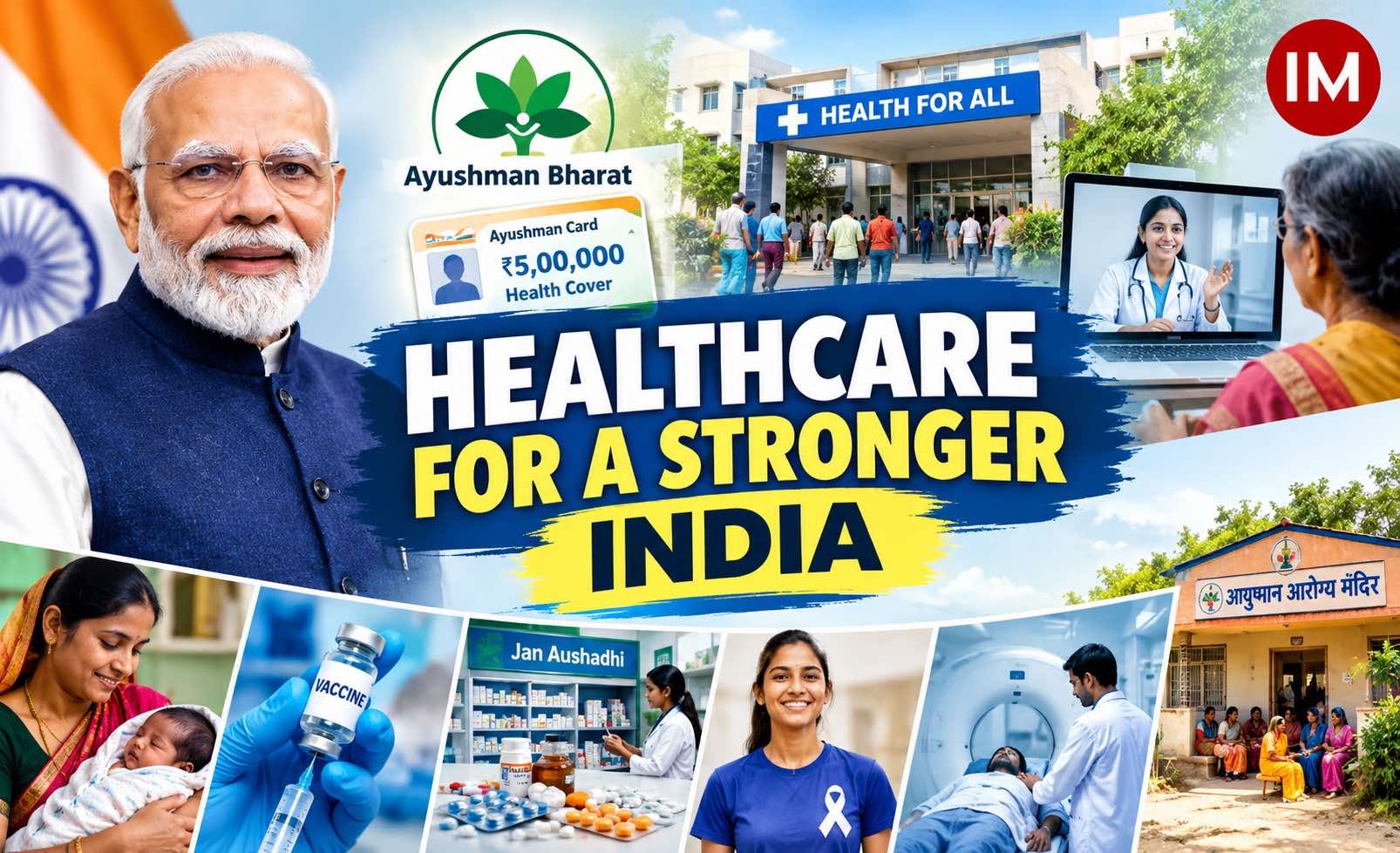
India’s healthcare system has undergone significant expansion over the past 12 years, with the Central Government introducing and strengthening several major schemes aimed at making medical treatment more affordable, accessible and inclusive. From providing health insurance to economically vulnerable families and senior citizens to expanding free medicines, diagnostic facilities, telemedicine, cancer treatment and medical education, the government has pursued a broad-based approach to improving healthcare delivery.
According to information released by the Government of India on August 12, 2026, the country has recorded substantial progress in healthcare coverage, infrastructure development, maternal and child health, disease prevention, digital health services and the availability of medical professionals.
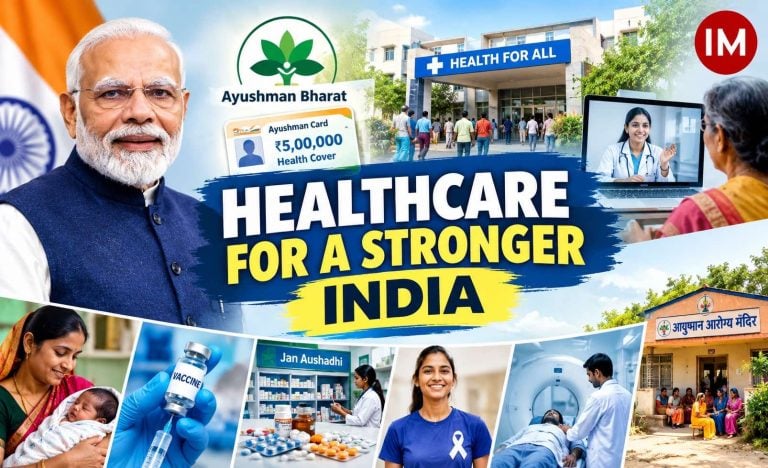
The Ayushman Bharat Pradhan Mantri Jan Arogya Yojana (AB-PMJAY), one of the government’s flagship healthcare programmes, has issued more than 45.5 crore Ayushman Cards since its launch in 2018. Meanwhile, over 12.69 crore hospitalisations involving expenditure of approximately ₹1.92 lakh crore have been covered under the scheme as of June 30, 2026.
Beyond health insurance, programmes such as the National Health Mission, Pradhan Mantri Bharatiya Janaushadhi Pariyojana, Pradhan Mantri National Dialysis Programme, Ayushman Bharat Digital Mission and eSanjeevani have expanded access to medical treatment and preventive healthcare.
The government has linked these initiatives to its broader objective of building an equitable and self-reliant healthcare system under the vision of Sabka Saath, Sabka Vikas, Sabka Vishwas and Sabka Prayas.
Ayushman Bharat PM-JAY: ₹5 Lakh Annual Health Cover for Vulnerable Families
The Ayushman Bharat Pradhan Mantri Jan Arogya Yojana, launched in 2018, is among India’s largest publicly funded health assurance programmes.
The scheme provides annual health coverage of up to ₹5 lakh per family to eligible households belonging to the economically vulnerable 40% of society. Its coverage has also been extended to all senior citizens aged 70 years and above.
The primary objective of AB-PMJAY is to reduce the financial burden of hospitalisation and ensure that people do not have to delay or avoid essential medical treatment because of financial constraints.
The programme covers more than 1,900 treatment packages across various medical specialties, providing access to hospital-based treatment through empanelled public and private healthcare institutions.
According to government figures, more than 40,000 claims are processed every day under the scheme.
As of August 12, 2026, over 45.5 crore Ayushman Cards had been issued across the country. By June 30, 2026, the programme had covered 12.69 crore hospitalisations involving claims amounting to ₹1.92 lakh crore.
More than 38,466 public and private hospitals have been empanelled, significantly expanding the network of healthcare institutions accessible to beneficiaries.
An important feature of AB-PMJAY is interstate portability, which allows eligible beneficiaries to obtain treatment at empanelled hospitals outside their home states.
As of June 30, 2026, approximately 29.05 lakh interstate hospital admissions involving more than ₹8,383.97 crore had been authorised under this facility.
This provision is particularly important for migrant workers, families living away from their native states and patients who require specialised treatment in other regions.
Ayushman Bharat Vay Vandana: Healthcare Protection for Senior Citizens Above 70
The expansion of Ayushman Bharat coverage to all senior citizens aged 70 years and above represents an important step towards addressing the healthcare requirements of India’s ageing population.
Under the Ayushman Bharat Vay Vandana initiative, senior citizens in this age group can access health coverage of up to ₹5 lakh annually, irrespective of their economic status.
The initiative seeks to reduce the financial pressure associated with hospitalisation and medical treatment among elderly citizens, who often face higher healthcare expenses.
According to the government, approximately 1.20 crore senior citizens had enrolled under the initiative as of August 12, 2026.
More than 13.84 lakh treatments worth approximately ₹3,000 crore had been availed under the programme.
The initiative is particularly significant because healthcare expenses during old age can place considerable pressure on household savings, especially where elderly people depend on pensions or family support.
Ayushman Arogya Mandirs: Bringing Primary Healthcare Closer to Communities
While AB-PMJAY focuses primarily on hospital-based treatment, Ayushman Arogya Mandirs are intended to strengthen healthcare services at the community level.
These centres form an important part of the government’s strategy to make primary healthcare available closer to people’s homes, especially in rural, remote and underserved areas.
Ayushman Arogya Mandirs provide 12 categories of free healthcare services, supporting preventive, promotive and basic curative care.
Their role includes helping people obtain essential medical consultations, screening for diseases, maternal and child healthcare services and other primary healthcare support without having to travel long distances to larger hospitals.
As of August 12, 2026, more than 1.86 lakh Ayushman Arogya Mandirs were functional across India.
These centres had recorded a cumulative footfall exceeding 540 crore visits.
The extensive use of these facilities reflects the growing importance of community-level healthcare in reducing pressure on hospitals and identifying medical conditions before they become severe.
PM-ABHIM: Strengthening India’s Public Health Infrastructure
The Pradhan Mantri Ayushman Bharat Health Infrastructure Mission (PM-ABHIM) is another major initiative aimed at strengthening India’s healthcare infrastructure and improving the country’s capacity to respond to public health emergencies.
The mission focuses on developing healthcare facilities at rural, urban, block and district levels, along with expanding diagnostic laboratories and critical care infrastructure.
Under the programme, support is envisaged for 23,224 rural health and wellness centres across 10 high-focus states.
The mission also provides for establishing 13,736 urban health and wellness centres across states, improving access to primary healthcare in densely populated urban areas.
At the block level, the programme envisages 3,389 block public health units across 11 high-focus states. These units are intended to strengthen local public health systems, disease surveillance and coordination of healthcare interventions.
Another important component is the establishment of 744 integrated public health laboratories across districts. These laboratories are designed to improve diagnostic capacity and facilitate the detection and monitoring of diseases.
The mission further provides for establishing 631 critical care hospital blocks in districts with populations exceeding five lakh.
Such infrastructure is important for managing seriously ill patients and strengthening the country’s preparedness for health emergencies.
Together, these components are intended to create a more resilient public healthcare system, capable of providing routine medical services while responding effectively to outbreaks and other health challenges.
Ayushman Bharat Digital Mission: Over 96 Crore Digital Health IDs Created
The Ayushman Bharat Digital Mission (ABDM) is aimed at developing an integrated digital healthcare ecosystem.
A central feature of the mission is the Ayushman Bharat Health Account (ABHA), which provides individuals with a digital health identity that can help them access and manage their medical records.
The mission seeks to improve continuity of treatment by enabling health information to be linked digitally, reducing dependence on physical medical documents and supporting better coordination among healthcare providers.
According to government data, 96.43 crore ABHA health identity numbers had been created as of August 12, 2026.
More than 110 crore health records had been linked with ABHA accounts.
Additionally, over 5.47 lakh healthcare facilities and more than 10.50 lakh healthcare professionals had registered on the digital platform.
The expansion of ABDM is intended to make healthcare delivery more connected, efficient and patient-centred while strengthening the digital foundations of India’s health system.
National Health Mission: Targeted Interventions for Rural and Urban Healthcare
The National Health Mission (NHM) remains one of the government’s principal programmes for improving public healthcare services.
It operates through two sub-missions: the National Rural Health Mission and the National Urban Health Mission.
These programmes focus on addressing healthcare challenges affecting different populations, particularly those requiring targeted interventions in maternal health, child health, immunisation, disease prevention and access to essential medical services.
The mission has played an important role in strengthening the delivery of healthcare programmes across states and union territories.
Its interventions cover preventive healthcare, early diagnosis, treatment support and efforts to improve major public health indicators.
Pradhan Mantri Surakshit Matritva Abhiyan: Over 7.91 Crore Free Antenatal Check-ups
Improving maternal health has been a major priority under the National Health Mission.
The Pradhan Mantri Surakshit Matritva Abhiyan focuses on providing antenatal healthcare services to pregnant women and identifying complications that may place mothers and unborn children at risk.
Regular antenatal examinations help healthcare professionals monitor pregnancies, identify medical complications and recommend timely interventions.
According to the government, more than 7.91 crore free antenatal check-ups have been conducted under the programme.
These examinations have helped identify more than 1.24 crore high-risk pregnancies, allowing healthcare providers to monitor such cases more closely.
The government’s figures also indicate improvements in several maternal healthcare indicators.
First-trimester antenatal registration increased from 58.6% in the National Family Health Survey-4 conducted during 2015–16 to 76.2% in NFHS-6 conducted during 2023–24.
The proportion of mothers receiving at least four antenatal care visits increased from 51.2% to 65.2% during the same survey periods.
Institutional deliveries also increased substantially, rising from 78.9% in NFHS-4 to 90.6% in NFHS-6.
These indicators reflect expanded access to pregnancy-related healthcare and a greater proportion of childbirths taking place in medical institutions.
Universal Immunisation Programme: Free Vaccines for Crores of Children and Pregnant Women
The Universal Immunisation Programme (UIP) is one of India’s most important preventive healthcare initiatives.
The programme provides free vaccines against 12 diseases and aims to protect children and pregnant women from vaccine-preventable illnesses.
According to the government, the programme reaches approximately 2.67 crore newborns and 2.9 crore pregnant women annually.
By providing vaccines through the public health system, UIP seeks to reduce the incidence of infectious diseases, prevent avoidable deaths and strengthen long-term public health outcomes.
Vaccination is particularly important for newborns and young children because early protection can reduce the risk of serious illness and complications.
The programme also supports maternal healthcare by ensuring that pregnant women receive recommended immunisation services.
Mission Indradhanush: Vaccination Coverage Expanded to Underserved Populations
Mission Indradhanush, launched in 2014, was introduced to strengthen immunisation coverage, particularly among children and pregnant women who had missed routine vaccination.
The programme functions as a catch-up immunisation initiative, identifying individuals who remain unvaccinated or incompletely vaccinated and bringing them within the vaccination system.
Across its various phases, Mission Indradhanush has vaccinated approximately 5.46 crore children and 1.32 crore pregnant women.
Government figures indicate that the proportion of zero-dose children, defined as children who have not received any vaccines, declined from 0.11% in 2023 to 0.06% in 2024.
The decline reflects progress in efforts to reach children who have remained outside routine immunisation services.
U-WIN: Digital Vaccination Records for Children and Pregnant Women
To strengthen immunisation management, the government launched the U-WIN platform in October 2024 under the Universal Immunisation Programme.
The digital platform is designed to maintain vaccination records and ensure that families can access information about immunisation services.
It aims to reduce the possibility of vaccination records being lost and supports the tracking of immunisation coverage.
As of March 2026, approximately 11.87 crore children and 3.96 crore pregnant women had registered on U-WIN.
The platform represents an important step towards integrating digital technology with routine public health services.
HPV Vaccination Campaign: Free Cervical Cancer Prevention for Girls Aged 14
In February 2026, the government launched a three-month campaign to provide free Human Papillomavirus (HPV) vaccines to approximately 1.2 crore girls aged 14 years.
The initiative aims to reduce the future burden of cervical cancer by protecting girls against HPV infection, a major cause of the disease.
The campaign focuses on preventive healthcare by providing vaccination before the development of HPV-related diseases.
According to government figures, 52,10,302 girls had received HPV vaccines across the country as of July 15, 2026.
The campaign forms part of broader efforts to strengthen cancer prevention through early public health interventions.
Maternal and Child Mortality: Major Improvements in Health Indicators
The expansion of maternal healthcare, institutional deliveries, immunisation and child health programmes has coincided with improvements in important mortality indicators.
India’s maternal mortality ratio declined from 130 deaths per 1,00,000 live births during 2014–16 to 87 during 2022–24.
The neonatal mortality rate fell from 28 deaths per 1,000 live births in 2015 to 17 in 2023.
Similarly, the under-five mortality rate declined from 48 deaths per 1,000 live births in 2015 to 28 in 2023.
These figures indicate progress in maternal and child survival, although continued attention to healthcare access and service quality remains important.
Tuberculosis Control: Treatment Success Rate Reaches 90%
Tuberculosis continues to be an important public health challenge in India, and the government has undertaken several interventions to strengthen screening, diagnosis, prevention and treatment.
According to the government, the number of new tuberculosis cases emerging annually declined by 21% between 2015 and 2024.
Tuberculosis-related mortality also fell by 28% during the same period.
Treatment success rates improved from 83% in 2021 to 90% in 2025.
Meanwhile, tuberculosis treatment coverage increased from 53% in 2015 to 92% in 2024.
The government has also intensified screening and preventive treatment initiatives.
Under campaigns undertaken since December 2024, more than 28.1 crore people have been screened for tuberculosis.
Approximately 20 lakh people have received preventive treatment, while 5.7 lakh new Nikshay Mitras have been added.
Nikshay Mitras are part of the wider community-support approach to tuberculosis care, helping strengthen assistance for people affected by the disease.
The combination of early identification, improved treatment access and community participation is central to efforts to reduce the burden of tuberculosis.
Malaria Control: Cases Decline by Over 80%
India has also recorded a significant reduction in malaria cases and deaths.
Government data indicates that malaria cases declined by 80.5% between 2015 and 2023.
Malaria-related deaths fell by 78.38% during the same period.
In 2024, India exited the World Health Organization’s High Burden to High Impact group for malaria.
The development reflects progress in malaria control efforts, although continued surveillance and prevention remain essential for sustaining these gains.
National Programme for Prevention and Control of Non-Communicable Diseases
Non-communicable diseases such as diabetes, hypertension and cancer represent a major and growing healthcare challenge.
The National Programme for Prevention and Control of Non-Communicable Diseases (NP-NCD) focuses on strengthening healthcare infrastructure, developing human resources, expanding screening services and ensuring timely diagnosis, referral and treatment.
The programme also emphasises health promotion and early identification of diseases to prevent complications.
According to government figures, nationwide screening initiatives have covered approximately 41.5 crore people for hypertension and 41.3 crore for diabetes.
Screening for oral cancer has reached 35.3 crore people, while approximately 16.5 crore people have been screened for breast cancer.
Early detection is particularly important in managing chronic diseases because timely treatment can reduce the risk of serious complications and improve long-term outcomes.
The government has also expanded dedicated healthcare facilities for managing non-communicable diseases.
Across the country, 770 district NCD clinics and 6,410 NCD clinics at Community Health Centres have been established.
Additionally, 524 Day Care Cancer Centres have been set up under the programme.
These facilities are intended to improve access to screening, diagnosis and treatment closer to patients’ homes.
Pradhan Mantri National Dialysis Programme: Free Treatment for Over 32 Lakh Patients
The Pradhan Mantri National Dialysis Programme, launched in 2016, aims to improve access to dialysis services for patients suffering from kidney-related conditions requiring regular treatment.
Dialysis can involve recurring medical expenses, making it financially challenging for patients and their families.
The programme seeks to reduce this burden by providing free dialysis services through designated healthcare facilities.
According to government data, approximately 32.44 lakh patients had received free dialysis services through the programme as of June 2026.
These services were available across 1,856 dialysis centres.
The initiative is particularly significant for patients who require repeated dialysis sessions and may otherwise face substantial long-term treatment costs.
Strengthening Tertiary Cancer Care: State Cancer Institutes and Specialised Centres
The government has also taken steps to expand specialised cancer treatment infrastructure.
Under the Strengthening of Tertiary Cancer Care Centres Facilities Scheme, approval has been granted for 19 State Cancer Institutes and 20 Tertiary Cancer Care Centres.
The initiative is intended to improve access to specialised cancer diagnosis and treatment facilities.
By strengthening cancer care infrastructure across states, the programme aims to reduce the need for patients to travel to a limited number of major hospitals for specialised treatment.
The expansion of cancer care facilities complements nationwide screening programmes that focus on detecting cancer at earlier stages.
Tobacco Free Youth Campaign: Preventing Tobacco Use Among Young People
Tobacco control is another important component of India’s preventive healthcare strategy.
According to the second Global Adult Tobacco Survey (GATS-2), India achieved a 17.3% relative reduction in overall tobacco use between 2009–10 and 2016–17.
To strengthen prevention efforts, the government launched the Tobacco Free Youth Campaign in 2023.
The initiative, now in its third edition, focuses on discouraging tobacco use among young people and supporting the broader objective of creating a tobacco-free generation.
India’s tobacco control efforts received international recognition through the 2025 Bloomberg Philanthropies Award for tobacco control.
Pradhan Mantri Bharatiya Janaushadhi Pariyojana: Generic Medicines at Lower Prices
The Pradhan Mantri Bharatiya Janaushadhi Pariyojana (PMBJP) is aimed at making essential medicines more affordable by expanding access to quality generic medicines.
Under the programme, medicines are sold through dedicated Jan Aushadhi Kendras at prices significantly lower than those of branded alternatives.
According to the government, medicines available under the scheme are generally priced 50% to 80% below branded medicines.
The Jan Aushadhi network has expanded considerably over the past decade.
From a small number of stores in 2014–15, the number of Jan Aushadhi Kendras increased to more than 18,646 as of February 2026.
The programme offers a product basket comprising more than 2,000 medicines and 300 surgical devices.
The initiative is intended to reduce out-of-pocket expenditure on medicines, particularly for patients requiring regular treatment for chronic conditions.
AMRIT Pharmacies: Life-Saving Medicines and Implants at Discounts of Up to 90%
The Affordable Medicines and Reliable Implants for Treatment (AMRIT) initiative, launched in 2015, focuses on reducing the cost of essential medicines and medical implants.
AMRIT pharmacies provide life-saving medicines at discounts ranging from 50% to 90%, according to the government.
The initiative is designed to help patients, particularly those from economically weaker sections, obtain medicines that might otherwise be financially difficult to afford.
Government figures indicate that more than 6.85 crore patients have benefited from the programme.
Medicines with a maximum retail price exceeding ₹17,000 crore have been dispensed through the initiative.
This has resulted in estimated cumulative savings of approximately ₹8,400 crore for patients.
The programme complements Jan Aushadhi by focusing on affordable access to medicines and implants, including those required for serious medical conditions.
Free Diagnostics Service Initiative: Tests Available Without Charges at Public Hospitals
Medical diagnostic tests can represent a substantial component of healthcare expenditure.
To address this challenge, the Free Diagnostics Service Initiative under the National Health Mission provides diagnostic services without charges at different levels of the public healthcare system.
The programme covers services in areas such as haematology, radiology and biochemistry.
Its objective is to ensure that patients can access essential tests without having to depend entirely on private diagnostic facilities.
The range of available tests varies according to the level of the healthcare institution.
Under the initiative, 14 tests are provided at Sub-Centres, while Primary Health Centres offer 63 tests.
Community Health Centres provide 97 tests, and Sub-District Hospitals offer 111 tests.
At District Hospitals, the range expands to 134 diagnostic tests.
By expanding free testing facilities, the programme aims to support timely diagnosis, reduce treatment delays and lower household medical expenses.
eSanjeevani: Over 49 Crore Telemedicine Consultations Delivered
Digital healthcare services have become an important part of India’s healthcare expansion.
The national telemedicine platform eSanjeevani, launched in 2019, enables patients to obtain medical consultations remotely.
The platform is particularly useful for people living in areas where specialist healthcare services may not be easily accessible.
By connecting patients and healthcare providers through digital systems, eSanjeevani aims to reduce unnecessary travel and improve access to medical advice.
According to government figures, more than 49 crore consultations had been delivered through the platform as of August 11, 2026.
Over 2.4 lakh healthcare providers were associated with the platform.
The programme demonstrates the increasing role of telemedicine in supplementing conventional healthcare services.
Tele-MANAS: Mental Health Support Through Toll-Free Helpline 14416
Recognising the importance of mental healthcare, the government launched Tele-MANAS in October 2022.
The programme provides mental health support through the nationwide toll-free helpline number 14416.
It aims to improve access to mental health services, including support for people who may face difficulties accessing conventional mental healthcare facilities.
The service operates in 20 languages across all 36 states and union territories.
As of August 11, 2026, Tele-MANAS had received approximately 43.64 lakh calls since its launch.
The programme operates through 53 Tele-MANAS Cells and 23 Mentoring Institutes.
The initiative represents an effort to integrate mental health support more closely into India’s broader public healthcare framework.
i-DRONE: Delivering Medicines and Vaccines to Remote Healthcare Facilities
The government has also introduced drone-based healthcare delivery services to improve access to essential medical supplies.
The i-DRONE service, launched in 2021, uses drone technology to transport medicines and vaccines.
Such technology can be particularly useful in areas where difficult terrain or limited transport connectivity creates challenges for conventional supply systems.
According to government figures, approximately 22,000 medicines have been delivered through the initiative.
These deliveries have covered a cumulative distance of more than 7,700 kilometres and involved 65 healthcare centres.
The programme highlights the potential role of emerging technologies in improving healthcare logistics.
Artificial Intelligence in Healthcare: Supporting Doctors During Consultations
Artificial intelligence is increasingly being integrated into India’s digital healthcare services.
Between April 2023 and November 2025, approximately 28.2 crore eSanjeevani consultations were supported by AI-enabled Clinical Decision Support Systems.
These systems provide real-time clinical alerts to doctors during consultations.
The objective is to support healthcare professionals with relevant clinical information and improve the efficiency of medical decision-making.
Such systems are intended to assist, rather than replace, medical professionals in delivering healthcare services.
Medical Education Expansion: Number of Medical Colleges More Than Doubles
Alongside healthcare schemes, the government has expanded medical education infrastructure to address the growing demand for doctors and healthcare professionals.
According to official figures, the number of allopathic medical colleges increased from 387 to 818 over the past 12 years, as of the 2025–26 academic period.
The expansion has been accompanied by an increase in undergraduate and postgraduate medical education capacity.
MBBS seats increased to 1,28,976, while postgraduate medical seats reached 85,822 as of 2025–26.
The increase in training capacity is intended to strengthen the availability of medical professionals and support the expansion of healthcare services across the country.
AIIMS Expansion: 23 Institutions Across India
The government has also expanded the All India Institute of Medical Sciences network.
According to the August 2026 government release, 12 new AIIMS institutions have become functional since 2014.
The total number of AIIMS institutions has reached 23.
These institutions play an important role in specialised medical treatment, medical education and research.
The expansion of the AIIMS network is intended to improve access to advanced healthcare services in different parts of the country.
Nursing Education: 157 New Colleges Being Established
The government has also focused on increasing the availability of trained nursing professionals.
Under the ongoing expansion of nursing education infrastructure, 157 new nursing colleges are being established.
These institutions are expected to add approximately 15,700 nursing graduates annually.
Nursing education capacity has also increased.
As of June 2025, B.Sc. Nursing seats had risen by 53% to 1,27,290.
M.Sc. Nursing seats increased by 39% to 14,986.
The expansion is intended to support hospitals, primary healthcare facilities and specialised medical institutions by increasing the availability of qualified nursing personnel.
AYUSH: Integrating Traditional Medicine With Public Healthcare
Alongside modern medicine, the government has expanded the institutional framework for traditional systems of healthcare.
The Ministry of AYUSH, established in November 2014, oversees systems including Ayurveda, Yoga and Naturopathy, Unani, Siddha, Sowa Rigpa and Homoeopathy.
The government’s approach seeks to integrate traditional healthcare systems into the broader public health framework while expanding their institutional reach.
According to official figures, India had 942 AYUSH institutions as of May 2025.
These institutions form part of the country’s traditional healthcare education and service delivery ecosystem.
Ayush Grid: Digital Connectivity for Traditional Healthcare
The Ayush Grid initiative aims to create a digital framework connecting traditional healthcare services with modern health information systems.
The programme is intended to digitally connect AYUSH hospitals and laboratories across the country.
Its objective is to improve accessibility, coordination and digital integration within traditional healthcare services.
By developing a connected digital platform, the government seeks to make AYUSH services more accessible and better integrated into India’s evolving healthcare system.
A Broader Shift Towards Preventive, Affordable and Technology-Enabled Healthcare
The government’s healthcare initiatives over the past 12 years reflect a multi-dimensional approach that combines financial protection, infrastructure development, preventive healthcare, affordable medicines and digital services.
Programmes such as AB-PMJAY seek to reduce the financial burden of hospitalisation, while Ayushman Arogya Mandirs and the National Health Mission focus on strengthening community-level and preventive healthcare.
Jan Aushadhi, AMRIT pharmacies and free diagnostic services address the cost of medicines and medical testing, while eSanjeevani, ABDM and Tele-MANAS expand the use of technology in healthcare delivery.
At the same time, initiatives focusing on tuberculosis, malaria, maternal health, immunisation, cancer screening and non-communicable diseases seek to improve health outcomes through early intervention and treatment.
The expansion of medical colleges, AIIMS institutions and nursing education is intended to strengthen the healthcare workforce needed to support these programmes.
The government’s figures show substantial growth in the reach of several healthcare initiatives. However, sustaining these gains will depend on the quality of services, availability of trained professionals, effective implementation and continued access for underserved communities.
As India continues to expand its healthcare infrastructure and public health programmes, the emphasis remains on ensuring that affordable and accessible medical services reach people across rural and urban areas.