New Delhi: For millions of people living in rural and remote parts of India, consulting a specialist doctor has traditionally meant travelling long distances, spending money on transportation and accommodation, and waiting for hours at crowded hospitals. However, a government-led digital healthcare initiative is gradually changing this experience by bringing medical consultations closer to people’s homes.
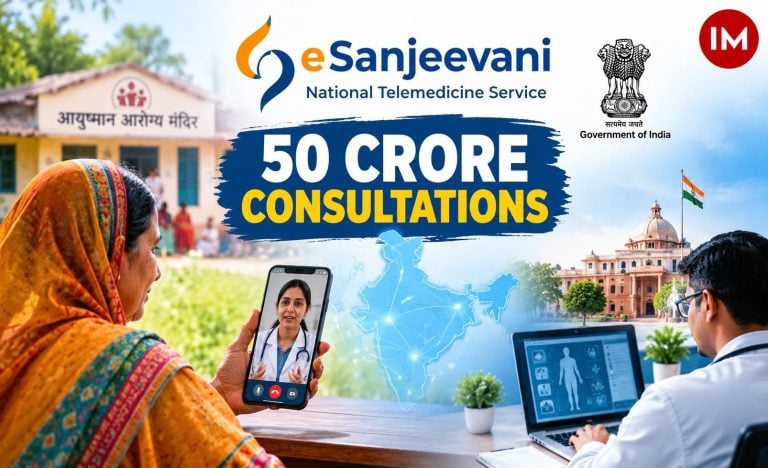
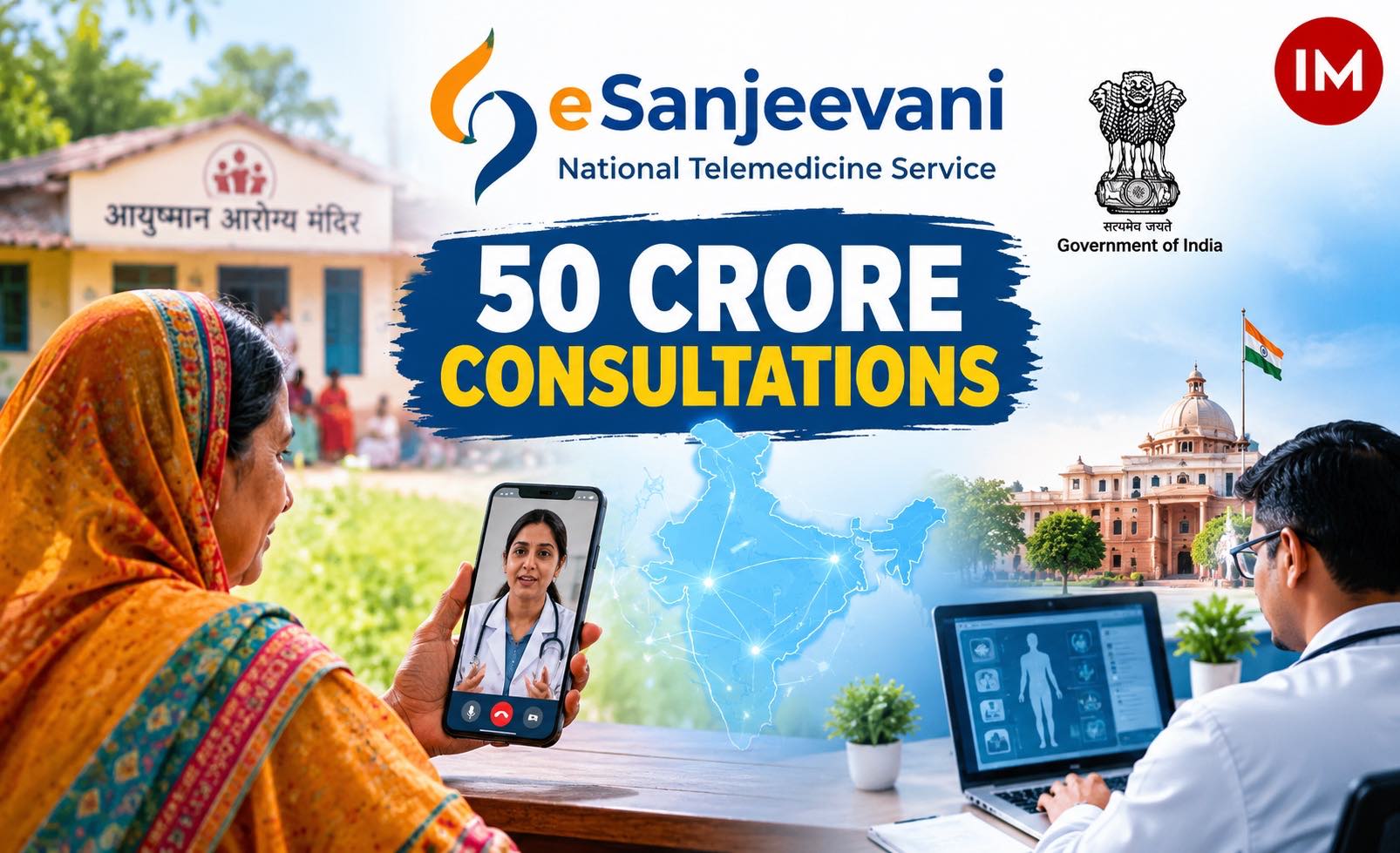
India’s National Telemedicine Service, eSanjeevani, has crossed the landmark of 50 crore teleconsultations, emerging as one of the country’s most significant digital public healthcare initiatives.
According to information released by the Ministry of Health and Family Welfare on October 6, 2026, the platform crossed the milestone on September 15, 2026, recording a cumulative 50,00,92,730 teleconsultations across all 36 States and Union Territories.
Developed indigenously by the Centre for Development of Advanced Computing (C-DAC), eSanjeevani has evolved from a telemedicine facility connecting rural health centres with doctors into a large-scale digital healthcare network that now includes specialist consultations, Artificial Intelligence-powered clinical support and emergency response integration.
The platform currently facilitates approximately 2.5 lakh to 3 lakh consultations every day, reflecting the growing acceptance of remote healthcare services among patients and medical professionals.
Its expansion represents an important development in India’s efforts to make healthcare more accessible, affordable and equitable, particularly for populations facing geographical and financial barriers.
What Is eSanjeevani and Why Was It Launched?
eSanjeevani is the Government of India’s National Telemedicine Service, launched under the Ministry of Health and Family Welfare to strengthen healthcare delivery through digital technology.
The initiative was designed to address one of the longstanding challenges of India’s public healthcare system: the unequal distribution of medical infrastructure, doctors and specialists between urban centres and rural areas.
While major cities have relatively greater access to hospitals and specialist medical institutions, patients in villages and remote districts often depend on primary healthcare centres with limited specialist availability.
For such patients, obtaining medical advice may require travelling to district hospitals or tertiary-care institutions, sometimes located several hours away.
eSanjeevani attempts to bridge this gap by connecting patients and healthcare providers through a cloud-based telemedicine platform.
The service enables medical consultations through video communication, digital patient records and electronic prescriptions, reducing the need for physical visits in cases where remote medical assessment is appropriate.
The platform was developed by C-DAC Mohali, which has provided technological development, engineering and end-to-end support since its inception.
The initiative also supports the broader objectives of India’s digital health ecosystem and the government’s efforts to strengthen indigenous digital public infrastructure.
From 1.2 Crore to 50 Crore Consultations: The Rapid Expansion of eSanjeevani
The growth of eSanjeevani demonstrates how telemedicine has moved from being a supplementary healthcare service to an increasingly important component of public healthcare delivery.
During an earlier phase of implementation, the platform had recorded approximately 1.2 crore consultations and was serving around 90,000 patients daily.
At that stage, the doctor-to-doctor eSanjeevani AB-HWC service had completed approximately 67 lakh consultations, while the direct patient-to-doctor eSanjeevaniOPD platform had served more than 51 lakh patients.
By August 11, 2026, cumulative consultations had crossed 49 crore, with more than 2.4 lakh healthcare providers associated with the platform.
The subsequent milestone came on September 15, 2026, when eSanjeevani recorded 50,00,92,730 consultations.
According to the October 2026 government update, the platform had reached the following scale:
- 50 crore-plus teleconsultations across all 36 States and Union Territories.
- More than 1.42 lakh Ayushman Arogya Mandir spokes connected to the digital healthcare network.
- 19,473 medical hubs and 901 online OPDs supporting consultations.
- 2,41,923 registered healthcare providers, with daily consultations ranging between 2.5 lakh and 3 lakh.
The highest single-day utilisation recorded by the platform stands at 6,30,315 consultations.
These figures highlight the scale of India’s government-led telemedicine infrastructure and the growing role of digital consultations in supplementing conventional hospital-based healthcare.
How eSanjeevani Works: Two Models Serving Different Healthcare Needs
One of the key strengths of eSanjeevani is its two-part service model, designed to address different healthcare requirements.
The first model connects healthcare workers at local health centres with doctors and specialists at larger medical institutions. The second allows patients to consult doctors directly from their homes.
Together, these models aim to serve both digitally connected citizens and patients who require assistance in accessing telemedicine facilities.
eSanjeevani AB-HWC: Connecting Rural Patients With Specialist Doctors
The eSanjeevani Ayushman Bharat Health and Wellness Centre model, commonly known as eSanjeevani AB-HWC, operates through a doctor-to-doctor telemedicine system.
It follows a hub-and-spoke model in which local healthcare centres function as spokes and larger hospitals or specialist facilities serve as medical hubs.
Under this arrangement, a patient visits a nearby Health and Wellness Centre, now commonly known as an Ayushman Arogya Mandir.
A Community Health Officer or another authorised healthcare professional records the patient’s symptoms, relevant medical history and other necessary clinical information.
The healthcare worker then facilitates a virtual consultation with a doctor or specialist connected through the platform.
This allows patients to receive medical advice without necessarily travelling to a district hospital or specialist institution.
The model is particularly useful in rural and underserved areas where specialist doctors may not be physically available.
The service was rolled out in November 2019, with Andhra Pradesh becoming the first state to implement eSanjeevani AB-HWC.
During an earlier expansion phase, the network had established more than 2,000 medical hubs and approximately 28,000 spokes across different states.
The latest figures indicate that the network has since expanded substantially, with more than 1.42 lakh Ayushman Arogya Mandir spokes and 19,473 medical hubs.
This expansion has strengthened the ability of primary healthcare institutions to connect patients with doctors working at higher levels of the public healthcare system.
eSanjeevaniOPD: Consult a Doctor Without Leaving Home
The second model, eSanjeevaniOPD, provides direct patient-to-doctor tele-consultations.
It was introduced on April 13, 2020, during the first nationwide COVID-19 lockdown, when regular outpatient services at many healthcare institutions were disrupted.
The platform was developed to ensure that citizens could continue receiving medical advice without physically visiting hospitals.
Through eSanjeevaniOPD, patients can register online, describe their medical complaints, upload relevant records and connect with available doctors through video consultations.
The service can be accessed through a smartphone or computer, subject to the availability of the relevant online clinic and consultation service.
Unlike the assisted AB-HWC model, patients using eSanjeevaniOPD can access consultations directly from their homes.
The platform supports consultations for a range of healthcare requirements, including common illnesses, follow-up advice and management of certain chronic medical conditions.
During an earlier implementation phase, eSanjeevaniOPD hosted more than 430 online outpatient departments, including general and specialty OPDs.
The latest government update places the overall online OPD network at 901.
The service has become an important alternative for patients who need medical advice but may not require an immediate physical examination or hospital visit.
Specialist Consultations Now Available Through Premier Government Hospitals
An important recent development in the eSanjeevani initiative is its expansion beyond primary healthcare into specialist outpatient services.
The government has introduced patient-to-doctor teleconsultation facilities for selected medical specialities through premier government institutions.
According to the Ministry of Health and Family Welfare, specialist teleconsultation services have been rolled out at AIIMS Jodhpur, AIIMS Jammu and AIIMS Patna.
This development allows eligible patients to seek specialist consultations remotely from their homes, subject to the availability of the relevant service.
The expansion is intended to reduce the need for long-distance travel to major tertiary-care hospitals and improve access to specialist medical expertise.
The government has also envisaged progressively extending these services to other premier institutions, including additional AIIMS facilities, the Jawaharlal Institute of Postgraduate Medical Education and Research (JIPMER), and the Postgraduate Institute of Medical Education and Research (PGIMER), Chandigarh.
Earlier, institutions such as AIIMS Bathinda, AIIMS Bibinagar, AIIMS Kalyani, AIIMS Rishikesh and King George’s Medical College, Lucknow, were also among the institutions providing outpatient healthcare services through the eSanjeevaniOPD network.
The move towards specialist teleconsultations represents an important transition in the platform’s development.
Instead of limiting digital healthcare services to basic consultations, the government is increasingly seeking to connect patients with medical expertise available at higher levels of the public healthcare system.
However, specialist teleconsultations are intended to complement conventional hospital services rather than replace physical examinations, diagnostic procedures or emergency medical care where these are necessary.
AI-Powered Clinical Decision Support Introduced to Strengthen Consultations
Artificial Intelligence is becoming another important component of eSanjeevani’s technological development.
The platform has integrated an AI-powered Clinical Decision Support System, or AI-CDSS, to assist healthcare professionals during consultations.
The system is intended to support doctors and other healthcare providers by strengthening the quality, consistency and efficiency of clinical decision-making.
By providing technology-assisted clinical support, the system aims to help healthcare professionals make more informed decisions during remote consultations.
The AI-CDSS integration has also received national recognition.
The innovation was awarded the Gold Award under the National Awards for e-Governance 2026, highlighting its contribution to technology-enabled public service delivery.
The integration reflects the government’s efforts to move beyond basic video consultations towards more technologically supported healthcare services.
Importantly, AI-powered clinical decision support functions as an aid to healthcare professionals rather than a substitute for medical judgement.
Emergency Healthcare Gets Digital Support Through ERSS-112 Integration
Another significant advancement is the integration of eSanjeevani with the Emergency Response Support System, ERSS-112.
The integration is intended to establish stronger connections between emergency response services and remote medical expertise.
By linking emergency response mechanisms with telemedicine capabilities, the initiative seeks to facilitate more coordinated access to medical support.
This could be particularly relevant in locations where immediate access to specialist medical professionals is limited.
The integration represents another step towards creating a more interconnected digital healthcare system in which primary care, specialist consultations and emergency response services can support one another.
However, telemedicine does not replace the need for immediate emergency intervention, ambulance services or hospital-based treatment in life-threatening situations.
Women Account for More Than 57% of eSanjeevani Utilisation
Beyond the overall consultation figures, the demographic profile of eSanjeevani users provides an important indication of the platform’s reach.
According to the October 2026 government data, women account for 57.14% of total utilisation of the telemedicine service.
This represents a substantial share of the platform’s consultations and highlights the relevance of digital healthcare services for women.
In many communities, accessing hospitals can involve challenges related to travel, time, household responsibilities and the availability of nearby healthcare facilities.
Remote consultations can help reduce some of these barriers by allowing patients to seek medical advice closer to home.
The government’s figures also show significant participation by older age groups.
Citizens aged 46 years and above account for 40.15% of consultations, while senior citizens aged 60 years and above account for 16.25%.
These numbers suggest that telemedicine is being used not only by younger, digitally connected patients but also by people who may face greater difficulties travelling frequently to hospitals.
For elderly patients requiring routine medical advice or follow-up consultations, access to remote medical services can provide additional convenience.
The figures also underline the importance of ensuring that telemedicine services remain accessible to people with limited digital literacy.
Healthcare in 15 Languages: Making Telemedicine More Inclusive
Language accessibility is another important aspect of the eSanjeevani initiative.
The platform supports 15 languages, including English and 14 Indian languages.
This multilingual capability is intended to reduce communication barriers and make digital healthcare services more accessible to citizens from different linguistic backgrounds.
In a country as diverse as India, language can influence how comfortably patients describe symptoms, understand medical advice and navigate digital services.
By supporting multiple languages, eSanjeevani aims to expand its usability beyond English-speaking populations.
The assisted consultation model further supports inclusivity by allowing healthcare workers to help patients who may not be comfortable operating smartphones, computers or online healthcare platforms independently.
How Patients Can Use eSanjeevani for Free Medical Consultations
The eSanjeevani service is designed to provide free telemedicine consultations through its government-supported platform.
Patients can access the service directly through eSanjeevaniOPD or obtain assisted consultations at participating Ayushman Arogya Mandirs.
Read Also: Government Tightens E-Commerce Rules With New Curbs on Dark Patterns, Search Manipulation
For direct consultations, patients can visit the official eSanjeevani portal or use the relevant mobile application.
The registration and consultation process generally involves the following steps:
- Register online: Access the official platform and complete the required mobile number verification through a One-Time Password.
- Create a consultation request: Select the available state and OPD service, provide medical complaints and upload relevant records where required.
- Join the virtual consultation: Enter the online waiting queue and connect with an available doctor through video consultation.
- Receive medical advice: Following the consultation, download the electronic prescription or medical advice generated through the platform.
The platform also supports integration with the Ayushman Bharat Health Account (ABHA), helping patients link relevant digital health records where applicable.
For patients without suitable smartphones or internet connectivity, assisted consultations are available through participating Ayushman Arogya Mandirs.
At these centres, healthcare professionals facilitate the consultation and help patients connect with doctors through the digital network.
The availability of individual OPD clinics, medical specialities and consultation hours may vary.
How eSanjeevani Is Reducing Healthcare Costs and Hospital Burden
The significance of eSanjeevani extends beyond the number of consultations conducted.
One of its major objectives is to reduce the indirect costs associated with accessing healthcare.
For patients living far from district hospitals or specialist medical institutions, even a routine consultation can involve transportation expenses, lost working hours and, in some cases, accommodation costs.
Telemedicine can help reduce these expenses when a patient’s medical condition can be appropriately assessed remotely.
The platform also offers an alternative for patients who would otherwise visit hospitals for consultations that do not necessarily require physical attendance.
This has the potential to reduce pressure on crowded outpatient departments, particularly at secondary and tertiary healthcare institutions.
By connecting local healthcare centres with specialists, eSanjeevani also seeks to make more efficient use of the medical expertise already available within the public healthcare system.
Rather than requiring every patient to travel to a specialist, the platform enables specialist advice to reach patients through a wider network of healthcare facilities.
For people managing chronic conditions, digital consultations may also support follow-up care and continuity of treatment, depending on clinical requirements.
Nevertheless, the suitability of telemedicine depends on the nature of the medical condition, the need for physical examination and the treating doctor’s assessment.
Andhra Pradesh, Karnataka and Tamil Nadu Among Early Leaders in Adoption
The expansion of eSanjeevani has involved participation from states across India, although the pace of adoption has varied.
During an earlier phase, when the platform had recorded approximately 1.2 crore consultations, Andhra Pradesh emerged as the leading state in terms of usage.
It had recorded 37,04,258 consultations, followed by Karnataka with 22,57,994 and Tamil Nadu with 15,62,156.
Uttar Pradesh ranked fourth with 13,28,889 consultations.
Other states reporting substantial utilisation during that period included Gujarat with 4,60,326 consultations, Madhya Pradesh with 4,28,544, Bihar with 4,04,345, Maharashtra with 3,78,912, West Bengal with 2,74,344 and Kerala with 2,60,654.
These historical figures reflect the early geographical spread of the programme and should not be interpreted as the latest state-wise rankings following the 50 crore milestone.
Andhra Pradesh also holds significance as the first state to roll out eSanjeevani AB-HWC services in November 2019.
The participation of multiple states has been central to the platform’s expansion from a relatively limited telemedicine network into a nationwide healthcare service.
COVID-19 Pandemic Accelerated the Adoption of Digital Healthcare
Although the assisted eSanjeevani AB-HWC model was introduced before the COVID-19 pandemic, the public health emergency played an important role in expanding the use of telemedicine.
When lockdown restrictions disrupted routine hospital visits and outpatient services in 2020, remote medical consultations became an important alternative for patients seeking healthcare advice.
The launch of eSanjeevaniOPD on April 13, 2020, provided a mechanism for patients to consult doctors without leaving their homes.
The platform was designed to support consultations for both COVID-19-related and other outpatient healthcare requirements.
As the service expanded, telemedicine increasingly became useful beyond the immediate requirements of pandemic management.
The subsequent growth in consultation numbers indicates that digital healthcare services continued to find relevance even after routine hospital services resumed.
The government’s continued expansion of eSanjeevani into specialist consultations, AI-supported services and emergency response integration reflects this broader shift.
Made-in-India Technology Behind the National Telemedicine Network
A defining feature of eSanjeevani is its indigenous technological development.
The platform was designed and developed by the Centre for Development of Advanced Computing, with C-DAC Mohali providing technological and engineering support.
The Ministry of Health and Family Welfare has guided the initiative’s development and expansion in response to changing healthcare requirements.
The platform operates as an integrated digital system capable of supporting consultations across a large network of healthcare institutions and professionals.
Its expansion from the original hub-and-spoke model to a population-scale digital health platform reflects India’s growing capacity to develop and deploy technology for large public service systems.
The government has also linked the initiative to the objectives of Aatmanirbhar Bharat and Viksit Bharat, emphasising the role of indigenous technology in strengthening public infrastructure.
The use of AI-powered clinical support and integration with emergency response services further demonstrates the platform’s continuing technological evolution.
Challenges and the Road Ahead for Digital Healthcare
Despite the scale of eSanjeevani’s achievements, expanding telemedicine across a geographically and socially diverse country presents continuing challenges.
Reliable internet connectivity, access to digital devices and digital literacy remain important factors influencing the ability of citizens to use online healthcare services independently.
The assisted consultation model helps address some of these challenges by allowing healthcare workers to support patients at local health centres.
Another important consideration is the distinction between consultations that can be managed remotely and medical conditions requiring physical examination, diagnostic testing or hospital-based intervention.
Maintaining clinical quality, appropriate referral mechanisms and continuity of care will remain important as the platform expands into more specialist services.
The integration of digital health records, AI-supported clinical tools and emergency response mechanisms also makes secure handling of patient information and effective coordination between healthcare providers important areas of implementation.
The government’s plans to expand specialist teleconsultations to additional premier medical institutions could further strengthen the platform’s usefulness.
The next phase of development is therefore likely to depend not only on increasing consultation numbers but also on improving the quality, accessibility and continuity of healthcare services delivered through the system.
Towards Universal Health Coverage Through Digital Public Infrastructure
The crossing of 50 crore teleconsultations marks an important achievement in India’s digital healthcare journey.
From its beginnings as a system connecting rural health centres with doctors, eSanjeevani has developed into a nationwide platform serving patients through both assisted and direct consultations.
Its growing infrastructure, participation of more than 2.41 lakh healthcare providers, multilingual accessibility and expansion into specialist medical services demonstrate the increasing role of digital technology in public healthcare delivery.
The integration of Artificial Intelligence and emergency response systems also points towards a more connected approach to healthcare services.
For patients in rural and remote areas, the platform offers an opportunity to access medical advice without undertaking long journeys for every consultation.
For the public healthcare system, it provides a mechanism to extend the reach of existing doctors and specialists while complementing conventional healthcare institutions.
As India works towards Universal Health Coverage, eSanjeevani illustrates how indigenous digital public infrastructure can help address geographical barriers and support more equitable access to medical services.
The 50 crore milestone is therefore not merely a measure of technological scale. It also reflects the growing acceptance of a healthcare delivery model in which medical advice can reach patients beyond the physical boundaries of hospitals.
Read Also: Ayush Economy Hits $36.92 Billion, Supports 1.76 Million Livelihoods: RIS Study