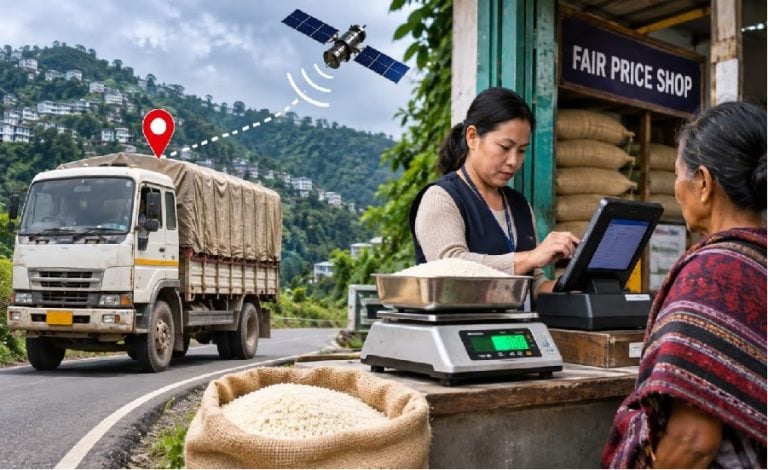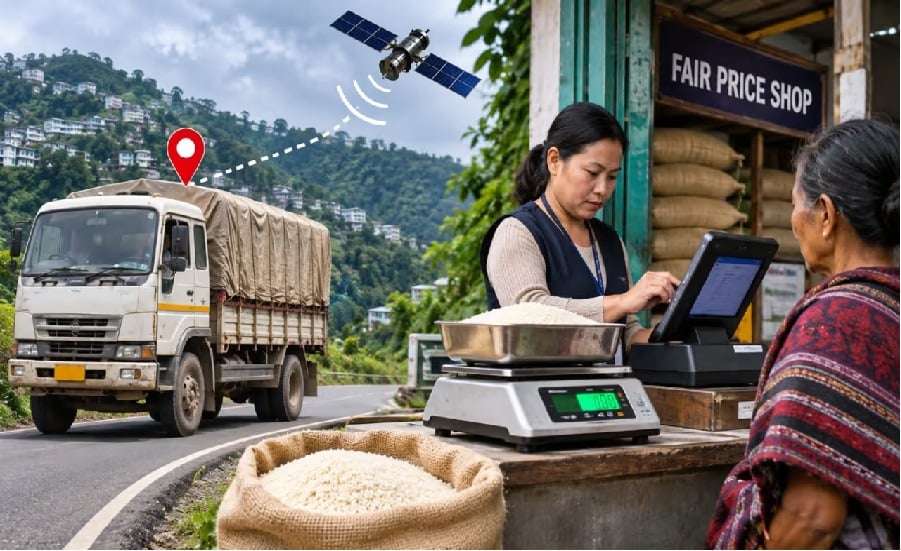
Aizawl: Mizoram is set to become one of the states in the country to strengthen ration distribution through technology-driven monitoring, with the state government making GPS tracking mandatory for trucks transporting rice under the Public Distribution System (PDS). The government will also connect electronic Point of Sale (ePoS) machines at Fair Price Shops (FPS) with digital weighing scales to ensure that beneficiaries receive their full entitled quantity of foodgrains.
State Food, Civil Supplies and Consumer Affairs Minister B. Lalchhanzova announced the measures on Thursday, stating that the new system would improve transparency across the rice supply chain, prevent diversion and distribution-related irregularities, and strengthen accountability among transporters and ration dealers.
The government is also increasing the margins of fair price shop dealers and transportation rates to support the effective implementation of the revised distribution system.
GPS Tracking Mandatory for Trucks Transporting Ration Rice
Under the proposed system, trucks transporting rice for the public distribution network will be required to install GPS devices meeting the AIS-140 standards.
The movement of these vehicles will be monitored through the department’s Command and Control Room, allowing officials to track the transportation of rice and improve oversight of its movement.
Minister B. Lalchhanzova said vehicles without the prescribed GPS tracking devices would not be permitted to transport ration rice. However, until the mandatory GPS-based system becomes operational, transporters will be allowed to use a mobile application-based tracking system.
The interim tracking application has been jointly developed by the Central Government and the World Food Programme (WFP).
According to the minister, the mandatory GPS tracking system is expected to be implemented by the end of December.
ePoS Machines to Be Connected with Digital Weighing Scales
In another major step towards preventing irregularities, the Mizoram government will connect all electronic Point of Sale machines installed at Fair Price Shops with digital weighing scales.
The integration will allow the department to compare the quantity of rice recorded in the ePoS system with the actual quantity distributed to beneficiaries.
This measure is intended to prevent practices such as providing less rice than the entitled quantity and recording transactions in the names of beneficiaries who have not actually collected their ration.
By linking digital weighing scales with ePoS machines, the government aims to ensure accurate distribution and improve transparency at the last-mile delivery level.
Digital Monitoring of the Entire Rice Supply Chain
The state government plans to digitise the entire rice supply chain through three systems to monitor the movement of foodgrains at different stages.
The proposed digital monitoring mechanism will track rice transportation from one warehouse to another and from warehouses to fair price shop dealers.
This will help authorities maintain better oversight of stock movement, identify possible irregularities and ensure that foodgrains reach their intended destinations.
The initiative is also expected to strengthen the monitoring of ration distribution and reduce the scope for diversion and discrepancies in the public distribution network.
Mizoram Increases Fair Price Shop Dealers’ Margins
Alongside technology-based reforms, the state government has announced an increase in the margins provided to fair price shop dealers.
Under the revised rates, the margin for beneficiaries covered under the Antyodaya Anna Yojana (AAY) and Priority Households (PHH) categories under the National Food Security Act (NFSA) has been increased to Rs 3 per kg.
For additional priority households, non-NFSA beneficiaries and those covered under the Mizoram State Special Ration Package, the margin has been fixed at Rs 2 per kg, effective from October.
The government has also increased the transportation rate for the movement of rice within urban areas. The rate has been revised from Rs 50 per quintal to Rs 75 per quintal.
These revisions are aimed at providing better financial support to ration dealers and transporters involved in the distribution process.
Mizoram Plans to Reduce Open-Market Rice Purchases
The state government is also working to reduce its dependence on open-market rice purchases during the current financial year.
According to Minister B. Lalchhanzova, Mizoram requires approximately 91,000 quintals of rice every month for distribution through its ration network. Of this, the state currently purchases around 36,000 quintals from the open market.
By improving supply chain management and strengthening digital monitoring, the government expects to reduce open-market procurement and achieve estimated savings of around Rs 52.19 crore.
The move is expected to improve the efficiency of foodgrain procurement and distribution while reducing the financial burden on the state government.
Mizoram PDS: 1,266 Fair Price Shops Serving Over 11.78 Lakh People
According to the state Food, Civil Supplies and Consumer Affairs Department, Mizoram has 1,266 Fair Price Shops and 2,96,051 ration cards.
The public distribution network covers a population of approximately 11,78,801 people across the state.
With GPS-enabled transportation, ePoS-integrated digital weighing scales and end-to-end supply chain monitoring, the government aims to strengthen the delivery mechanism and ensure that eligible beneficiaries receive their full ration entitlement.
The reforms are expected to improve transparency, accountability and efficiency in Mizoram’s Public Distribution System.
About the Public Distribution System (PDS)
The Public Distribution System (PDS) is a government food security mechanism designed to provide essential foodgrains, including rice and wheat, to eligible households at subsidised prices through a network of Fair Price Shops. It operates under the National Food Security Act, 2013, and aims to ensure food security for vulnerable sections of the population. The system is supported by digital initiatives such as electronic Point of Sale machines, Aadhaar-based authentication and supply chain monitoring to improve transparency and reduce leakages.