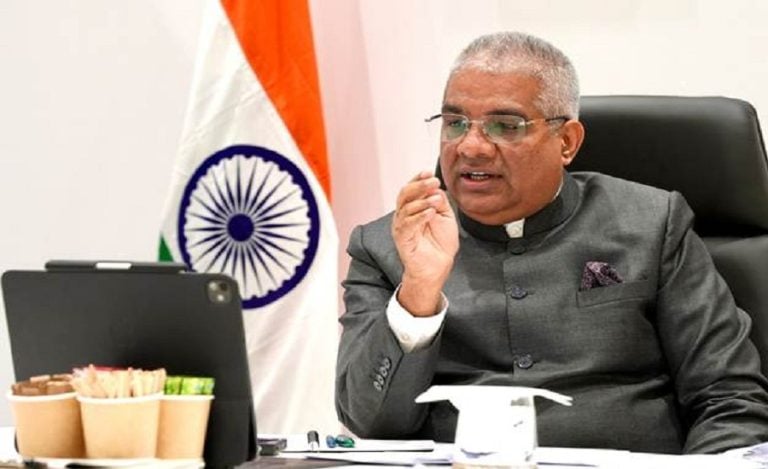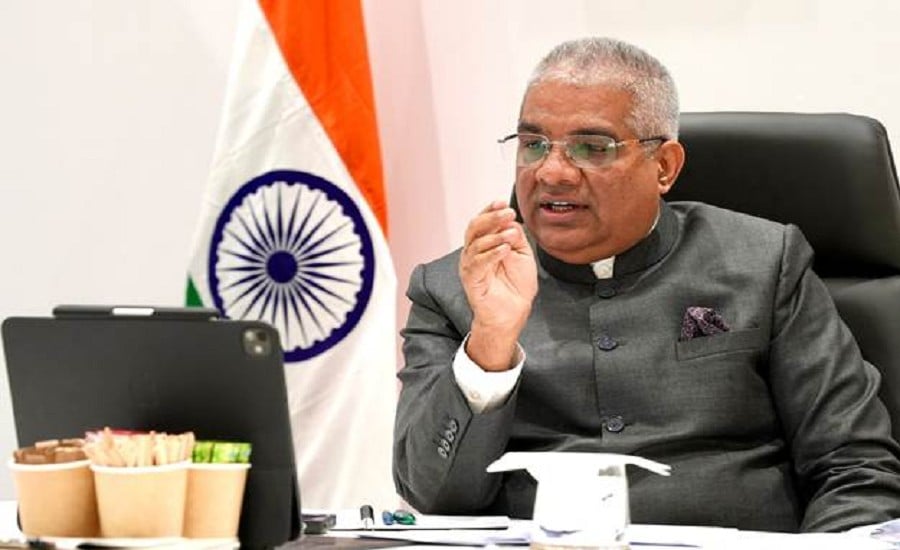
Delhi: Union Environment Minister Bhupender Yadav has directed civic bodies across Delhi-NCR to adopt a zero-tolerance approach towards air pollution violations and ensure strict enforcement of pollution control measures during the winter season.
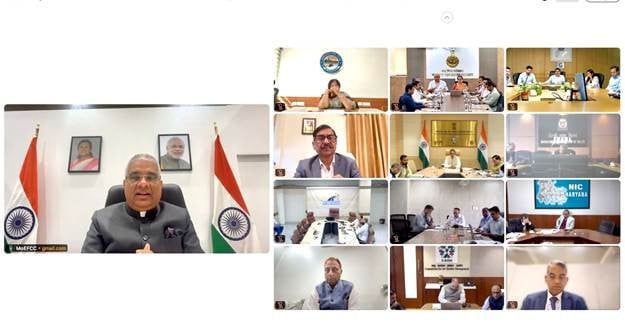
Chairing a virtual review meeting from Antalya, Türkiye, on Thursday, Yadav assessed the preparedness and implementation of Winter Action Plans by municipal bodies in Delhi, Ghaziabad, Noida, Gurugram and Faridabad.
The minister emphasised the need for visible and sustained action on the ground, daily monitoring, strict enforcement and accountability at every level of administration. He also called for citizen-centric governance and urged officials to ensure that pollution control measures are implemented without creating unnecessary panic among residents.
The meeting reviewed progress across various pollution control measures, including waste management, road dust mitigation, construction and demolition waste management, hotspot mitigation and implementation of the Graded Response Action Plan (GRAP).
Strict Action Against Open Waste Burning and Dumping
Yadav directed Municipal Corporations to take strict penal action against those found burning municipal waste, dry leaves and biomass in the open. He called for the establishment of Quick Response Teams (QRTs) in every ward to address complaints within hours and ensure accountability of officers in cases of enforcement failures.
The minister also directed civic bodies to ensure complete processing of daily waste generation and accelerate the remediation of legacy waste dumpsites within a fixed timeline, particularly at Bhalswa and Okhla in Delhi.
To strengthen decentralised governance, he called for regular ward-level reviews by Mayors and dedicated WhatsApp groups with designated nodal officers to facilitate time-bound grievance redressal.
He also urged civic bodies to replicate successful initiatives across NCR, including:
- MCD’s Malba App: For managing construction and demolition waste.
- Faridabad Municipal Corporation’s Pothole Ambulance: To address road-related issues.
- Gurugram Municipal Corporation’s survey-based initiative: For identifying sanitation workers.
- Ghaziabad Nagar Nigam’s C&D waste portal: A platform for sharing construction and demolition waste-related information.
Read also: Big Cat Conservation Can Boost Climate Change Mitigation, Says Bhupender Yadav at COP31
Road Dust Management and Construction Site Compliance
Reviewing road dust management measures, Yadav directed civic bodies to expedite road repairs and strengthen the deployment of Mechanical Road Sweeping Machines (MRSMs).
He called for the full utilisation of sweeping machines, including double-shift operations during winter, along with GPS-enabled monitoring and supervision through Integrated Command and Control Centres (ICCCs).
The minister also directed officials to ensure daily removal of roadside dust, silt and construction debris to prevent their accumulation and reduce pollution.
For Gurugram, he stressed advance planning of road development projects and dust mitigation measures, including greening of identified open spaces to address PM10 pollution.
He further directed strict compliance with dust mitigation norms at construction and demolition sites, operationalisation of wheel-washing facilities and regular inspections. Sites found seriously non-compliant should face stringent enforcement action, including closure.
Emphasising the need to prevent dust pollution, Yadav said the objective should be to ensure “No Visible Dust” in and around construction sites.
The minister also called for greater awareness of Solid Waste Management Rules and proactive identification of bulk waste generators, citing Delhi’s efforts in this regard.
Hotspot Mitigation and Strict GRAP Implementation
The minister also reviewed pollution hotspots and the implementation of GRAP measures across Delhi-NCR cities.
He directed civic bodies to appoint dedicated nodal officers for pollution hotspots and prepare hotspot-specific action plans. These plans must be reviewed regularly by Mayors and designated officials to ensure that pollution control measures are implemented effectively.
Yadav stressed that all measures prescribed under the prevailing stage of GRAP must be enforced without exception.
To strengthen institutional accountability, he directed Collectors to regularly review the performance of municipal bodies and take corrective action against those lagging in pollution control efforts.
He also asked the Secretaries of the Ministry of Environment, Forest and Climate Change (MoEFCC) and the Ministry of Housing and Urban Affairs (MoHUA), along with the Chairpersons of the Commission for Air Quality Management (CAQM) and Central Pollution Control Board (CPCB), to review the performance of municipal corporations and municipalities across NCR.
Real-Time Grievance Monitoring and Public Awareness
Emphasising measurable outcomes, Yadav directed officials to monitor public grievances in real time and ensure that complaints are closed only after physical verification and confirmation of resolution.
He also called for intensive public awareness campaigns involving relevant stakeholders to encourage citizen participation in pollution control efforts.
The minister stressed that pollution mitigation requires sustained action throughout the winter season, with every ward demonstrating visible progress daily through strict enforcement, continuous monitoring, public participation and accountability.
Officials Present at the Review Meeting
The meeting was attended by Union Minister of State for Environment, Forest and Climate Change Kirti Vardhan Singh; MoEFCC Secretary Narendra Bhooshan; CAQM Chairperson Rajesh Verma; Secretary, Department of Capital Development, MoHUA, D. Thara; MoEFCC Director General and Special Secretary Santosh Tewari; Additional Secretary, MoEFCC, and CPCB Chairperson Amandeep Garg.
Mayors and Municipal Commissioners of the respective municipal corporations, the CEO of Noida Authority and senior officials from state governments were also present.
CAQM Member Secretary Tarun Pithode presented the progress made by NCR cities, while CAQM Chairperson Rajesh Verma provided an overview of on-ground implementation of the action plans and pending measures.
The review comes amid heightened concerns over winter air pollution in Delhi-NCR, with the Union Environment Ministry emphasising coordinated action by civic bodies to strengthen enforcement and improve air quality across the region.