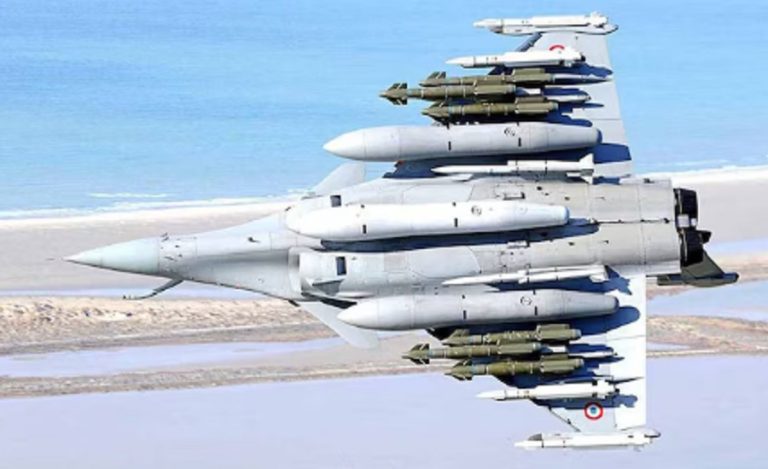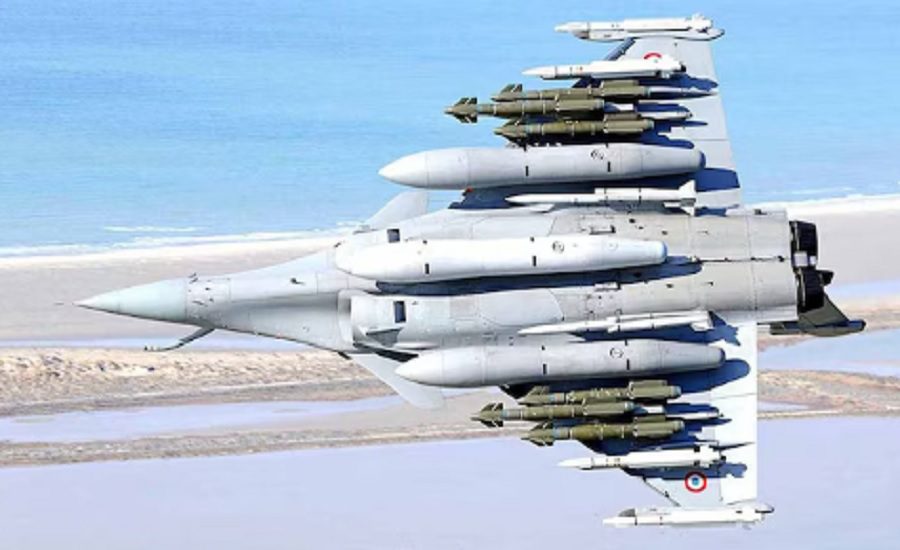
New Delhi: The Indian Air Force (IAF) is pushing for greater control over its future fleet of 114 Rafale fighter jets by seeking the integration of India’s indigenous Astra air-to-air missile and advanced communication systems. The proposed arrangement would allow the IAF to use Indian-made weapons without depending on foreign approval. It could also make the existing fleet of 36 Rafale fighters eligible for similar upgrades.
Rafale Fighter Jet Upgrade: IAF Wants Independent Weapons Integration
According to a report published on November 18, 2026, the IAF has made independent weapons integration one of its key conditions for the proposed acquisition of 114 additional Rafale fighter jets from French manufacturer Dassault Aviation.
Read also: Will Rafale Fighter Jets Be Built In India? Here’s What Dassault’s Latest Report Says
Under this arrangement, India would have the freedom to integrate and use its own weapons without seeking separate approval from foreign authorities.
This would be an important step towards India’s defence self-reliance, as the country continues to develop advanced missiles and weapons systems through the Defence Research and Development Organisation (DRDO) and domestic defence industries.
The proposed arrangement could allow the indigenous Astra Beyond Visual Range Air-to-Air Missile (BVRAAM) to become part of the Rafale’s weapons package.
Rafale Fighter Jet Upgrade: Indigenous Astra Missile Could Strengthen Rafale’s Combat Capabilities
The Astra missile is one of India’s important indigenous air-to-air weapons developed by DRDO.
It is designed to engage enemy aircraft from beyond visual range, allowing fighter pilots to attack targets without having to see them directly.
According to the Ministry of Defence, the Astra missile has a range exceeding 100 kilometres and uses an indigenous Radio Frequency (RF) seeker.
DRDO and the Indian Air Force successfully tested the missile from a Su-30MKI fighter aircraft in July 2025.
Integrating Astra with the Rafale would give the IAF another domestic weapons option and reduce its dependence on imported air-to-air missiles over time. It could also provide greater flexibility in selecting weapons according to different operational requirements.
Rafale Fighter Jet Upgrade: Existing 36 Rafale Fighters Could Also Receive Indigenous Weapons
One of the most important aspects of the reported arrangement is its possible application to India’s existing Rafale fleet. The IAF currently operates 36 Rafale fighter jets, which were acquired under the 2016 agreement with France.
According to the latest report, the proposed independent weapons integration capability could also be extended to these aircraft.
This would be significant because India would not have to limit the benefits of indigenous weapons integration to the additional 114 fighters.
The IAF could potentially develop a more common weapons ecosystem across its Rafale fleet, subject to the necessary technical work and contractual arrangements.
Special Ground Equipment Will Support Independent Weapons Integration
The reported arrangement also includes access to specialised ground support equipment. This equipment, including weapons test benches, would help the IAF test, calibrate and configure indigenous weapons for the Rafale platform.
Such facilities are important because integrating a new missile into a fighter aircraft requires more than simply attaching it to the aircraft.
The weapon must communicate properly with the aircraft’s radar, computers, targeting systems and other onboard equipment.
Independent access to these facilities would give Indian defence teams greater control over future weapons integration activities.
Advanced Software-Defined Radio To Connect Rafale With IAF Networks
Another major requirement for the proposed 114 Rafale acquisition is an advanced Software-Defined Radio (SDR) system. The IAF wants the new aircraft to communicate securely and exchange information quickly with its existing and future military platforms.
A Software-Defined Radio is a programmable communication system that can support secure information sharing between different military platforms.
This capability is important for modern air warfare, where fighter aircraft, ground-based radars, unmanned aerial vehicles and military commanders need to share information in real time.
The system would help the Rafale operate more effectively alongside aircraft and defence systems developed in different countries.
What Is The ‘Any Sensor, Best Shooter’ Concept
The SDR requirement supports the IAF’s broader vision of ‘Any Sensor, Best Shooter’. Under this concept, the aircraft that detects an enemy target does not necessarily have to be the aircraft that attacks it.
For example, a ground-based radar or an unmanned aerial vehicle could detect an enemy aircraft and share its information with a nearby fighter jet.
The fighter could then use this information to engage the target. This approach allows different military platforms to work together instead of operating as separate units.
It could improve battlefield awareness, coordination and response time, especially when dealing with advanced combat aircraft and stealth threats.
India Does Not Need Complete Rafale Source Code For These Capabilities
An important clarification in the latest report is that India is not seeking complete access to the Rafale’s core source code. Source code is the underlying software that controls important aircraft functions, including sensors, weapons and mission systems.
According to the defence sources quoted in the report, complete access to this software is not necessary for independent weapons integration or secure communication through SDR.
Instead, the focus is on obtaining the technical capabilities and equipment needed to integrate Indian weapons and connect the aircraft with the IAF’s wider communication network.
This approach could help India secure greater operational independence while respecting the French manufacturer’s proprietary technology.
Read also: France Submits 114 Rafale Fighter Jet Proposal, India Begins Technical Review
FAQs
According to the latest defence report, the proposed independent weapons integration capability could also be extended to the existing 36 Rafale fighters operated by the IAF.
The IAF is reportedly seeking the integration of India’s indigenous Astra beyond-visual-range air-to-air missile on its proposed 114 new Rafale fighter jets. The final implementation will depend on the procurement contract and technical integration.
Software-Defined Radio (SDR) will help Rafale fighters securely exchange information with other IAF aircraft, radars, drones and ground-based command systems. It will support faster communication and coordinated military operations.