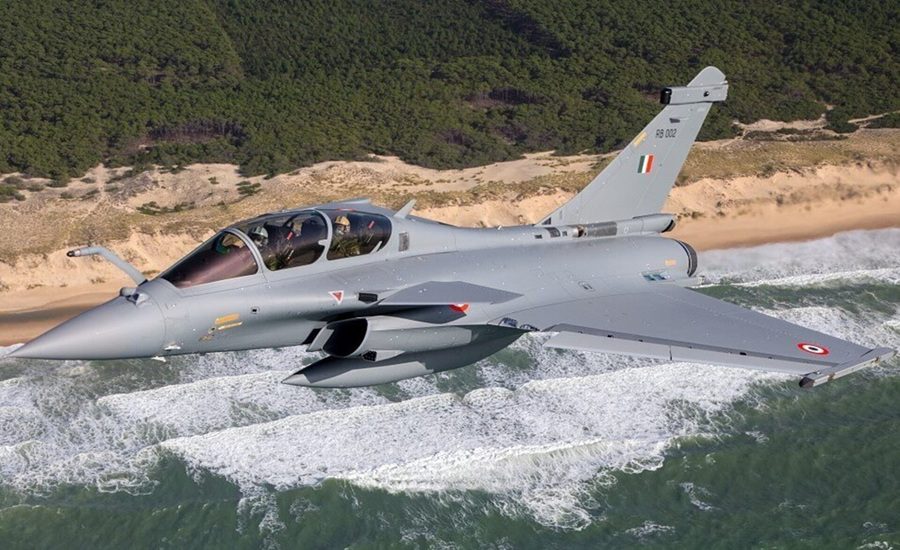
New Delhi: Dassault India Manufacturing is entering a new phase as French aerospace company Dassault Aviation expands its industrial footprint across India. According to the company’s 2026 Half-Year Financial Report, India is becoming a major manufacturing and engineering hub for both Rafale fighter jets and Falcon business aircraft. The report highlights Dassault’s growing partnerships with Indian companies and signals its readiness to support the Indian Air Force’s proposed 114-aircraft Multi-Role Fighter Aircraft (MRFA) programme through local manufacturing and final aircraft assembly.
Details of Dassault India Plans
Dassault Aviation says India is no longer just a customer for military aircraft. The company’s latest financial report shows that India is becoming an important manufacturing, engineering and supply-chain centre for both military and civil aviation. This expansion supports India’s “Make In India” and Aatmanirbhar Bharat initiatives while strengthening Dassault’s global production network.
The report also indicates that Dassault is preparing an industrial roadmap that includes final aircraft assembly, flight testing and a wider manufacturing ecosystem in India if it wins the Indian Air Force’s MRFA competition.
What Is The MRFA Programme
The Multi-Role Fighter Aircraft (MRFA) programme is one of the Indian Air Force’s biggest fighter aircraft acquisition plans. The project aims to purchase 114 modern fighter jets to strengthen the IAF’s combat capability and replace ageing aircraft over the coming years. Although the procurement process is still underway, Dassault’s financial report clearly shows that the company is preparing a strong industrial proposal focused on local manufacturing and technology partnerships in India.
Dassault Wants More Aircraft Manufacturing In India
One of the biggest highlights of the report is Dassault’s plan to move beyond manufacturing aircraft parts. The company says its industrial roadmap includes complete aircraft assembly and flight testing in India if selected under the MRFA programme. If implemented, this would represent a major expansion of India’s aerospace manufacturing capabilities and could significantly increase local value addition.
Dassault India Plans: DRAL Plays A Key Role In Dassault’s India Strategy
The report identifies Dassault Reliance Aerospace Limited (DRAL) at MIHAN, Nagpur, as one of the company’s most important production centres in India. Originally established to manufacture Falcon aircraft components, the facility has steadily expanded its manufacturing capabilities and now contributes to Dassault’s global aerospace supply chain. According to the report, DRAL has become an important production hub for Falcon aircraft while supporting Dassault’s long-term industrial plans in India.
Tata Advanced Systems To Manufacture Rafale Fuselage Sections
Dassault has also expanded its partnership with Tata Advanced Systems Limited (TASL). The company has selected TASL as a global supplier for important fuselage sections of the Rafale fighter aircraft. Production will take place at Tata’s Hyderabad facility, helping expand India’s role in the global Rafale manufacturing ecosystem.
This partnership is expected to strengthen India’s aerospace manufacturing skills while increasing exports of high-value aircraft structures.
Indian Companies Are Becoming Global Aerospace Suppliers
Dassault’s industrial strategy now includes several Indian companies. Besides DRAL and TASL, the report highlights Dynamatic Technologies, which manufactures rear fuselage sections for Falcon 6X business jets, and Hical Technologies, which supplies flight control components for Rafale aircraft. This shows that Indian private companies are increasingly becoming trusted suppliers for complex aerospace systems used worldwide.
Why Is Dassault India Plans Important For India?
Dassault’s expansion could bring several long-term benefits for India’s defence sector. These include:
- Higher indigenous manufacturing
- Advanced aerospace technology transfer
- Skilled employment opportunities
- Stronger defence supply chains
- Increased exports of aerospace components
- Better maintenance and lifecycle support for future aircraft
The company’s strategy closely aligns with India’s goal of reducing dependence on imported defence equipment while developing a globally competitive aerospace industry.
Read also: Egypt Considers Buying India’s Pinaka Rocket System Amid Defence Modernisation Push