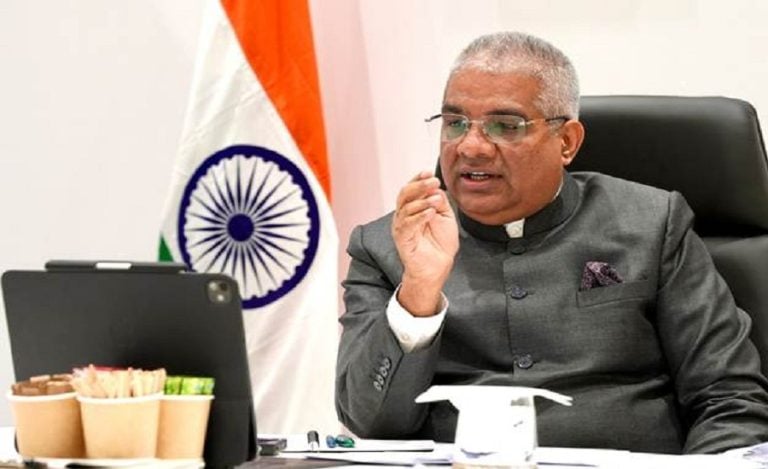
Tokyo: India and Japan are preparing to review their defence ties and strategic cooperation during the India-Japan 2+2 Ministerial Dialogue 2026 in Tokyo. Defence Minister Rajnath Singh and External Affairs Minister S Jaishankar arrived in Japan on November 18 for the two-day official visit.
The meeting will focus on defence technology, maritime security, military exercises and regional stability. Both countries are also expected to discuss ways to strengthen their Special Strategic and Global Partnership.
India-Japan Defence Talks 2026: Key Details
The fourth India-Japan Foreign and Defence Ministers’ Dialogue (2+2) is scheduled to take place in Tokyo on November 19, 2026.
Rajnath Singh and S Jaishankar will co-chair the meeting with their Japanese counterparts, Defence Minister Shinjiro Koizumi and Foreign Minister Toshimitsu Motegi.
According to India’s Ministry of Defence, the meeting will review the full range of bilateral defence and strategic cooperation.
The ministers will also exchange views on regional and international developments and discuss their shared vision for a free, open and rules-based Indo-Pacific. The previous India-Japan 2+2 dialogue was held in New Delhi on August 20, 2024.
What are the Key Focus Areas of India-Japan Defence Talks 2026
Defence technology and maritime security are expected to be important topics during the discussions.
According to the Ministry of Defence, both countries will explore ways to strengthen cooperation in defence equipment, advanced technology and industrial partnerships.
The two sides are also expected to discuss increasing the scale and complexity of joint military exercises involving their armies, navies and air forces.
Another important area is maritime security cooperation. India and Japan are working to improve cooperation between their naval forces to protect important sea routes and strengthen security across the Indo-Pacific region.
In August 2026, both countries signed a Memorandum of Arrangement on Maritime Security Cooperation.
The agreement provides a framework for cooperation in maritime information sharing, search and rescue operations, and humanitarian assistance and disaster relief.
Rajnath Singh Visits Japanese Naval Base At Yokosuka
During his visit, Rajnath Singh met his Japanese counterpart, Shinjiro Koizumi, in Tokyo. The Japanese Defence Minister welcomed him with a ceremonial Guard of Honour at Japan’s Ministry of Defence. Both ministers also visited the Japan Maritime Self-Defence Force naval base at Yokosuka.
During the visit, they inspected the JS Natori, a Mogami-class multi-mission frigate operated by Japan’s Maritime Self-Defence Force. The visit provided an opportunity to understand Japan’s naval capabilities and discuss practical maritime security cooperation.
Rajnath Singh said that growing maritime cooperation reflects the trust and shared commitment between India and Japan towards a free, open and rules-based Indo-Pacific.
Jaishankar Holds Talks With Former Japanese PM Fumio Kishida
External Affairs Minister S Jaishankar also held a meeting with former Japanese Prime Minister Fumio Kishida in Tokyo.
Kishida is currently the chairman of the Japan-India Association. During their meeting, both leaders discussed strategic cooperation and economic security.
Jaishankar highlighted the importance of strengthening the India-Japan Special Strategic and Global Partnership. He also underlined the importance of cooperation in areas such as defence, technology, energy security, innovation and reliable global supply chains.
Jaishankar will also participate in the third edition of the Raisina Tokyo dialogue during his visit.
India And Japan Strengthen Their Defence Partnership
India and Japan have steadily expanded their defence cooperation through regular meetings, military exercises and technology partnerships.
Both countries conduct several important joint military exercises. These include:
- Dharma Guardian: Joint military exercise between the Indian Army and Japan Ground Self-Defence Force.
- JAIMEX: Maritime exercise between the Indian Navy and Japan Maritime Self-Defence Force.
- Veer Guardian: Joint air exercise between the Indian Air Force and Japan Air Self-Defence Force.
Both countries also participate in multilateral naval exercises such as Malabar and MILAN.
The two countries signed an agreement in 2020 for the reciprocal provision of supplies and services between their armed forces. It helps provide logistical support during military exercises and naval visits.
In August 2026, India and Japan also discussed cooperation in naval shipbuilding, defence equipment transfers and ship repair facilities. These developments show the growing scope of defence cooperation between the two countries.
Why Is The India-Japan Defence Talks 2026 Important
India and Japan share common interests in maintaining peace, stability and security in the Indo-Pacific region. Both countries have important maritime interests and support freedom of navigation and respect for international rules.
Japan brings advanced manufacturing technology and industrial expertise, while India offers a large production base, skilled workforce and growing defence manufacturing capabilities.
Stronger cooperation can create opportunities in defence technology, naval manufacturing, military training and industrial partnerships.
The fourth 2+2 dialogue is expected to provide an opportunity for both countries to review existing cooperation and identify new areas for collaboration.
Read also: India-Japan Defence Deal: How UNICORN Could Strengthen Indian Navy Warships
FAQs
India will be represented by Defence Minister Rajnath Singh and External Affairs Minister S Jaishankar. Japan will be represented by Defence Minister Shinjiro Koizumi and Foreign Minister Toshimitsu Motegi.
India and Japan conduct three major bilateral military exercises: Dharma Guardian between their armies, JAIMEX between their navies and Veer Guardian between their air forces.
India and Japan are holding the 2+2 dialogue to review their defence and strategic partnership, strengthen maritime security cooperation and discuss regional and global developments.