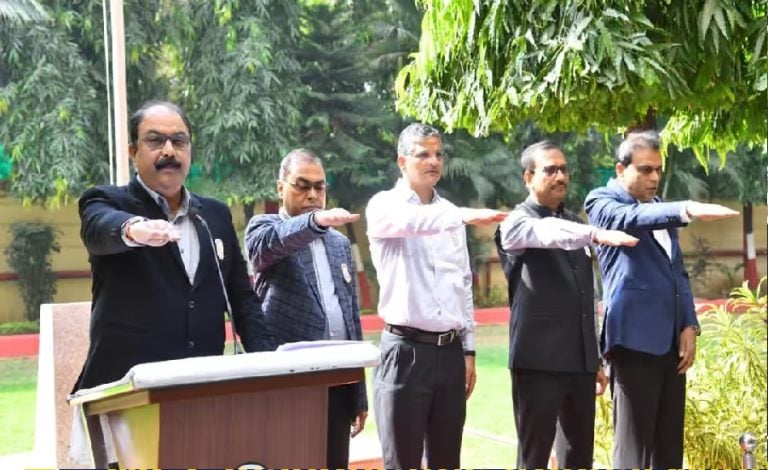
New Delhi: The Union Public Service Commission (UPSC) on November 16 organised a one-day national workshop for Secretaries of State Public Service Commissions (PSCs) at Dholpur House, New Delhi, focusing on examination security, technology adoption and recruitment reforms.
The workshop brought together Secretaries, Joint Secretaries and senior officials from State Commissions to discuss operational challenges, exchange administrative practices and explore ways to strengthen recruitment systems across the country.
The initiative was organised in pursuance of a decision taken at the 25th National Conference of Chairpersons of State Public Service Commissions, held in Bengaluru in January 2025.
‘More Technology Needed to Check Those Using Technology to Beat the System’
Addressing the participants, UPSC Chairman Dr. Ajay Kumar (IAS: 1985: KL), emphasised the role of technology in protecting the integrity and fairness of competitive examinations.
He said, “When people use technology to beat the system, the only way is to use more technology to keep a check on them, so that the system remains fair and transparent and the integrity of the examination process is upheld.”
He also referred to the Prime Minister’s emphasis on sharing best practices among Public Service Commissions during the UPSC centenary celebrations.
Highlighting the Commission’s recent initiatives, Dr. Kumar cited:
- AI-enabled face authentication of candidates at examination venues.
- Universal Registration Number (URN) for applicants.
- Digitisation of Departmental Promotion Committee (DPC) proposals.
- Computerised randomisation of interview boards.
Secretaries Bridge Policy Intent and Administrative Execution
Welcoming the participants, UPSC Secretary Shashi Ranjan Kumar described the workshop as a platform for officials performing similar responsibilities across different administrative settings.
He said, “While Chairpersons and Members shape the vision, it is our duty as Secretaries to ensure that operational mechanisms are robust, legally sound, fair and technologically modern. We bridge policy intent with administrative execution.”
He noted that several State Commissions had developed effective practices in areas such as:
- Digital processing of applications.
- Conduct of examinations in regional languages.
- Grievance redressal mechanisms.
He urged the participating Commissions to document and share such practices through a common repository of best practices. Depending on feedback, the workshop could also become an annual feature.
Four Key Areas Taken Up for Discussion
The working sessions covered four major areas of the recruitment process:
- Examination security: Procedures to safeguard examinations and maintain public trust.
- Transparent selection: Practices to ensure fairness and transparency in candidate selection.
- Recruitment rules: Updating recruitment rules to reflect changing job profiles and requirements.
- Disciplinary and appeal cases: Handling disciplinary matters while balancing administrative accountability with the principles of natural justice.
Officials from the UPSC branches dealing with examinations, recruitment, recruitment rules, and disciplinary and appeal cases presented their procedures, followed by discussions with representatives of State Commissions.
The programme concluded with a vote of thanks and a visit to the UPSC Museum.
Read Also: UPSC IFS Mains Admit Card 2026 Released; Check Download Steps, Exam Dates and Centre Details