New Delhi: Bengaluru Scientists have made an important breakthrough in understanding solar eruptions using Aditya-L1 and Proba-3 satellites. Researchers combined observations from India’s Aditya-L1 mission and the European Space Agency’s Proba-3 mission to study powerful eruptions from the Sun.
The study provides new information about the shape, speed, density, mass, and energy of these eruptions. It also shows how two different space instruments can work together to provide a clearer picture of solar activity.
What Are Solar Eruptions
Solar eruptions are powerful events that release huge amounts of material and energy from the Sun. One important type is called a Coronal Mass Ejection (CME).
Read also: ISRO’s Solar Observatory Aditya-L1 Provides First Direct Proof of 40-Year-Old Solar Wind Theory
A CME occurs when the Sun releases a large cloud of electrically charged particles and magnetic fields into space. These clouds can travel at hundreds of kilometres per second.
When CMEs reach Earth, they can disturb the planet’s magnetic field. Strong events may affect satellites, radio communication, navigation systems, and power networks. Scientists study these events to improve their understanding of space weather and help prepare for possible disruptions.
How Aditya-L1 And Proba-3 Worked Together
Researchers from the Indian Institute of Astrophysics (IIA), Bengaluru, worked with international collaborators to study CMEs using data from two space missions.
India’s Aditya-L1 mission carries an instrument called the Visible Emission Line Coronagraph (VELC). Europe’s Proba-3 mission carries the Association of Spacecraft for Polarimetric and Imaging Investigation of the Corona of the Sun (ASPIICS).
Both instruments observe the Sun’s outer atmosphere, known as the solar corona. However, they use different methods to collect scientific information.
VELC studies the light emitted by the hot gases in the corona. This helps scientists understand the temperature and physical properties of the material involved in solar eruptions.
ASPIICS captures images of the corona in visible light. These images help researchers examine the shape, size, and movement of a CME.
By combining these observations, scientists can study solar eruptions in greater detail than they could with data from a single instrument.
Scientists Study Two Solar Eruptions With the Help of Aditya-L1
The research team compared two CMEs observed on September 14 and September 16, 2025. These events were recorded simultaneously by VELC and ASPIICS. The observations allowed scientists to compare the images of the eruptions with measurements of the light emitted by their hot gases.
The instruments captured the eruptions at an early stage. This was important because CMEs can change their shape, speed, density, and energy as they move away from the Sun. The findings showed that the two eruptions behaved differently, demonstrating why scientists need to study each event carefully.
Different Speeds Revealed Different Behaviours
According to the reported findings, the CME observed on September 14 travelled at approximately 645 kilometres per second. In comparison, the CME observed on September 16 moved at around 145 kilometres per second.
This means the first eruption was much faster than the second one. The researchers also found that the density of the September 16 CME decreased more rapidly with height. This suggested that the eruption expanded more strongly during its early development.
These differences help scientists understand how solar eruptions develop and how their physical properties change as they travel through the corona.
Sharp Images Help Scientists Measure CMEs
ASPIICS provides detailed white-light images of the solar corona. These images help researchers estimate the shape, size, and movement of a CME.
VELC adds another layer of information through spectroscopy, which involves studying light at different wavelengths. Its observations of the green coronal emission line provide information about the hot gases associated with the eruption.
The researchers used these different types of measurements to estimate the density and thermal energy of the CMEs. The two instruments also shared a common field of view in the lower corona. This allowed scientists to compare observations of nearly the same region of the Sun. Combining the data helped researchers check their estimates and improve the reliability of their findings.
What Did Scientists Learn About CME Energy
The study also examined the different forms of energy associated with the two solar eruptions.
These included kinetic energy, which is the energy of movement; thermal energy, which is related to temperature; and magnetic energy, which is stored in magnetic fields.
The findings showed that thermal energy accounted for only about 1% of the total energy in the September 14 CME. For the September 16 event, thermal energy increased until it became comparable to the kinetic energy, according to the reported study.
The researchers also found that the estimates of mass and thermal energy from VELC and ASPIICS agreed well, even though the instruments used different methods and assumptions. This agreement strengthened confidence in the combined measurements.
Why This Research Is Important
Understanding CMEs is important because solar activity can influence conditions throughout the Solar System.
Powerful CMEs can interact with Earth’s magnetic field and trigger geomagnetic storms. These storms may affect satellite operations, navigation services, communication systems, and electrical infrastructure.
Better measurements of CME speed, density, mass, and energy can help scientists improve models of how these eruptions develop. The combined observations from Aditya-L1 and Proba-3 could also help researchers understand the early stages of solar eruptions, when important changes in their structure and energy take place.
The study demonstrates the scientific value of combining different observation techniques to investigate complex solar events.
Aditya-L1 And Proba-3 Mission Details
India’s Aditya-L1 Mission
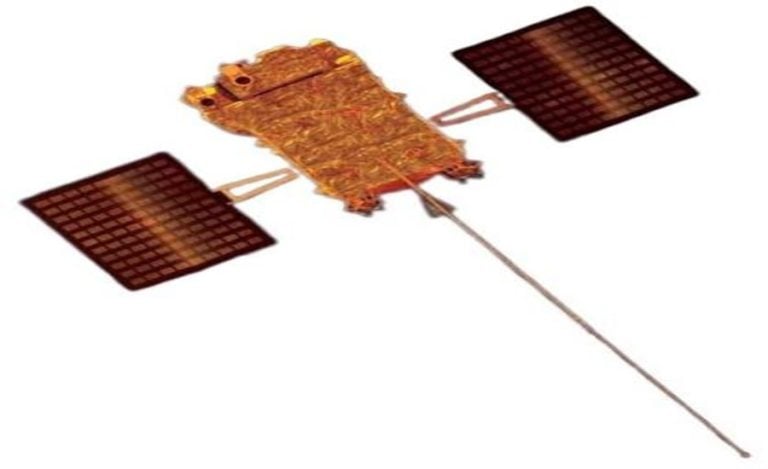
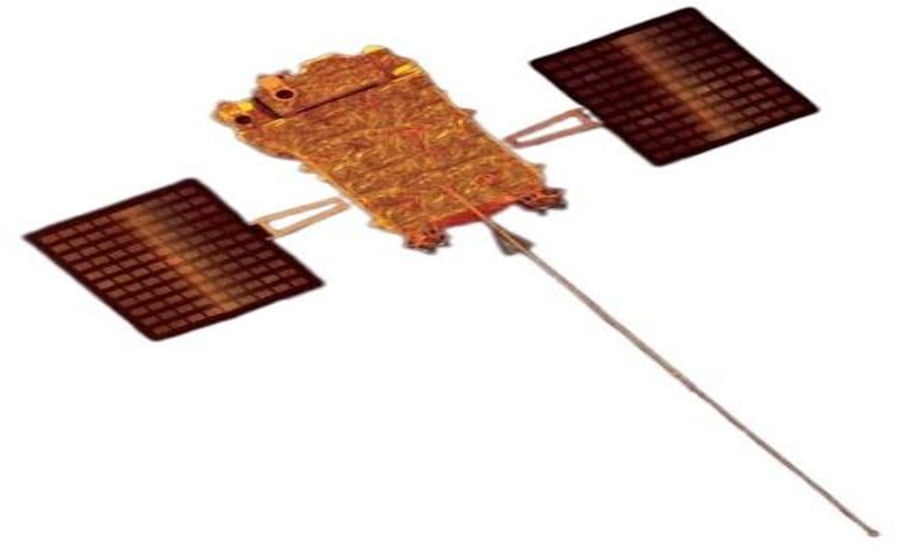
Aditya-L1 is India’s first dedicated solar mission. The Indian Space Research Organisation (ISRO) launched it on September 2, 2023, using a PSLV-C57 rocket.
The spacecraft operates around the Sun-Earth L1 Lagrange point, approximately 1.5 million kilometres from Earth in the direction of the Sun. This location allows the spacecraft to observe the Sun for long periods with minimal interruption from Earth.
Its VELC instrument is designed to study the solar corona, including its temperature, dynamics, and other physical properties.
Europe’s Proba-3 Mission
Proba-3 is a European Space Agency mission launched on December 5, 2024, using a PSLV-XL rocket from Sriharikota, India.
The mission uses two spacecraft flying in a carefully controlled formation. One spacecraft blocks the Sun’s bright disc, allowing the other spacecraft to observe the much fainter corona.
The two spacecraft operate approximately 150 metres apart during their formation-flying observations. This artificial eclipse makes it possible to study the solar corona in ways that are difficult to achieve with a single spacecraft.
Read also: India’s Aditya-L1 Mission Gains Momentum as ISRO Expands Solar Research Opportunities Globally
FAQs
Aditya-L1 is India’s dedicated solar mission, and its VELC instrument studies the solar corona using spectroscopic observations. Proba-3 is a European mission that uses two spacecraft flying in formation to create an artificial eclipse and capture detailed images of the corona.
Scientists from Bengaluru and their collaborators combined observations from Aditya-L1 and Proba-3 to study two coronal mass ejections. They measured their speed, density, mass, shape, and energy to better understand how solar eruptions develop.
Scientists study coronal mass ejections to understand how solar material and magnetic fields travel through space. These eruptions can cause geomagnetic storms that may affect satellites, communication, navigation, and power systems on Earth.