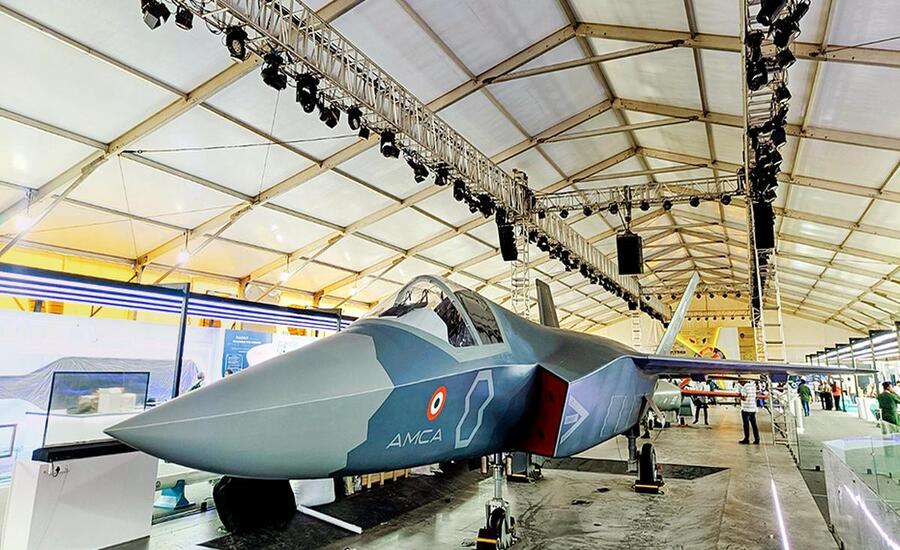
New Delhi: India’s Advanced Medium Combat Aircraft programme has moved forward with a new engineering initiative. The Aeronautical Development Agency (ADA) has invited bids for electrical harness design activities and drawing release for India’s planned fifth-generation stealth fighter. The move highlights continued progress in the aircraft’s design and engineering work as India works towards developing an advanced indigenous combat aircraft.
AMCA Programme: ADA Issues New Tender For Electrical Harness Design
The Aeronautical Development Agency (ADA), operating under the Defence Research and Development Organisation (DRDO), has issued a consultancy tender for electrical harness design activities and drawing release for the AMCA programme.
The tender carries the identification number GEM/2026/B/8164482 and was published on October 15, 2026.
According to the tender details, the contract is planned for approximately two years. Interested bidders were required to submit an Earnest Money Deposit (EMD) of ₹10 lakh.
The bid submission deadline was November 5, 2026, with the opening scheduled for November 6, 2026.
What Is Electrical Harness Design And Why Is It Important
Electrical harness design is an important part of modern fighter aircraft development. It involves planning and designing the complete network of electrical wires and connections inside an aircraft.
These wires connect different systems, including:
- Flight control systems
- Radar and communication equipment
- Electronic warfare systems
- Aircraft sensors
- Avionics and onboard computers
- Electrical power systems
In simple terms, electrical harnesses work like the nervous system of an aircraft. They help different electronic components communicate and operate together.
For a fifth-generation stealth fighter like the AMCA, this work requires careful planning because wiring must fit within the aircraft’s limited internal space without affecting its performance.
Key Engineering Challenges In AMCA Wiring Design
The electrical wiring system of a modern stealth fighter must meet several important engineering requirements.
1. Electromagnetic Compatibility: Engineers must ensure that electrical systems do not create unwanted interference with sensitive equipment such as radar, sensors and communication systems.
2. Weight Optimisation: Aircraft designers must keep wiring weight under control because unnecessary weight can affect aircraft performance and efficiency.
3. System Reliability: Critical electrical connections must remain reliable during demanding flight conditions.
4. Redundancy And Safety: Important aircraft systems need suitable backup arrangements to maintain functionality if a component or connection fails.
5. Maintenance And Accessibility: Engineers must design wiring routes that allow technicians to inspect, repair and replace components more easily.
These requirements make electrical harness design an important part of the AMCA’s overall engineering process.
AMCA Programme: ADA Also Plans To Procure 431 Computing Units
Alongside the electrical harness design tender, the Aeronautical Development Agency has issued another procurement tender for 431 computing units.
The procurement, identified as GEM/2026/B/8152801, covers different types of computing equipment required for engineering and technical activities. The planned equipment includes:
- Desktop computers
- Engineering workstations
- High-performance workstations
- Professional laptops
- AI mini workstations
- Network switches
These systems can support important engineering activities such as computer-aided design (CAD), structural analysis, aircraft modelling, software development and computer simulations.
The procurement also indicates the importance of computing infrastructure in the development of advanced military aircraft.
FAQs
Electrical harness design establishes the wiring network that connects the aircraft’s radar, sensors, avionics, flight controls, communication equipment and other electronic systems.
The Aeronautical Development Agency has issued a tender for electrical harness design activities and drawing release for the AMCA fifth-generation fighter aircraft programme.
India plans to develop five AMCA prototypes before moving towards the series production phase, according to the Ministry of Defence’s programme announcement.