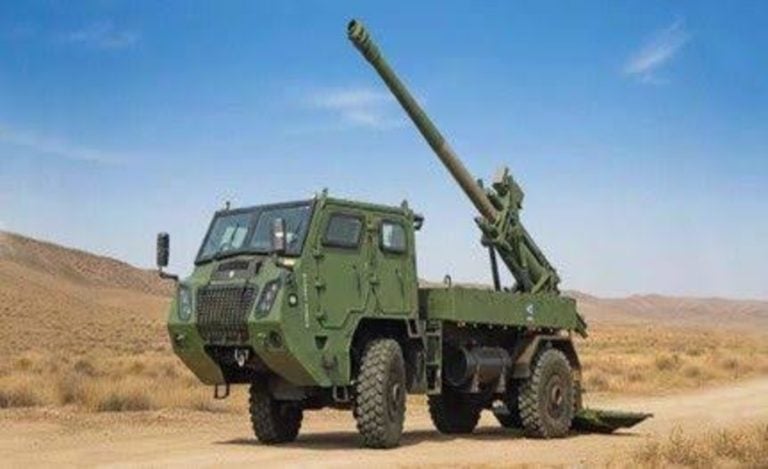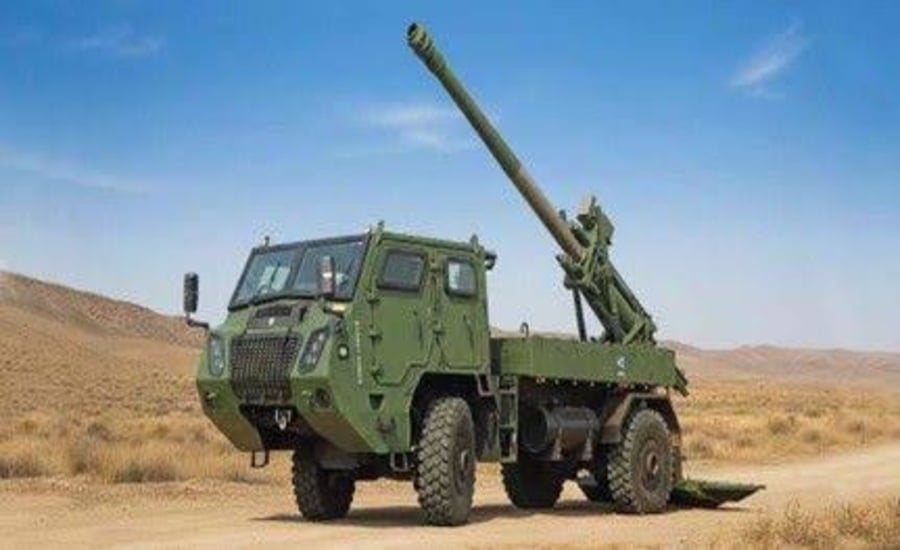
New Delhi: Kalyani Strategic Systems Limited (KSSL), a subsidiary of Bharat Forge, has reportedly completed the desert testing phase of its indigenous Mounted Gun System (MGS) at the Pokhran firing ranges in Rajasthan.
The Kalyani Mounted Gun System is now expected to face another major challenge in the cold and mountainous conditions of Sikkim. These evaluations could help assess the artillery system’s ability to operate across India’s different battlefield environments.
Details of Indigenous Mounted Gun System Pokhran Trial
According to the latest report, Kalyani Strategic Systems Limited has successfully completed the desert testing phase of its locally developed Mounted Gun System in coordination with the Indian Army.
Read also: Indian Navy BrahMos Missile Deployment: Key Plans, Benefits and 2030 Roadmap
The Pokhran firing ranges in Rajasthan provided a challenging environment for evaluating the weapon system’s performance in extreme heat, dust and difficult desert conditions.
These trials are important because military equipment must perform reliably in different weather and geographical conditions before it can be considered suitable for operational use.
The successful completion of this reported testing phase represents progress for India’s indigenous artillery development programme.
Indigenous Mounted Gun System Sikkim Winter Trials Will Test High-Altitude Performance
Following the reported Pokhran evaluation, the Mounted Gun System is expected to undergo another important assessment in Sikkim. Unlike the hot and dusty conditions of Rajasthan, the Himalayan region presents different operational challenges.
The upcoming winter evaluation is expected to examine the system’s performance in extremely cold temperatures, high-altitude conditions and difficult mountain terrain.
These conditions can affect mechanical components, vehicle mobility and weapon performance.
The results will help assess whether the artillery platform can operate reliably in India’s challenging mountainous border regions. However, the completion date and detailed schedule of the Sikkim trials have not yet been officially confirmed.
What Makes Indigenous Mounted Gun System Important
The Mounted Gun System is an indigenous artillery platform developed by Kalyani Strategic Systems Limited.
It combines an artillery weapon with a mobile vehicle platform, allowing military units to move and deploy the system more easily than traditional stationary artillery arrangements. Its vehicle-mounted design is intended to provide several battlefield advantages.
1. High Mobility
The vehicle-mounted configuration allows the artillery system to move between different positions. This capability can be particularly useful in areas where military forces need to change locations quickly.
2. Shoot-And-Scoot Capability
One important advantage of mobile artillery is its shoot-and-scoot capability. It allows a weapon system to fire from one position and relocate quickly to another location.
This reduces the time spent at a firing position and can help limit exposure to enemy counter-battery attacks.
3. Rapid Deployment
Quick deployment is another important requirement for modern artillery systems. A mobile artillery platform can help military units respond to changing battlefield situations more efficiently. However, specific performance figures for the system discussed in the latest report should not be treated as officially verified specifications.
FAQs
According to a November 2026 defence news report, the system has completed its Pokhran desert testing phase alongside the Indian Army. An independent official confirmation of this specific development has not yet been located.
Kalyani’s Mounted Gun System is an indigenous mobile artillery platform developed by Kalyani Strategic Systems Limited, a subsidiary of Bharat Forge. It is designed to combine artillery firepower with vehicle-based mobility.
The proposed Sikkim winter trials will assess the system’s performance in extreme cold, high-altitude conditions and mountainous terrain. These tests will help evaluate its suitability for challenging Himalayan operational environments.