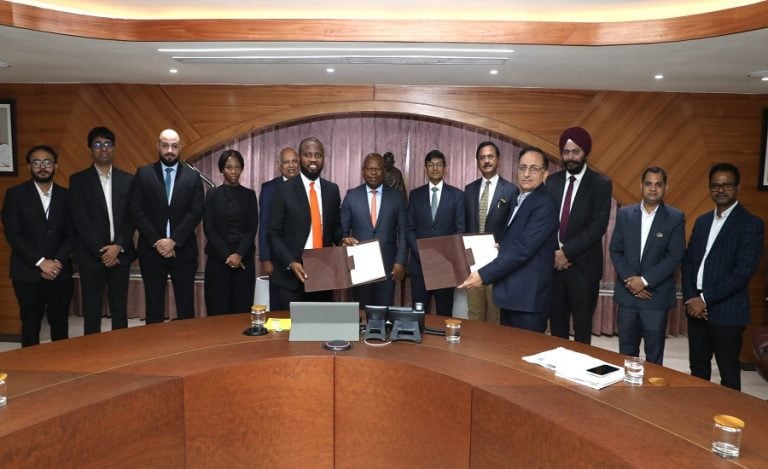
New Delhi: The KSSL FN Herstal partnership marks an important step in India’s efforts to strengthen indigenous defence manufacturing. Bharat Forge’s wholly owned subsidiary, Kalyani Strategic Systems Limited (KSSL), has signed a Memorandum of Understanding (MoU) with Belgium-based FN Herstal to explore local production of advanced small arms and integrated weapon systems in India. The initiative aligns closely with the Government of India’s Make in India and Aatmanirbhar Bharat programmes.
The agreement was announced on September 3, 2026, and focuses on expanding India’s domestic defence industrial capabilities through manufacturing, technology cooperation, and potential long-term strategic collaboration.
What Is The KSSL FN Herstal Partnership
Under the MoU, KSSL and FN Herstal will evaluate the establishment of a dedicated production centre in India. The companies will also assess the possibility of creating a Strategic Alliance or Joint Venture to address the requirements of the Indian defence market.
Read also: Atmanirbhar Bharat Boost: Bharat Forge 1.25 MW Marine Gas Turbine Generator Enters Trial Phase
The collaboration will cover a broad range of defence products, including small arms, integrated weapon systems, and Counter-Unmanned Aerial System (C-UAS) solutions.
Focus On Local Manufacturing
A major objective of the agreement is to manufacture advanced defence products within India. This approach supports the government’s goal of reducing dependence on imports while increasing domestic production capabilities.
The partnership is expected to create opportunities for technology transfer, local value creation, and skill development in the defence sector.
Who Are KSSL And FN Herstal
Kalyani Strategic Systems Limited (KSSL)
KSSL is the defence arm of Bharat Forge and has become one of India’s leading private defence manufacturers. The company develops and produces artillery systems, ammunition, armoured solutions, drones, air defence systems, and other military equipment for domestic and export markets. KSSL has also emerged as an important supplier to the Indian Armed Forces and has expanded its presence in international defence markets.
FN Herstal
FN Herstal is one of the world’s most respected small arms manufacturers. Based in Belgium, the company has more than 135 years of experience in developing military firearms, machine guns, weapon stations, and integrated weapon systems used by armed forces across the world. The partnership combines FN Herstal’s global expertise with KSSL’s manufacturing scale and engineering capabilities in India.
How KSSL FN Herstal Partnership Supports Make In India
The agreement directly supports India’s defence self-reliance strategy. By encouraging local manufacturing and technology cooperation, the project aims to strengthen India’s defence industrial base and increase domestic participation in military procurement programmes. The initiative is also expected to improve long-term supply security for the Indian Armed Forces. Producing critical defence systems locally can reduce procurement delays and provide greater strategic autonomy.
Potential Benefits For The Indian Armed Forces
The collaboration could provide access to advanced small arms and weapon technologies manufactured in India. It may also improve lifecycle support, maintenance capabilities, and availability of critical defence equipment for military users.
Growing India-Belgium Defence Cooperation
The KSSL-FN Herstal agreement comes at a time when India and Belgium are expanding cooperation in defence and trade. Both countries recently agreed to deepen collaboration across strategic sectors, including defence manufacturing and technology partnerships.
This broader cooperation framework creates opportunities for additional industrial partnerships between Indian and Belgian defence companies.
FAQs
The partnership is an MoU between Kalyani Strategic Systems Limited and Belgium’s FN Herstal to explore local manufacturing of small arms, integrated weapon systems, and counter-drone solutions in India.
The agreement can boost indigenous defence manufacturing, encourage technology cooperation, create skilled jobs, and reduce dependence on imported defence equipment.
The companies will first evaluate the feasibility of establishing a dedicated production centre and may also consider a future strategic alliance or joint venture.