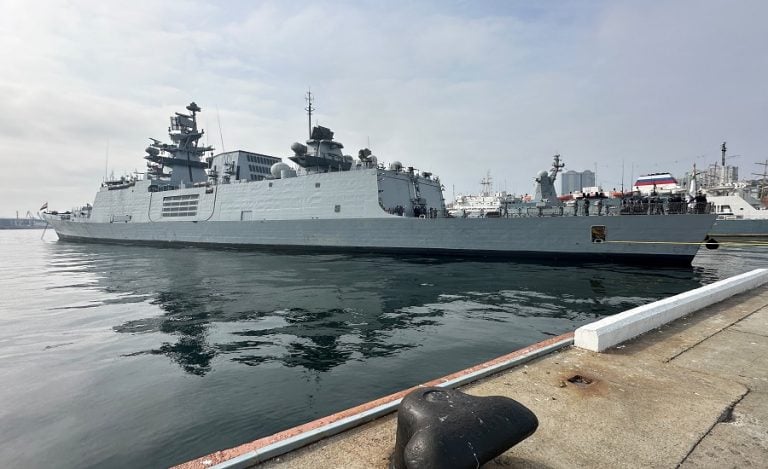
New Delhi: India’s indigenous marine gas turbine generator programme has reached an important stage as Bharat Forge prepares to begin trials of its 1.25 MW Marine Gas Turbine Generator (MGTG) for the Indian Navy. The project is a major step toward strengthening India’s defence manufacturing capabilities and reducing dependence on foreign suppliers. The trials are expected to validate the system before deployment on frontline warships.
Key Highlights of the Bharat Forge 1.25 MW Marine Gas Turbine Generator Project
- Bharat Forge will begin trials of the indigenous 1.25 MW Marine Gas Turbine Generator.
- The Ministry of Defence has already signed a ₹425 crore contract for 12 generator sets.
- The project requires a minimum of 60% indigenous content.
- The generators are expected to power Kolkata-class destroyers of the Indian Navy.
- The initiative supports the government’s Atmanirbhar Bharat and defence indigenisation goals.
Read also: India’s New Fire-and-Forget Missile Is Ready—Here’s What Makes MP-ATGM Special
What Is The Marine Gas Turbine Generator
The 1.25 MW Marine Gas Turbine Generator is designed to generate electrical power onboard naval warships. Unlike propulsion turbines that move ships, these generators supply electricity to critical systems such as combat management systems, radars, sensors, communication equipment and advanced weapon platforms. The system is considered one of the most important power-generation components used in modern naval vessels.
Background Of The Project
In June 2026, the Ministry of Defence signed a contract worth approximately ₹425 crore with Bharat Forge Limited for the acquisition of 12 indigenous Marine Gas Turbine Generator sets. The contract was awarded under the Buy (Indian) category of the Defence Acquisition Procedure (DAP) 2020, ensuring significant domestic participation in manufacturing. The agreement mandates at least 60% indigenous content, making it a major Make-in-India defence project.
Why The Upcoming Trials Are Important
The upcoming trials will test the generator’s:
Performance
The generator will be assessed under different operating conditions to verify power output and operational efficiency.
Reliability
Engineers will evaluate whether the system can continuously support naval combat operations without failure.
Endurance
Long-duration testing will help determine its suitability for deployment on operational warships.
Successful trials could pave the way for installation on Kolkata-class destroyers and future Indian Navy platforms.
How This Benefits The Indian Navy
For decades, India depended heavily on imported marine gas turbine technology. The indigenous generator programme will reduce foreign dependence and improve self-reliance in maintaining critical naval systems.
Domestic production can also shorten supply chains and reduce maintenance challenges during emergencies or geopolitical disruptions.
Read also: How The Indian Navy Plans To Fight Future Naval Battles With A Layered Missile Network