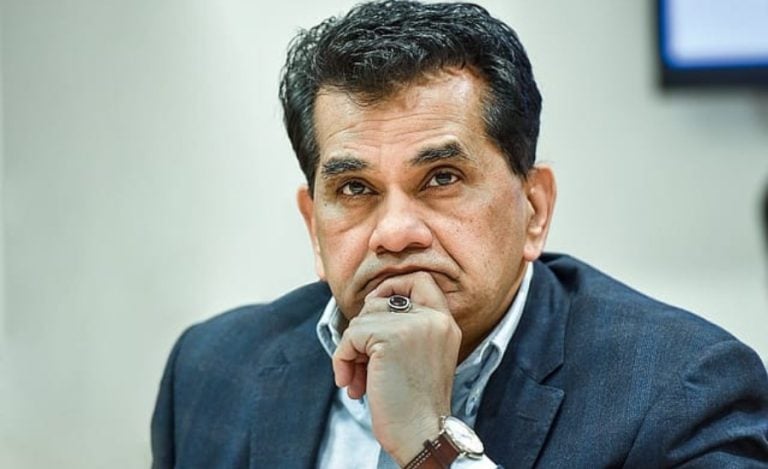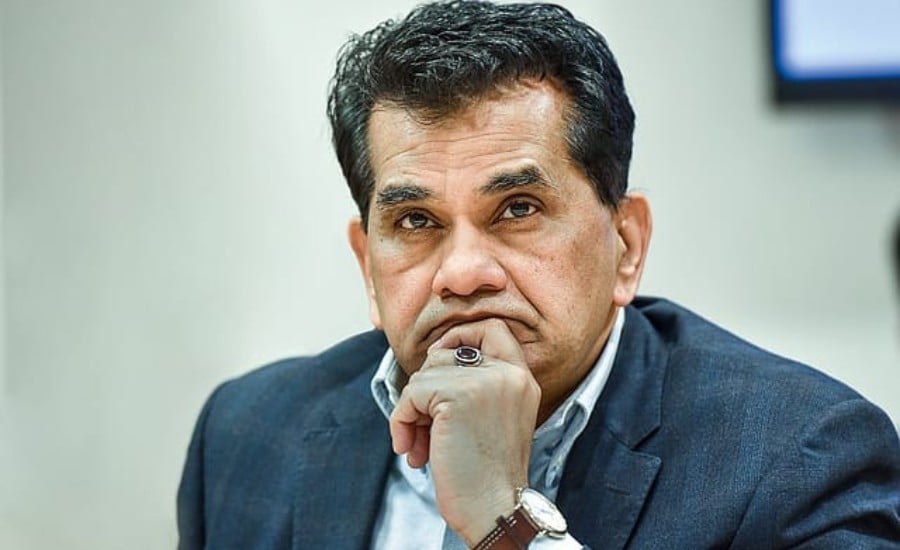
New Delhi: Former NITI Aayog CEO and India’s former G20 Sherpa Amitabh Kant has revealed that he once came close to resigning from the Indian Administrative Service (IAS) after facing political opposition over an anti-encroachment drive in Kerala. The 1980-batch officer said he remained without a posting for approximately 11 months after the action and reached a point where he felt his administrative career had come to an end.
Speaking to media, Kant reflected on his 45-year public service career, including the difficult phase that followed his tenure as District Collector of Kozhikode. He also described his work with Kerala’s fishing communities and the state’s tourism sector as among the most meaningful experiences of his career.
Anti-Encroachment Drive in Kozhikode Led to Professional Setback
During his tenure as District Collector of Kozhikode, Kant initiated a major drive to reclaim public spaces that had been occupied by buildings and commercial establishments.
The campaign resulted in the removal of approximately 450 encroachments from the city’s central green belt, helping restore the area that is now known as Mananchira Maidan.
He also recalled several urban infrastructure initiatives undertaken during his tenure, including the expansion of 29 roads, construction of a city bypass and work related to Kozhikode airport.
However, the anti-encroachment action triggered political opposition. Kant said one of the properties removed during the drive was a five-star hotel whose owner later became a minister and Deputy Chief Minister of Kerala.
According to Kant, the political fallout led to cases being initiated against him, leaving him without an official posting for around 11 months.
Recalling the emotional impact of the period, he said he felt his career was over and admitted that he had considered it better to resign.
Tourism Secretary Posting Became a Turning Point
After the prolonged period without a posting, Kant was appointed Secretary of Tourism in the Kerala government. Although the assignment was viewed by some as a punishment posting at the time, it became a significant phase of his administrative career.
He recalled that Kerala’s tourism sector had limited national visibility, with Kovalam being among the state’s few established tourist destinations.
Kant worked towards developing a tourism identity rooted in Kerala’s natural landscapes, backwaters, cultural traditions and local heritage rather than replicating Western tourism models.
His approach contributed to the promotion of the state’s now widely recognised “God’s Own Country” tourism identity.
Key Elements of Kerala’s Tourism Strategy
- Promoting the state’s backwaters and traditional landscapes.
- Highlighting cultural art forms such as Kathakali and Mohiniyattam.
- Showcasing Kalaripayattu and Ayurveda.
- Giving greater visibility to local cuisine and cultural heritage.
- Building a tourism identity based on Kerala’s distinct regional character.
Kant recalled the philosophy behind the campaign as an effort to make Kerala a unique destination that would remain connected to its roots.
Working With Fishermen Became His Most Satisfying Public Service Experience
Kant also spoke about his early years in Kerala, particularly his work with coastal fishing communities. He said he initially felt disappointed when he was allotted the Kerala cadre in 1980, having completed his schooling in Uttar Pradesh and Delhi.
To integrate into the state, he studied Malayalam regularly for two years. He subsequently spent nearly four years working closely with fishing communities.
At the time, fishermen reportedly received only around 18 per cent of the market price of their catch, with several intermediaries taking a share of the earnings.
Kant described a series of interventions aimed at improving fishing technology, market access and the financial position of fishing families.
Measures Introduced for Fishing Communities
- Introduction of outboard motors and fibreglass fishing crafts.
- Promotion of improved fishing nets, including those known as “disco nets”.
- Establishment of beach-level auctions to reduce dependence on intermediaries.
- Dedicated bus services for fisherwomen.
- Opening of bank accounts for fishermen to encourage savings.
Kant said these interventions helped increase the fishermen’s share of the market price from approximately 18 per cent to nearly 90 per cent.
Describing the experience, he called living and working with the fishing community the most satisfying experience of his life.
From Incredible India to Make in India: Kant’s National Assignments
Kant moved to New Delhi on central deputation in 2001, joining the Union Ministry of Tourism as Joint Secretary.
During his tenure in the ministry, he played a key role in the Incredible India tourism campaign, launched in 2002 to promote India as an international travel destination.
He subsequently held several senior positions in the central government, including Secretary of the Department of Industrial Policy and Promotion (DIPP) and Chief Executive Officer of the Delhi-Mumbai Industrial Corridor Development Corporation.
His work also included major national initiatives such as Make in India and Startup India.
Major Roles and Initiatives in His Career
- Kerala Tourism Secretary: Contributed to the state’s tourism branding and the “God’s Own Country” campaign.
- Joint Secretary, Union Ministry of Tourism: Associated with the Incredible India campaign.
- DIPP Secretary: Led initiatives including Make in India and Startup India.
- CEO, Delhi-Mumbai Industrial Corridor Development Corporation: Worked on the industrial corridor initiative.
- CEO, NITI Aayog (2016–2022): Led programmes including the Aspirational Districts Programme, Production-Linked Incentive schemes and India’s National AI Strategy.
- India’s G20 Sherpa (2022–2025): Played a key role in building consensus around the New Delhi Leaders’ Declaration during India’s 2023 G20 Presidency.
Who Is Amitabh Kant?
Amitabh Kant is a retired 1980-batch IAS officer of the Kerala cadre, known for his work in public administration, tourism promotion and economic policy.
He studied Economics at St. Stephen’s College, University of Delhi, and completed his postgraduate studies in International Relations at Jawaharlal Nehru University. He is also a Chevening Scholar.
Kant served as CEO of NITI Aayog from 2016 to 2022 and later represented India as its G20 Sherpa during the country’s G20 Presidency. His administrative career included assignments in Kerala and several senior positions in the Union government.
His account of considering resignation after a prolonged period without a posting offers a glimpse into the professional challenges he faced during his early years in public service. The same Kerala chapter, however, also produced some of the experiences he has described as the most rewarding of his career.
Read Also: NITI Aayog to Document PM Modi’s 25 Years in Government Through Five National Governance Workshops