Kolkata: The West Bengal government has introduced a new investment promotion policy offering financial assistance of up to 120% of eligible investment in plant and machinery, alongside employment-linked incentives and time-bound project approvals, as it seeks to attract fresh industrial investment and accelerate job creation.
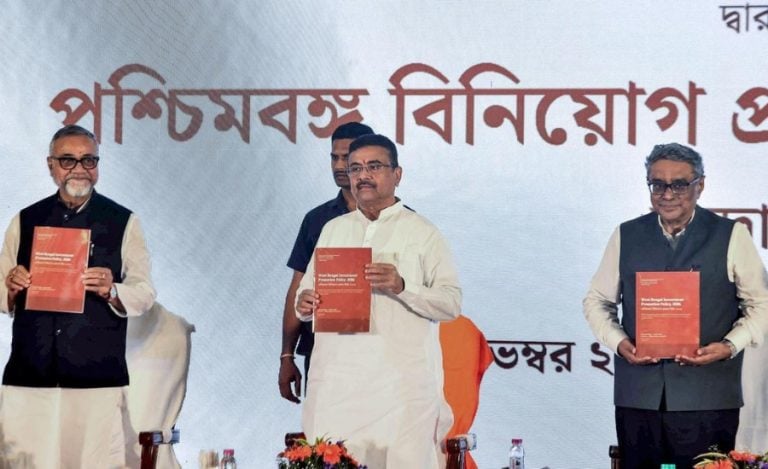
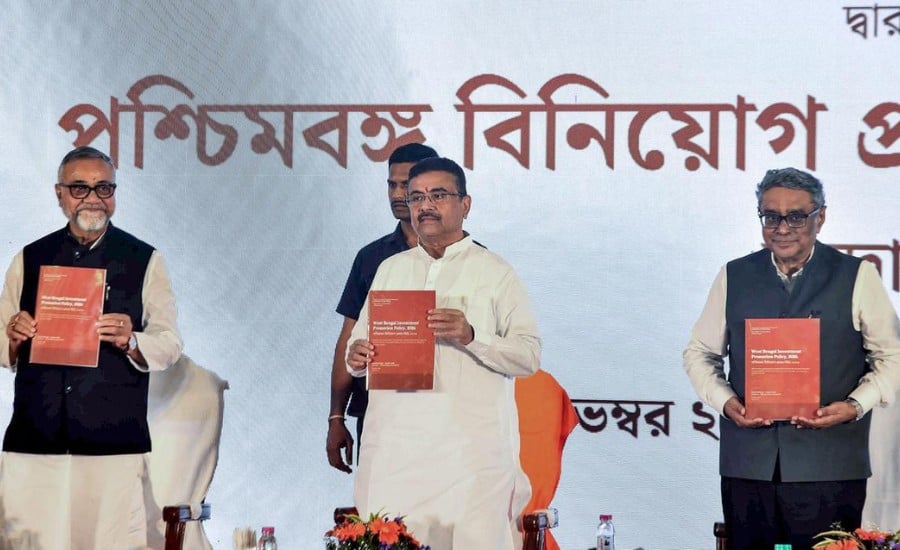
Chief Minister Suvendu Adhikari unveiled the West Bengal Investment Promotion Policy, 2026, on November 5. The policy, which is effective retrospectively from May 9, 2026, the day the BJP government assumed office in the state, aims to strengthen manufacturing, encourage private investment and improve the state’s industrial ecosystem.
The framework covers micro, small and medium enterprises (MSMEs), large industrial units, strategic and mega projects, as well as service-sector businesses.
Investment Assistance of Up to 120% for Eligible Industrial Units
A key feature of the new policy is financial assistance linked to the fixed capital investment (FCI) made in plant and machinery. The assistance ceiling varies according to the category and location of the industrial unit.
Read Also: West Bengal Unveils New Industrial Policy, Targets ₹1 Lakh Crore Investment Pipeline
The policy provides for:
- 100% assistance of eligible plant and machinery investment for regular units.
- 110% assistance for units operating in thrust sectors or designated priority areas.
- 120% assistance for units belonging to thrust sectors and located in priority areas.
The assistance will be provided over a period of up to 10 years from the commencement of commercial production. It will stop once the applicable investment-linked ceiling is reached or the 10-year period ends, whichever comes first.
The policy also provides for additional incentives linked to electricity duty, stamp duty, State Goods and Services Tax (SGST) and other eligible components.
Jobs-First Policy Offers Higher EPF Support for Women and Transgender Employees
Employment generation is another central component of the investment framework, with higher incentives for businesses employing women and transgender persons.
Under the policy, eligible MSMEs will receive reimbursement of the employer’s contribution to the Employees’ Provident Fund (EPF) for a period of 10 years.
The reimbursement structure includes:
- 100% reimbursement of the employer’s EPF contribution for women and transgender employees in eligible MSMEs.
- 50% reimbursement for male employees in eligible MSMEs.
- For eligible service-sector units employing more than 200 people, reimbursement of 75% for women and 50% for men for five years.
- Large and strategic industrial projects will also receive employment-linked assistance, subject to the prescribed eligibility conditions.
The policy seeks to make employment generation a measurable component of industrial incentives rather than focusing only on capital investment.
Fixed Timelines for Project Approvals and Incentive Payments
The government has also promised a time-bound approval mechanism to reduce procedural delays and provide greater certainty to investors.
The proposed timelines include:
- 30 days for issuing a Certificate of Intent.
- 45 days for issuing a Certificate of Eligibility.
- 30 days for sanctioning and releasing eligible assistance after a complete claim is submitted.
The policy envisages an online, single-window process for applications, approvals and incentive payments, with procedures to be made faceless wherever possible.
Large industrial projects will also be assigned dedicated relationship officers to coordinate with government departments and facilitate clearances.
Semiconductors, EVs, Green Hydrogen Among Priority Sectors
The policy identifies several industries as thrust sectors to attract investment in emerging technologies, manufacturing and strategic industries.
These include:
- Semiconductors and electronics manufacturing
- Electric vehicles and battery manufacturing
- Green hydrogen, waste-to-energy and compressed biogas
- Defence manufacturing and shipbuilding
- Emerging digital technologies
- Pharmaceuticals and medical devices
- Automobiles and speciality steel
- Textiles and food processing
- Petrochemicals and aviation
The government also intends to encourage research and development, technological innovation and collaboration between industries and academic institutions.
Renewable Energy and Revival of Sick Industrial Units
The policy includes provisions intended to support industries adopting renewable energy and revive eligible sick and closed industrial units.
Among the announced measures is a waiver of cross-subsidy and additional surcharges on renewable energy sourced through open access within the state until March 2030.
Eligible sick and closed industrial units that can be revived will also receive special assistance under the policy.
Certain eligible non-profit institutions, including hospitals and universities making investments exceeding ₹100 crore, may also qualify for additional benefits, subject to the conditions and categories notified by the state government.
New Policy Follows 2025 Withdrawal of Earlier Industrial Incentive Schemes
The announcement marks a change in the state’s industrial incentive framework following the passage of the Revocation of West Bengal Incentive Schemes and Obligations in the Nature of Grants and Incentives Act, 2025.
The legislation, notified in April 2025, revoked several earlier industrial incentive schemes, including schemes introduced in 1993, 1999, 2000, 2004, 2008, 2013, 2015 and 2021.
At the launch, Adhikari criticised the previous government’s approach to industrial incentives and said the new administration wanted to rebuild investor confidence.
He also spoke about the state’s approach to industrial land, saying that his government would neither resort to forcible land acquisition nor leave industries entirely responsible for arranging land without government support.
The Chief Minister said the government had already handed over land to 33 business groups and was working to meet industrial land requirements.
A GIS-mapped inventory of land parcels for industrial use is also being prepared, according to state government officials.
Government Seeks to Position Bengal as an Investment Destination
The new policy is part of the BJP government’s stated effort to revive industrial activity and expand employment opportunities in West Bengal.
Adhikari interacted with representatives of industry during the launch and sought their feedback on the changes they had experienced since the new government took office.
He said the government would support businesses and protect their interests if industrialists cooperated with its industrialisation efforts.
Industries and Commerce Minister Tapas Roy and Finance Minister Swapan Dasgupta were also present at the launch.
With incentives linked to capital investment, employment generation and priority sectors, the state government is seeking to establish a more structured framework for attracting industrial projects and expanding the state’s manufacturing base.