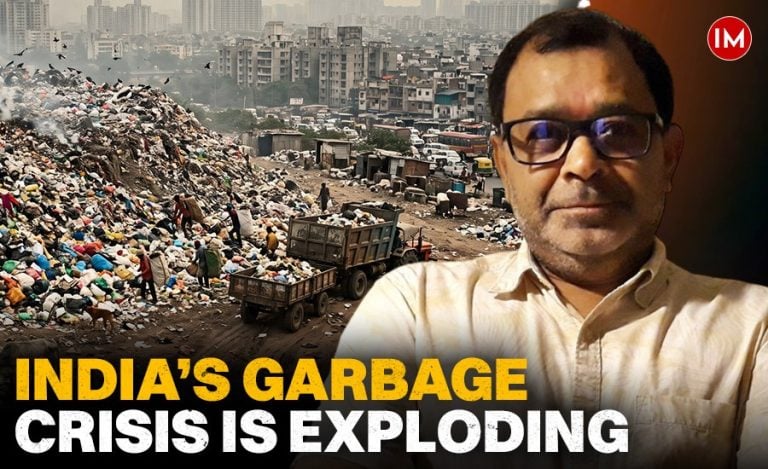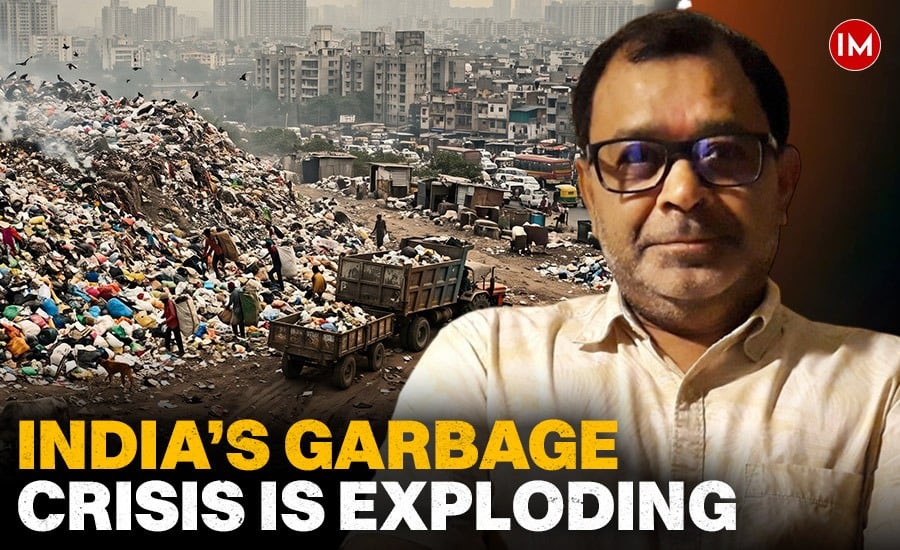
India generates nearly 97 million tonnes of municipal solid waste annually, a figure projected to reach 165 million tonnes by 2030. Ravi Kant explains how regional processing facilities, public-private partnerships and scientific waste disposal can turn this mounting challenge into an opportunity for sustainable development.
India is witnessing unprecedented infrastructure growth, rapid urbanisation and industrial expansion. But alongside this progress, another challenge is growing at an alarming pace: municipal solid waste.
India currently generates approximately 2.66 lakh tonnes of municipal solid waste (MSW) every day, amounting to 970 lakh tonnes annually. By 2030, this is projected to increase to 4.52 lakh tonnes daily, or 1,650 lakh tonnes annually.
The average waste generation per urban Indian has also increased from 400 grams per day in 2021 to approximately 624 grams in 2025. By 2030, it is expected to reach 1,061 grams per person per day.
The problem is not merely how much waste India generates, but how little of it is scientifically managed. While approximately 89 per cent of municipal waste is collected, only 53 per cent is processed and disposed of scientifically. The remainder is dumped on land and in water bodies, creating an environmental catastrophe.
Having worked closely with several large municipal solid waste management projects in India, I believe the country already has the technology and operational experience to address this challenge. What it needs now is political will, suitable infrastructure and a long-term strategy.
The Mountains of Waste Outside Our Cities
For decades, cities deposited their garbage beyond municipal boundaries. Over time, these dumping grounds grew into enormous mountains of waste, becoming the unwanted neighbours of expanding urban settlements.
Also Read – Beyond Tourism: Lokesh Ohri’s Journey Through the Myths, Mysteries and Sacred Trails of Uttarakhand
Today, more than 24 crore tonnes of legacy waste lie across approximately 2,400 dumpsites in India.
The danger extends beyond the visible garbage. The contaminated liquid draining from these dumps, known as leachate, contains heavy metals, organic pollutants and pathogens. Its seepage contaminates groundwater and soil.
Exposure to such toxic pollutants is linked to gastrointestinal disorders, neurological conditions and cancer. The consequences are particularly concerning in a country where approximately 16.3 crore people depend on untreated groundwater for drinking.
These dumpsites have far-reaching implications for public health, the economy, the environment and climate. They are ticking time bombs that demand immediate attention.
Waste Management Must Become Essential Urban Infrastructure
Greater infrastructure and industrial growth inevitably mean greater waste generation. The resulting pressure on air, water and soil makes scientific waste management an essential requirement.
Waste-processing infrastructure must be incorporated into the master plans of Indian cities, just like roads, electricity, water supply and sewage systems. Developed cities across the world already recognise waste management as an essential utility.
India has considerable catching up to do if it wants to become a truly modern country.
The objective must go beyond collecting garbage. Cities need infrastructure that can process waste, recover useful resources and safely dispose of the remaining material.
Segregation Is Important, But Solutions Must Reflect Ground Reality
Segregation at source is the foundation of scientific waste management. Households and establishments must separate wet and dry waste, which should then be transported independently to processing facilities.
Although several cities have attempted local-level segregation, implementation remains inconsistent. Processing plants frequently receive mixed, unsegregated waste.
This reality is unlikely to change completely in the near future. Therefore, India must design its waste-processing solutions to handle unsegregated waste while continuing to encourage source segregation.
The technology must work with the ground reality, not merely depend on ideal conditions.
Why India Needs a Regional Waste Management Approach
Large processing plants handling more than 1,000 tonnes per day offer considerable technical and economic advantages.
Several metropolitan cities generate sufficient waste to support such facilities. Delhi generates approximately 11,000 tonnes per day, Mumbai and Hyderabad around 8,000 tonnes each, Bengaluru and Chennai approximately 6,000 tonnes each, while Indore generates around 1,200 tonnes daily.
However, most Indian cities generate less than 500 tonnes of municipal waste per day.
Building individual processing facilities for every small town may not be economically viable. Instead, India should adopt a regional approach by combining waste from multiple towns and cities at common processing facilities.
This would improve technical efficiency, provide economies of scale and reduce the need for separate land parcels at multiple locations.
Land is a scarce resource, and its unavailability is frequently cited as the principal reason for delaying waste management projects. Regional facilities can help overcome this challenge.
Political Will: The Missing Ingredient
Experience shows that waste management projects move forward only when there is political will. Unlike roads and bridges, waste management rarely translates into immediate electoral gains.
Politicians often avoid or postpone such projects because of two familiar considerations:
- NIMBY – Not In My Back Yard: Communities oppose waste-processing and disposal facilities in their neighbourhoods.
- NIMET – Not In My Elected Term: Political representatives hesitate to undertake projects whose benefits may become visible only after their tenure.
Waste management, however, cannot be postponed indefinitely. It requires long-term planning, land allocation, administrative coordination and political commitment beyond individual electoral cycles.
India’s Legal Framework for Waste Management
The Environment (Protection) Act, 1986, provides the umbrella legislative framework for environmental protection and waste management in India.
Under this Act, the Ministry of Environment, Forest and Climate Change has notified the Solid Waste Management Rules, 2026, which came into force on April 1, 2026.
The Central Public Health and Environmental Engineering Organisation (CPHEEO) has also published the Manual on Municipal Solid Waste Management (2016).
The manual serves as a comprehensive guide for urban local bodies, providing technologies, case studies, financial models and guidelines for designing, operating and maintaining effective municipal solid waste management projects.
The regulatory and technical frameworks are available. The challenge is to translate them into functioning infrastructure.
Understanding How Organic Waste Decomposes
Scientific waste management requires an understanding of how organic matter breaks down.
Decomposition is the process through which dead organic substances, including food, fruits and vegetables, break down into simpler matter. Microorganisms naturally present in the ecosystem facilitate this process.
There are two primary forms of decomposition.
Aerobic decomposition: This occurs in the presence of oxygen. Microorganisms such as bacteria and fungi use oxygen to break down organic matter, producing carbon dioxide, ammonia, water, heat and compost.
Anaerobic decomposition: This takes place in the absence of oxygen, generally inside sealed containers or digesters. Specialised microorganisms called methanogens break down organic matter, producing methane, carbon dioxide and trace quantities of hydrogen sulphide. The resulting gas is known as biogas.
Methane is a potent greenhouse gas, with a warming impact substantially greater than carbon dioxide. However, when captured and processed, it becomes an excellent clean fuel.
Uncontrolled decomposition releases harmful emissions, whereas scientifically managed decomposition can generate valuable resources.
Understanding the Three Components of Municipal Waste
Municipal solid waste broadly comprises three categories.
Recyclables: Paper, plastic, glass, metal, fabric and similar materials. In India, a substantial proportion is recovered through the informal waste collection system involving ragpickers, often under unhygienic conditions, before it reaches processing facilities.
Organic matter: Food waste, garden waste and other biodegradable material. It can be processed through aerobic composting or anaerobic biomethanation. Uncontrolled decomposition damages the environment, making scientific processing essential.
Inerts: Silt, ash and rejects from composting and other processing operations. These must be safely disposed of in engineered sanitary landfills.
The Scientific Waste Management Hierarchy
The waste management hierarchy follows five principles: Reduce, Reuse, Recycle, Recover and Dispose.
Waste generation should first be reduced, followed by reuse and recycling. Materials that cannot be recycled should be assessed for energy recovery.
After exhausting the possibilities of recycling and recovery, the remaining waste must be safely disposed of through two primary methods: burial in engineered landfills or controlled burning in incinerators.
Both processes must be carried out without damaging air, water and soil, either immediately or in the future.
Why Public-Private Partnerships Are the Way Forward
Municipal waste management involves two major activities: collection and transportation, followed by processing and disposal.
Waste management is a 24×7, highly specialised service requiring technology, trained manpower and strict environmental compliance. International experience suggests that specialised private operators are better equipped to deliver these services efficiently than government agencies operating entirely on their own.
A Public-Private Partnership (PPP) model offers a practical solution.
Under this arrangement, the government selects a competent private operator, known as the concessionaire, through transparent and competitive bidding. It provides suitable land, generally at a nominal rate, for establishing the processing and disposal facility.
A long-term concession agreement is signed between the government and the operator.
The private operator brings capital, technology and manpower to establish and operate the facility as a commercial entity throughout the concession period. The operator’s environmental responsibility also extends beyond the concession period, particularly regarding the long-term integrity of secured landfills.
The operator manages municipal waste generated within the Urban Local Body (ULB) area and receives tipping fees from the ULB for providing the service.
Tipping fees are payments calculated per tonne of waste and cover collection and transportation as well as processing and disposal. These payments are generally made monthly.
The operator recovers the investment and operational expenditure over the concession period, which may extend to approximately 20 years. Additional revenue comes from selling compost, biogas, recyclables and electricity.
This creates a win-win-win arrangement for waste generators, the government and private operators. The greatest beneficiary, however, is the environment.
How an Integrated Waste Processing Facility Works
The recommended approach is to transport even unsegregated municipal waste to an integrated processing and disposal facility. The waste is weighed at the entry gate and then separated and processed.
The principal outputs include recyclables, compost, refined biogas (Bio-CNG or Renewable Natural Gas), and electricity. The remaining inerts are sent to secured landfills, while the leachate generated during processing is collected and treated separately.
1. Pre-sorting
The incoming mixed waste is separated into organic waste, dry waste, recyclables, silt and debris.
The dry combustible fraction is processed into Refuse Derived Fuel (RDF), which becomes the feedstock for waste-to-energy plants.
2. Composting
Not all wet organic waste is suitable for biomethanation. The remaining fraction is treated through aerobic composting.
The process produces compost and additional RDF, including combustible rejects that can be used for electricity generation. It also generates leachate, which requires separate treatment.
The inert rejects from composting must be disposed of in scientific landfills.
Compost should not be confused with chemical fertiliser. It is a valuable soil additive that improves soil quality.
3. Biomethanation and Renewable Natural Gas
Anaerobic decomposition of organic waste produces biogas, consisting mainly of methane and carbon dioxide, along with other impurities.
The gas is purified to remove carbon dioxide and other impurities, producing refined biogas, also called Renewable Natural Gas (RNG).
RNG is comparable in application to naturally occurring natural gas. It can be compressed and used as vehicle fuel, dispensed at fuel stations or filled into cylinders for commercial and industrial consumption.
Indore and Hyderabad are pioneers in this field.
After the biogas is extracted, the remaining digestate from the plant provides an excellent organic raw material for aerobic composting. It can be further processed into compost.
RNG represents a major opportunity for India to turn organic waste into clean fuel.
4. Waste-to-Energy
RDF generated during pre-sorting, along with combustible rejects from composting, can be used as fuel in environmentally compliant incinerators.
The electricity generation process follows the same basic principle as conventional thermal and nuclear power plants. Fuel is used to boil water and generate steam. The steam drives a turbine operating within a magnetic field, generating electromotive force (EMF) and producing electricity.
After meeting the power requirements of the processing facility, surplus electricity is supplied to the State Power Grid.
The preferential tariff for this renewable power is determined by the respective State Electricity Regulatory Commission, providing an additional revenue stream for the operator.
Why Waste-to-Energy Is Important for India
Incineration offers an efficient way to reduce the growing volume of urban waste and the demand for scarce landfill space.
Waste-to-energy involves controlled combustion of suitable municipal waste at high temperatures under environmentally compliant conditions.
The process can reduce waste volume by approximately 90 per cent and its original weight by around 80 per cent.
The Indian Electricity Act has also been amended to include waste-to-energy as a renewable energy source.
However, electricity and RNG are valuable by-products; the primary objective is scientific treatment and disposal of municipal waste. The aim is to reduce waste quantity and volume, prevent environmental contamination and avoid occupying precious land with unnecessarily large landfills.
Incineration also generates ash. Approximately 65 per cent of this ash can be recycled, while the remaining material must be safely disposed of in secured landfills.
The Numbers Behind a 1,000 TPD Waste Processing Plant
Based on my professional association with several large municipal solid waste projects, the following empirical figures illustrate the output of a facility processing 1,000 tonnes of unsegregated municipal waste daily.
The useful products recovered include approximately 112 tonnes of compost per day, representing 11 per cent of the input waste; five tonnes of biogas per day, or 0.5 per cent; and 20 tonnes of recyclables daily, representing 2 per cent.
The dry combustible waste generates RDF for electricity production. Approximately 55 tonnes of RDF are required to generate 1 MW of electricity.
The process also generates unwanted material requiring treatment and safe disposal. Approximately 200 tonnes per day, or 20 per cent of the input, constitute inerts for secured landfills. Leachate generation is approximately 172 tonnes per day, representing 17 per cent of the input, and requires a dedicated treatment plant.
These are empirical project-based figures derived from large Indian projects and, as the author notes, are not readily available on government data platforms.
What Happens to the Incoming 1,000 Tonnes?
After pre-sorting, the incoming mixed waste is divided into four fractions:
- Dry waste or RDF: 500 TPD, accounting for 50 per cent.
- Wet waste: 470 TPD, accounting for 47 per cent.
- Recyclables: 20 TPD, accounting for 2 per cent.
- Inerts: 10 TPD, accounting for 1 per cent.
Of the wet waste, approximately 32 per cent is suitable for biomethanation to produce biogas, while the remaining 68 per cent is suitable for aerobic composting.
The Economics of Waste-to-Energy
The current capital expenditure for a waste-to-energy plant is approximately Rs. 22 crore per MW of electricity-generating capacity. Its annual operational expenditure is approximately 10 per cent of the capital expenditure.
With 55 tonnes of RDF required to generate 1 MW of electricity, the power generated can be sold at approximately Rs. 7.00–Rs. 7.90 per unit (kWh), depending on the preferential tariff determined by the State Electricity Regulatory Commission.
These benchmarks provide an indicative basis for assessing the technical and commercial viability of large waste-to-energy projects.
Tipping Fees and Revenue: Making Waste Management Viable
Tipping fees are payments made by Urban Local Bodies to private operators for transporting, processing and disposing of municipal waste. These are separate from revenue generated through the sale of compost, biogas, recyclables and electricity.
The indicative current tipping fees are:
- Processing and disposal: Rs. 1,700 per tonne.
- Collection and transportation: Rs. 2,200 per tonne, covering waste collection from households and establishments up to the processing facility.
These are ballpark figures that vary with project size and total daily waste capacity. Economies of scale play an important role.
Tipping fees are escalated year-on-year based on the Wholesale Price Index (WPI) and measurable changes in input costs. They may also be revised periodically, including once every three or five years.
The indicative selling prices of recovered products are Rs. 68 per kg for RNG, Rs. 2,000 per tonne for compost after adding additives to raw compost, and Rs. 3,000 per tonne for recyclables.
The combination of tipping fees and revenue from recovered products can make integrated waste management projects commercially sustainable.
What Does a 4,000 TPD Integrated Project Cost?
We recently designed an integrated municipal solid waste processing and disposal project for a major metropolitan city in India, with an incoming waste capacity of 4,000 TPD.
The estimated capital expenditure for its components is:
- Pre-sorting line: Rs. 399.90 crore (SBM 2.0 benchmark).
- RDF-to-Waste-to-Energy plant: Rs. 880 crore (CERC 2024–25 benchmark of Rs. 22 crore per MW).
- Biomethanation plant: Rs. 127 crore (SBM 2.0).
- Composting facility: Rs. 173.10 crore (SBM 2.0).
- Sanitary landfill: Rs. 33.81 crore (SBM 2.0).
- Leachate treatment plant: Rs. 75 crore (market standards).
- Land development: Rs. 75 crore (market standards).
- Vehicles: Rs. 50 crore (market standards).
- Ash recycling unit: Rs. 30.80 crore (SBM 2.0, C&D reference).
- Interest During Construction (IDC): Rs. 202.80 crore.
The total estimated capital expenditure is Rs. 2,046.56 crore. A government grant of 30 per cent, amounting to Rs. 613.97 crore, brings the net investment requirement down to Rs. 1,432.59 crore.
The project illustrates the investment required to establish integrated waste management infrastructure at metropolitan scale and the role government support can play in making it viable.
Biomining: Turning Legacy Waste Into Road Construction Material
While new waste requires scientific processing infrastructure, India must simultaneously address the enormous quantities of garbage accumulated over previous decades.
Biomining offers a practical solution. It involves excavating old accumulated waste and scientifically processing it to separate reusable, recyclable, combustible and inert fractions.
The inert material recovered is generally stable and non-reactive. It largely comprises construction and demolition debris and other similar material. This can be used in road and highway embankment construction.
Two important experiments have already demonstrated this possibility: the Urban Extension Road-II in Delhi and the Ahmedabad–Dholera Expressway in Gujarat. Together, approximately 27 lakh tonnes of inert material recovered from legacy dumpsites were repurposed.
Following these experiments, the Ministry of Road Transport and Highways has drawn up a plan to explore similar applications in 15 major upcoming highway projects located within 50 metres of large landfills.
The initiative began in 2014 during the construction of the Delhi–Meerut Expressway, when officials first explored using landfill material to reduce the enormous garbage piles along the Delhi–Uttar Pradesh border.
The Central Road Research Institute (CRRI) conducted a detailed study and concluded that the material could be safely used. Since the recovered material was more than 15 years old, concerns regarding foul smell were also addressed.
Following testing and validation by CRRI and the National Highways Authority of India (NHAI), the material was successfully used for embankment construction. NHAI has also issued detailed guidelines to ensure the safety and quality of inert waste material used in highway construction.
This is an important example of converting a waste management problem into an infrastructure resource.
Capping Old Landfills and Capturing Methane
In several projects, the concessionaire may also be assigned responsibility for scientifically capping existing waste dumps at the processing and disposal site.
Even after a landfill is capped, methane continues to be generated by decomposing municipal waste inside it. This gas can be captured through a network of pipes and transferred to storage balloons.
The captured gas is then purified to remove carbon dioxide and other impurities, producing RNG. It can subsequently be compressed and filled into cylinders for commercial and industrial use.
This process prevents uncontrolled methane emissions while recovering energy from waste that has already been dumped.
Indore: Turning Organic Waste Into Clean Fuel
Indore provides one of India’s most important examples of converting municipal organic waste into renewable fuel.
The city established India’s first commercial plant to produce RNG, or purified biogas, from freshly generated municipal organic waste. The plant was inaugurated by the Prime Minister on 19 February 2022.
The project has an input capacity of 500 TPD of wet organic waste and produces approximately 17,000 kg of RNG daily. Half of the gas is supplied to the municipal corporation’s city buses, while the remaining half is used for industrial, commercial and fuel outlets.
The plant also produces 100 tonnes of fermented organic manure daily, which is sold directly to farmers and through chemical fertiliser companies.
The project cost was Rs. 150 crore and it uses the Semi-Dry Mesophilic Process. Its estimated environmental benefit is a reduction of 1,30,000 tonnes of CO2 emissions annually.
The plant demonstrates how municipal organic waste can generate clean fuel and valuable organic manure instead of occupying landfill space.
Indore’s experience offers an important model for other Indian cities seeking to integrate waste management with renewable energy production.
Hyderabad: India’s Largest Integrated Waste Management Project
Hyderabad’s integrated municipal solid waste management project at Jawaharnagar is among India’s largest facilities of its kind.
The project caters to approximately 8,000 TPD of the city’s municipal waste. I commissioned the plant in 2012.
Spread across 300 acres, the facility incorporates aerobic windrow composting, RDF production, waste-to-energy generation, plastic recycling, sanitary landfill, capped landfill gas capture, RNG production and legacy waste management.
The project demonstrates how multiple waste-processing and disposal technologies can function together at one location.
Waste-to-energy generation: The plant currently generates 19.8 MW of electricity. Its second phase, with an additional capacity of 24 MW, is expected to commence operations.
RNG from capped landfill: The facility also captures biogas generated within the capped landfill. The gas is cleaned to remove carbon dioxide and other impurities, compressed and packed into cylinders for industrial use and automobile fuel.
Inaugurated in October 2021, this has been described as India’s largest plant for converting landfill gas into compressed biogas.
Hyderabad demonstrates how legacy waste can also become an energy resource while reducing uncontrolled methane emissions.
Together, the Indore and Hyderabad projects establish that India already has working examples of scientific waste management. The technologies have been implemented under Indian conditions and can be replicated elsewhere.
India Has the Solutions. What It Needs Is the Will to Implement Them
India’s waste management challenge is enormous, but it is not beyond our capabilities.
We have demonstrated the feasibility of composting, biomethanation, waste-to-energy generation, RDF production, recycling, sanitary landfills, biomining and landfill gas recovery. We also have financial and operational models that allow governments and private operators to work together in establishing large-scale facilities.
The solutions must now be implemented consistently across cities through regional planning, appropriate technology and community involvement.
Source segregation must improve, but processing infrastructure must also account for the reality of unsegregated waste. Regional facilities can overcome land constraints and achieve economies of scale, while PPP arrangements can bring in the specialised expertise, capital and manpower that municipal bodies often lack.
Most importantly, political representatives and administrators must recognise that waste management is not an optional civic activity. It is essential infrastructure for a growing country.
Given political will and good intentions, waste management can be achieved. It is not rocket science. We have already established and demonstrated the different facets of sustainable waste management in India.
We do not need to reinvent the wheel. It is already here; we simply need to make it move everywhere. India cannot achieve Viksit Bharat without becoming a Sustainable Bharat. When the going gets tough, the tough get going. Winners do not curse the darkness; they light a candle. And then one candle lights another.
Also Read – No Coaching, Full-Time Job and Two Attempts: How Aniket Sagar Cleared ICoAS