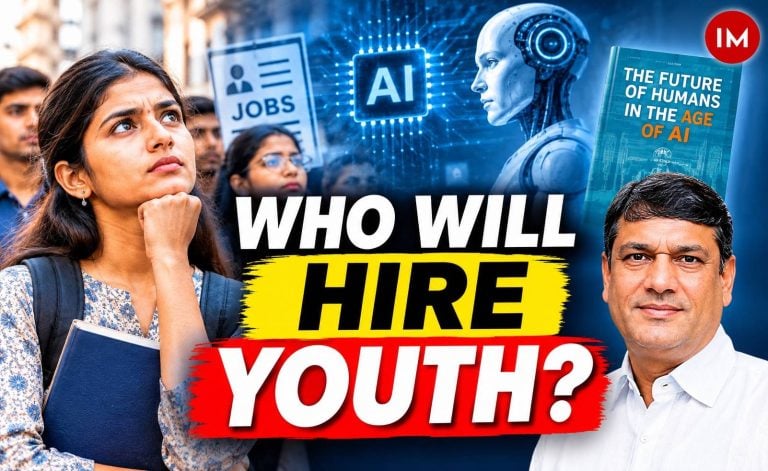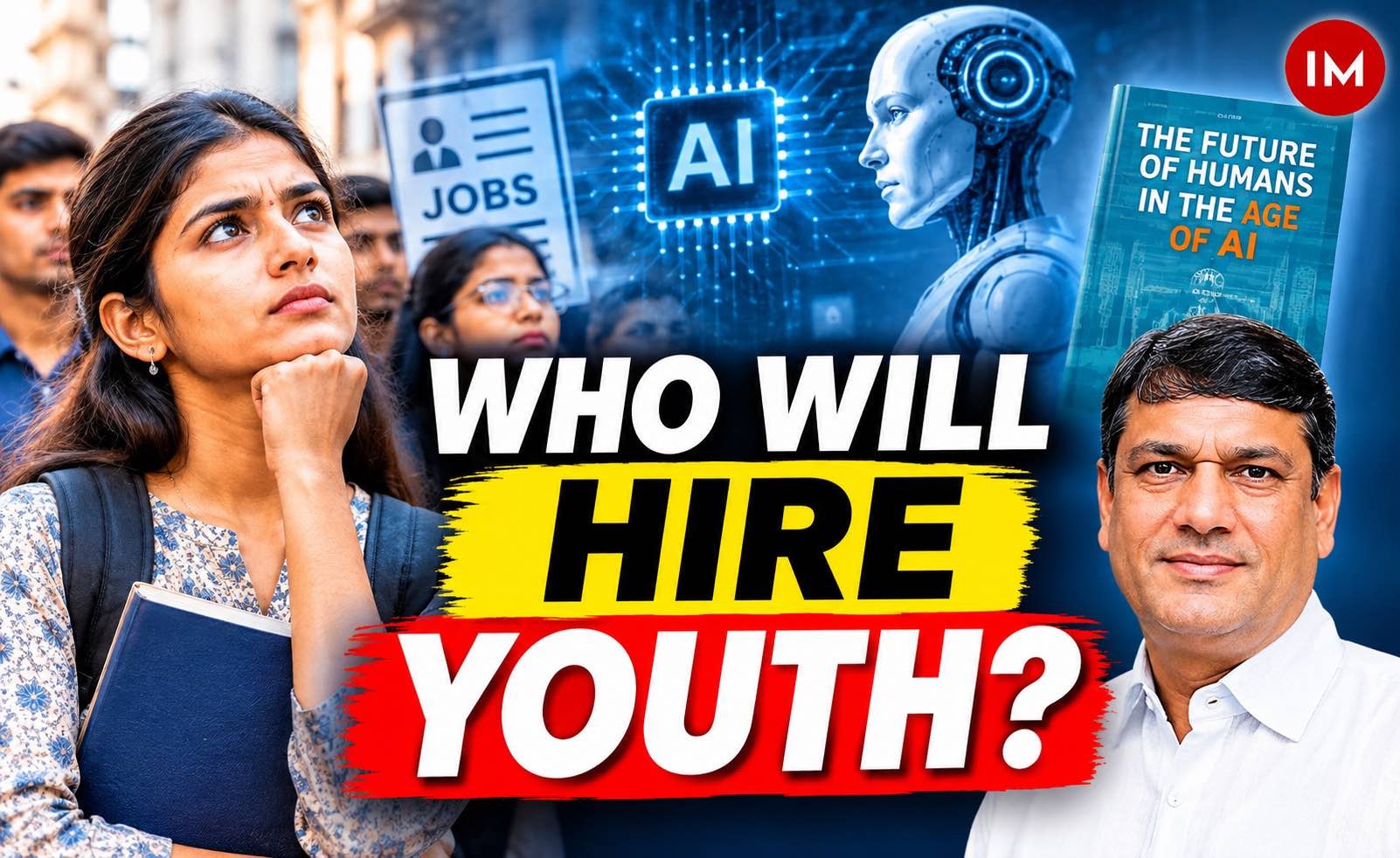
Picture a young woman in Garhwa or Pakur who finishes her degree this year. She is the first in her family to reach college, and her parents have saved for years to pay her fees. What she wants is not complicated. An office job, a salary that comes every month, and a life a little easier than her mother’s.
For thirty years, that hope has carried millions of young Indians into the middle class. I am no longer sure it will carry her.
Two clocks are ticking over her head, and most of us hear only one of them.
The first clock
We have called India a young country for so long that we now treat it as a permanent fact. It isn’t one.
Azim Premji University’s State of Working India 2026 report says the share of Indians of working age will begin to fall after 2030. The number of people aged 15 to 29 has been going down since 2020. There are about 36.7 crore of them today, roughly a third of our working-age population.
Economists call this window the demographic dividend. David Bloom, who with his colleagues made the term popular, also made a point we tend to skip over. The dividend is paid only if young people find productive work. South Korea and China collected theirs in factories.
India’s young went another way. They entered the middle class through offices, through call centres, IT firms, banks, back offices and the thousands of entry-level desks where a degree first turned into a pay cheque. That is exactly where the second clock is ticking.
Read Also: Can AI Bridge the Opportunity Gap? IAS Officer Dr. Manish Ranjan Explores the Answer in His New Book
The second clock
At the AI Impact Summit in New Delhi this February, Demis Hassabis of Google DeepMind said AI could have something like ten times the impact of the Industrial Revolution and could play out ten times faster, perhaps within a decade. A month before that, Anthropic’s chief executive Dario Amodei had repeated his warning that half of all entry-level white-collar jobs might disappear in one to five years.
Tech leaders have been wrong about timelines before, so I would not take their numbers on trust. What worries me more is a quieter piece of evidence. Economists at Stanford, led by Erik Brynjolfsson, went through payroll records covering millions of American workers. In the jobs most exposed to AI, employment of 22 to 25-year-olds fell 16 per cent compared with other groups. Among workers over 30 in the very same jobs, employment kept rising.
This makes sense. The first things AI does well are the tasks we used to hand to beginners: drafting a letter, summarising a file, writing simple code, handling routine calls. Those tasks paid young people a salary, and they also taught them the job. The machine is learning the first job before it learns the last one.
Where the clocks meet
Indian numbers point the same way. Our five biggest IT companies ended 2025-26 with close to 7,000 fewer people than they began the year with, and TCS has brought its fresher hiring target down to 25,000 from as many as 42,000 in earlier years.
This is not a collapse. Nasscom says the tech industry as a whole added 1.35 lakh jobs in 2026 and now employs 5.9 million people, as companies move toward AI, cloud and data work. The ladder is still standing. It is the bottom rung that is getting harder to reach.
NITI Aayog’s Roadmap for Job Creation in the AI Economy lays out both possibilities. India could lose about 1.5 million tech jobs by 2031, or it could create up to four million new ones. Much depends on what government, industry and our colleges do now. The Economic Survey 2025-26 notes that the economy already needs slightly less labour for each unit of output.
Here India’s position is unusual. Japan, South Korea, much of Europe and now China are growing old. For them, AI will fill chairs that no young worker is left to sit in. We face the opposite problem. We have plenty of young people, and we need AI to help build more chairs.
There is an opening here too. The trade economist Richard Baldwin calls it telemigration: service work that crosses borders while the worker stays at home. An ageing world will need people to supervise machines and serve customers in many languages, and young Indians, well trained, can do it from towns like Ranchi and Jamshedpur.
The third power shift
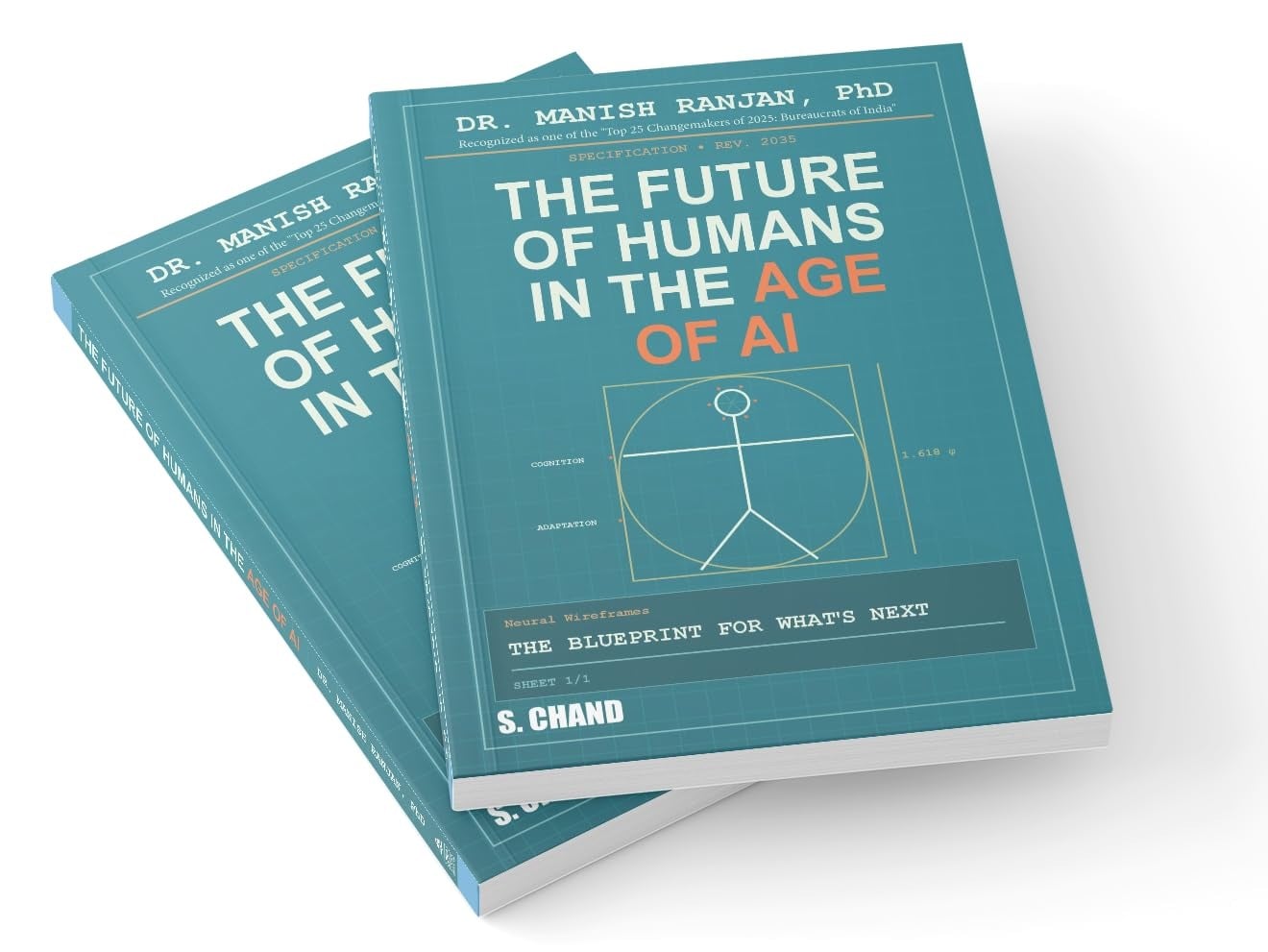
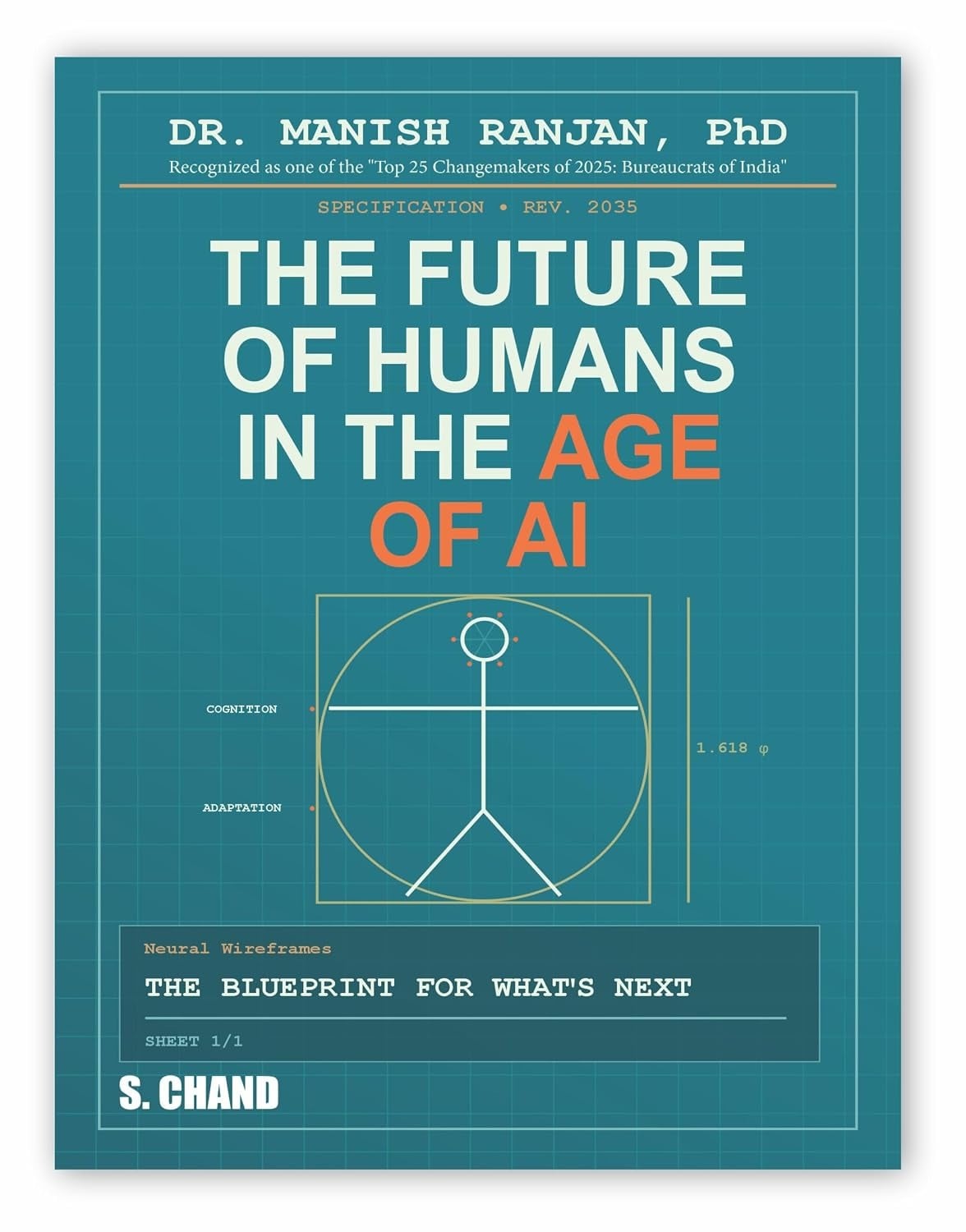
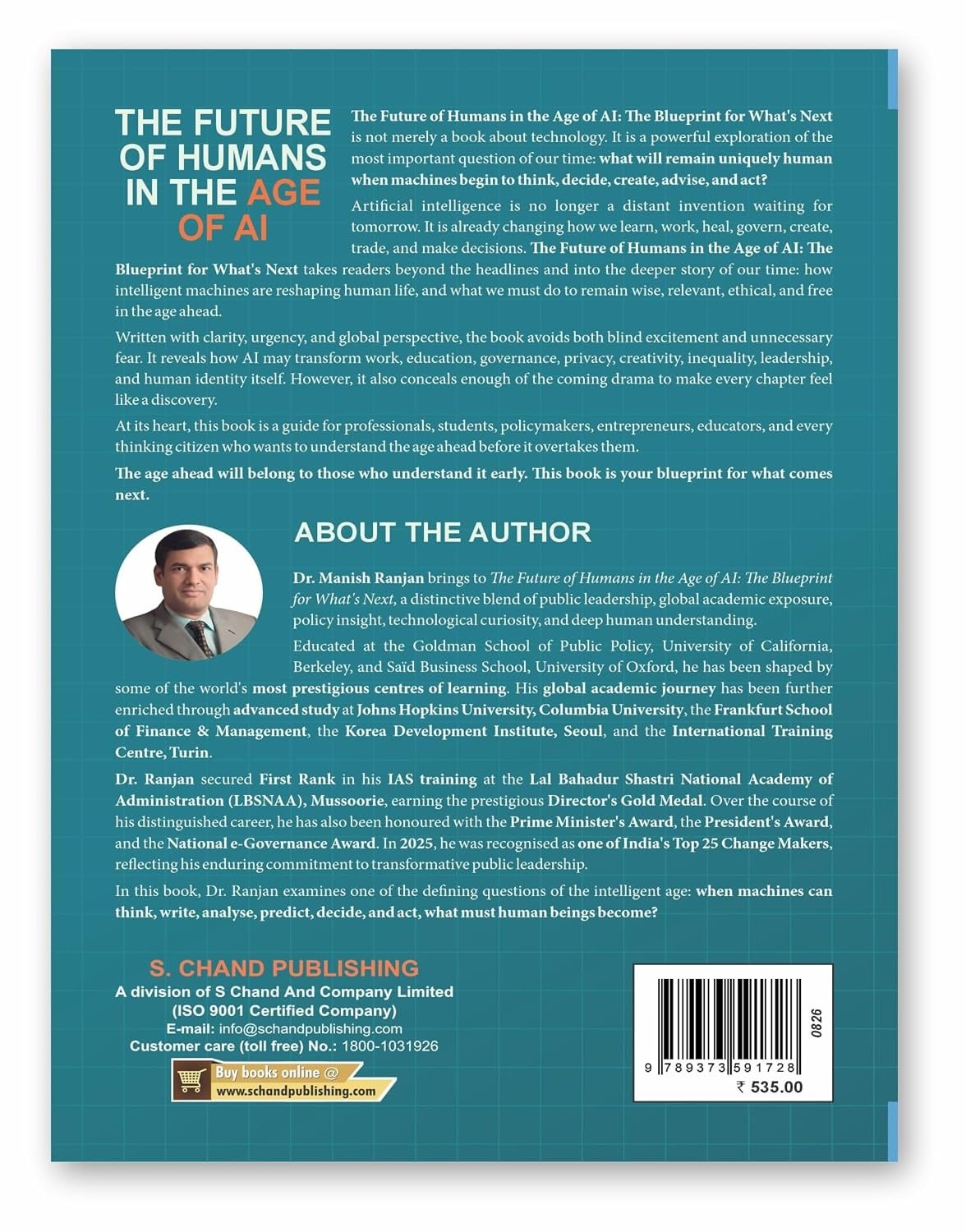
In my book, The Future of Humans in the Age of AI, I describe three great shifts of power in human history. The steam engine gave us physical power. The computer gave us processing power. AI is giving us cognitive power, a machine that can learn, write, reason and advise.
Each earlier shift left the human mind alone. This one doesn’t. That is why the familiar comfort, that technology always creates more jobs than it destroys, needs a harder look. Daron Acemoglu and Simon Johnson, who shared the 2024 Nobel Prize in economics, show in Power and Progress that the gains of the Industrial Revolution took decades to reach ordinary workers. Who benefits from a technology depends on the choices of the people who shape it.
India does not have decades. Our demographic clock gives us less than one.
The book also makes a hopeful argument, and I find it easier to defend each year. As machines take over routine thinking, the most human qualities become more valuable. Judgement, trust, care, knowledge of a place and its people, the ability to calm an angry crowd or persuade a village. The future I argue for is machine-led but human-governed, where people decide the purpose and machines do more of the work.
What the field taught me
My years in the districts taught me never to underestimate how fast India can move once it makes up its mind.
In Deoghar in 2007, we planted 7.5 lakh trees in a single day. I still think about what that day showed me. When people can see the goal and understand their own part in it, a district can move at a speed nobody expects. Jan Dhan reached 59 crore bank accounts on much the same principle.
Later, as collector of Hazaribag, I piloted Aadhaar enrolment in two blocks, Churchu and Katkamsandi, before the scheme was formally rolled out. It was early, unglamorous work in villages a long way from any technology hub, and I doubt any of us guessed where it would lead. Today there are 144 crore Aadhaar numbers, and together with Jan Dhan they support a UPI system that handled more than 2,500 crore payments in October alone. Our largest systems were tested in small places first.
As Commissioner of the Kolhan division, the old Singhbhum country, I looked after three districts at once: East Singhbhum, West Singhbhum and Seraikela-Kharsawan. From that chair you see how uneven the starting lines are. Jamshedpur is a planned steel city with XLRI, an NIT and a cosmopolitan way of life. A few hours away, young men and women from the villages board trains every season to find work in other states. AI can widen that gap or help close it. Which way it goes will be decided less in Bengaluru than in our district headquarters.
Three choices
None of this is settled. Three choices will matter most.
One is to favour AI that makes workers stronger over AI that simply replaces them. The Stanford team found that jobs fell mainly where AI automated work and held steady where it helped people. Government is the biggest buyer in the country. When it picks tools that make an ASHA worker, a teacher or a patwari more capable, the market takes note. The Economic Survey adds a fair warning here. The gains from assisting workers have a ceiling, so augmentation buys us time while new kinds of work take shape.
Another is to rebuild the first rung of the ladder. The Survey suggests an Earn-and-Learn initiative, and it deserves to grow. New entry-level work is already appearing: checking what AI produces, training models in Indian languages, preparing and cleaning data. The Survey itself points out that startups which curate training data have not yet appeared at scale in India. For a country with 22 scheduled languages and many more spoken ones, that is a strange gap and a real opening. This work can be done in Dumka or Daltonganj as well as in Gurugram.
The last is to count what matters. We count enrolments, certificates and trainees. We seldom count first jobs. The AI Economic Council proposed in the Survey could track, district by district, whether young people are getting onto that first rung. In my experience, what gets counted in India usually gets done.

Back to Garhwa
So, back to the young woman in Garhwa. Whether she ends up supervising machines or being replaced by them will not be settled in Silicon Valley. It will be settled in our classrooms and district offices, and in the decisions we take over the next five years.
Neither clock will stop for us. But both are still set by human hands, and that is what the future of humans finally comes down to. Machines may set the pace. We still choose the direction.
(Dr. Manish Ranjan is a 2002-batch IAS officer of Jharkhand cadre and the author of eight books on artificial intelligence, including The Future of Humans in the Age of AI. A recipient of the Prime Minister’s Award and the National e-Governance Award, he studied at Saïd Business School, University of Oxford, and the Goldman School of Public Policy, UC Berkeley. He writes often on technology, governance and Indian Knowledge Systems. Views are personal.)