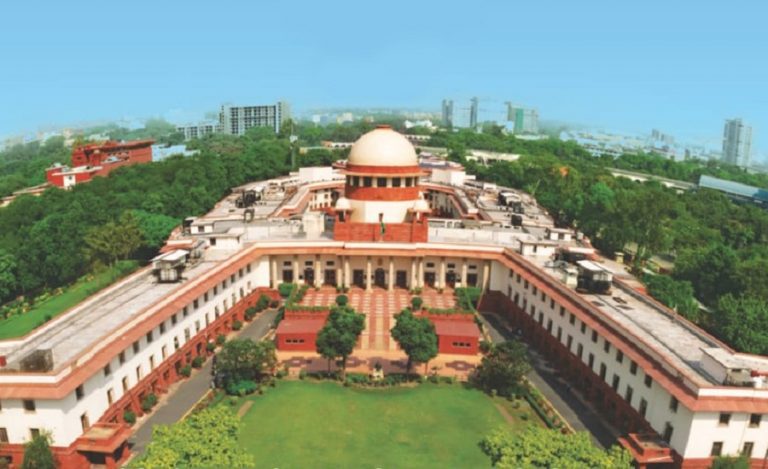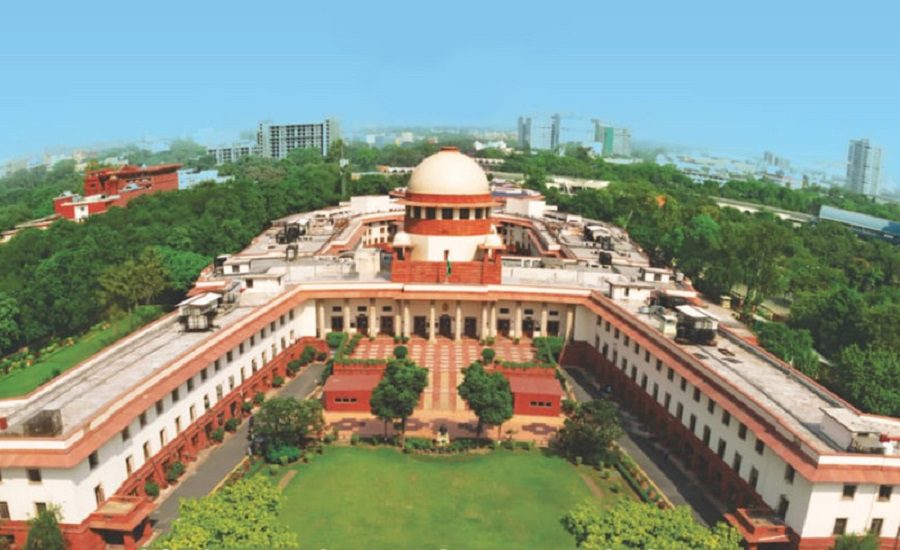
Jaipur: The Supreme Court has ordered a Special Investigation Team (SIT) probe into illegal gravel mining in Rajasthan’s Luni, Jojari and Bandi rivers. The Court has also restricted new industrial projects near the river ecosystem until scientific surveys identify the High Flood Line and protective buffer zones. The order aims to protect rivers, prevent illegal mining and hold responsible officials accountable.
Details of Rajasthan Illegal Mining Case
The Supreme Court of India has directed the Rajasthan government to establish a Special Investigation Team (SIT) within three days to investigate organised illegal gravel mining in the Luni, Jojari and Bandi rivers and their tributaries.
Read also: Rajasthan Fake Aadhaar Case: High Court Rejects Bail Pleas Of Government Officials
The investigation will examine illegal mining activities, transportation and sale of gravel, and the possible involvement of government officials.
The order was passed by a bench of Justice Vikram Nath and Justice Sandeep Mehta on October 26, 2026, in the suo motu case concerning pollution in the Jojari-Luni-Bandi river system.
The Court noted that pollution in this river system has affected the environment and the lives of approximately 20 lakh people.
Rajasthan Illegal Mining Case: SIT To Investigate Illegal Mining Networks And Officials
The Supreme Court directed that the SIT must be headed by an officer of at least Inspector General (IG) rank. The team will also include the Superintendents of Police of Jodhpur, Balotra and Pali districts. The investigation will focus on:
- Identifying people and companies involved in illegal gravel mining.
- Examining networks responsible for extracting, transporting and selling illegally mined gravel.
- Identifying the beneficiaries of illegal mining activities.
- Investigating possible involvement or support from government officials.
- Taking appropriate action against officials found responsible for allowing or supporting illegal mining.
The Court has directed the SIT to submit its status report by November 27, 2026.
Rajasthan Illegal Mining Case: Supreme Court Questions Rajasthan’s Mining Department
The Supreme Court expressed serious concern over the Rajasthan Mining Department’s explanation that mining leases were granted later in areas where illegal mining had previously been detected.
The Court said that granting a mining lease later does not automatically make earlier illegal mining activities legal.
It also clarified that following the legal procedure for granting mining leases and following environmental protection rules during mining operations are two different requirements.
The Court said that mining activities must be independently assessed to understand their impact on river flow, riverbeds, riverbanks and groundwater recharge.
It warned that authorities cannot protect rivers simply by reporting the number of cases, FIRs, penalties or mining leases. The main responsibility is to prevent further environmental damage and restore affected areas.
New Industrial Projects Restricted Near River Ecosystems
The Supreme Court has also issued important directions to protect the river areas from further industrial pollution. The Court ordered an additional protective zone of 100 metres on either side of the recorded outer boundaries of the rivers.
It also prohibited the establishment of Red Category industries within 500 metres of the recorded outer boundaries.
Furthermore, Rajasthan cannot grant permission for new industrial units along or near the river ecosystem until the High Flood Line and buffer zones are scientifically identified. These restrictions aim to protect riverbanks, control industrial pollution and reduce pressure on the natural environment.
Rajasthan Illegal Mining Case: Anonymous Complaints Allowed Against Illegal Mining
The Supreme Court has directed authorities to include an anonymous complaint facility in the Integrated Public Reporting and Environmental Grievance Redressal Mechanism.
This mechanism was previously ordered by the Court on August 7, 2026.
People will be able to submit complaints about illegal gravel mining and other unlawful activities affecting the river ecosystem without revealing their identities.
The complaints must be recorded, examined and forwarded to the appropriate authorities for necessary action. This step could help local residents report illegal activities without fear of direct identification.
Rajasthan Illegal Mining Case: Supreme Court Seeks Report On Groundwater Depletion
The Court has also raised concerns about groundwater depletion and industrial pollution in Jodhpur, Balotra and Pali. It directed the Rajasthan government to submit a separate affidavit addressing concerns about the ecological condition of the Balotra region.
The Court also directed the Central Ground Water Authority (CGWA) to become a party to the proceedings within one week.
The authority must submit information about groundwater availability, extraction and depletion in the three districts. The issue is important because excessive groundwater extraction can threaten drinking water supplies, agriculture and local ecosystems.
National Green Tribunal Can Examine Industrial Closure Orders
In a separate part of the same proceedings, the Supreme Court clarified the powers of the National Green Tribunal (NGT).
The clarification came after Bherawa Textile Industries Pvt. Ltd. challenged the closure of its industrial unit by the Rajasthan State Pollution Control Board (RSPCB).
The company had withdrawn its appeal before the NGT after questions arose about the effect of the Supreme Court’s earlier directions.
The Supreme Court clarified that its previous orders restricting the reopening of closed industrial units do not remove the NGT’s legal power to examine independent closure orders issued by the pollution control board. However, the clarification does not give any closed industrial unit automatic permission to restart operations.
The company was allowed to approach the NGT again and seek restoration of its withdrawn appeal.
Rajasthan Illegal Mining Case: Why This Supreme Court Order Is Important
The Supreme Court’s decision is an important step towards protecting Rajasthan’s river ecosystems. The SIT investigation will examine not only illegal mining operators but also government officials who may have helped such activities continue.
The restrictions on new industries and the protection zones may also help reduce pollution and protect groundwater resources.
Most importantly, the Court has made it clear that granting mining leases after illegal activities have taken place cannot replace accountability and proper environmental protection.
The outcome of this investigation could have a wider impact on illegal river mining and environmental enforcement in India.
FAQs
The investigation covers the Luni, Jojari and Bandi rivers and their tributaries in Rajasthan. The case concerns illegal gravel mining and pollution affecting the river ecosystem.
The Supreme Court ordered an SIT investigation to examine organised illegal gravel mining in the Luni, Jojari and Bandi rivers, identify the people involved and investigate whether government officials supported or allowed these activities.
The Court ordered a 100-metre additional protective zone on either side of the recorded river boundaries. It also prohibited Red Category industries within 500 metres and stopped new industrial permissions near the river ecosystem until the High Flood Line and buffer zones are scientifically determined.