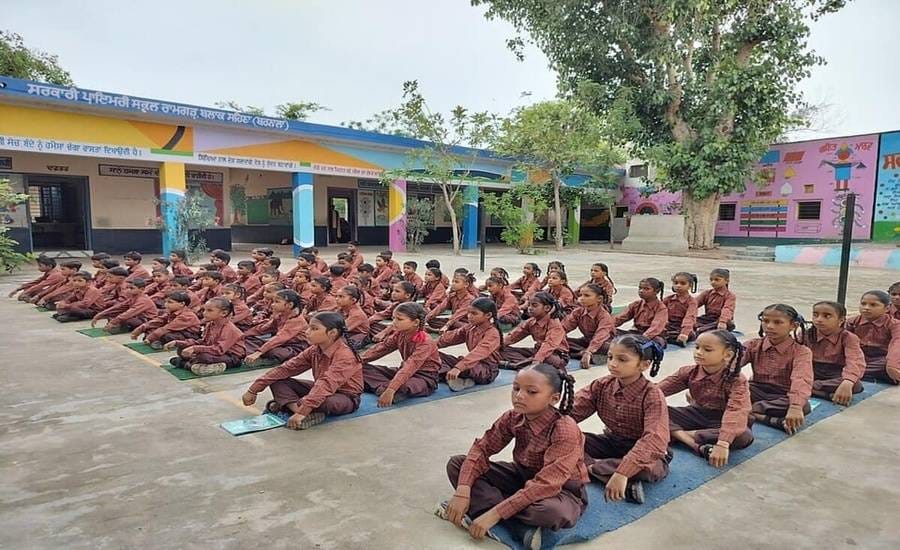
Chandigarh: Punjab Education Minister Harjot Singh Bains has said the state government has invested ₹2,300 crore in school infrastructure over the past four and a half years, alongside measures aimed at improving learning outcomes and restoring confidence in government schools.
3.64 Lakh Students Move to Government Schools
According to Bains, 3.64 lakh students have shifted from private schools to government schools since 2022. The minister linked the change to improvements in infrastructure, digital facilities, teacher training and academic outcomes.
The government says the infrastructure push has addressed several basic gaps that existed in schools, including inadequate toilets, classroom furniture, boundary walls and drinking water facilities.
₹2,300 Crore Spent on School Infrastructure
Bains said the government invested an average of around ₹15 lakh per school as part of the infrastructure programme.
The reported upgrades include:
- 13,920 new toilets
- Around 2 lakh desks
- More than 9,000 classrooms and laboratories
- Over 10,000 interactive panels
- Advanced computer labs in 5,012 schools
The government also says all government schools now have Wi-Fi, while 99.9% have boundary walls.
NEET Qualifiers Rise More Than Tenfold
The minister also highlighted changes in competitive examination results. Government school students qualifying for NEET-UG increased from 80 in 2021 to 882 in 2026, according to the figures presented by Bains.
Over the last four years, 2,166 government school students reportedly qualified for NEET, while 786 qualified for JEE. Bains also said 361 students qualified for JEE Main and 64 cleared JEE Advanced.
Teacher Training and Better School Facilities
The reform programme has also included professional training for teachers and school heads. According to Bains, principals were sent to Singapore, primary teachers to Finland and headmasters to IIM Ahmedabad for training.
Government schools have also received sports facilities such as swimming pools, shooting ranges, basketball and tennis courts, along with facilities for kabaddi, wrestling and boxing.
The state has additionally introduced campus managers from the ex-Army personnel category in senior secondary schools and security guards in larger senior secondary schools. Cleaning funds are also provided to schools according to student strength.
Focus Shifts to Learning and Affordability
Bains said Punjab topped the NITI Aayog Report 2026-27 in classroom learning outcomes, although this remains a claim made by the state government and should be read in that context.
To reduce the financial burden on families, the government has also capped annual school fee increases at 5%, according to the minister.
The scale of investment shows a broader attempt to make government schools more attractive to families by combining basic infrastructure with digital learning, teacher development and stronger academic support. If these improvements translate into sustained learning gains, they could have a lasting impact on the quality and reach of public education in Punjab.
Read Also: Punjab DGP Gaurav Yadav Pushes Women Cops Into Crime, Intelligence and Law & Order Roles