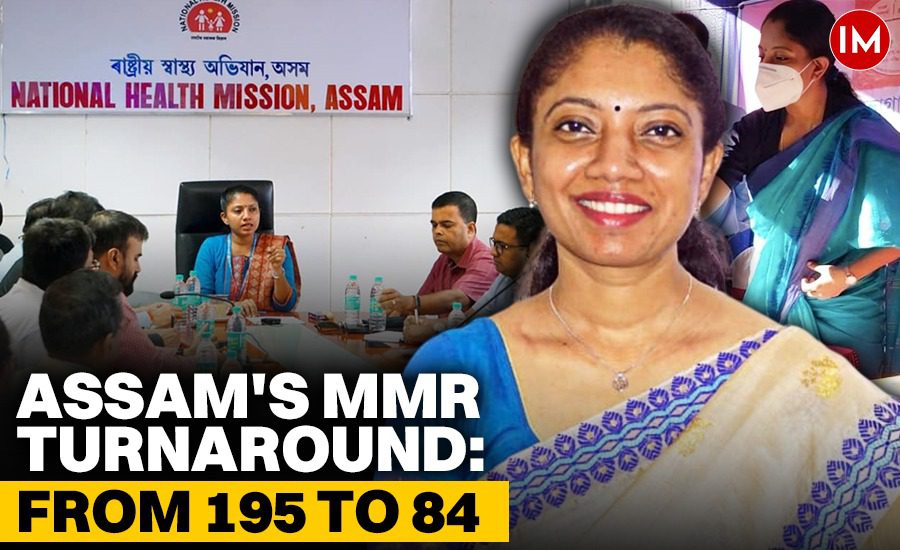
For years, Assam’s public health story was marked by a quiet contradiction: expanding healthcare infrastructure alongside persistently high maternal and infant mortality. SRS data reflected this gap: while India’s MMR fell to 97 (2018-2020), Assam’s remained at 195, with IMR also lagging behind. These figures pointed not just to medical gaps, but to deeper challenges of access, social norms, and trust in institutional care. The turnaround, however, has been striking. The SRS Report for 2022-24 (May 2026) places Assam’s MMR at 84, now below the national average of 87, signalling a significant shift, with community participation, mainly the ‘buddy mother’ initiative’, emerging as a key force in bridging the gap between healthcare systems and community acceptance.
Also read: Devangi Meena: The UPSC Candidate Who Stopped Studying to Start Understanding Herself
Story that begins far from hospitals
In the villages of Assam, or in India in general, pregnancy unfolds by family traditions, community perceptions, and often, a silence around fears and uncertainties.
Over the years, government efforts have ensured that services reached closer to these communities. ASHA workers became the face of healthcare at the last mile. Institutional deliveries were promoted. Nutritional schemes were expanded.
Yet, outcomes lagged.
Because access alone does not guarantee acceptance. Information does not always translate into action. And a system, no matter how well-designed, cannot succeed unless it is trusted.
This is the space where community participation comes into action, as a response to what they could not fully achieve.
Reimagining Care: The Birth of Special Project to reduce Maternal Deaths
Launched in July 2022 under the National Health Mission, Assam, the Project represents a shift in thinking as much as in strategy.
At its core lies a simple question: What if healthcare felt less like a directive, and more like a relationship?
The project and involved initiatives were designed as a dual intervention. It sought to strengthen the existing healthcare delivery system while simultaneously building a framework for community participation. It recognised that sustainable improvements in maternal and child health require more than services, they require social ownership. Therefore, it is not just about expanding care, it is about embedding care within the community itself.
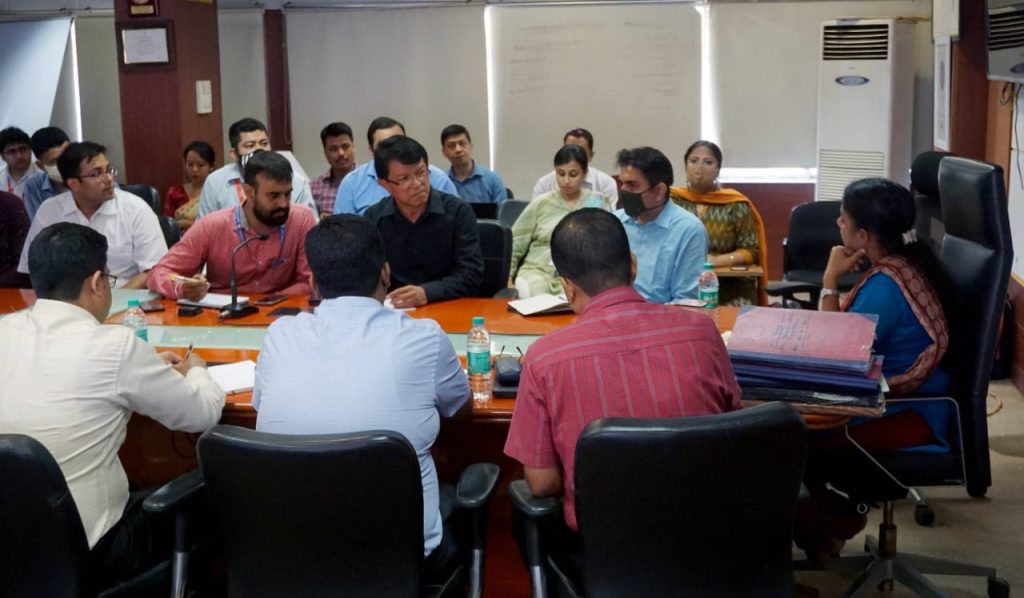
The Mind Behind the Mission: Dr. M. S. Lakshmi Priya
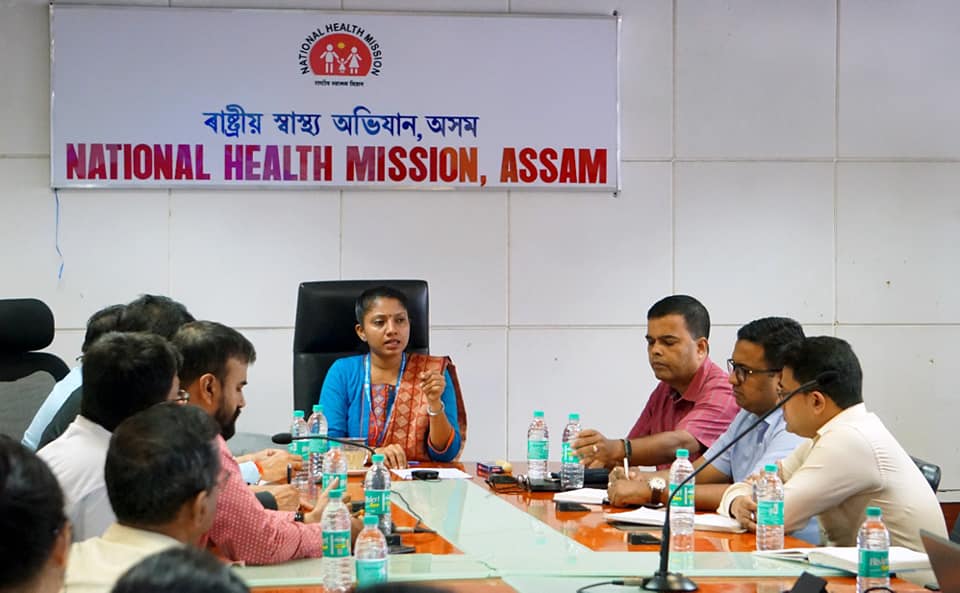
At the centre of this shift is 2014 batch IAS officer Dr. M. S. Lakshmi Priya, whose leadership of the National Health Mission in Assam reflects an understanding of governance.
Her administrative approach is rooted in a clear insight: policies succeed not when they are implemented efficiently alone, but when they are internalised by the people they are meant for.
Drawing from her earlier work on nutrition (Project Sampoorna) and community engagement during the pandemic (Project Mili Juli), she recognised the importance of behaviour change as the missing link in public health interventions. Saubhagya builds on this continuum, utilizing field experiences into a structured, scalable model.
Her approach is neither top-down nor purely decentralised; it is connective, linking systems with society through trust.
Core Innovation: The Buddy Mothers Approach
At the heart of the project lies its most distinctive feature, the Buddy Mothers model.
The design is deceptively simple. In each village, two pregnant women are paired as “buddies.” They are supported by a Mentor Mother, a woman from the same community who has recently gone through childbirth.
Together, they form a small but significant support network.
These triad buddies attend health check-ups together, remind each other of medical appointments, and share their experiences. The mentor provides guidance grounded in lived reality, bridging the gap between medical advice and everyday understanding.
Village Health Sanitation and Nutrition Days (VHSNDs) become spaces not just for service delivery, but for interaction, dialogue, and collective learning.
In this model, care is no longer something delivered to individuals. It is something shared among them.
Behavioural Insight: Why Relationships matter in Public Health
The strength of the Buddy Mothers approach lies in its recognition of a fundamental truth: healthcare decisions are rarely made in isolation. They are influenced by family dynamics, social norms, and emotional reassurance.
Traditional health communication often assumes that awareness leads to action. Saubhagya challenges this assumption by focusing on trust as the key driver of behaviour change.
A woman is more likely to act on advice that comes from someone she relates to. A peer offers companionship. A mentor offers credibility. Together, they create an environment where seeking care becomes natural rather than imposed.
This shift, from instruction to interaction, is what makes the model both effective and sustainable.
From Blueprint to Practice: Iteration, Learning, Adaptation
The implementation of the project is an example of a deliberate and thoughtful process.
Following its launch, significant time was invested in developing operational guidelines, informed by field visits across districts such as Nagaon, Morigaon, Cachar, and Kokrajhar. Interactions with Buddy Mothers, Mentor Mothers, ASHA workers, and local officials provided insights that shaped the programme’s evolution.
The process was neither linear nor rigid. It included pauses, for retraining, for refining guidelines, and for strengthening frontline capacity. Subsequent visits to districts like Dhemaji, Golaghat, Karbi Anglong, and Dhubri further enriched the model.
This iterative approach highlights a key principle: effective governance is adaptive. It learns, recalibrates, and improves.
Convergence with Existing Systems: Strengthening, Not Substituting
Project operates within a broader ecosystem of national health programmes. Initiatives such as SUMAN, LaQshya, POSHAN Abhiyaan, and the Pradhan Mantri Matru Vandana Yojana continue to provide essential services and entitlements.
It does not replace these programmes. Instead, it enhances their effectiveness by ensuring that they are accessed, understood, and utilised.
By integrating community participation with institutional frameworks, it creates a continuum of care, from early pregnancy to postpartum support, that is both comprehensive and grounded.
Community as Co-Creator: Reclaiming Local Agency
One of the defining features is its emphasis on community ownership.
Panchayats, Self-Help Groups, and ASHA workers are not peripheral actors; they are central to implementation. Their involvement ensures that the programme is responsive to local realities and adaptable to diverse contexts.
This approach aligns with broader evidence in public health: interventions are most effective when communities are not passive recipients, but active participants. In this sense, the initiative under the National Health Mission, redefines governance, not as delivery, but as collaboration.
Outcomes: Measuring the Intangible
The transformation is now visible in outcomes that were once thought difficult for Assam to achieve. The latest Sample Registration System (SRS) Report for 2022-24, released in May 2026, places Assam’s Maternal Mortality Ratio (MMR) at 84 per 100,000 live births, now lower than the national average of 87. This marks a historic reversal for a State that, just a few years ago, recorded one of the highest maternal mortality levels in the country. The decline from 195 (2018-20) to 84 is shift in how maternal healthcare is delivered and experienced.
Thus by combining strengthened health systems with community-led interventions such as the Buddy Mothers model, it has helped bridge the long-standing gap between access and acceptance. What was once a story of lagging indicators is now emerging as a case of accelerated, people-centred progress, where policy, participation, and trust converge to save lives.
Participation in antenatal care has increased. Awareness around nutrition and institutional delivery has improved. Conversations around pregnancy are becoming more open and less burdened by hesitation.
Conclusion: When Governance feels Personal
There is a quiet, enduring strength in such community participation initiative.
It does not rely on scale alone. It does not seek visibility through spectacle. Instead, it builds itself through everyday interactions, conversations between women, shared experiences, small acts of reassurance.
Under the leadership of Dr. M. S. Lakshmi Priya, it is a model of governance that is attentive, adaptive, and deeply human.
Because in the end, public health is not only about reducing mortality rates or achieving targets. It is about ensuring that every mother feels supported, every child is given a safer beginning, and every community becomes a participant in its own well-being.
And sometimes, that transformation begins not in a hospital, but in the simple act of one woman standing by another.
Also read: Rajeev Kumar Sharma: The Officer Tasked With Reimagining Rajasthan Police