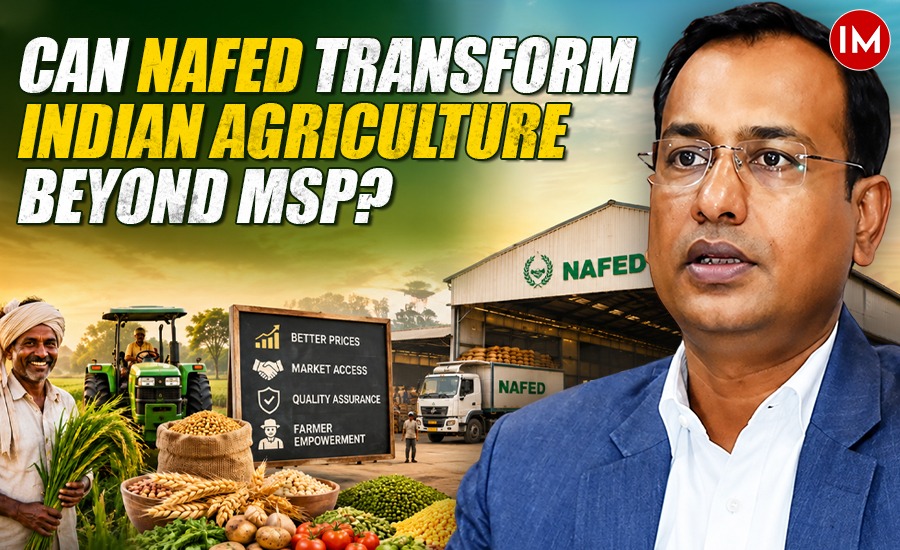
Few institutions have evolved alongside Indian agriculture as closely as the National Agricultural Cooperative Marketing Federation of India (NAFED). Created in 1958 to promote cooperative marketing, the organisation has gradually transformed into one of the country’s most important agencies for supporting farmers, stabilising commodity prices and safeguarding food security.
Today, agriculture faces an entirely new set of realities. Climate change is altering cropping patterns. Landholdings continue to shrink. Farmers are increasingly looking beyond production towards profitability, value addition and assured markets. Consumers, meanwhile, are demanding safer, traceable and even organic produce. Against this backdrop, NAFED’s role is undergoing a significant transformation.
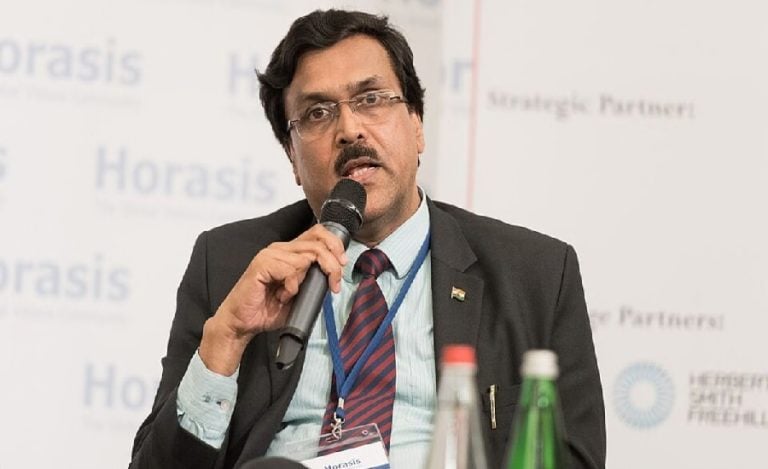
During an extensive interaction with Managing Director Deepak Agrawal, several critical issues concerning the future of Indian agriculture and NAFED’s evolving responsibilities came under discussion.
Please watch the full interview here:
Read & Watch Also: How IFS Piyusha Jagtap Is Changing Conservation Through Stories, Communities and Compassion | Video Interview
The conversation began with NAFED’s expanding contribution to India’s agricultural ecosystem. While procurement under the Minimum Support Price framework continues to remain one of its defining responsibilities, the organisation today influences a much wider spectrum—from market interventions and price stabilisation to cooperative development and strengthening supply chains. The discussion explored how NAFED has evolved over nearly seven decades while remaining relevant to changing policy priorities and farmers’ needs.
Another important issue revolved around agricultural procurement itself. Questions were raised about the crops procured by NAFED, the principles governing procurement prices and the balancing act between ensuring remunerative prices for farmers and maintaining affordability for consumers. In an era marked by increasing production costs and volatile global commodity markets, procurement policies are becoming more significant than ever.
We also discussed how Indian farming itself is changing. Mechanisation, precision agriculture, digital technologies, improved seed varieties, scientific research and modern equipment are gradually transforming cultivation practices. The discussion focused on how institutions such as NAFED can complement these technological advances by ensuring that improved production is matched with efficient marketing and remunerative returns.
Climate change naturally emerged as one of the most pressing concerns. Unpredictable rainfall, prolonged heat waves, groundwater depletion and deteriorating soil health are already affecting agricultural productivity across several regions. Questions centred on how sustainable farming practices, better resource management and farmer awareness can help Indian agriculture remain resilient in the coming decades.
Equally important was the issue of the economic security of farmers. Small and marginal cultivators continue to face challenges relating to fragmented landholdings, fluctuating market prices, limited access to institutional finance and post-harvest losses. The discussion examined the role of farmer cooperatives and collective institutions in improving bargaining power, reducing marketing costs and creating sustainable rural livelihoods.
The interview further explored whether NAFED should now move beyond being primarily recognised as a procurement agency. With growing consumer awareness regarding quality food products, questions were raised about strengthening NAFED’s retail presence through dedicated outlets, expanding branded products and creating modern grain retail formats that directly connect farmers with consumers while enhancing value addition.
Marketing remains another crucial challenge for Indian agriculture. Producing quality crops alone is no longer sufficient unless farmers receive assured access to markets. Accordingly, considerable attention was devoted to market linkages, collaborations with organised retailers, institutional buyers, exporters, digital platforms and supply-chain partners capable of providing better price realisation to farmers.
The conversation also assessed the immense potential of Indian agriculture itself. Despite supporting one of the world’s largest farming populations, India’s agricultural sector continues to diversify rapidly into horticulture, pulses, oilseeds, spices, millets, fruits, vegetables and value-added products. Discussions focused on how policy support, infrastructure development and cooperative institutions can unlock greater opportunities both within the domestic market and internationally.
Recognising that future agricultural growth must be knowledge-driven, another important theme concerned collaboration between NAFED and agricultural universities, research institutions, ICAR organisations, Krishi Vigyan Kendras and technology developers. Stronger partnerships between research and implementation agencies are increasingly essential for transferring innovations from laboratories to farmers’ fields.
Organic and natural farming also formed a significant part of the discussion. As demand for residue-free and environmentally sustainable food products grows across domestic and international markets, the interview examined the institutional support required to help farmers adopt such practices. Besides production techniques, questions addressed farmer training, certification, quality assurance, aggregation and market access—areas where organisations like NAFED could play an enabling role.
The interaction concluded with a broader discussion on the future of Indian agriculture under Prime Minister Narendra Modi’s vision of a developed India by 2047. The conversation explored how food security, cooperative reforms, technological innovation, climate resilience, digital agriculture and stronger market ecosystems must converge to build a farming sector that is globally competitive while remaining farmer-centric.
Taken together, these issues underline the changing character of NAFED itself. No longer confined to procurement and price support, the organisation increasingly finds itself at the centre of India’s larger agricultural transformation—one that seeks to balance productivity with sustainability, profitability with affordability, and food security with farmer prosperity.
As Indian agriculture prepares for its next phase of growth, institutions such as NAFED will be judged not merely by the quantity they procure, but by the strength of the ecosystems they help create—connecting farms with markets, research with practice, cooperatives with commerce, and farmers with a more secure and prosperous future.
Read & Watch Also: How Uttar Pradesh Is Preparing Its Youth for the AI Revolution