New Delhi: The Central Administrative Tribunal (CAT), Principal Bench, has quashed the transfer of Pranjal Patil, India’s first visually impaired woman IAS officer, from Delhi to Arunachal Pradesh. In its November 4, 2026, order, the Tribunal held that routine transfer policies cannot be applied mechanically to an officer with a benchmark disability without an individual assessment of her medical and support requirements.
The order was passed by Judicial Member Rajveer Singh Verma in Patil Pranjal Lahensingh vs Union of India (O.A. No. 4634/2024).
The Tribunal ruled that the government’s obligation to provide reasonable accommodation under the Rights of Persons with Disabilities (RPwD) Act, 2016, must be considered while deciding the posting of an employee with a disability.
It set aside the Ministry of Home Affairs’ transfer order dated September 12, 2024, the subsequent relieving order dated October 17, 2024, and the November 6, 2024, decision rejecting Patil’s representation.
Who Is Pranjal Patil?
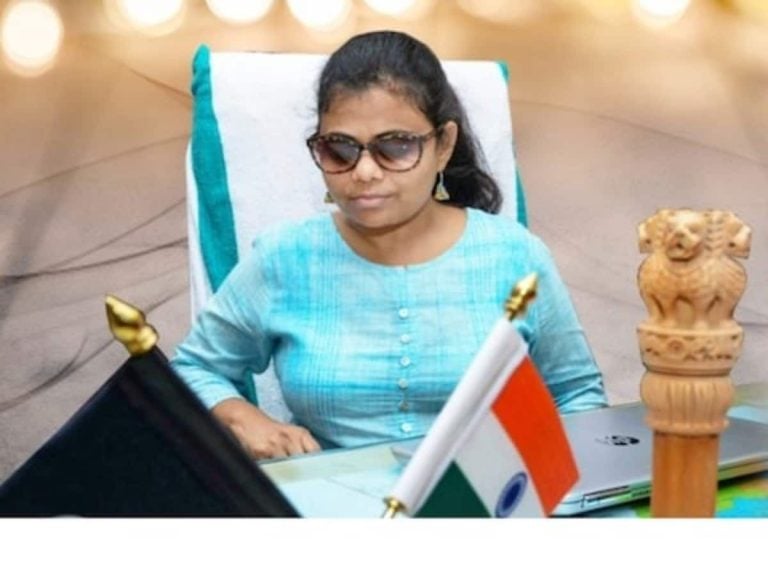
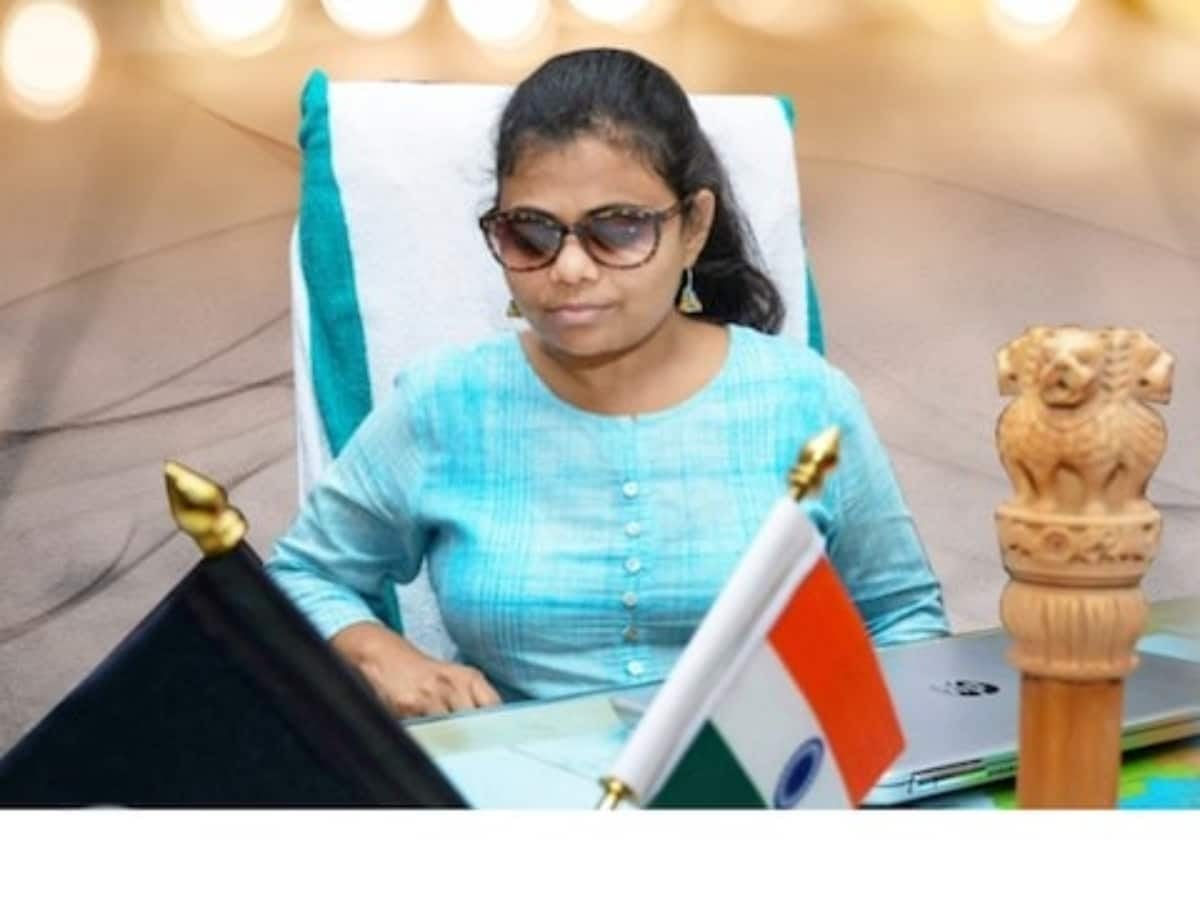
Pranjal Patil is a 2017-batch Indian Administrative Service (IAS) officer of the AGMUT cadre. She became widely recognised as India’s first visually impaired woman to join the IAS.
She has had no perception of light since childhood. Despite her visual impairment, she pursued higher education and cleared the UPSC Civil Services Examination.
Educational and UPSC Journey
Patil completed her schooling at Kamla Mehta School for the Blind in Mumbai before pursuing higher education.
She graduated in Political Science from St. Xavier’s College, Mumbai, and subsequently completed her postgraduate studies in International Relations at Jawaharlal Nehru University, New Delhi.
She used assistive technology, including screen-reading software, during her studies and UPSC preparation.
Patil appeared for the Civil Services Examination in 2016 and secured a rank of 773. She improved her performance in the following attempt, securing All India Rank 124 in 2017 and qualifying for the IAS.
Previous Administrative Assignments
Before her transfer dispute, Patil served in both Kerala and Delhi in different administrative capacities.
Her documented assignments include:
- Assistant Collector, Ernakulam: She began her field-level administrative career in Kerala in 2018 during her training period.
- Sub-Collector, Thiruvananthapuram: She took charge in October 2019, becoming the first visually impaired woman IAS officer appointed to the position.
- Delhi assignments: After joining the AGMUT cadre, she served in administrative and education-related roles in Delhi, including assignments as Sub-Divisional Magistrate and Deputy Commissioner (Revenue).
- Directorate of Education, Delhi: She has also held responsibilities as Additional Director in the Education Department and State Project Director of Samagra Shiksha.
Her administrative experience has included district-level governance, revenue administration and education-related responsibilities.
Why Was Pranjal Patil Transferred to Arunachal Pradesh?
Patil was initially allocated the Kerala cadre after joining the IAS. In 2018, her request for an inter-cadre transfer to the AGMUT cadre was accepted under the policy applicable to officers with disabilities.
She joined the AGMUT cadre on January 13, 2020, and the Ministry of Home Affairs subsequently posted her to Delhi.
Her transfer to the Delhi segment was intended to facilitate access to specialised medical treatment and the support systems she required.
However, on September 12, 2024, the Ministry of Home Affairs issued an order transferring her to Arunachal Pradesh. A relieving order followed on October 17, 2024.
Patil challenged the decision, arguing that the transfer did not adequately account for her medical condition and violated the protections available to persons with disabilities under the RPwD Act.
She also pointed out that she required continuous specialised ophthalmic care at the Sitaram Bhartia Institute and ICARE Eye Hospital in Noida, besides regular visits to AIIMS.
Her grandmother, who had been her sole caregiver, had died on September 10, 2024, just two days before the transfer order was issued.
Why Did the CAT Quash the Transfer?
The Tribunal examined whether the Ministry of Home Affairs had considered Patil’s disability-related requirements and established genuine administrative reasons for transferring her to Arunachal Pradesh.
The government defended its decision, arguing that AGMUT cadre officers were required to serve in different segments, including difficult and remote postings.
It also cited the transfer guidelines for AGMUT officers, under which senior-scale IAS officers were expected to complete a minimum tenure in Category B segments. According to the government, Patil had served in Delhi without completing any tenure in a Category B segment, while Arunachal Pradesh was facing a shortage of senior-scale officers.
The Tribunal, however, found these arguments insufficient.
It held that the requirement to complete a tenure in a difficult posting could not itself be treated as an administrative constraint that overrides the protections available to an employee with a disability.
The respondents had also failed to provide specific information about:
- The sanctioned strength and working strength of senior-scale officers in Arunachal Pradesh.
- The number of vacancies in the state segment.
- The availability of other officers who could have been considered for the posting.
- Whether comparable specialised medical facilities and support systems were available at the proposed place of posting.
The Tribunal observed that a general claim of shortage of officers, without supporting particulars, was insufficient to establish a genuine administrative constraint.
What Did the Tribunal Say About Disability Rights?
A major part of the ruling concerned Section 20 of the Rights of Persons with Disabilities Act, 2016, which provides protection against discrimination in government employment and requires reasonable accommodation.
The Tribunal also referred to the Department of Personnel and Training’s Office Memorandum dated March 31, 2014, reiterated through another memorandum on February 2, 2024.
Under Part H of these instructions, employees with disabilities should, as far as possible, be exempted from rotational transfers and given preference in their choice of posting, subject to administrative constraints.
The Tribunal held that these protections could not be overridden by routine executive transfer guidelines.
It also relied on the Delhi High Court’s judgment in Ircon International Ltd. v. Bhavneet Singh, which placed the burden on the employer to establish genuine administrative exigencies when transferring an employee with a disability.
The Tribunal further referred to the Supreme Court’s observations in Net Ram Yadav, holding that applying identical transfer requirements to a completely blind officer without an individual assessment would amount to treating unequal situations as equal.
It rejected the government’s argument that Patil had accepted the possibility of postings across the AGMUT cadre when she sought her inter-cadre transfer in 2018.
The Tribunal observed that a statutory right could not be waived merely because an officer had accepted the general transfer liability associated with a cadre.
What Directions Did the CAT Issue?
Allowing Patil’s application, the Tribunal set aside the three orders connected with her transfer and rejection of her representation.
It directed the authorities to continue her in, or repost her to, the Delhi segment of the AGMUT cadre within four weeks of receiving a certified copy of the order.
The Tribunal also issued directions to protect her future service prospects.
These include:
- Her inability to complete a tenure in difficult or Category B postings because of her disability cannot be used adversely against her in promotion or empanelment.
- Her career prospects, including consideration for central deputation and other service benefits, must not be prejudiced on this ground.
- Any future proposal to transfer her outside Delhi must be supported by a reasoned order.
- Before such a transfer, the authorities must hear her, consider her current medical condition and support requirements, and examine alternative postings where comparable medical facilities are available.
The ruling reinforces the requirement for government authorities to consider reasonable accommodation and individual circumstances while making transfer decisions involving employees with disabilities.
Read Also: MHA Sets October 5 Deadline for IAS Officer Mohammad Aijaz to Take Up Arunachal Posting