Artificial Intelligence (AI) is no longer a futuristic concept. It is transforming industries, changing the nature of work and creating entirely new career opportunities. Recognising this shift, the Uttar Pradesh Skill Development Mission (UPSDM) is ensuring that the state’s youth are not left behind. Instead of treating AI as a specialised skill for a select few, the Mission is making it accessible to students, job seekers and aspiring entrepreneurs across Uttar Pradesh.
From introducing AI literacy courses to integrating artificial intelligence into career guidance, training delivery and skill mapping, UPSDM is creating a future-ready workforce. The idea is simple: equip young people with skills that match the changing demands of the global economy while making them employable in emerging sectors.
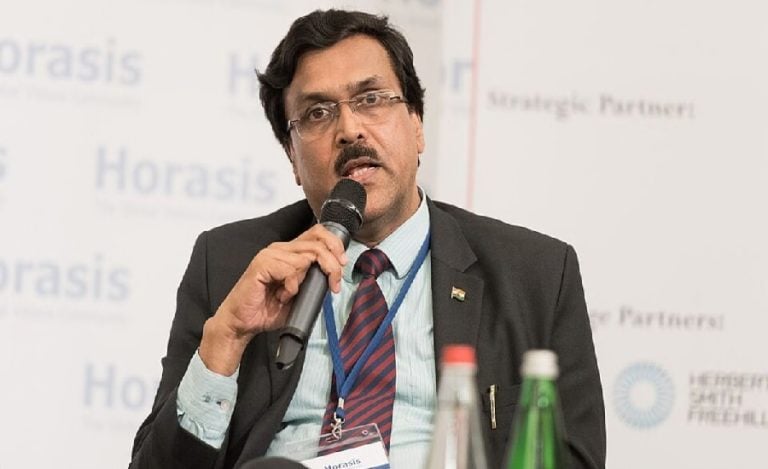
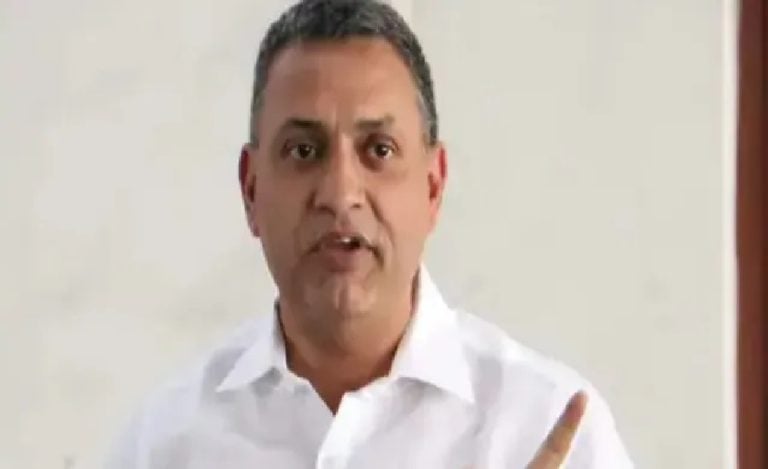
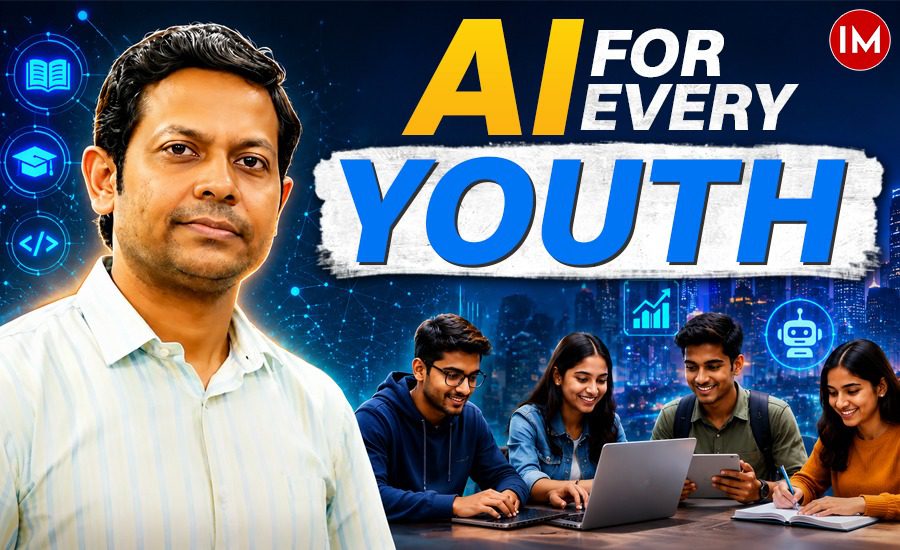
At the centre of this transformation is Pulkit Khare, IAS (2011 batch), Managing Director of the Uttar Pradesh Skill Development Mission, who believes that AI should become an enabler for every young person rather than remain a technology understood only by experts.
Speaking to Indian Masterminds, he says, “Artificial Intelligence is reshaping every sector of the economy. Our responsibility is to ensure that the youth of Uttar Pradesh are not merely consumers of this technology but become skilled professionals capable of using AI to create opportunities for themselves and for the state.”
Watch the Interview Here :
BUILDING AN AI-READY WORKFORCE
The Mission has adopted a multi-pronged approach to prepare youth for the AI-driven economy. Rather than limiting training to coding or advanced machine learning, UPSDM is focusing on creating awareness, digital literacy and practical AI skills that can be used across industries.
Students enrolled under various skill development programmes are now being introduced to AI tools, data-driven decision-making and digital technologies that are increasingly becoming part of everyday workplaces. The objective is to ensure that young people are comfortable working alongside AI-powered systems regardless of whether they join manufacturing, logistics, healthcare, IT services or retail.
The Mission also recognises that future jobs will demand adaptability. Therefore, the emphasis is not only on technical competence but also on analytical thinking, problem-solving and continuous learning.
Also Read – How Nagaland’s CMHIS is Making Healthcare Affordable for Every Family
PROJECT PRAVEEN: MAKING AI ACCESSIBLE TO EVERYONE
One of the Mission’s important initiatives is Project Praveen, which aims to bridge the digital divide by offering modern technology-based training to young people across the state.
The programme introduces learners to emerging technologies, including Artificial Intelligence, while ensuring that students from rural and semi-urban areas receive the same exposure as those in major cities. Through digital learning modules and technology-enabled classrooms, UPSDM is creating opportunities that were once available only in premium institutions.
By integrating AI into existing skill programmes, Project Praveen ensures that technology becomes a practical workplace skill rather than an abstract academic subject.
‘AI FOR ALL’: DEMOCRATISING ARTIFICIAL INTELLIGENCE
Understanding that AI awareness should not remain restricted to engineering graduates, UPSDM has also promoted initiatives such as ‘AI for All’, enabling students from diverse educational backgrounds to understand the basics of Artificial Intelligence.
The initiative introduces learners to AI concepts in simple language and explains how the technology is being used in everyday life—from healthcare and agriculture to banking, education and governance.
This approach ensures that even students without a technical background develop confidence in using AI-powered tools, making them better prepared for future employment.
USING AI TO GUIDE CAREERS
UPSDM is not only teaching Artificial Intelligence but is also using it to improve the way career guidance is delivered.
AI-enabled counselling platforms help students identify suitable career paths based on their interests, educational background and aptitude. Instead of generic advice, young people receive personalised recommendations on courses, certifications and employment opportunities.
Such data-driven career planning reduces the mismatch between industry requirements and workforce skills, improving employability while helping industries find trained manpower.
KAUSHAL DARPAN: DATA-DRIVEN SKILL PLANNING
The Mission has also strengthened its digital ecosystem through Kaushal Darpan, an integrated platform that uses data analytics to monitor training outcomes, identify skill gaps and improve programme implementation.
The platform helps policymakers understand which sectors require skilled workers, where training demand is highest and how employment trends are changing. This allows UPSDM to continuously update its training programmes based on industry needs instead of relying on outdated curricula.
As industries rapidly adopt AI and automation, such data-driven planning enables the Mission to remain responsive to changing market demands.
PARTNERING WITH INDUSTRY FOR FUTURE JOBS
Technology alone cannot create employment unless it is aligned with industry requirements. UPSDM has therefore built partnerships with companies and sector skill councils to ensure that training programmes reflect real workplace expectations.
Special focus is being given to sectors such as electronics, information technology, manufacturing, logistics and digital services, where Artificial Intelligence is increasingly becoming an integral part of daily operations.
Industry experts also contribute to curriculum development, helping students acquire practical skills that improve placement opportunities.
REACHING RURAL YOUTH
One of the most significant aspects of the Mission’s strategy is its emphasis on inclusivity. AI education is not being confined to urban centres but is gradually reaching rural districts through the state’s network of training centres.
This is particularly important because many young people from villages often lack access to advanced technology education despite possessing enormous talent. By taking AI-based learning closer to their homes, UPSDM is ensuring that geography does not become a barrier to opportunity.
The initiative also supports the state’s broader vision of reducing migration by creating better employment prospects within Uttar Pradesh.
PREPARING FOR THE ECONOMY OF TOMORROW
The global workforce is changing rapidly as automation, robotics and Artificial Intelligence redefine job roles. While some traditional jobs may disappear, entirely new professions are emerging in AI operations, data analytics, digital services and intelligent manufacturing.
UPSDM’s approach reflects this changing reality by preparing youth not merely for today’s vacancies but for tomorrow’s careers.
Speaking to Indian Masterminds, Pulkit Khare, IAS (2011 batch), says, “Our vision is to build a future-ready workforce. We are integrating Artificial Intelligence into skilling, career guidance and workforce planning so that the youth of Uttar Pradesh remain competitive in the evolving global economy.”
A MODEL FOR FUTURE-READY SKILL DEVELOPMENT
As Artificial Intelligence reshapes economies worldwide, Uttar Pradesh is positioning itself to become a leader in technology-driven skilling. By combining AI literacy, digital platforms, industry partnerships and data-driven governance, the Uttar Pradesh Skill Development Mission is ensuring that young people are prepared for opportunities that did not exist a decade ago.
The Mission’s efforts demonstrate that skill development today is no longer confined to traditional trades. It is about preparing citizens for a digital future where technology and human potential work together.
For thousands of young people across Uttar Pradesh, AI is no longer just a buzzword. Thanks to UPSDM’s initiatives, it is becoming a pathway to better jobs, greater confidence and a brighter future.
Also Read – Bhoopendra Dhakad: Raised in a Farming Family, Educated at IIT, Chosen by UPSC