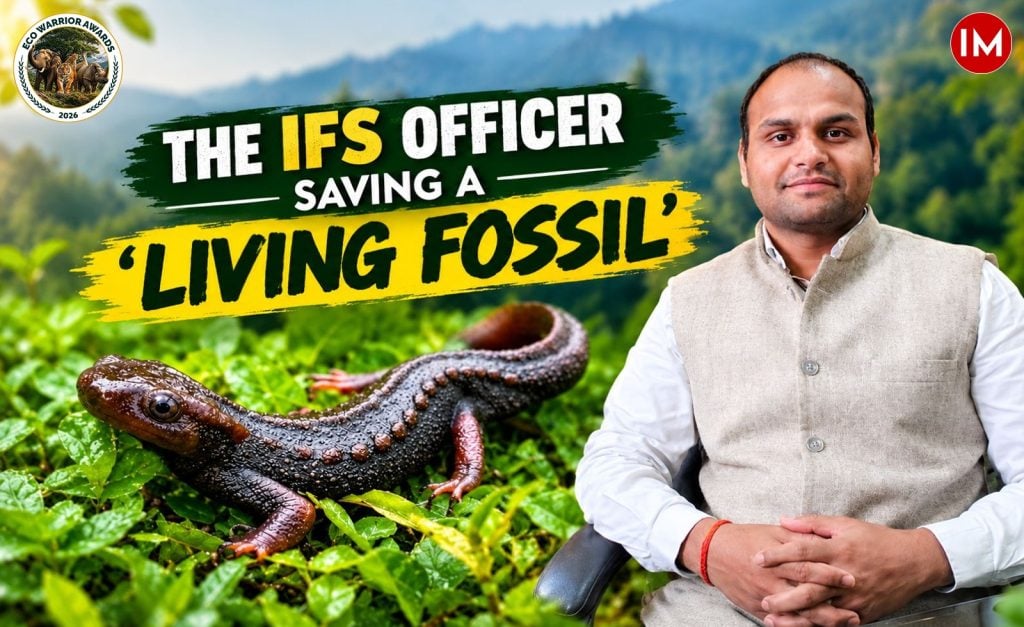
In the misty hills of Darjeeling, where tea gardens stretch across slopes and tourism brings thousands of visitors every year, an unlikely conservation story is unfolding. It is the story of a small amphibian that most people would probably walk past without noticing: the Himalayan Newt.
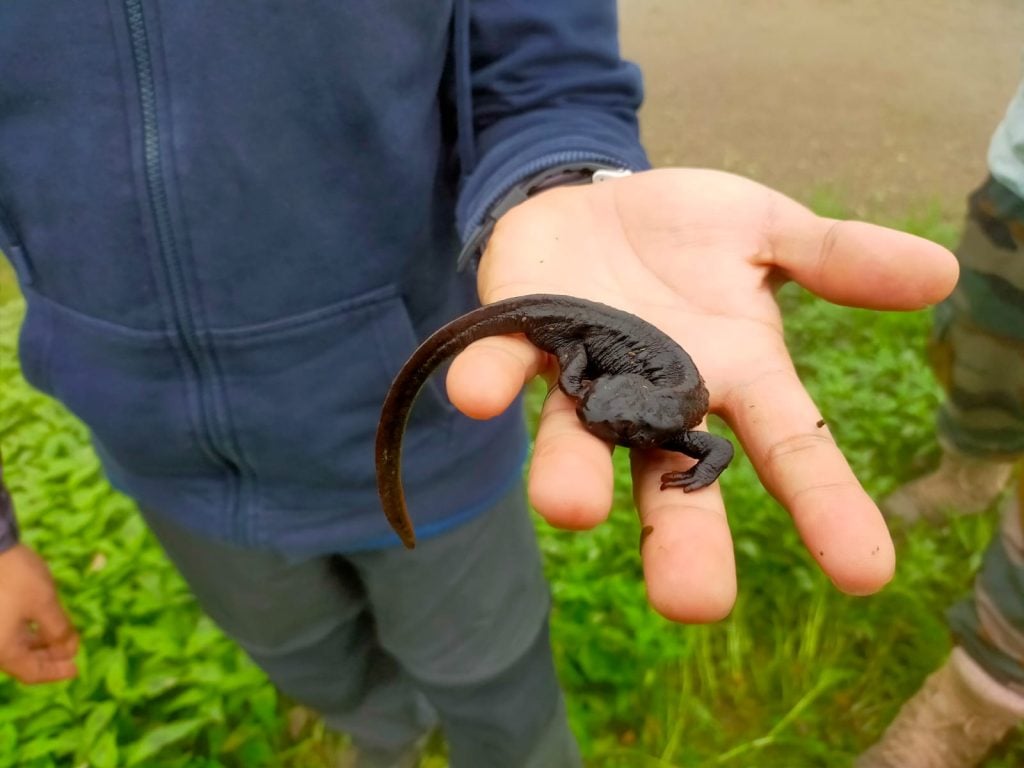
Known scientifically as Tylototriton verrucosus, the species is among the most distinctive amphibians of the Eastern Himalayas. In the Darjeeling Hills, it has survived for generations, but its habitats are steadily shrinking under pressure from human activity, tourism, land-use change and pollution.
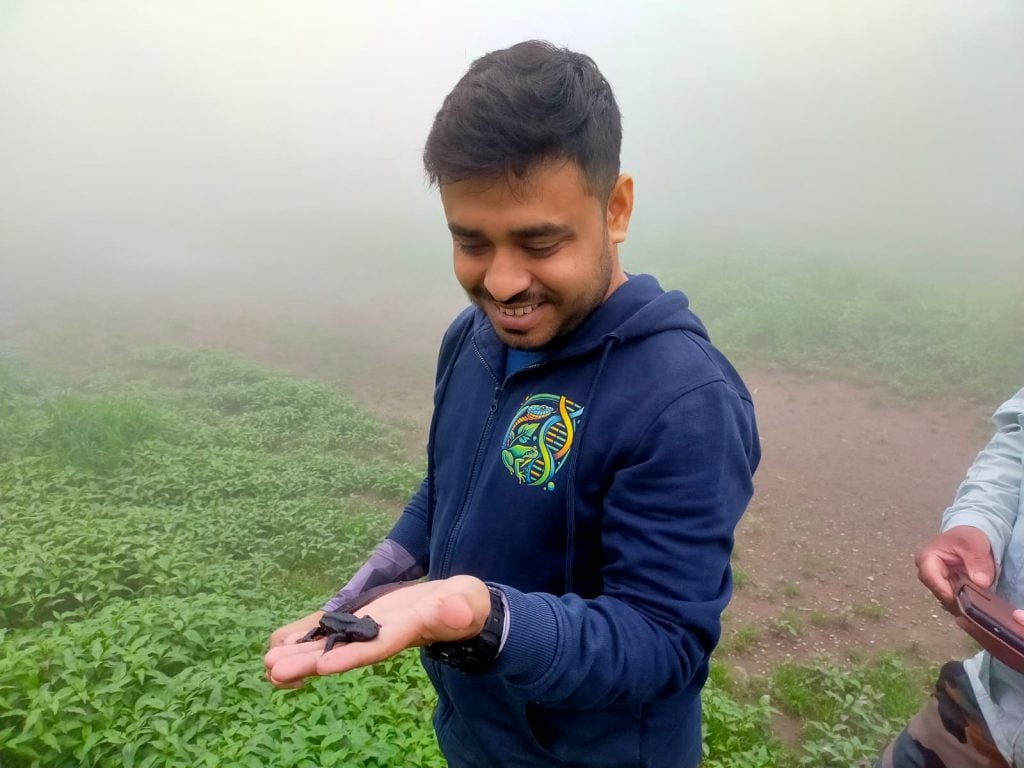
For Devesh Pandey, IFS, DFO Kurseong, protecting this little-known species has become a conservation mission built around three things: science, habitat restoration and people.
A 2020-batch IFS officer of the West Bengal cadre, Pandey has been nominated for the Eco Warrior Awards 2026 in the Wildlife Protection and Conservation category for his work towards protecting the Himalayan Newt and its fragile wetland habitats.
Also read: How IFS Sarthak Parashar Is Using Stories, Sketches and Literature to Make Wildlife Conservation Personal
A Species Surviving Against the Odds
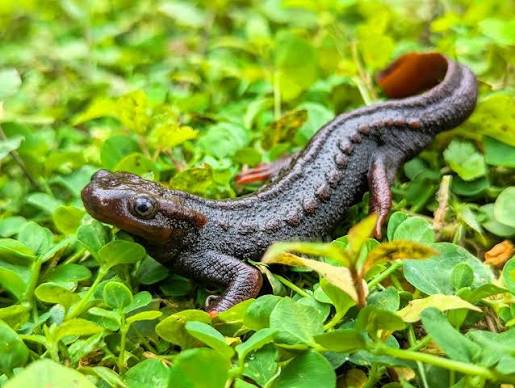
The Himalayan Newt is not simply another species found in the hills. It is an animal that has existed for an extraordinary length of time and is often described as a “living fossil”.
Yet its ancient survival story is now facing a very modern threat.
According to Pandey, more than 100 sites across the Darjeeling and Kurseong Hills have historically been associated with the species. Today, only a fraction enjoy meaningful protection.
The problem is made more complicated by the location of many of these habitats. Some lie inside forests, but others are tucked away in tea gardens, private yards and areas outside conventional protected areas.
“Many of these habitats are outside protected areas, including tea gardens and private land. Their numbers are shrinking because of changes brought by human activity, and that is why we have to look beyond the traditional protected-area approach. We are working with researchers and local communities so that these habitats can receive the protection they need,” Pandey shared in an exclusive conversation with Indian Masterminds.
His approach has involved identifying five key Himalayan Newt habitats and working towards giving them enhanced conservation attention.
When a Pond Becomes a Lifeline
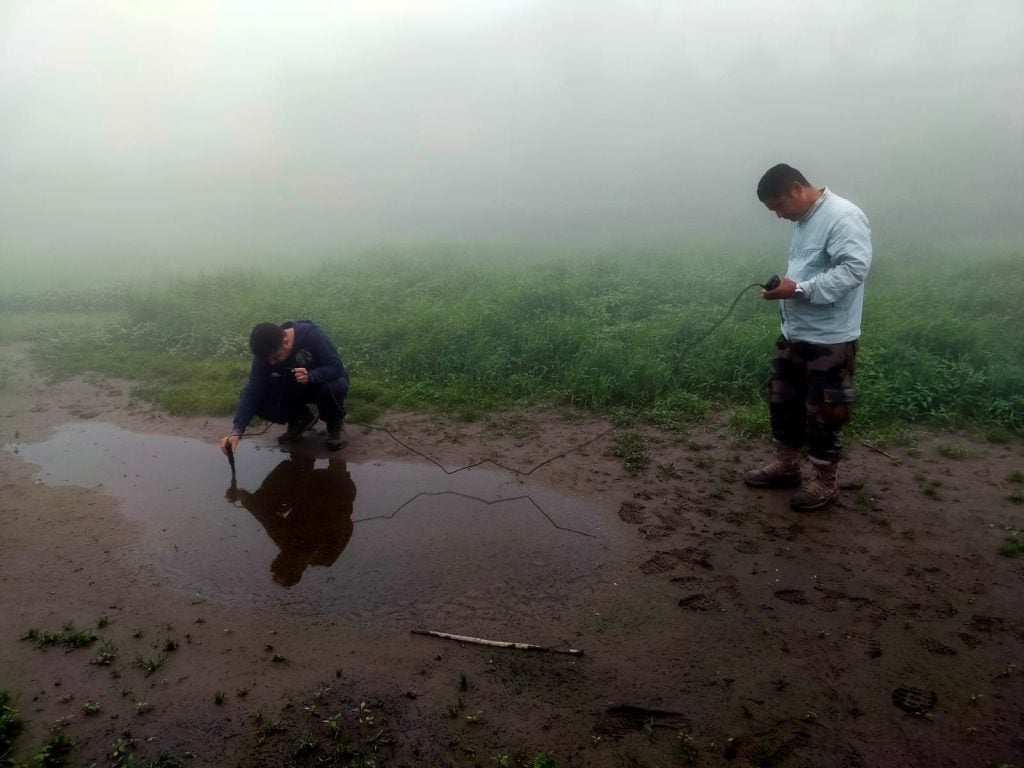
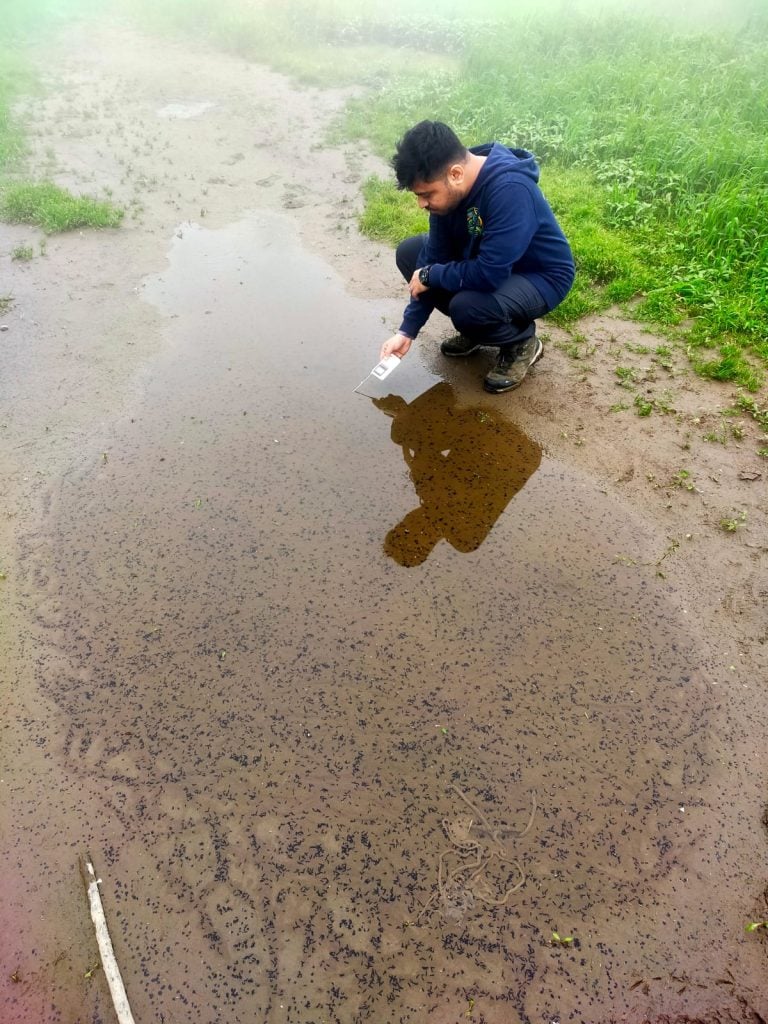
One of the most practical interventions has been habitat restoration. The species depends heavily on water bodies for breeding, but the small wetlands and waterlogged depressions it needs are increasingly vulnerable. Pandey’s team has therefore restored critical breeding water bodies and created artificial ponds and demonstration habitats.
These artificial ponds have also become emergency refuges. When newts or their larvae are found in unsafe locations, including near roads or polluted water bodies, they can be shifted to safer artificial habitats created by the Forest Department.
The conservation effort is also looking at a much larger landscape-level solution.
At Namthing Biodiversity Heritage Site, a high-altitude wetland ecosystem in Darjeeling, the focus is on protecting the wetland and surrounding forest as a complete ecological system. The site is an important breeding habitat for the Himalayan Salamander in West Bengal and performs functions far beyond providing shelter to one amphibian.
Its wetlands help regulate water, support biodiversity, provide habitat connectivity and sustain resources linked to local communities.
A management plan for 2026–2031, with a longer vision extending to 2036, proposes systematic biodiversity assessments, wetland restoration, threat reduction, scientific monitoring, community participation and sustainable livelihoods.
The larger ambition is to establish Namthing as a nationally recognised model of community-led wetland conservation.
The Amphibian That Helps Store Water
There is another reason Pandey believes these creatures deserve attention. The saucer-shaped depressions where the newts are found can play an important role in groundwater recharge. Their presence and activity contribute to soil aeration and help water move through the landscape.
That makes the species part of a much bigger ecological story.
“They are not only surviving in these wetlands; they are also contributing to the functioning of the ecosystem. These waterlogged, saucer-shaped areas help recharge water, and the presence of the Himalayan Newt is connected to these ecological processes. So protecting the species is also about protecting the systems that support our own existence,” says Pandey.
Taking Conservation Beyond the Forest
Perhaps the most important part of the initiative is that conservation has not remained confined to forest offices.
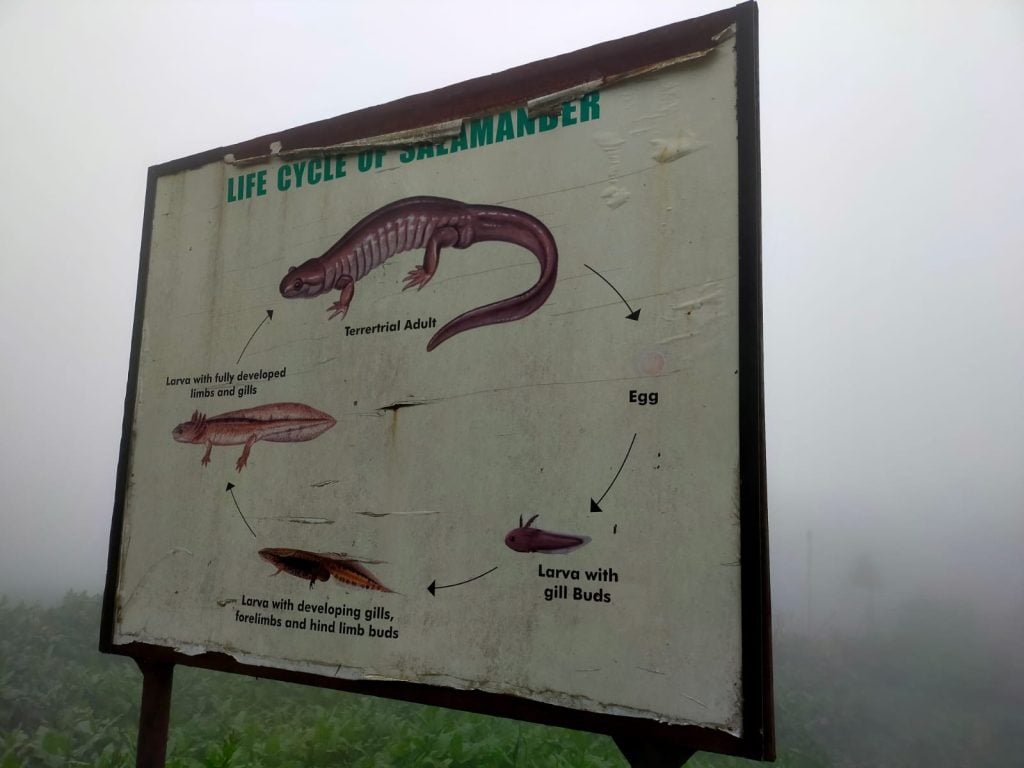
Pandey’s team has taken the Himalayan Newt into schools, fringe villages and local communities through awareness campaigns, films, documentaries, social media and outreach programmes.
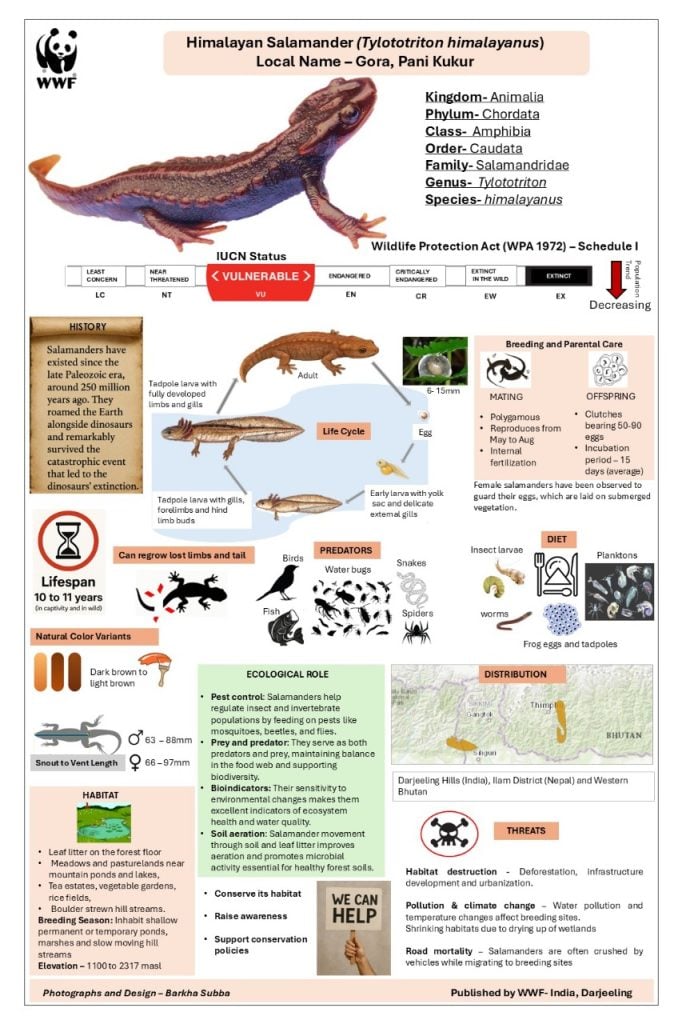
With support from WWF, infographics explaining the species, its food habits and threats have been developed and circulated through social media, YouTube and dedicated Facebook pages.
The aim is simple: make people notice the animal before it disappears. For years, many local residents, including schoolchildren, had seen the species without even knowing what it was. That is changing.
From Screen to Green
Kurseong is home to several prominent schools, including boarding schools. Pandey saw an opportunity to turn students into participants in conservation.
The result was “Screen to Green”, a nature-based programme designed to take children away from screens and into the forest.
Students participate in nature camps involving orientation sessions, biodiversity treks and wildlife exploration. They learn about elephants, leopards and human-wildlife conflict, take part in cleaning activities, tree-hugging, painting and observation exercises, and participate in treasure hunts, quizzes and wildlife-sign identification.
The programme also introduces them to local culture, traditional knowledge and the relationship between people and forests. A supervised night experience, complete with forest stories and a bonfire, adds another dimension to the learning.
The camps are supported through Joint Forest Management Committee participation, ensuring that community involvement extends to the upkeep of these experiences. And somewhere along the way, the Himalayan Newt gets introduced too.
Science Meets Community
Pandey’s conservation model has also placed scientific research at its centre.
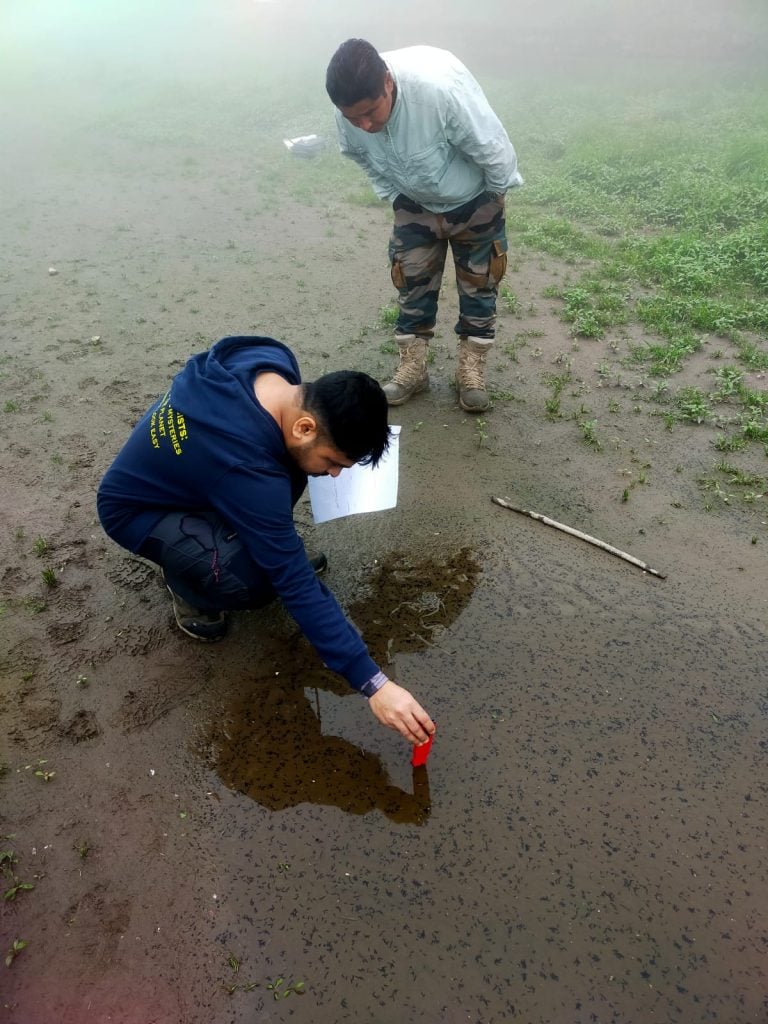
Collaborative studies were undertaken with the Zoological Survey of India (ZSI), Kolkata, to understand the species’ distribution, threats and conservation requirements. Research findings have helped identify measures for habitat protection and informed the management approach.
There is also a push to strengthen protection for important habitats that currently fall outside conventional protected areas. A proposal has been made for greater legal protection, including consideration of a dedicated salamander sanctuary.
But Pandey knows that government protection alone cannot secure these habitats.
The hills are under pressure from tourism, construction and encroachment. His team has therefore worked with local groups to create a sense of ownership around conservation, while encouraging the idea that tourism and environmental protection do not have to be opposing forces.
“We cannot look at tourism and conservation as separate things. Tourism can continue, but it has to happen in a way that protects these habitats. If we allow important sites to be encroached upon in the name of development, we may lose them forever,” he says.
Building a Model Beyond One Species
The work around the Himalayan Newt is part of a broader vision for Namthing Biodiversity Heritage Site.
The proposed management framework includes a Biodiversity Heritage Site Management Committee involving the Gram Panchayat, Forest Department, local communities, technical experts and local NGOs.
It envisages mapping boundaries, wetlands, forests, villages, streams, roads and tea gardens, while documenting land ownership, land use, cultural practices and community dependence on water, fuelwood, fodder, medicinal plants and other natural resources.
The conservation plan also covers biodiversity assessments of amphibians, birds, mammals, butterflies, dragonflies, moths, plants and wetland vegetation.
Threats such as climate variability, drought, landslides, plastic waste, road kills, tourism pressure, wetland encroachment, fires, livestock, invasive plants, pollution and illegal collection are to be assessed and prioritised.
The proposed solutions range from wetland and spring restoration to native planting, invasive-species control, salamander monitoring, disease surveillance and citizen science. Community groups, youth volunteers and women’s groups are expected to play a role, alongside sustainable tourism initiatives such as nature trails, interpretation facilities, local guides and better waste management.
The five-year mission is clear: restore habitats, strengthen monitoring, build community ownership and create sustainable livelihood opportunities such as homestays, nature guiding, nurseries and handicrafts.
The ten-year vision stretches further, towards a landscape where biodiversity thrives, communities benefit from nature-based livelihoods and scientific monitoring guides conservation decisions.
For an animal that has survived since a world very different from ours, the challenge today is not merely survival. It is whether humans will make enough room for it to continue.
In the Darjeeling Hills, Devesh Pandey and the people working with him are trying to ensure that the answer is yes.
Also read: IFS Dr Patil Nitin Kundalik: How Scientific Khair Forestry and E-Auctions Delivered 105 Crore in Himachal Pradesh