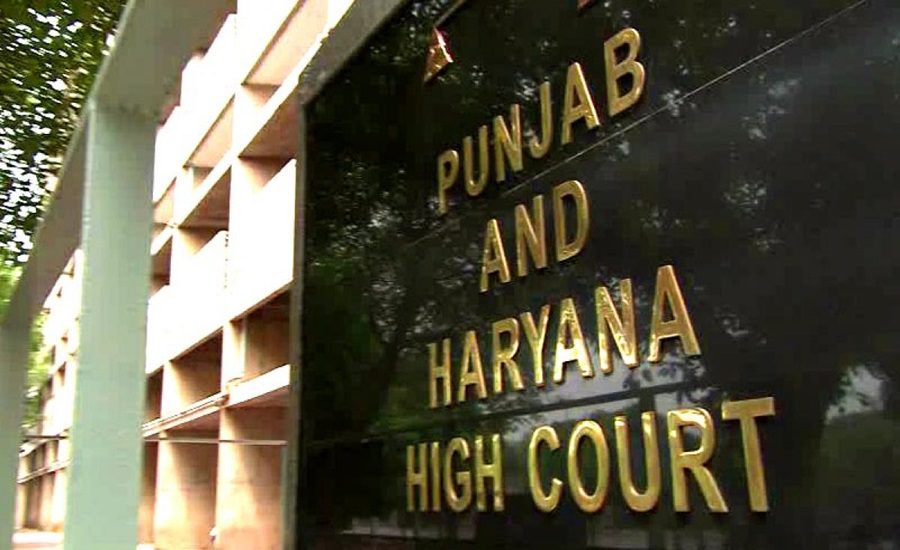
Chandigarh: The Punjab and Haryana High Court has sought the Punjab government’s response to a Public Interest Litigation challenging the continued absence of a regular Director General of Police (DGP) in the state for nearly four years.
A division bench comprising Chief Justice Ashwani Kumar Mishra and Justice Rohit Kapoor directed the state government to file an affidavit explaining its position. The matter has been listed for hearing on October 1, 2026.
The PIL has been filed by advocate Nikhil Thamman, who has questioned the continued use of an additional-charge arrangement for the state’s top police post.
Gaurav Yadav Has Held Additional Charge Since 2022
According to the petition, Gaurav Yadav, a 1992-batch IPS officer of the Punjab cadre, was given additional charge of Punjab DGP on July 4, 2022, when then DGP, Viresh Kumar Bhawra, a 1987-batch retired IPS officer of the Punjab cadre, proceeded on leave.
Bhawra was subsequently transferred on September 2, 2022, to serve as chairman of the Punjab Police Housing Corporation. Yadav was directed to continue holding additional charge of the DGP post until further orders.
The petition contends that the arrangement has continued for almost four years instead of being followed by the appointment of a regular police chief. Gaurav Yadav continues to be identified as DGP, Punjab, in recent Punjab and Haryana High Court records.
PIL Cites Supreme Court’s Police Reform Directions
The petitioner has relied on the Supreme Court’s landmark Prakash Singh v. Union of India judgment and subsequent orders governing the appointment and tenure of state police chiefs.
The Supreme Court had directed that a DGP selected through the prescribed process should have a minimum tenure of two years, irrespective of the officer’s date of superannuation. In its March 2019 clarification, the apex court also said the directions did not contemplate appointing a DGP on the eve of retirement.
The petition argues that keeping the post under additional charge for an extended period defeats the objective of providing stable and independent leadership to the state police force.
The petitioner argued that continuing the DGP post under an additional-charge arrangement for such a prolonged period undermines the stability and independence of the police leadership and is contrary to the Supreme Court’s directions on police reforms.
Petition Raises Question of UPSC Panel
The PIL also refers to the role of the Union Public Service Commission (UPSC) in preparing a panel of eligible officers for appointment as state DGPs.
The petitioner has contended that a panel of eligible officers has already been prepared and forwarded to the Punjab government and has questioned why the state has not proceeded with the appointment of a regular police chief.
The issue comes amid continuing Supreme Court scrutiny of compliance with the Prakash Singh framework. In February 2026, the Supreme Court directed states and the UPSC to follow the procedure laid down in its subsequent orders concerning DGP appointments.
The Punjab government will now have to place its position before the High Court through the affidavit sought by the bench. The court is scheduled to consider the matter next on October 1.
Read Also: High Court Bench Expansion: Three Judges for Chhattisgarh, Two Additional Judges for Gauhati