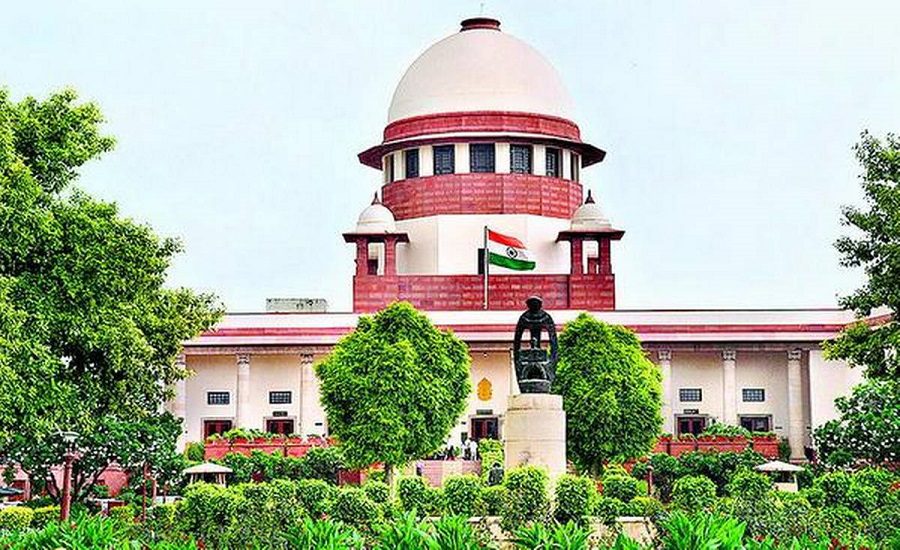
New Delhi: The Supreme Court on September 29 reserved its order on pleas concerning the selection of the next Odisha Director General of Police (DGP), while questioning whether the State’s process and the Union Public Service Commission’s (UPSC) empanelment followed the guidelines laid down in the 2006 Prakash Singh judgment.
A three-judge Bench comprising Chief Justice of India Surya Kant and Justices Joymalya Bagchi and V. Mohana heard the matter. During the hearing, the Chief Justice questioned the manner in which States approach the DGP selection process and observed that States sometimes seek to appoint a police chief of their preference rather than follow the procedure prescribed by the court.
“The state would like to derail the appointment process and do not want to follow the Prakash Singh (judgment)… they want to have the DGP of their choice,”
The Bench also indicated that it would examine whether the DGP appointment processes in Odisha and Jharkhand complied with the directions issued in the Prakash Singh case.
Court Questions UPSC’s Role in DGP Empanelment
The Bench also questioned the UPSC’s handling of the empanelment process. The Chief Justice remarked:
“The casual approach is reflected everywhere, and you are in a position of trust conferred by this court.”
The CJI further described the process as:
“This is all just an eyewash.”
The observations came amid challenges to the manner in which officers were included and excluded from consideration for the Odisha DGP post.
Susanta Kumar Nath’s Exclusion From DGP Panel Discussed
The exclusion of senior IPS officer Susanta Kumar Nath (IPS: 1993: OD), was also discussed. Nath’s integrity certificate was withdrawn after the State received a communication from the CBI concerning his possible examination in connection with a police recruitment examination case.
Solicitor General Tushar Mehta told the Bench that the CBI had informed the Odisha government on August 4 that Nath “may be required to be examined” in the case. Nath had headed the Odisha Police Recruitment Board when the examination was conducted.
Following the withdrawal of his integrity certificate, the State submitted a revised proposal containing the integrity certificates of 10 officers.
Senior advocate Karuna Nundy, appearing for Nath, submitted that no FIR names him as an accused in the case.
The court had previously questioned the State over Nath’s exclusion and sought clarity on the circumstances surrounding the withdrawal of his integrity certificate.
Odisha DGP Selection Has Been Under Court Scrutiny
The dispute has centred on the State’s proposal of senior IPS officers for consideration by the UPSC and subsequent changes to the list. Earlier proceedings also raised questions about the inclusion of additional officers, promotions and the eligibility of officers for consideration.
The Supreme Court’s scrutiny is linked to the Prakash Singh v. Union of India judgment of 2006, which laid down the framework for the selection and appointment of State police chiefs. The Court has reiterated in recent proceedings that States and the UPSC must follow the prescribed process for DGP appointments.
Acting DGP Arrangement in Odisha
The Bench was also informed that the Union Home Ministry had cleared two temporary ex-cadre posts in the DGP grade on August 9.
Odisha subsequently appointed Vinaytosh Mishra (IPS: 1993: OD), as acting DGP after incumbent DGP Y.B. Khurania (IPS: 1990: OD), retired on August 16.
The Supreme Court has now reserved its order on the pleas challenging aspects of the DGP selection process. The outcome will determine the next stage of the appointment process for Odisha’s regular police chief.