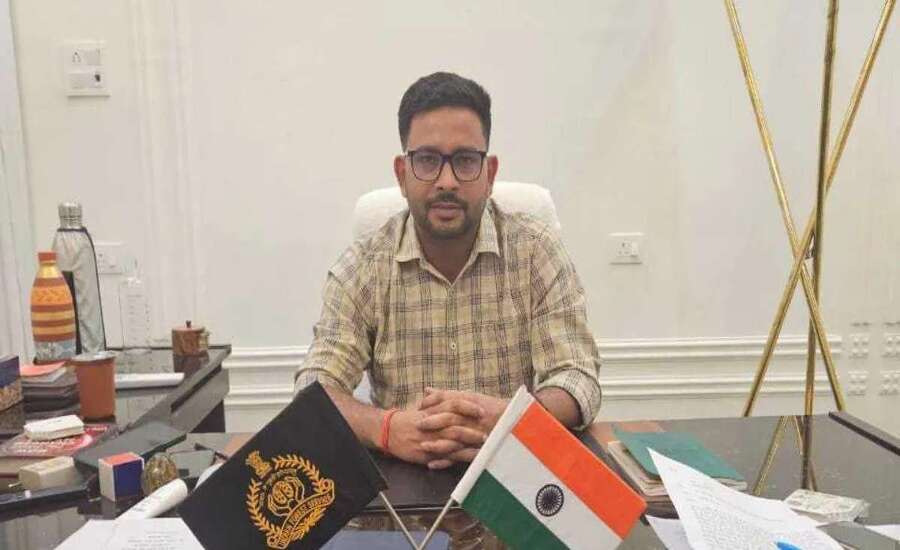
The Indian Forest Service fraternity has lost a young officer whose career was marked by an unusual combination of conservation, eco-tourism, community participation and public engagement. Vikas Nayak, a 2019-batch Uttar Pradesh cadre IFS officer and Divisional Forest Officer (DFO) of the Etawah Forest Division, died in a tragic road accident on September 29, 2026. He was 36.
Mr Nayak and his driver, Devansh Singh, 26, died after an SUV allegedly being driven by a 69-year-old man lost control after the driver apparently dozed off at the wheel, crossed the central divider of the Agra-Lucknow Expressway in Firozabad district and collided head-on with their vehicle.
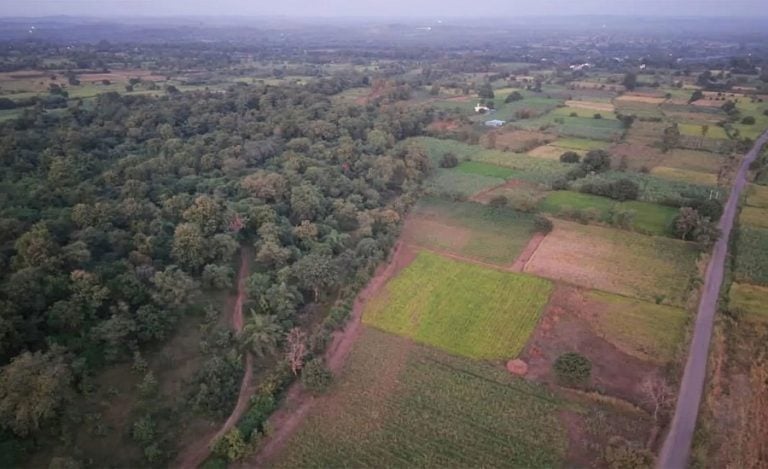
The accident cut short the career of a young forest officer who had already made a mark through several conservation and public-oriented initiatives, particularly the transformation of a barren and rugged ravine along the Yamuna in Firozabad into the Rapdi Eco Tourism Centre.
Young IFS Officer Dies in Agra-Lucknow Expressway Accident
According to the information provided by the police, Nayak was travelling towards Noida from Lucknow in an SUV when the accident took place on the Agra-Lucknow Expressway in Firozabad district on the morning of September 29.
Nayak, his driver Devansh Singh and the mother of one of his colleagues were travelling in the vehicle. The other SUV was reportedly being driven by David Dsouza, 69, a resident of Hotman Road in Kolkata. His wife, Mamta, 65, was also travelling with him.
Investigators said Dsouza allegedly dozed off while driving, following which he lost control of the vehicle. The SUV crossed the central divider and entered the opposite carriageway before colliding with Nayak’s vehicle.
Read Also: CAT Member Recuses From Hearing IFS Sanjiv Chaturvedi Case, Becomes 17th Judge to Step Aside
The impact left both vehicles severely damaged.
All five people involved in the collision were taken by ambulance to Saifai PGI for treatment. Nayak and his driver Devansh succumbed to their injuries during treatment, while the other three injured persons remained under treatment.
Firozabad DSP Chanchal Dubey said the Nagla Khangar police team and an ambulance reached the spot immediately after receiving information about the accident, while the families of the deceased were informed.
Who Was Vikas Nayak?
Mr Nayak was a 2019-batch Indian Forest Service officer of the Uttar Pradesh cadre. He served as the Divisional Forest Officer of the Etawah Forest Division at the time of his death.
Born on November 11, 1990, Nayak hailed from Nagaur district in Rajasthan. He completed his B.Tech before qualifying for the civil services and joining the Indian Forest Service.
He entered the IFS through the UPSC examination as a direct recruit in the 2019 batch. His IFS code was listed as UP/434.
Though his service was relatively short, Nayak worked across important forest divisions in Uttar Pradesh and became particularly known for his efforts to combine forest conservation with eco-tourism and community participation.
Career Across Firozabad, Mainpuri and Etawah
IFS Nayak served as the DFO of Firozabad Forest Division, where he led several initiatives related to afforestation, eco-tourism and environmental awareness.
During his tenure in Firozabad, he worked on increasing green cover and developing areas that had traditionally been viewed as difficult and degraded landscapes. His work eventually resulted in the creation of the Rapdi Eco Tourism Centre, one of the initiatives most closely associated with his name.
In July 2024, he was also given additional charge as the DFO of Mainpuri.
Nayak was transferred to the Etawah Forest Division on June 14, 2025. He subsequently served as DFO of Etawah until his untimely death.
His work in Etawah included a large-scale afforestation campaign as well as efforts to involve citizens, schools and local communities in protecting newly planted trees.
How Vikas Nayak Transformed Firozabad’s Ravines
Among IFS Nayak’s most notable achievements was his role in transforming a barren and heavily eroded ravine landscape along the Yamuna into the Rapdi Eco Tourism Centre.
The area around Shikohabad had been marked by severe erosion and was historically associated with outlaw and dacoit activity. The rugged ravines were difficult terrain, but Nayak saw an opportunity to convert the landscape into an ecological and tourism asset.
Drawing inspiration from the dramatic ravine landscape depicted in the film Paan Singh Tomar, he conceptualised a plan to reclaim the area and develop it as an eco-tourism destination.
The reclamation project began in March 2023 and was completed over roughly 11 months.
Instead of attempting to erase the character of the ravines, the project incorporated the natural terrain into the tourism experience. The resulting centre featured geo-treks, wooden cottages, speed boating, cave exploration areas and a dedicated butterfly park.
The project was also designed as a 100 per cent plastic-free eco-hub.
Rapdi Eco Tourism Centre Put Community at the Centre
For Mr Nayak, conservation was not limited to planting trees or creating protected spaces. An important component of his approach was ensuring that local communities became stakeholders in the conservation economy.
He established a Joint Forest Management Committee (JFMC) and brought local villagers into the management of the eco-tourism facility.
Rapdi villagers and women-led Self-Help Groups were given responsibilities related to the operation of canteens, parking facilities and local ticket collection. The revenue generated through these activities was divided between the state Forest Department and the local village committee.
This model created direct employment opportunities while giving local residents a financial interest in protecting and maintaining the destination.
The centre also included a ‘Plant Library’, conceived to help visitors understand different tree species, seeds and local conservation practices.
Through the initiative, a landscape once viewed primarily through the lens of erosion, isolation and criminal activity was given a new identity centred on nature, recreation and community participation.
Large-Scale Afforestation in Etawah
After his transfer to the Social Forestry Division in Etawah, Nayak took up large-scale afforestation and public participation in tree planting.
He spearheaded a district-wide initiative targeting the plantation of 55 lakh saplings, or 5.5 million trees, across various public departments.
The initiative was not restricted to government agencies. Nayak sought to involve citizens and schools in the plantation effort and encouraged them to adopt and protect saplings.
The idea was to move beyond plantation as a one-time government exercise and create a sense of community stewardship around the trees.
The information provided also credits his efforts with helping sustain a 10–12 per cent increase in regional forest cover under Forest Survey of India (FSI) frameworks.
Conservation Through Community Participation
A recurring feature of Mr Nayak’s administrative approach was his emphasis on involving local communities in environmental programmes.
At Rapdi, villagers and women-led SHGs were brought into the eco-tourism model. In Etawah, citizens and schools were encouraged to participate in the protection of planted saplings.
This approach reflected an effort to make conservation economically and socially relevant to people living around forest and ecological landscapes.
Rather than treating conservation as an activity limited to the Forest Department, Nayak worked towards creating public ownership of environmental initiatives.
He Also Mentored Students and Aspirants
IFS Nayak’s engagement with the public extended beyond forestry.
As a B.Tech graduate who had successfully cleared the UPSC examination, he regularly interacted with students in Etawah and organised free career guidance programmes.
He personally mentored students from government schools and helped them understand competitive examination preparation, study planning and the discipline required for national-level entrance and recruitment examinations.
His guidance extended to students preparing for examinations such as NEET and JEE. He shared preparation strategies, study roadmaps and what was described as mental-conditioning guidance to help students approach competitive examinations with greater confidence.
Thus, alongside his work in forests and eco-tourism, Nayak became involved in helping young people from the region explore educational and career opportunities.
A Career Focused on Active Conservation
Mr Nayak’s career reflected an approach that moved beyond conventional administrative responsibilities associated with forest management.
His initiatives combined ecological restoration with tourism, employment, public awareness and community participation.
The Rapdi project demonstrated how degraded landscapes could be developed as ecological and recreational spaces without abandoning their natural character. His afforestation campaign in Etawah focused on bringing government departments, citizens and schools together for plantation and protection.
His work with students added another dimension to his public service, allowing him to use his own educational and civil-services journey to guide young people.
An Untimely End to a Promising Career
Mr Nayak’s death at the age of 36 has brought an abrupt end to a career that had already produced several visible initiatives in Uttar Pradesh.
At the time of his death, he was serving as DFO of the Etawah Forest Division. His journey from Nagaur in Rajasthan to the Indian Forest Service and then to field-level forest administration in Uttar Pradesh had taken him through Firozabad, Mainpuri and Etawah.
His most visible legacy remains the transformation of the ravines along the Yamuna into the Rapdi Eco Tourism Centre, alongside his large-scale afforestation efforts and community-oriented conservation work.
The accident on September 29 not only claimed the life of a young forest officer but also cut short a career that had sought to make conservation more participatory, economically meaningful and accessible to the public.
For the Forest Department and the communities where he worked, Nayak will be remembered for the landscapes he helped transform, the trees he sought to nurture and the young people he encouraged to pursue bigger dreams.
Vikas Nayak: Career at a Glance
- Born on November 11, 1990, in Rajasthan’s Nagaur district.
- Completed B.Tech before entering the civil services.
- Cleared UPSC and joined the Indian Forest Service as a 2019-batch direct recruit of the Uttar Pradesh cadre.
- Served as DFO of Firozabad and worked on afforestation and eco-tourism initiatives.
- Given additional charge of DFO Mainpuri in July 2024.
- Transferred as DFO Etawah on June 14, 2025.
- Led the transformation of degraded Yamuna ravines into the Rapdi Eco Tourism Centre.
- Promoted community participation through Joint Forest Management and women-led SHGs.
- Spearheaded a 55-lakh sapling plantation initiative in Etawah.
- Conducted career guidance and mentorship programmes for government-school students.
- Died in a road accident on the Agra-Lucknow Expressway on September 29, 2026, aged 36.
A Legacy Beyond the Uniform
For a young officer whose formal career in the Indian Forest Service lasted only a few years, Mr Nayak’s work left an imprint across multiple areas of public service.
His initiatives showed how forest administration could extend beyond protecting existing forests to restoring degraded landscapes, creating livelihood opportunities, developing responsible tourism, involving communities and inspiring students.
The Rapdi Eco Tourism Centre stands as the most prominent example of that approach, while his plantation and mentorship initiatives reflected his wider belief in public participation.
His untimely death has therefore brought not just grief to the Forest Service fraternity but also the loss of a young administrator whose career was still unfolding.
Read Also: 6 Cheetahs to Move From Kuno to Gujarat’s Banni: October 31 Release Likely, PM Modi May Release Them