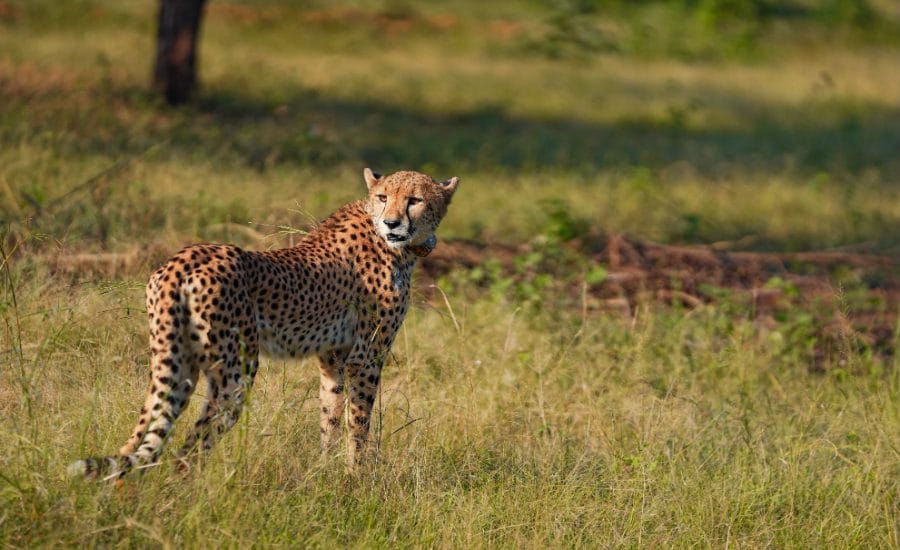
Sheopur: Preparations are in the final stages for the proposed relocation of six cheetahs from Madhya Pradesh’s Kuno National Park to Gujarat’s Banni grasslands, marking another major expansion of India’s cheetah reintroduction programme.
The Forest Department has largely completed the necessary arrangements at both Kuno and Banni for the proposed movement. October 31, the birth anniversary of Sardar Vallabhbhai Patel, is being considered as the likely date for the release of the animals in Banni.
However, the date has not yet been officially finalised. There is also speculation that Prime Minister Narendra Modi could be present for the release, although his participation has not been officially confirmed.
The proposed transfer comes as Gujarat prepares to become the second state in India to host cheetahs under Project Cheetah. The Banni grasslands in Kutch have been under preparation for some time, with experts assessing the area’s prey availability, spatial requirements and ecological suitability.
Six Cheetahs Proposed for Banni
According to reports, six cheetahs from Kuno have been identified for the proposed Banni relocation. The group is expected to comprise two males born at Kuno, one male originally brought from Botswana and three females.
The official names of all six cheetahs have not yet been released.
The proposed movement is part of a broader strategy to establish additional cheetah populations and expand the species’ distribution beyond Kuno. The Cheetah Steering Committee has already approved the relocation of cheetahs from Kuno to other suitable sites.
The move also follows the recent transfer of a female cheetah from Kuno to Madhya Pradesh’s Gandhi Sagar Wildlife Sanctuary.
Kuno Cheetah Already Moved to Gandhi Sagar
On September 20, a three-year-old female cheetah from Botswana, identified as CCB-2 and later renamed Radha, was released into a protected enclosure at Gandhi Sagar Wildlife Sanctuary by Madhya Pradesh Chief Minister Mohan Yadav. Gandhi Sagar now has four cheetahs—two males and two females.
The transfer demonstrates the ongoing effort to establish multiple sites for cheetah conservation in India rather than concentrating the entire population at Kuno.
Read Also: A New Roar in Madhya Pradesh: CCB-2 Joins Gandhi Sagar’s Cheetah Family
Recent reporting puts the total number of cheetahs in India at around 55-56, depending on the precise reporting date and count methodology, with 51-52 at Kuno and the remainder at Gandhi Sagar.
The Kuno population has also recorded a new generation of India-born cheetahs. Four cubs were born in the wild in April 2026 to KGP12, an India-born female and daughter of Gamini. Those cubs were subsequently reported dead in May, however, and should not be counted among the current Kuno population.
Banni Habitat Has Been Under Preparation
The Banni grasslands in Gujarat’s Kutch region have been identified as a potential new habitat for cheetahs for several years.
Forest officials and conservation experts have been working on developing the required infrastructure and assessing the landscape for its suitability. The assessment has included factors such as availability of prey, the amount of space available and broader ecological conditions required for cheetah survival.
Earlier reports indicated that the National Tiger Conservation Authority had cleared the movement of cheetahs to Banni and that Gujarat was working towards establishing a population there in phases.
The broader plan is aimed at establishing Banni as another cheetah-bearing landscape and eventually building a larger population through a combination of animals relocated from Kuno and cheetahs brought from other African range countries.
Kenya Cheetahs Could Change the Banni Plan
The proposed composition of the six-cheetah group could still change if the plan to bring cheetahs from Kenya moves forward.
Reports in May had indicated that four cheetahs from Kenya could be brought to Banni. Earlier reporting said the four animals were expected to comprise two male-female pairs, with the objective of establishing a different genetic line at Banni alongside cheetahs from Botswana.
The Kenya component is significant because Banni’s planned population is not necessarily intended to consist only of animals transferred from Kuno. Earlier reports indicated that Gujarat’s longer-term plan envisaged bringing together cheetahs from Kuno and Kenya, with the state working towards a larger population over time.
Therefore, if the Kenya transfer materialises, the number or specific selection of animals moved from Kuno could be revised.
Banni Could Become India’s Second Cheetah Landscape
Kuno National Park has remained the centre of India’s cheetah reintroduction programme since the first animals arrived from Namibia in September 2022.
The programme subsequently expanded through additional introductions from South Africa and, in 2026, Botswana. India has also begun developing additional sites to reduce dependence on a single landscape and create more opportunities for breeding and population growth.
Gandhi Sagar in Madhya Pradesh is already functioning as a second cheetah site. Banni in Gujarat is being developed as another potential landscape for the species.
The proposed movement of six Kuno cheetahs to Banni would therefore represent another significant step in the geographical expansion of Project Cheetah.
Kuno Currently Has a Growing Population
Kuno continues to remain the principal cheetah landscape in India, with the population having grown through both imported animals and births in the country.
The latest reports have highlighted the increasing number of India-born cheetahs, including the four cubs born to KGP12 earlier this year. The programme has also seen successful breeding by cheetahs that were themselves born in India, marking the development of a second generation under the reintroduction programme.
At the same time, the population has experienced mortality, including the recent death of Gaurav, one of the original eight Namibian cheetahs brought to India in 2022. Following his death, reports put the Kuno population at 51.
Reports also indicate that two female cheetahs at Kuno are pregnant and could give birth in the coming months, potentially adding further to the population.
Local Objection: Lions Should Come to Kuno First
The proposed transfer has also triggered objections from a section of local representatives associated with the Kuno region.
Atul Chauhan, convener of the Kuno Sangharsh Samiti and a former Congress district president, has opposed the shifting of cheetahs from Kuno to Gujarat.
Chauhan has said that while Gujarat can be given cheetahs, the longstanding demand to bring Asiatic lions from Gujarat to Kuno should first be addressed.
According to him, a proposal to bring Asiatic lions from Gujarat to Kuno was made around 13 years ago, but the lions have not been translocated to Kuno.
The issue reflects the longer-running debate around the proposed translocation of Asiatic lions to Kuno, which was identified as a potential alternative habitat for the species. The proposed movement of cheetahs to Banni has therefore added a new dimension to the discussion over the use of the two landscapes for different large carnivore conservation programmes.
October 31 Release Still Awaiting Official Confirmation
For now, preparations for the proposed movement of six cheetahs from Kuno to Banni are progressing, but key details remain subject to final decisions.
October 31 is being considered for the release, coinciding with Sardar Vallabhbhai Patel’s birth anniversary. The possibility of Prime Minister Narendra Modi releasing the cheetahs has also been discussed, but neither the date nor his participation has been officially confirmed in the information currently available.
The final selection of animals could also change depending on the status of the proposed Kenya cheetah transfer.
If the six-animal relocation goes ahead as currently planned, Banni will take another step towards becoming a new cheetah landscape in India, expanding the geographical footprint of Project Cheetah beyond Madhya Pradesh.
Read Also: Rare Cheetah Bond in Kuno: 2 Unrelated Males Hunt, Groom & Defend Territory Together