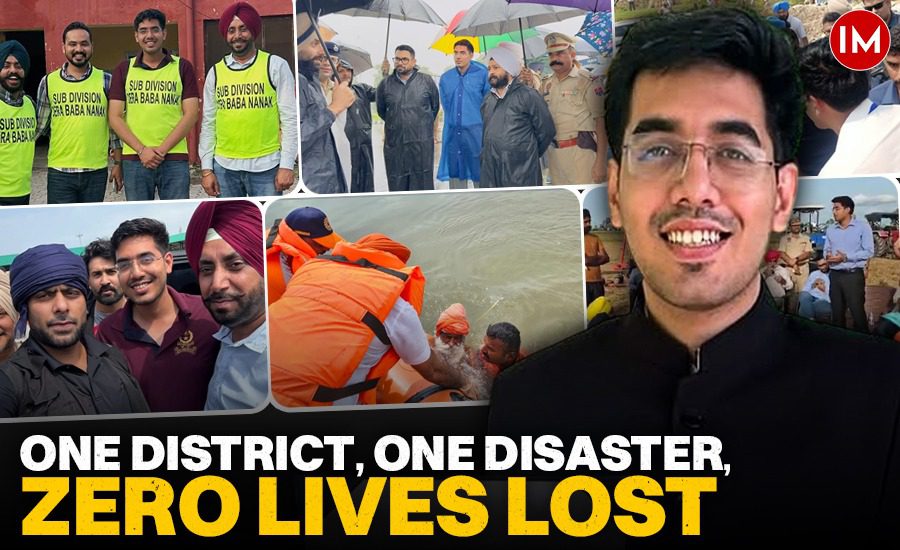
When floodwaters swallowed roads, cut off entire villages, and damaged even government buildings, a young IAS officer found himself at the centre of one of Punjab’s biggest disaster management operations in recent memory.
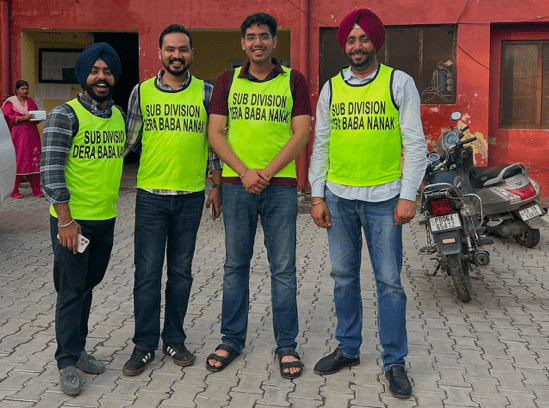
Aaditya Sharma, a 2023-batch IAS officer of the Punjab cadre, currently serving as SDM, Dera Baba Nanak, Gurdaspur, Punjab, had barely begun settling into his first major field posting when the devastating floods of August 2025 hit the region. Within days, she found himself leading rescue, relief, and rehabilitation efforts across one of the worst-affected areas of the state.
What followed became a remarkable story of leadership, teamwork, and community spirit. In a conversation with Indian Masterminds, Mr. Sharma recalled how Punjab overcame one of its most severe floods in decades while ensuring that not a single life was lost.
WHEN DISASTER ARRIVED UNANNOUNCED
The floods of 2025 were unlike anything most people in Punjab had witnessed.
According to Mr. Sharma, the state had not experienced a flood of this magnitude since 1988. While the floods of 1988 saw water discharge levels of around 11 lakh cusecs, the 2025 disaster brought nearly 18 lakh cusecs of water into Punjab.
A large share of this water entered through the Gurdaspur border region, placing enormous pressure on Dera Baba Nanak and surrounding areas.
Roads disappeared. Electricity failed. Villages became isolated. Even the official rest house at Dera Baba Nanak was flooded.
“Punjab had not witnessed a flood of such magnitude since 1988. The scale of water entering through the Gurdaspur border region was unprecedented,” Mr. Sharma told Indian Masterminds.
With travel routes cut off, returning to Gurdaspur became impossible. For several days, she stayed inside the Block Development Office, where a simple mattress served as his temporary bed.
Also Read – In Tamil Nadu’s Remote Hills, IAS Officer Abhilasha Kour is Bridging the Last Mile
A REGION COMPLETELY CUT OFF
The floodwaters transformed the landscape.
Connectivity between Gurdaspur and Dera Baba Nanak was completely disrupted. The Kartarpur Corridor suffered major damage, and several important roads were washed away.
The administration quickly realised that no single agency could manage such a crisis alone.
NDRF, SDRF, BSF, Army units, health officials, local administration, volunteers, NGOs, and religious institutions joined hands in a coordinated response.
Relief centres and temporary shelters were established. Gurdwaras opened their doors to provide food and accommodation. Social media was used to connect with volunteers and organisations willing to help.
For the administration, every hour mattered.
MORE THAN 150 VILLAGES UNDER WATER
The scale of the disaster was far larger than many initially understood.
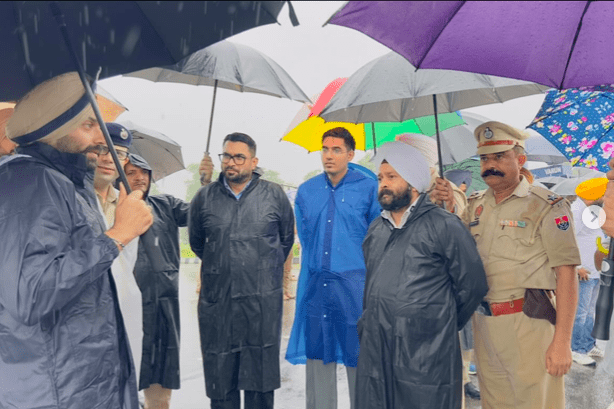
In Dera Baba Nanak alone, more than 150 villages experienced flooding. Some were completely cut off from the outside world.
Reaching them was a challenge.
In many places, boats became the only mode of transport. In partially flooded areas, tractors were used to move supplies and personnel.
Despite the difficult conditions, administrative teams continued field visits to assess damage and ensure relief reached every affected village.
“The reality on the ground was much larger than what many people saw. Nearly every village in the subdivision was affected in some way,” Mr. Sharma told Indian Masterminds.
COMMUNITY SPIRIT BECAME PUNJAB’S BIGGEST STRENGTH
As the disaster unfolded, help began arriving from every direction.
Local gurdwaras immediately started relief operations. NGOs mobilised volunteers. Donations arrived from different states. Members of the Punjabi diaspora also contacted the administration offering support.
What impressed Mr. Sharma most was the willingness of ordinary citizens to help complete strangers.
However, many well-wishers faced difficulties because traditional donation processes often involved excessive paperwork and multiple approvals.
The administration decided to simplify the process and make contributions easier and more transparent.
BUILDING A DIGITAL RELIEF NETWORK
One of the most innovative steps taken during the crisis was the creation of an online relief portal.
Developed under the guidance of the district administration, the portal became a central information platform for the entire district.
It listed relief requirements, contact details of officials, updates on contributions, and information about partner organisations.
The system also helped prevent duplication of donations.
Instead of receiving excessive quantities of certain items while lacking others, the administration could clearly communicate what was needed at any given time.
This improved efficiency and ensured resources reached the right places at the right time.
THE RACE TO SAVE LIVES
Although authorities had received some warnings about possible flooding, nobody anticipated the scale of the disaster.
Fortunately, preparations had already begun.
NDRF and SDRF teams were placed on standby. Meetings were conducted with the Army and paramilitary forces. More than 500 evacuation centres were identified before floodwaters arrived.
Announcements were made in vulnerable villages urging residents to move to safer locations.
Many people complied. Others chose to stay.
When water levels rose dramatically, rescue operations intensified.
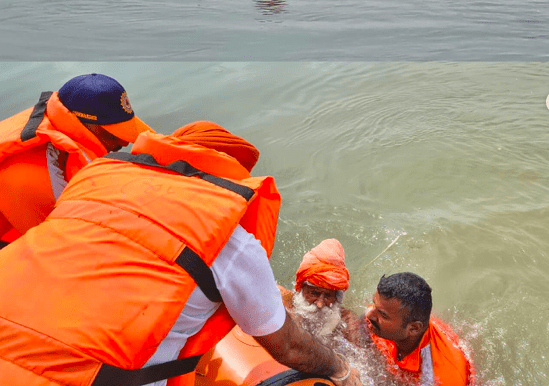
Helicopters were brought in through coordination with the Air Force. Boats were deployed by government agencies and NGOs. Army teams worked around the clock evacuating stranded residents.
“Every institution understood the seriousness of the situation. The coordination between agencies became our biggest strength during the rescue operations,” Mr. Sharma told Indian Masterminds.
Between 15,000 and 20,000 people were eventually rescued.
Most importantly, not a single casualty was reported.
PREVENTING A HEALTH CRISIS
While rescue operations continued, another danger emerged.
Floods often trigger outbreaks of cholera, typhoid, and other water-borne diseases. Snake bites also become common.
Recognising these risks, the administration launched an aggressive health response.
Mobile medical teams were deployed across the district. NGOs, hospitals, Army medical units, and paramilitary healthcare teams were integrated into the effort.
Boat ambulances were introduced in inaccessible villages. Veterinary teams treated livestock and monitored outbreaks of Foot and Mouth Disease.
Medical camps were organised throughout affected areas.
The results were remarkable. No epidemic outbreak occurred, and health-related complications remained under control.
BUILDING BACK BETTER
Once floodwaters receded, attention shifted to rehabilitation.
The administration adopted a “Build Back Better” approach.
Damaged schools were upgraded rather than simply repaired. Compensation was provided for crop losses, damaged homes, and livestock deaths.
Families that had lost their homes received support through innovative solutions such as prefabricated housing units developed with assistance from partner organisations.
The district also began strengthening embankments and improving flood-control infrastructure to prepare for future emergencies.
LESSONS FROM A DEFINING CRISIS
For Mr. Sharma, the floods became much more than a disaster-management assignment.
It was his first major test as a young administrator.
The experience revealed the strength of institutions, the dedication of public servants, and the generosity of ordinary citizens.
It also reinforced a lesson that will likely stay with him throughout his career: during a crisis, calm leadership and teamwork can overcome even the most difficult challenges.
The 2025 Gurdaspur floods tested the resilience of an entire district. But they also showed what is possible when government agencies, communities, volunteers, and citizens work together with a shared purpose.
In the end, amid washed-out roads, submerged villages, and unprecedented floodwaters, the administration achieved its most important objective—saving every single life.
Also Read – The IPS Officer Who Turned a Tiger’s Tragedy into a Conservation Mission