The beautiful Manas Tiger Reserve in Bodoland Territorial Region of Assam is home to diverse wildlife. However, back in 1980s and early 1990s, civil unrest in the region had left the Manas landscape vulnerable to poaching, deforestation and fragmentation. Wildlife population was severely impacted and nearly all of the Reserve’s rhinos were wiped out.
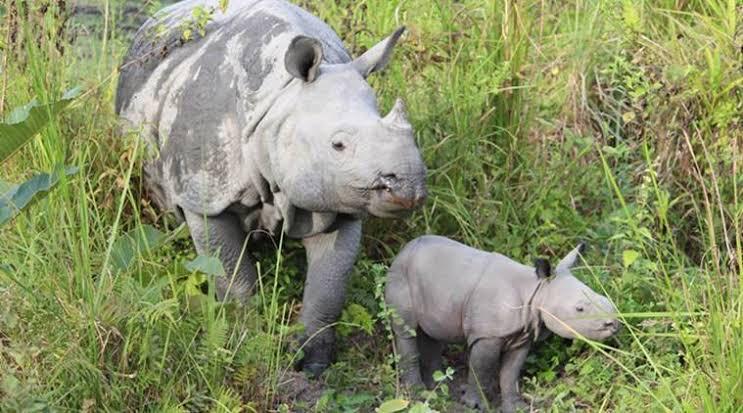
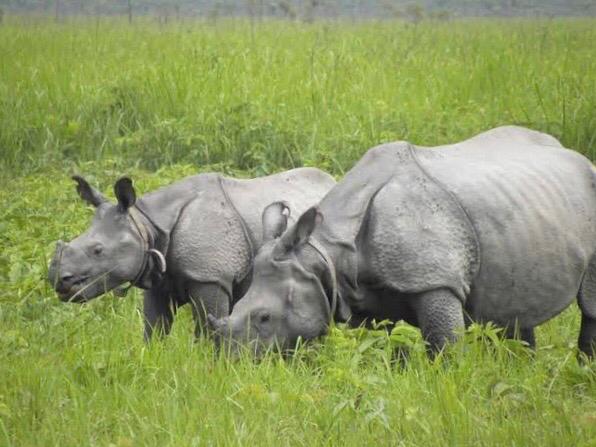
As the region stabilized, the Assam Forest department along with conservation partners like International Rhino Foundation, Wildlife Trust of India (WTI), WWF and Aaranyak began working on repopulating the Reserve. Their efforts have helped rebuild a key population of greater one-horned rhinos in the Manas Tiger Reserve. Today, an estimated 51 rhinos thrive in the area and the number is steadily increasing.
Indian Masterminds spoke with Anurag Singh, IFS, Chief Conservator of Forests, Bodoland Territorial Council and Dr. Vaibhav Mathur, IFS, Field Director, Manas Tiger Reserve, to know the inspiring story of how sustained efforts brought back the rhino from the verge of extinction to a thriving and growing population in Manas today.
WHY RHINOS DISAPPEARED
Manas Tiger Reserve is located in the Bodoland Territorial Region (BTR) in Assam and is one of India’s most important wildlife conservation areas. The grassland ecosystem is home to rich wildlife, including the greater one-horned rhino, tiger, Asian elephant, golden langur, swamp deer, clouded leopard, etc.
However, civil unrest in the region in 1980s and early 1990s had led to widespread poaching, deforestation and fragmentation. As a result, the rhinos disappeared from the Reserve. And a beautiful haven for wildlife became barren without its children.
After the situation in the region stabilized, the Assam Forest Department took up restoration of wildlife in Manas as a priority. Special focus was laid on the world-famous greater one-horned rhino as it had completely disappeared from the Reserve.
HOW THEY RETURNED
The return of the one-horned rhinos to Manas is a powerful example of how sustained efforts and consistent focus can restore wildlife. The rhino population rebuilding was done through a combination of community engagement, animal rehabilitation and habitat conservation.
Field Director of Manas Tiger Reserve, Dr. Vaibhav Mathur, IFS, said, “The Assam Forest Department has played a lead role in bringing back rhinos to Manas. Right from statutory clearances to deployment of boots on the ground to oversee capture, transport and release of rhinos, everything was undertaken by the forest department along with its conservation partners.”
ORPHAN CALVES RELEASED
Re-establishing rhinos was challenging because they are very territorial, and adults moved from one habitat to another often fail to thrive. So, a new approach was also explored. Orphaned rhino calves from Kaziranga National Park were rehabilitated and then released into Manas when they were 2 or 3 years old, an age at which they are more able to establish their own territory.
Kaziranga is home to the world’s largest population of greater one-horned rhinos. Rhino calves sometimes get separated from their mothers in this area, often during biannual flooding that forces animals to seek higher ground.
In 2002, the only facility in India that rescues, hand-raises and rehabilitates animals such as one-horned rhinos and Asian elephants – the Centre for Wildlife Rehabilitation and Conservation (CWRC) – was established near the Kaziranga Park. Orphaned rhino calves are rehabilitated there and raised until they can be moved to a soft-release facility in Manas before being set free into the wild.
Field Director Mathur said, “Day-to-day monitoring of released rhinos was subsequently taken up after the capacity of forest frontline was built up. As an ongoing process, the department is seeing to it that the habitat for rhinos does not deteriorate over time and habitat management interventions are being taken up annually. This has taken the rhino number to 51 till now.”

INVOLVING LOCAL BOYS
Chief Conservator of Forests, BTC, Anurag Singh said, “The success of reintroduction, conservation and steady establishment of greater one horned rhinoceros in Manas Tiger Reserve is a result of support from all communities living around the reserve, the efffort of Bodo community, dedicated effort of the frontline staff and critical role of NGOs and organisation such as WTI, Arayanak, WWF.”
To tackle poaching and human-animal conflict, community-based conservation activities and alternate livelihoods were introduced. Local communities were imparted training to boost anti-poaching efforts and equip rangers. And the children were educated through dedicated campaigns to take pride in their natural heritage.
Field Director Mathur further informed that, “Forest personnel started working with the local boys and, in due course, gained their confidence. These boys were gradually employed as casual forest personnel and have been serving Manas Tiger Reserve for nearly 20 years now. However, with low wages, their life is still a struggle. So, to enhance their pay, I have put up a proposal to get them paid through the centrally-sponsored scheme of Project Tiger from the next financial, subject to concurrence of the Ministry of Environment, Forest and Climate Change, Govt. of India.”
ENSURING SAFE HABITATS
Ensuring that rhinos and other wildlife have a safe and secure habitat was another top priority. Manas was expanded by 350 square kilometers in 2016. In 2021, another 422 square kilometers of protected land was added to the Greater Manas Landscape with the designation of Raimona National Park. This park runs contiguous to two protected areas in Bhutan, facilitating habitat connectivity and supporting wildlife movement between the areas.
“Raimona National Park was notified as the 7th national park in Assam in 2021 which now covers 422 sq km additional landscape, adding a larger area for wildlife in the region,” CCF Singh said.
In accordance with India’s National Wildlife Action Plan, the Government of Assam has adopted the landscape approach to conservation, wherein wildlife habitat areas adjoining National Parks are being notified as Protected areas under the Wildlife Protection Act. This shall secure dispersal of wildlife, especially long ranging mammals such as rhinos, tigers and elephants.
“Recently, the first addition to Manas was handed over to us, so that it can be effectively managed from the wildlife point of view. Once this is successfully managed, it shall ensure a contiguous landscape right up to the newly notified Raimona National Park,” Field Director Mathur said.
TIGERS INCREASED TOO
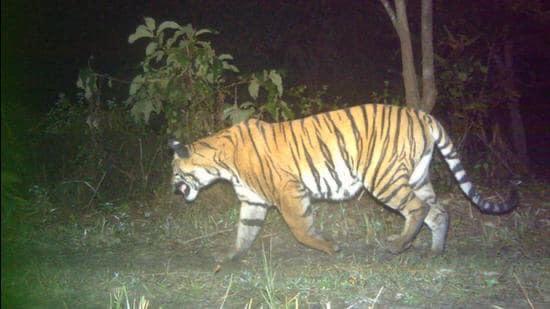
The conservation efforts have not just increased the rhino population in Manas, the tiger population is on the rise, too. CCF Singh said, “The conservation efforts have also resulted in increased population of tiger in the Manas landscape. As per the last estimation, 50 tigers now exist in the landscape.”
In conclusion, Field Director Mathur outlined the way forward: “While existing issues and pressures on Manas need to be continuously dealt with, the future challenge is to make the first addition to the Reserve inviolate and disturbance free. Infrastruture for area domination needs to be developed and put in use at the earliest along with habitat interventions.”