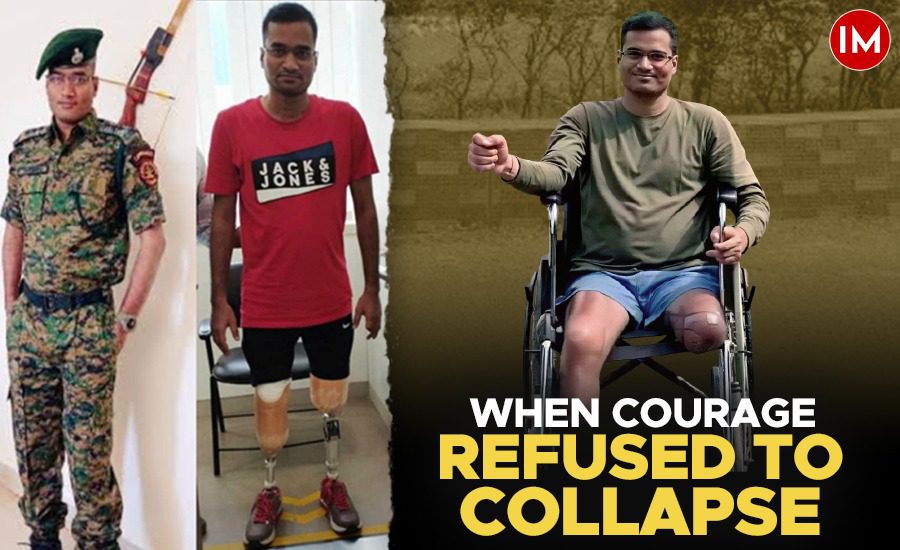
The forest was too quiet.
In the dense, unforgiving stretches of Bihar’s Chakrabandha hills, silence is never peace; it is a warning. Every step sinks into layers of leaves that may or may not be covering death. Every tree can hide a rifle barrel. Every trail could be wired to explode.
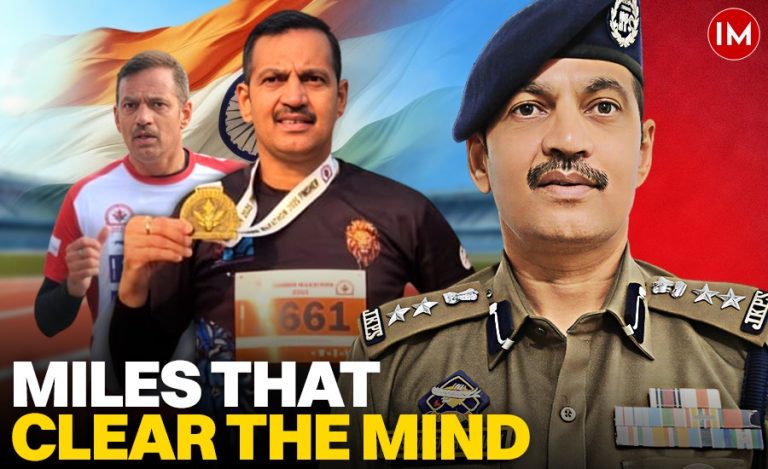
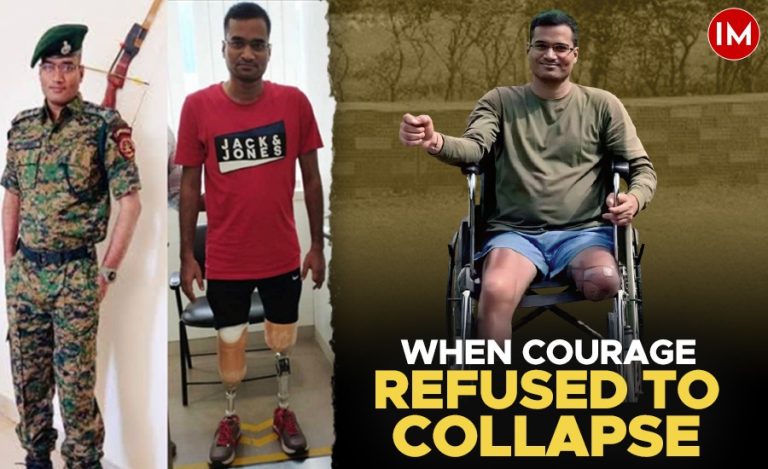
On the morning of February 25, 2022, Assistant Commandant Bibhor Kumar Singh was leading his team from the 205 CoBRA Battalion into this silence.
They were not walking into unknown territory. They were walking into a Maoist stronghold.
INTO THE KILL ZONE
The mission was a search-and-destroy operation, routine on paper, lethal in reality. Intelligence inputs had suggested a Maoist presence deep inside the forested belt straddling Gaya and Aurangabad.
Singh wasn’t trailing behind. CoBRA officers don’t. He was at the front, reading the forest like a battlefield map with its disturbed soil, broken twigs, and an unnatural stillness.
Then the silence snapped.
Gunfire erupted.
Maoists, hidden in elevated positions, opened fire with the advantage of surprise. It was a classic ambush… precise, rehearsed, and meant to pin the forces down.
But Bibhor Kumar Singh didn’t freeze. He reacted.
Issuing rapid commands, he led a flanking manoeuvre, one of the riskiest moves in close combat. It meant exposing himself, shifting angles, and forcing the enemy to lose their advantage.
It worked.
Under pressure, the Maoists began to retreat. For a moment, the forest exhaled. And then the ground exploded.
THE BLAST
It was a pressure IED, hidden beneath the forest floor, waiting for weight, for timing, for someone to step exactly where he did.
The explosion tore through the silence, through the formation, through his body.
In an instant, both his legs were gone.
There are moments in combat when time fractures, when seconds stretch, when the body registers what the mind refuses to accept.
This was one of those moments.
But Bibhor Kumar Singh did not stop.
COMMAND BEYOND PAIN
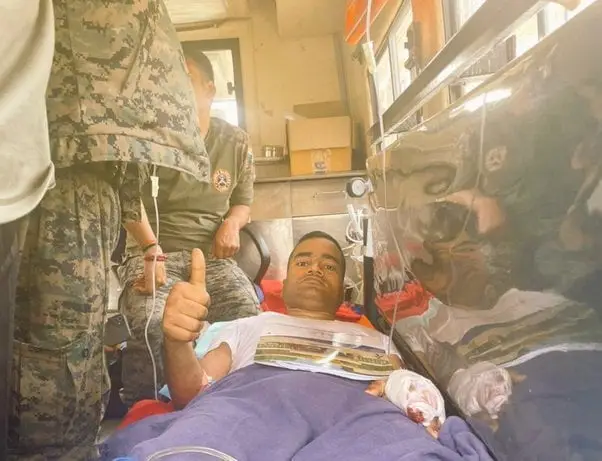
Severely injured, bleeding profusely, his body collapsing into the forest floor, he remained conscious.
And more importantly, he remained in command.
Through the chaos, dust, screams, and gunfire, he continued issuing instructions. Positioning his men. Directing fire. Ensuring that the formation did not break.
The difference between survival and disaster in an ambush is often measured in seconds of leadership.
Those seconds came from him.
Despite the catastrophic injuries, despite the shock, he held the line long enough for his team to regain tactical control. The Maoists, unable to sustain the engagement, withdrew deeper into the forest.
The ambush had failed.
But the battle for his life had just begun.
SEVEN HOURS
Evacuation in such terrain is never immediate. There are no straight roads out of an ambush site. No instant rescues.
For over seven hours, he lay between survival and collapse. His comrades fought two battles at once: securing the area and keeping him alive.
There were delays. Terrain. Logistics. Weather conditions that slowed aerial evacuation. Time, in those hours, was not just passing; it was slipping.
He was eventually moved from the forest to a hospital in Gaya and later flown to AIIMS Delhi. By then, the cost of survival had become irreversible.
Both legs had to be amputated.
THE MEDAL AND THE MEANING
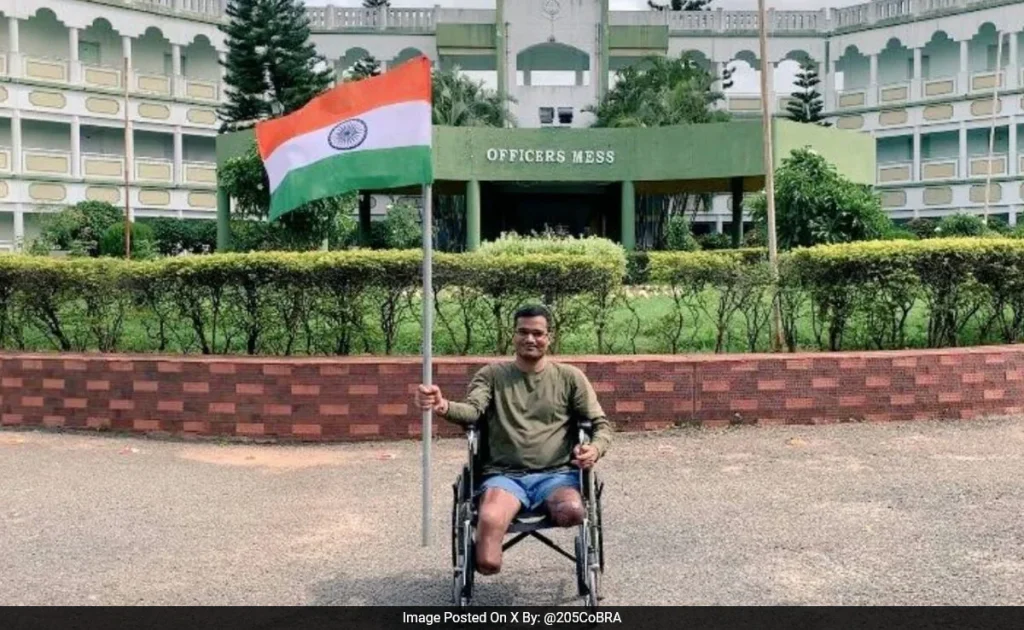
On Republic Day 2024, Assistant Commandant Bibhor Kumar Singh was awarded the Shaurya Chakra, India’s third-highest peacetime gallantry award.
The citation spoke of courage, leadership, and presence of mind.
But citations are always shorter than reality.
They do not capture the forest.
They do not capture the explosion.
They do not capture the man who continued to command after his body had given way.
He was the only officer from the Central Armed Police Forces to receive the honour that year.
THE UNSEEN WAR
Far from the spotlight of conventional warfare, India’s battle against Maoist insurgency continues in forests like Chakrabandha. It is a war without headlines, fought in ambushes, in patrols, in long stretches of uncertainty.
And in that war, officers like Bibhor Kumar Singh represent a kind of leadership that is rarely seen and even more rarely understood.
Leadership that does not retreat when the ground itself turns hostile.
Leadership that does not end where the body does.
AFTER THE BLAST
There is very little known publicly about his life beyond that day. No detailed interviews. No personal narratives. No accounts of recovery in the public domain.
What remains is the moment.
A moment in a forest where an officer, critically wounded, refused to let command slip away.
THE LAST LINE
In combat, the line between life and death is often drawn by instinct.
On that day, in a forest wired with explosives and lined with gunfire, Bibhor Kumar Singh redrew that line.
Not with his legs.
But with his will.