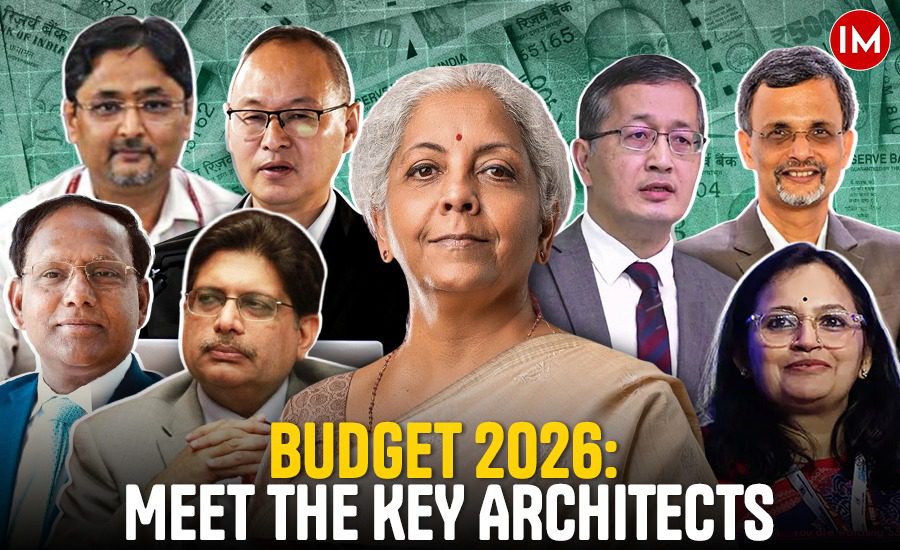
When Finance Minister Nirmala Sitharaman presents the Union Budget on February 1, she will mark a significant milestone in India’s fiscal history. This will be her ninth consecutive budget—placing her among a rare group of finance ministers who have shaped economic policy across multiple political cycles. Having first presented the Budget in 2019, Sitharaman is now the longest-serving Finance Minister under the same Prime Minister and is closing in on Morarji Desai’s record of ten Union Budgets. She also matches former Finance Minister P. Chidambaram’s tally of nine.
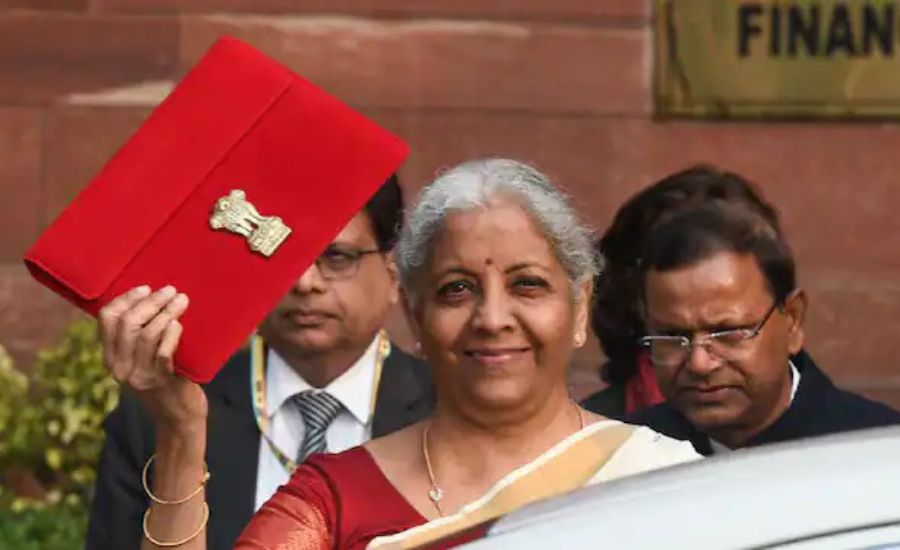
The budget for 2026-27 assumes added importance as it becomes the third full budget of the Modi 3.0 government, prepared against a backdrop of a 7.4 percent growth rate, global economic uncertainty, and ongoing geopolitical churn. While the Finance Minister will deliver the speech in Parliament, the framework of the budget is the result of months of work by a small but powerful group of senior bureaucrats inside North Block.
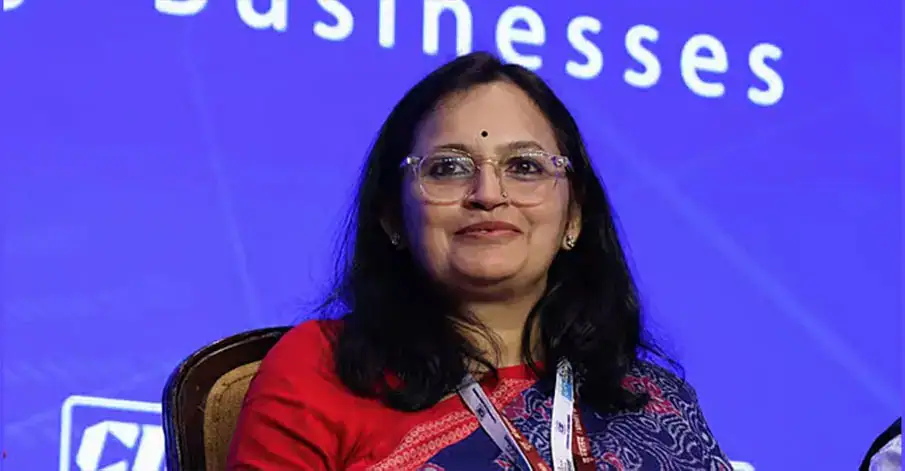
ANURADHA THAKUR, IAS
At the centre of budget preparation is Anuradha Thakur, Secretary, Department of Economic Affairs. As the head of the department that steers macroeconomic policy, Thakur plays a decisive role in shaping the budget’s structure—ranging from growth assumptions and fiscal deficit targets to sectoral allocations. The Budget Division under her charge drafts the documents that eventually reach Parliament.
This is her first budget as Economic Affairs Secretary. A 1994-batch IAS officer of the Himachal Pradesh cadre, Thakur assumed office on July 1, 2025. Her appointment also marks a first: she is the first woman IAS officer to lead the Department of Economic Affairs, a key institution in India’s economic governance.
ARVIND SHRIVASTAVA, IAS
Tax proposals, which often dominate public and market attention, are handled by Arvind Shrivastava, Revenue Secretary. He is responsible for Part B of the Budget Speech, covering both direct taxes—such as income and corporate tax—and indirect taxes, including GST and customs duties.
Shrivastava is a 1994-batch IAS officer and an engineering graduate with an MSc in Finance from the University of London. While this is his first Budget as Revenue Secretary, he brings substantial institutional memory to the role. Earlier, he served as Joint Secretary in the Budget Division and later worked in the Prime Minister’s Office, handling finance-related matters. With expectations of rationalisation in customs duties and TDS structures, his department’s decisions will be closely tracked for their impact on revenue mobilisation and compliance.
VUMLUNMANG VUALNAM, IAS
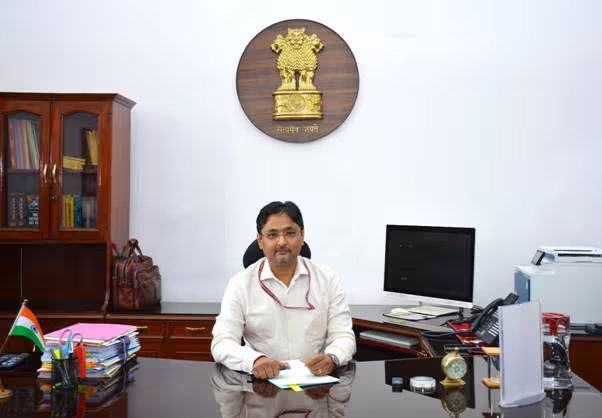
On the spending side, Vumlunmang Vualnam, Secretary, Department of Expenditure, acts as the government’s principal gatekeeper. His department evaluates expenditure proposals from ministries, oversees subsidy allocations, and enforces fiscal discipline to keep the deficit within planned limits.
A 1992-batch IAS officer of the Manipur cadre, Vualnam has previously served as Civil Aviation Secretary and as Additional Secretary in the Department of Economic Affairs. He is a commerce graduate with a Master’s degree in public policy. His role extends beyond numbers, influencing how effectively government programs are funded and implemented in the coming year.
M. NAGARAJU
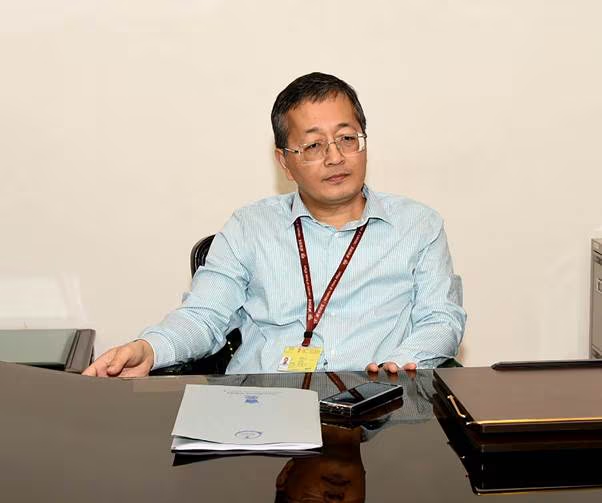
M. Nagaraju, Secretary, Department of Financial Services, oversees policies related to banks, insurance companies, and pension systems. His department is central to the government’s financial inclusion and social security programs, as well as to maintaining the health of public sector banks.
An economics graduate with a postgraduate degree in philosophy, Nagaraju is currently the longest-serving secretary in the finance ministry. Before taking charge of Financial Services, he served as Coal Secretary. His continuity provides stability at a time when credit growth, digital finance, and balance-sheet strength remain critical to sustaining economic momentum.
ARUNISH CHAWLA, IAS
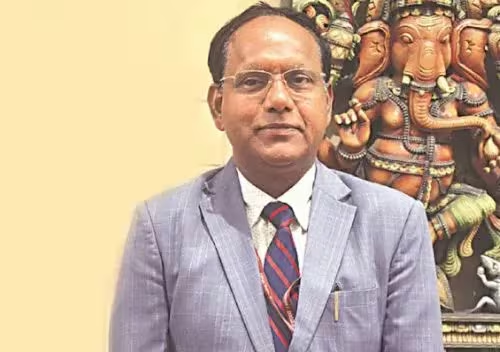
Managing non-tax revenues is Arunish Chawla, Secretary, Department of Investment and Public Asset Management (DIPAM). His department handles the government’s disinvestment and privatisation strategy, including targets derived from selling stakes in central public sector enterprises.
A 1992-batch IAS officer of the Bihar cadre, Chawla is an economist by training, with an MSc and a PhD in Economics from the London School of Economics. His work has a direct bearing on fiscal arithmetic as well as on investor sentiment, particularly in years when disinvestment receipts are crucial to meeting revenue targets.
K. MOSES CHALAI
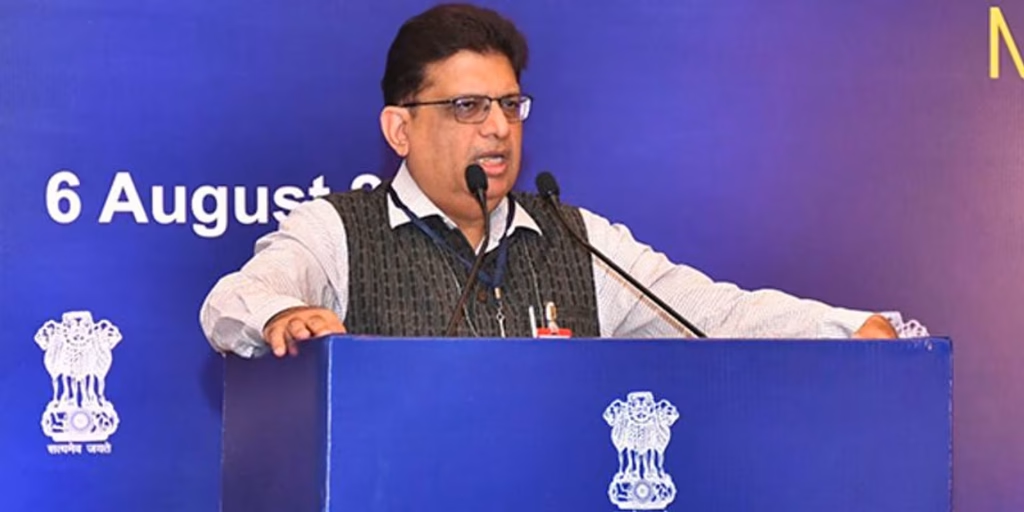
Working alongside DIPAM is K. Moses Chalai, Secretary, Department of Public Enterprises. He oversees capital expenditure plans of select CPSEs and monitors their financial performance to ensure that budgetary support translates into operational outcomes.
The department also tracks asset monetisation efforts and evaluates the overall financial health of state-owned firms, linking public sector efficiency with broader fiscal goals.

V. ANANTHA NAGESWARAN
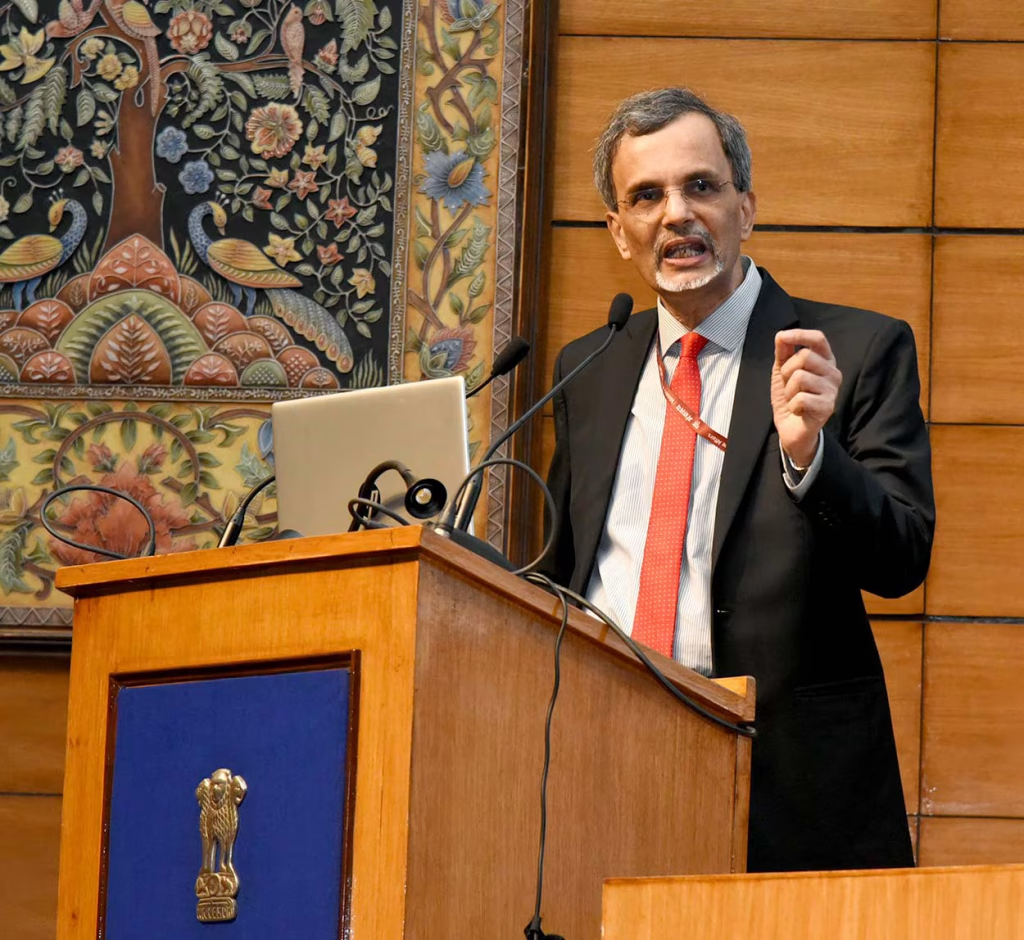
Providing analytical depth to the budget is V. Anantha Nageswaran, the 18th Chief Economic Adviser to the Government of India. Appointed in January 2022, he will serve in the role until March 2027.
As CEA, Nageswaran advises the Finance Minister on critical budget-related issues, including economic reforms, fiscal policy choices, and long-term financial strategy. His office supplies the macroeconomic context for the budget—forecasting growth, analysing performance across agriculture, industry, and services, and assessing global economic risks that could affect India’s outlook.
A COLLECTIVE EFFORT BEHIND THE NUMBERS
Budget 2026-27 reflects continuity in leadership and complexity in execution. While the Finance Minister carries the responsibility of presenting the budget to Parliament, its architecture is shaped by a coordinated effort across departments—where policy intent, fiscal discipline, and economic analysis converge.
As February 1 approaches, the focus will be on announcements and allocations. But behind the speech lies the sustained work of a bureaucratic team tasked with steering the economy through another demanding fiscal year.