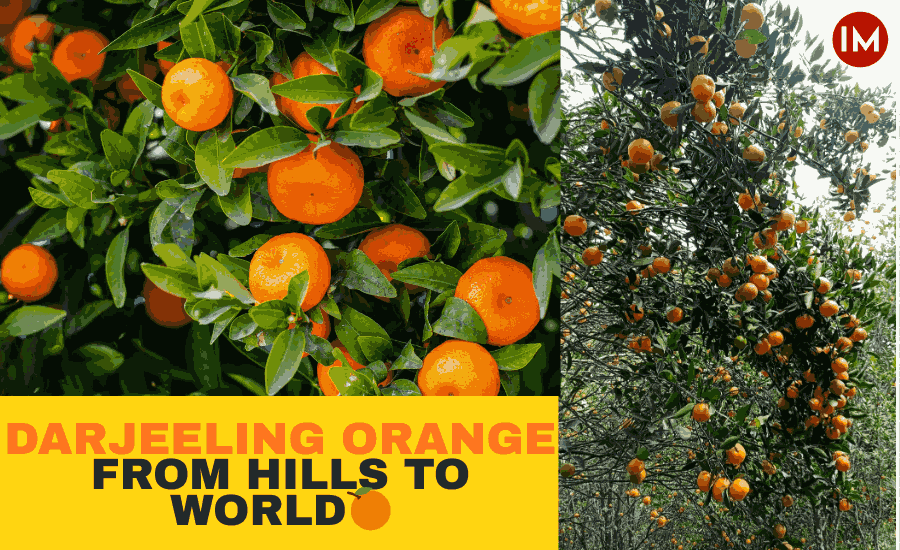
In November 2025, years of relentless effort, scientific validation, and grassroots perseverance finally bore fruit. What began as a vision more than a decade ago culminated in a historic moment when the famed Darjeeling Mandarin Orange received the prestigious Geographical Indication (GI) tag.
For thousands of farmers in the hills of Darjeeling and Kalimpong, this recognition is not merely a legal certification – it is a lifeline. The GI status promises better prices, global visibility, and renewed hope for a crop that once defined the region’s agrarian identity but had suffered a steady decline over the years.
With the inclusion of Darjeeling Mandarin Orange, West Bengal now boasts 11 agriculture and horticulture products with GI status, the first being the iconic Darjeeling Tea, which received two GI tags – one for its name and another for its logo – in 2005.
Indian Masterminds interacted with 2022 batch IFS officer Sammed Mahaveer Patil, DFO Darjeeling, and Mr Manoj Subba, Chairman of DOFPO – the key organization behind securing the GI tag – to learn more about Darjeeling Mandarin Oranges and how this milestone will benefit farmers.
Darjeeling Mandarin: A Fruit Known for Sweetness and Heritage
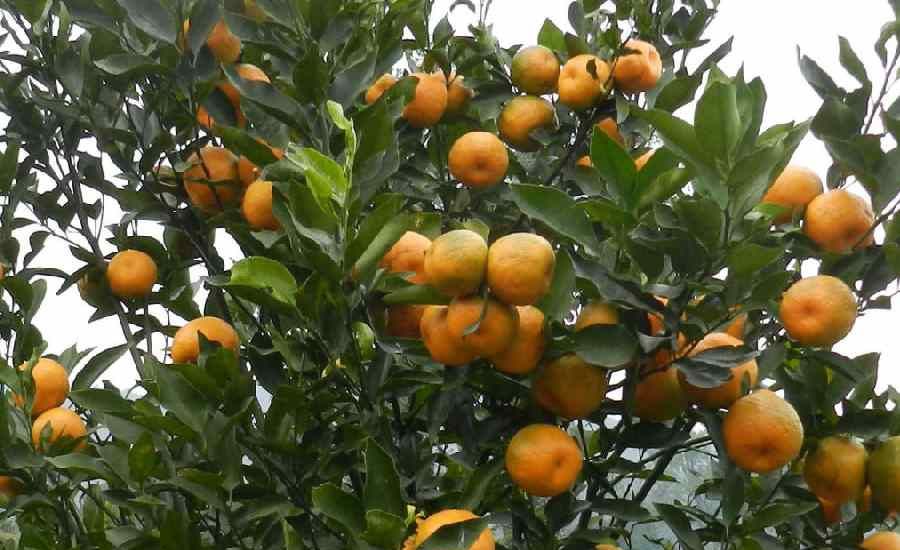
Grown in the mist-laden hills of Darjeeling, the Mandarin Orange is celebrated for its exceptional sweetness, juiciness, thin skin, and distinctive aroma. Once a major export commodity with demand even in European markets, the fruit faced severe challenges over the past 15 years due to virus and pest attacks, causing a sharp decline in production and farmer income.
According to 2016 data, Darjeeling and Kalimpong districts produced nearly 15,000 metric tonnes of oranges, underscoring the crop’s historical economic importance.
The Man Behind the Initiative: Tulsi Saran Ghimiray’s Vision
The GI journey formally began in August 2022, when Tulsi Saran Ghimiray, former professor of Uttar Banga Krishi Viswavidyalaya (UBKV), initiated the proposal.
“With expert support from Mahuya Hom Choudhary, the nodal officer of the Patent Information Centre under the West Bengal State Council of Science & Technology, we began the GI application process,” Ghimiray said.
As the process evolved, a crucial decision was taken.
“As the process progressed, the applicant was formally changed from UBKV to Darjeeling Organic Farmers Producer Organisation (DOFPO), Mirik, in August 2024. This was done to ensure that ownership rested with the grassroots community,” Ghimiray explained.
Scientific Scrutiny and Legal Milestones
The Darjeeling Mandarin Orange successfully met all GI qualification requirements. Following extensive examinations, hearings, and due diligence conducted by the GI Registry under the Department for Promotion of Industry and Internal Trade (DPIIT), Ministry of Commerce and Industry, the product was published in the GI Journal (Volume 206) on July 23, 2025.
This was followed by the mandatory public objection period.
“Formally, the GI status was accorded to Darjeeling Mandarin Orange on November 24, 2025,” Ghimiray confirmed.
Grassroots Ownership: Role of DOFPO and Chairman Manoj Subba
The Darjeeling Organic Farmers Producer Organisation (DOFPO) played a decisive role in taking the process forward at the ground level. Its Chairman, Manoj Subba, a Mirik resident who owns orange orchards spread over two acres, described the moment as deeply emotional.
“Securing GI status would go a long way in reviving the cultivation of Darjeeling Mandarin Orange,” Mr Subba said.
Calling it a celebration beyond paperwork, he added, “It is a celebration of the hills, the farmers, and the heritage of a fruit that has shaped the identity of Darjeeling and Kalimpong for generations. This is more than just achieving a legal milestone.”
Decline, Realisation, and the Fight to Preserve a Cash Crop
Explaining the background, Subba traced the decline back nearly three decades.
“From around 1995, production started declining. About ten years ago, it became very serious. Darjeeling Mandarin is our main cash crop. We realised we had to do something to preserve its unique quality,” he said.
This realisation led to the formation of farmer organisations and, eventually, the decision to pursue GI recognition seriously from 2019, culminating in the formal application in 2023.
Support from Scientists and Institutions
The initiative received strong scientific backing from UBKV, its Regional Research Station at Kalimpong, and experts including Dr. Tulsi Saran Ghimiray, Dr. Saif Ali, and Bharat Guru, head of the Regional Research Station, Kalindi.
“Their cooperation has been immense,” Mr Subba acknowledged.
The Intellectual Property facilitation units and agricultural scientists played a critical role in testing, documentation, and verification.
Competition and the Observation Period
The GI journey was not without challenges. Competing claims emerged, particularly from neighbouring Sikkim, where mandarins are also cultivated.
“There was a six-month observation period, during which objections were examined,” Mr Subba said.
Ultimately, Darjeeling Mandarin Orange emerged distinct and uncontested.
“Sikkim did not get the GI tag. We overcame that competition,” he added.
Special Characteristics That Set It Apart
Describing the fruit’s uniqueness, Mr Subba highlighted, “Its skin is thin, it has a very good scent, excellent flavour, and it is much juicier compared to Nagpur oranges.”
Beyond consumption, the fruit has industrial value.
“The peel is used in cosmetics, perfumes, and food processing for its aroma and flavour,” he explained.
Production, Season, and Farmer Involvement
Currently, over 1,000 farmers are directly involved in cultivating Darjeeling Mandarin Orange, with entire families depending on it for livelihood.
- Annual production: Around 500 tonnes
- Season: November to February
- Peak harvest: Currently underway
“Its impact is significant. Many families depend on this crop,” Mr Subba said.
Prices, Markets, and the Promise of Better Income
Marketing has long been the biggest challenge.
“Earlier, farmers used to get only ₹7–10 per piece. Due to poor marketing, rates were low,” Mr Subba explained.
At present:
- Current target price: ₹15 per orange (depending on size)
“This itself is a big increase. After getting the GI tag, we expect prices to improve further,” he said confidently.
The GI status is expected to open doors to international markets, providing branding and recognition.
“Darjeeling Mandarin is different – juicier, aromatic, and unique. We believe it will find space in the global market,” Mr Subba added.
Administration and Broader Impact
While congratulatory messages from the administration are awaited, the recognition is already being seen as a boost to the regional economy.
Darjeeling Divisional Forest Officer, IFS Patil welcomed the development.
“Darjeeling Orange is already famous. After getting the GI tag, farmers will get better prices. This will be good for farmers’ revenue and the local economy,” he said.
Although the Forest Department did not play a direct role in the GI application, Mr Patil acknowledged that the West Bengal Government’s efforts were instrumental in giving due recognition to the fruit.
A New Chapter for Darjeeling’s Citrus Legacy
The GI tag for Darjeeling Mandarin Orange marks not just recognition, but revival – of a crop, a community, and a legacy shaped over generations. For farmers battling declining yields, market uncertainties, and environmental challenges, this milestone stands as proof that perseverance, science, and collective action can indeed change destinies.
As the hills glow orange this season, the future of Darjeeling Mandarin finally looks as bright as its flavour.