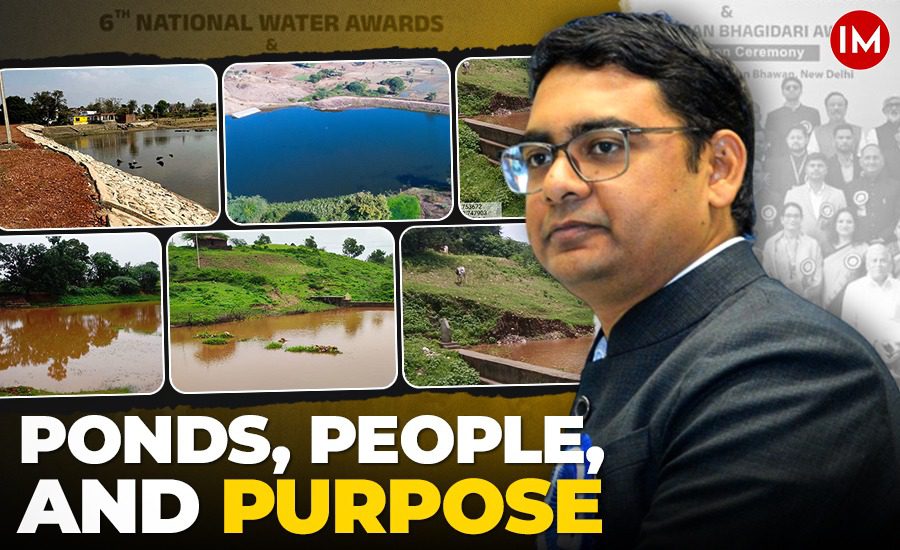
When Dungarpur was called on stage at Vigyan Bhawan, New Delhi, on 18 November 2025, it was more than an award ceremony. It was the moment an entire district’s hard work found a national voice. As IAS officer Mr. Ankit Kumar Singh (2014 batch, Rajasthan cadre) walked up to receive the National Water Award under the Western Zone (Category 3), the applause in the hall carried a simple message — community-driven water conservation can transform even the most water-stressed regions.
For Dungarpur, this honour did not arrive overnight. It grew from the mud of village ponds, from hours of labour under the sun, and from a collector who believed that water security begins at the grassroots.
A DISTRICT THAT CHOSE ACTION OVER APATHY
In 2024, when the Ministry of Jal Shakti launched the Jal Sanchay Jan Bhagidari 1.0 (JSJB)initiative, the expectations were high. Every district in the country had to create and rejuvenate thousands of groundwater recharge structures — a massive task that needed both planning and people’s participation.
Under this mission, Dungarpur set out to prove that a tribal district with limited resources could still lead with innovation and determination. The target for each district was 10,000 recharge and storage structures.
Dungarpur completed 9,712, placing itself among the standout performers in the Western Zone.
Collector Mr. Ankit Kumar Singh describes the district’s approach simply:
“We decided early that every village would be involved. When people own the work, they protect it. That has been our strength in Dungarpur.”
REVIVING THE HERITAGE OF PONDS
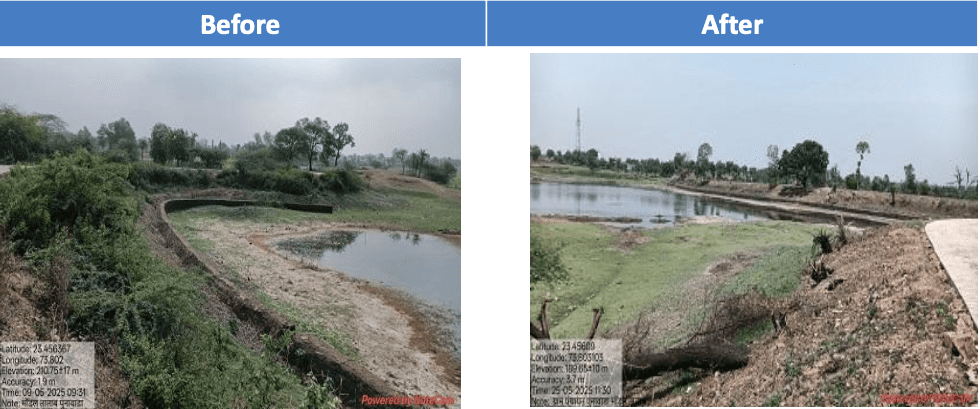
One of the biggest achievements came through the Pond Cleaning Drive held from 16 to 31 May 2025. Spread across all 10 panchayat samitis, 100 ponds were carefully selected for deep cleaning, de-silting, and repair.
Under MGNREGA, thousands of workers were mobilised. Silt was removed, old ghats were repaired, and encroachments were cleared. The water inlets were freed of blockages so that every pond could naturally recharge groundwater during the monsoon.
Villages like Punawara, Nandli Sagora, Ratadia, and Nadiya saw transformation through model pond works. New structures were also built where the need was high. For example:
- Ratadia Model Pond began in April 2024 with a focus on storage capacity and long-term sustainability.
- Upaiya Talab in Nadiya underwent major rejuvenation, restoring its water-holding ability and making it a dependable source for the village.
Each structure added to the district’s growing network of water security.
COMMUNITY POWER AT THE CENTRE OF THE MISSION
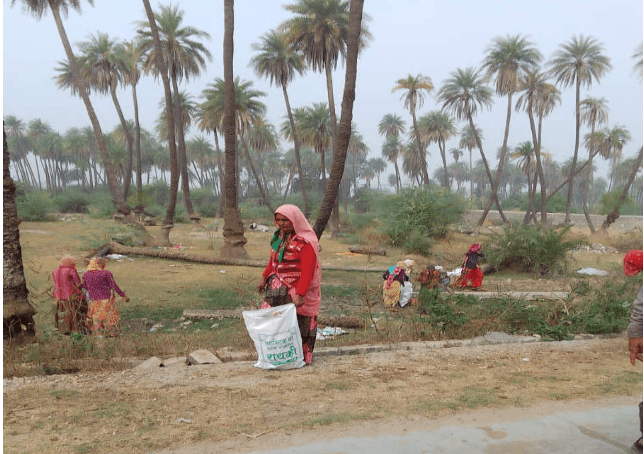
Dungarpur’s success lay not only in engineering but in participation. Panchayat leaders, local volunteers, school students, and civil society groups joined hands throughout the year.
The district also tied its water work with the Swachh Bharat Mission (Rural). During the Atal Bihari Vajpayee Birth Centenary Swachhta Week (25–31 December 2024), a massive plastic-free campaign swept across villages. Plastic waste was collected from rivers, nalas, ponds, and public spaces. It was then segregated and weighed in the presence of revenue officials.
Clean ponds, unclogged drains, and plastic-free water sources gave a new push to groundwater recharge efforts.
“Clean water structures bring long-term results. Swachhta and water conservation must go together,” the Collector often told his team. In practice, the district proved this to be true.
HARNESSING EVERY RUPEE AND EVERY HAND
The JSJB model is based on the 3Cs — Community, CSR, and Cost-effectiveness. Dungarpur lived all three on the ground.
Work estimates were tightly managed. For instance, the Ratadia Model Pond operated with a cost of ₹49.89 lakh, using both labour and material efficiently. Similarly, the Upaiya Talab rejuvenation used ₹30.06 lakh judiciously, ensuring maximum benefit with minimum wastage.
MGNREGA played a pivotal role. The labour demand created employment during summer months while contributing directly to water conservation. Local CSR partners also supported small repair and maintenance works where needed.
This combination of government schemes, community energy, and low-cost innovation became Dungarpur’s winning formula.
RECOGNITION THAT REFLECTS REAL CHANGE
At the national level, JSJB 1.0 recorded 27.6 lakh water structures, far exceeding the 10 lakh target. From this enormous landscape of effort, only 100 awardees were selected — and Dungarpur emerged among them.
Ranked 6th in Western Zone, Category 3, the district received ₹25 lakh as a cash prize, along with a citation signed by the Secretary of the Department of Water Resources, River Development & Ganga Rejuvenation.
The ceremony, held in the presence of the Hon’ble President of India and Union Jal Shakti Minister C.R. Patil, was a proud moment for the entire Dungarpur team.
A MODEL FOR OTHER DISTRICTS
What makes Dungarpur’s achievement remarkable is not the number of structures alone, but the mindset it represents.
A remote tribal district chose to lead through participation, not by waiting for ideal conditions.
Through organised campaigns, transparent planning, and consistent monitoring, the administration ensured that the work stayed on track and communities stayed involved.
As the award was handed over, Collector Mr. Ankit Kumar Singh summed up his district’s journey with quiet pride:
“This recognition belongs to our villages. They protected their ponds, restored them, and brought Dungarpur to the national stage. Our job was only to guide them.”
Dungarpur’s story now stands as a model for sustainable, people-led water conservation — proving once again that when a district believes in its own strength, national honours naturally follow.Dungarpur’s community-driven water revival has transformed a tribal district into a national model for conservation. Under Collector Mr. Ankit Kumar Singh, the district completed 9,712 works and set a new benchmark in sustainable water management.
Read More: Scanning for Change: How QR Codes Are Making MGNREGA Transparent in Chhattisgarh