‘Auqaat’ – that ubiquitous word we hear in North India especially – is actually the plural of ‘waqt’ (in the same way that ‘akhbaar’ is the plural of ‘khabar’). To remember one’s auqaat is actually to remember one’s times. It is difficult to translate this context because time itself has altered the word’s general understanding to mean status instead. Language is a melody which travels along spirals rather than straight lines. And we are, to quote from a Salman Rushdie description about this part of the world, a people who still have the same word for both yesterday and tomorrow.
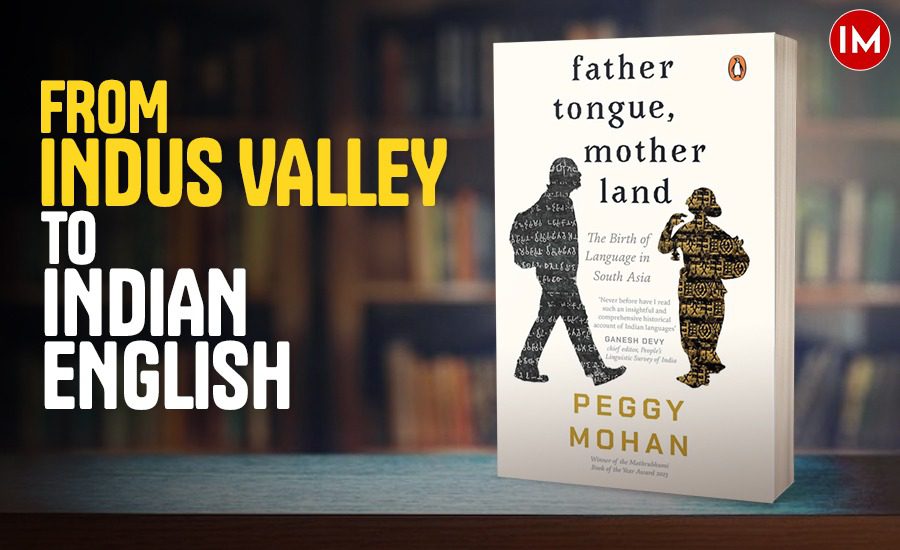
The First Australians who migrated out of Africa 70,000 years ago lived a fluid notion of Dreamtime “time-before-time everywhen” which corresponds better to our civilizational sense of continuity than the standardized Prime Meridian Time whose 0° longitude originates in Great Britain as a colonial centre. Globalization has happened many times in large language families much before these most recent centuries of rediscovery. Two genetic mutations on the mtDNA of modern Australian aborigines align perfectly with the Baiga tribe of central India and the Birhor of eastern India from 55,000 years ago. “So whatever the twists and turns Munda genealogy has taken in the last few thousand years,” writes Peggy Mohan in her fascinating book Father Tongue, Motherland, “it is fair to say that Mundas trace back all the way to the first modern humans in the subcontinent.”
Austro-Asiatic ancestry in Munda genealogy around 4000 years ago introduced new words and japonica rice. 9000 years ago, in another agricultural churn, Iranian farmers shifted from Zagros to Balochistan. 200 years ago, a cultivation migration of Bhojpuri-speaking Indians into Trinidad’s plantation economy created a new language which race-focused colonial scholarship cannot adequately explain. But Dr Mohan, who inherited Trinidian English Creole as her ancestral language, makes an intervention: “What if pidgins and primordial chaos are not actually a part of the process that made creoles? This thought is exciting because it is a rare moment when we in India get to use our own languages to challenge linguistic theory and posit one that is better.”
Primordial unity is revealed when diverse layers of vocabulary and grammar are detached from language palimpsests. Northern Dehlavi and Southern Dakkhini illuminate how languages adapt through shared lexicons despite differences in grammatical gender rules. Telugu, Marathi, and Kannada cohere in multilingual Deccan syncretism. Within the Hindi Heartland of Uttar Pradesh, branches of Khari Boli, Awadhi, Maithili, Bundeli, and Brajbhasha have been unevenly crowned to literature. “Bhojpuri, Magahi and Maithili, while they became literary quite early, never had their literature supported by those in power.” The written language of the elite is often at odds with the oral language of the everyday community. There seems to be a recurring pattern of migrant men, native women — father tongue, motherland.
In searching for the foundational Language X of the Indus Valley Civilization, Dr Mohan draws comparisons between Sanskrit, prakrits, and the modern languages of Punjabi and Sindhi which have emerged from the northwest of the subcontinent. The features she discusses are retroflexion (d versus ḍ as in ‘daant’ and ‘ḍaant’), aspiration (both voiced and voiceless as in bh and th), word order (typically Subject-Object-Verb in Indic languages), light verbs (an Indian love for nouns instead), ergativity and gender (verb agreement with subjects and objects within grammar structures), compound verbs (regularly found in Tibeto-Burman languages), reduplication (yes-yes I know this sentence is becoming too long), and honorifics (thank you for reading, ji). Indian English is a prakrit too: linear language recalibrated by people who belong to cyclical times.
“Was this the sort of social hierarchy the Indus Valley people would have had, a civilization with no temples or palaces?” When we see how Language X lines up on the eight parameters listed above with Tamil in the southern peninsula, the language isolate Burushaski deep in the Karakoram mountains, and the geographically isolated pastoralist Brahui of Balochistan—“A big surprise is how similar Burushaski, Brahui and Tamil look in terms of these features, how much of a resemblance you find when you are not looking at the words themselves or the fine morphological details that make Burushaski such an enigma. Language X comes across as a Dravidian-type language that has Burushaski-style ergativity, an early form of ergativity that simply had markers in all tenses on the subject-as-agent, in sentences with direct objects, and without the flips in alignment that you get in the modern languages of the area that tell of Sanskrit and prakrit influence… Connecting the dots, we could also imagine that Language X would have done its verbs as stems with agreement markers, the way that Tamil, Burushaski and Munda languages do, with person markers for I and you, but gender markers for he, she and it.”
Modern boundaries maintain and destroy complex multilingual histories. In India today, bilingualism has surrendered to a diglossia whose vocabulary is an Internet English percolating from oft-uncredited African American English. To censure a younger generation for stripping language would be unfair. “Brat” is often considered to be derived from the Celtic Old Irish “bratt” meaning “cloth” but could also have emerged from the Marathi-Bangla “vratyal brattyo” for “disobedient child”; “brat” today has different connotations for parents who use it to describe their wilful teenagers who use it to describe their wilful summers. “kamala IS brat,” tweeted British Indian-origin singer Charli XCX in 2024; the Indian-American presidential candidate Kamala Harris’s social media team changed their page backdrop to lime-green soon after to capitalize on this moment of popular culture.
We are all migrants. As globalization accelerates again in this decade of large language machines, our accents are code-switching out of polyphonic plurality. “Some people feel embarrassed of speaking in their mother tongue because they think it’s a villager’s language; it doesn’t seem as polished as English or Hindi,” says YouTuber India in Pixels in a video on Awadhi. Hopefully this will not always be true. “Ganwaar” has become an insult in the same way as being reminded of your auqaat. But time could return these words to their origins. In the meanwhile, the song of language echoes — discordant, eternal, re-sounding in the stillness of yesterday and tomorrow.