What happens when environmental care goes hand in hand with development? What if biodiversity protection is placed at the heart of sustainable development goals? The result is not only the restoration of biodiversity and the creation of a safe habitat for flora and fauna, but also wide-ranging benefits for surrounding communities and ecosystems.
This vision is steadily becoming reality at Singareni Collieries Company Limited (SCCL), a major government-owned coal mining enterprise in Telangana. By successfully restoring mine overburden (OB) areas, SCCL is setting a strong example of responsible mining and ecological recovery – one that offers a replicable and scalable model of sustainable development in mining regions.
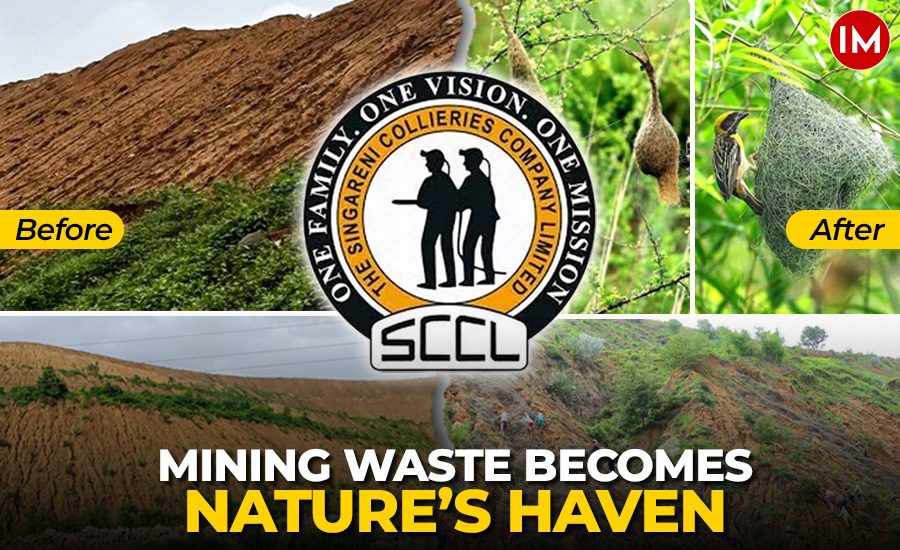
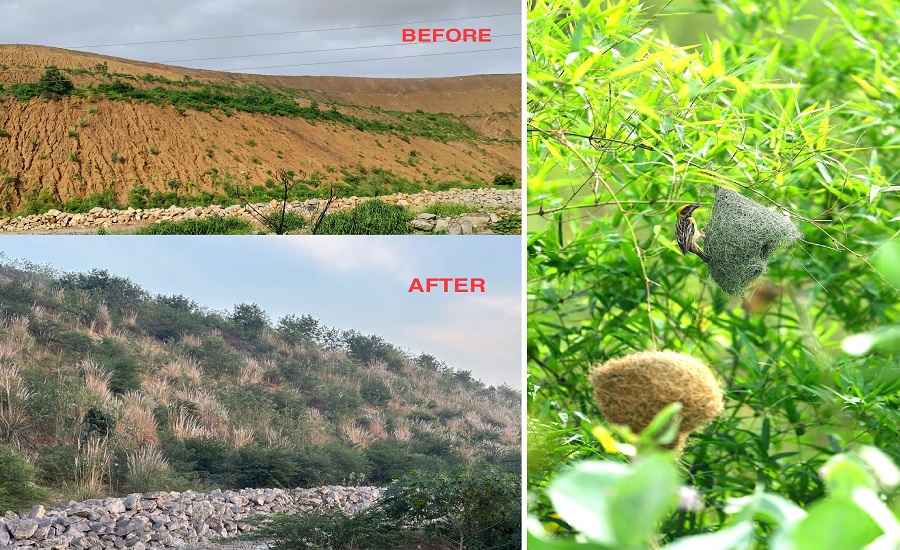
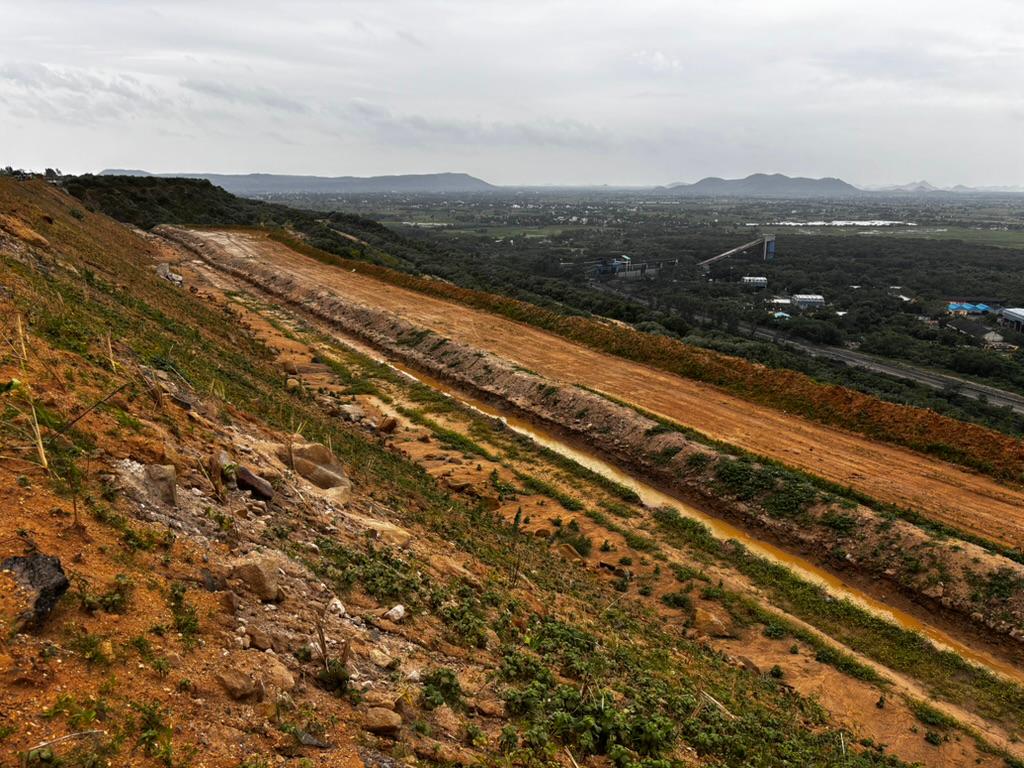
A striking example of this transformation can be seen in the RG-1 area, where a once-barren overburden dump has been converted into a thriving green landscape within just two years. Covered today with lush grasses such as Saccharum munja (moonj) and thriving plantations of Hardwickia, Bamboo, Inga dulcis, Sesbania, and other native species, the restored site stands as a testimony to what scientific planning, sustained effort, and environmental commitment can achieve. SCCL plans to share similar success stories from other mining areas in the coming days.
Indian Masterminds interacted with Mr Mohan Pargaien, a 1990-batch retired IFS (Indian Forest Service) officer and Advisor (Environment & Forestry) to SCCL, to learn more about this transformative initiative and how SCCL is driving ecological restoration.
From Barren Overburden to Living Ecosystem
Open-cast coal mining inevitably involves the removal of massive quantities of soil before coal seams can be accessed. This removed material – known as overburden – is stacked into large dumps, often forming artificial hills of loose soil that are highly vulnerable to erosion and ecological degradation if left untreated.
Explaining the process, Mr Mohan says, “Whenever open-cast mining takes place, millions of tonnes of soil are removed before coal extraction begins. This soil, called overburden, has to be stacked somewhere. If it is not treated properly, it remains barren, erodes easily, and becomes an environmental liability.”
At SCCL, however, these overburden dumps are no longer treated as waste landscapes. Instead, they are systematically rehabilitated and restored through scientific and ecological interventions.
Understanding Overburden Restoration and Rehabilitation
According to Mr Pargaien, overburden restoration is not a single activity but a carefully planned, multi-stage process.
“Proper treatment of overburden means stacking it scientifically, stabilising the slopes, and preventing soil erosion. This entire process is called restoration and rehabilitation of overburden dumps,” he explains.
The first step involves regrading the overburden to stable contours, followed by backfilling of excavated pits wherever possible. Mechanical methods are employed to shape the slopes at safe angles. However, mechanical stability alone is not sufficient.
“Even after shaping the slopes, the surface remains bare. Whether it’s the slope or the flat top, there are no trees initially. That’s where bio-remediation comes in,” Mr Pargaien notes.
Bio-remediation: The Heart of Ecological Recovery
The core of SCCL’s overburden restoration strategy lies in bio-vegetation and afforestation. Native grasses are planted on slopes to bind the soil, while trees are planted on flatter areas. Additional measures such as gully control structures ensure that rainwater does not wash away the soil.
“Grass and vegetation don’t grow on overburden naturally. Everything you see – the grasses, the trees – has been planted later through planned interventions,” Mr Pargaien emphasizes.
Over the past few years, SCCL has intensified monitoring and timely execution of these activities, ensuring higher survival rates and faster ecological recovery.
“This work didn’t start after I joined. My role as Advisor is to guide, monitor, and technically strengthen what was already being done. Now we are documenting it better, so the results are clearly visible,” he adds.
Visible Results Within Two Years
The impact of these sustained efforts is clearly visible in sites like the RG-1 overburden dump. Photographs comparing the area over a two-year period show a dramatic transformation – from bare, erosion-prone slopes to landscapes fully covered with grasses and young trees.
“After one or two years, the change is remarkable. There are small water streams, birds have started coming, grasses have completely covered the slopes,” says Mr Pargaien.
What was once a degraded mining by-product has now evolved into a functioning ecosystem.
Biodiversity Returns to Restored Landscapes
One of the most encouraging outcomes of SCCL’s restoration efforts is the return of biodiversity. Birds have begun nesting in the reclaimed areas, and a variety of native species are flourishing.
“Proper biodiversity has developed there. Birds are not just visiting; they are building nests and living there. These areas are becoming rich biodiversity spots,” Mr Pargaien observes.
Such restored overburden dumps now serve as ecological buffers, improving microclimates and enhancing environmental quality in surrounding regions.
Scale of SCCL’s Environmental Commitment
SCCL’s achievements are particularly significant given the scale of its operations. The company generates over 4,100 lakh cubic metres of overburden annually from nearly 16 open-cast mines. Producing about 70 million tonnes of coal every year, SCCL contributes nearly 10% of India’s coal output.
Despite this scale, environmental restoration remains integral to its mining operations.
Nearly 500 hectares of overburden land are rehabilitated every year through block plantations and slope stabilisation works. Only native species seedlings, grown in SCCL’s own nurseries under expert supervision, are used. Special care is taken to ensure seedlings attain a height of at least 1.5 metres before plantation to maximize survival.
Major species include Bamboo, Hardwickia, Neem, Kanuga, Babul, Bargad, Peepal, Pakad, Albizzia, Glyciridia, along with grasses such as Moonj, Cenchrus, Pennisetum, and Hamata.
Sustained Efforts, Sustainable Outcomes
The continued dedication of SCCL’s field staff has yielded impressive results within just two to three years. Slopes once prone to soil and water erosion are now fully covered with vegetation, preventing land degradation and facilitating long-term rehabilitation.
These restored landscapes are now attracting wildlife and supporting ecological balance, making them a key component of SCCL’s broader Singareni Sustainability Programme.
A Century-Old Company with a Future-Focused Vision
Founded in 1920, following the discovery of coal in 1871, The Singareni Collieries Company Limited today operates 40 mines – 18 opencast and 22 underground – across six districts of Telangana. With proven coal reserves of 10.84 billion tonnes, SCCL contributes 9.2% to India’s domestic coal production.
Yet, as this transformation of overburden dumps shows, SCCL’s legacy is no longer defined by coal alone – but by its growing role as a steward of environmental restoration and sustainable mining.