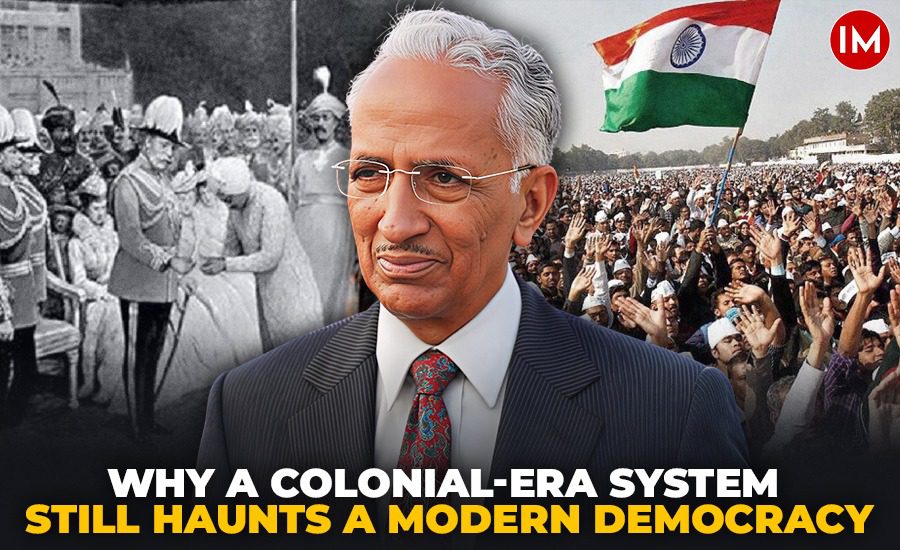
It is one of the ironies of India that while we are striving to be a developed nation and have the fastest growing economy in the world, we are still saddled with a colonial police structure. As far back as the early twentieth century, the Frazer Commission (1902-1903) appointed by the then Governor-General, Lord Curzon, made the following observations about police in the country:
“The police force is far from efficient; it is defective in training and organization; it is inadequately supervised; it is generally regarded as corrupt and oppressive; and it has utterly failed to secure the confidence and cordial cooperation of the people.”
Time appears to have stood still for the police during the last more than 120 years. The above observations could as well have been written today. There has been no change. In fact, there has been further deterioration insofar as the state police forces have been deeply politicized during the last five decades and there is today a strong nexus between the police, bureaucracy, politicians and criminals. It is a sad reflection on our policy makers and is no credit to our governance.
India must have a progressive, modern police. There were several State Commissions in the wake of independence to reorganize and restructure the police. The Government of India, in 1977, appointed a National Police Commission as it felt that “far reaching changes have taken place in the country” since independence and “there has been no comprehensive review at the national level of the police system after independence despite radical changes in the political, social and economic situation in the country”. The NPC submitted eight detailed reports between 1979-81 which contained comprehensive recommendations covering the entire gamut of police working. Its recommendations however received no more than cosmetic treatment at the hands of the government.
Supreme Court’s Directions
The Supreme Court of India, in a landmark judgment on Sept. 22, 2006, gave comprehensive directions on police reforms. Seven directions were given, out of which six were for the state governments and one for the central government. The directions were as follows:
i) State Security Commission: To be constituted in every state to ensure that state government does not exercise unwarranted influence or pressure on the state police and for laying down broad policy guidelines. States were to adopt one of the three models recommended by NHRC, Ribeiro Committee or Sorabjee Committee. Members were to be chosen in such a manner that it functioned independent of government control.
ii) Selection and Minimum Tenure of DGP: Director General of Police of the state to be selected by the state government from amongst the three senior-most officers of the Department empanelled for promotion to that rank by the UPSC on the basis of their length of service, very good record and range of experience for heading the police force; and, once selected, he shall have a minimum tenure of at least two years irrespective of his date of superannuation.
iii) Minimum Tenure of IG Police and Other Officers: All police officers on operational duties like IG i/c Zone, DIG i/c Range, SP i/c District and SHO should also have a prescribed minimum tenure of two years.
iv) Separation of Investigation: The investigating police shall be separated from the law and order police in towns/urban areas which have a population of ten lakhs or more to start with, and gradually extended to smaller towns/urban areas.
v) Police Establishment Board: Such a Board comprising DGP and four other senior officers of the Department should be constituted to decide all transfers, postings, promotions and other service related matters of officers of and below the rank of Dy.SP. The Board shall make appropriate recommendations to the state government regarding the postings and transfers of officers of and above the rank of Superintendent of Police. It will also function as a forum of appeal and generally review the functioning of police in the state.
vi) Police Complaints Authority: Authorities will be set up at the state level to look into complaints against officers of the rank of SP and above and, at the district level, to look into complaints against officers of and up to the rank of Dy. SP. These will be headed by retired judges and shall look into complaints of serious misconduct by police personnel.
vii) National Security Commission: The Central Government shall set up a National Security Commission to prepare a panel for selection and placement of Chiefs of Central Police Organizations, and also review measures to upgrade the effectiveness of these forces, improve the service conditions of its personnel, ensure that there is proper coordination between them and that the forces are generally utilized for the purposes they were raised.
The states have however dilly-dallied in the implementation of the Court’s directions. Even where the mandated institutions – the State Security Commission, Police Establishment Board and the Complaints Authorities – were set up, their composition was subverted, their charter diluted or their powers curtailed. There has been arbitrariness in the appointment of DGP with several states not consulting the UPSC in the empanelment of officers and managing with ‘officiating’ DGPs. Police officers on operational assignments are shunted out for all kinds of administrative reasons before the completion of two years. There is tardiness in the separation of investigative and law and order functions of the police.
Thomas / Verma Committees
Justice Thomas Committee which was appointed by the Supreme Court to monitor the implementation of directions in the various states, in its report dated August 23, 2010, expressed “dismay over the total indifference to the issue of reforms in the functioning of Police being exhibited by the States.”
Justice J.S. Verma Committee, which was constituted in the wake of the brutal gang rape in Delhi on December 16, 2012 submitted a comprehensive report on Amendments to Criminal Law. It urged “all states to fully comply with all six Supreme Court directives in order to tackle systemic problems in policing which exist today”. It further made the following observations:
“We believe that if the Supreme Court’s directions in Prakash Singh are implemented, there will be a crucial modernization of the police to be service oriented for the citizenry in a manner which is efficient, scientific, and consistent with human dignity.”
Tardy Implementation
There has been tardiness in the implementation of judicial directions. These were brought to the notice of the Supreme Court from time to time and contempt petitions were filed, but for inexplicable reasons the Apex Court never issued any notices to the defiant states. In fact, only two judges – Chief Justice SH Kapadia and Justice GS Singhvi – showed keen interest and some kind of a crusading zeal in pushing the police reforms agenda. The states have nevertheless willy-nilly taken some forward steps. According to an assessment, the six states of Arunachal Pradesh, Andhra Pradesh, Goa, Karnataka, Manipur and Mizoram have done reasonably well while progress in Kerala, Nagaland and Uttarakhand has been satisfactory. The remaining states fall in the average category. The laggard states are Bihar, Himachal Pradesh, Maharashtra, Telangana and UP.
Redeeming Features
Police reforms have entered public consciousness and every time something goes seriously wrong on the law and order front, discussions veer around the non-implementation of the Supreme Court’s directions and there are articles and editorials on the subject. A number of NGOs across the country have included police reforms in their agenda and are pursuing the matter at the state level. The Government of India is also committed to having SMART police in the country which would be sensitive, mobile, accountable, responsible and techno-savvy.
Reforms Beyond Judicial Directions
Police reforms, it may be emphasised, imply not only the directions given by the Supreme Court in 2006. They cover a much wider spectrum. These would include: filling up the human resource deficiencies; improving the infrastructure in transport, communications and housing; having more forensic laboratories with sophisticated equipment, etc. There is tremendous scope for technological inputs also into the functioning of the police. These inputs would act as force multipliers.
Much is at Stake
What is at stake is not only the vitality and credibility of the police but the very survival of the democratic structure and the success of economic reforms. The legislatures and the parliament have been infiltrated with criminals. The nexus between the politicians and criminals is undermining the authority of the State. People who should be behind the bars are protected by the police. A system which permits such an aberration is inherently faulty and must be changed. Mechanisms must be devised to safeguard the police from becoming a tool in the hands of unscrupulous politicians or oblige it to protect criminals.
The economic growth of the country also requires comprehensive improvement in the law and order situation. Investments would not be forthcoming if returns are not guaranteed. Financial irregularities happen now and then. Money is laundered in a big way. Criminals are able to spread their operations beyond the national boundaries and move with much greater ease and frequency. All this would need effective action, preventive as well as detective, by the law enforcement agencies. Police in its present from are not able to meet adequately the challenges of the developing situation.
Reforms a Must for Modern India
Police reforms are not for the glory of the police. They are to give better security and protection to the people of the country, uphold their human rights, enforce the rule of law, and improve governance. If sincerely implemented, the Ruler’s Police would be transformed into People’s Police – and that contribute very substantially to the welfare and happiness of the people.
(Author is a 1959-batch IPS officer of UP Cadre. He has been DGP of U.P., Assam and DG of Border Security Force. He has been campaigning for Police Reforms for the last three decades)