What do you do when the sole earning member of your family falls seriously ill or suddenly loses his job? Do you walk away, or do you tighten your belt, adjust your lifestyle, and stand beside him—quietly, resolutely, without complaint?
Nations, too, go through such moments. There have been times in our history when India was not just struggling—but gasping. The freedom struggle is one such example, where ordinary Indians did extraordinary things. Students left colleges, lawyers gave up lucrative practices, farmers risked their only source of livelihood, countless families sent their sons and daughters to prisons without knowing if they would return, and some even proudly sent their loved ones to the gallows.
Past Instances of Collective Sacrifice
But even after independence, this spirit did not fade.
In the 1960s, when India faced a severe food crisis, Prime Minister Lal Bahadur Shastri gave a simple call—“Jai Jawan, Jai Kisan”—and appealed to citizens to voluntarily skip one meal a week. People responded. Households across the country observed “Monday fasts.” It was not imposed. It was embraced.
During the 1991 economic crisis, when India stood on the brink of default, the country quietly endured structural reforms, inflation, and uncertainty. Gold was mortgaged, policies were changed, and citizens adapted. There was discomfort, even pain—but also patience and belief.
More recently, during the COVID-19 pandemic, millions of Indians came together—walking hundreds of miles during lockdowns, lighting lamps, supporting frontline workers, sharing resources, and helping strangers. It may not have been perfect, but it was powerful.
History Repeats Itself
And today, once again, India stands at a difficult crossroads.
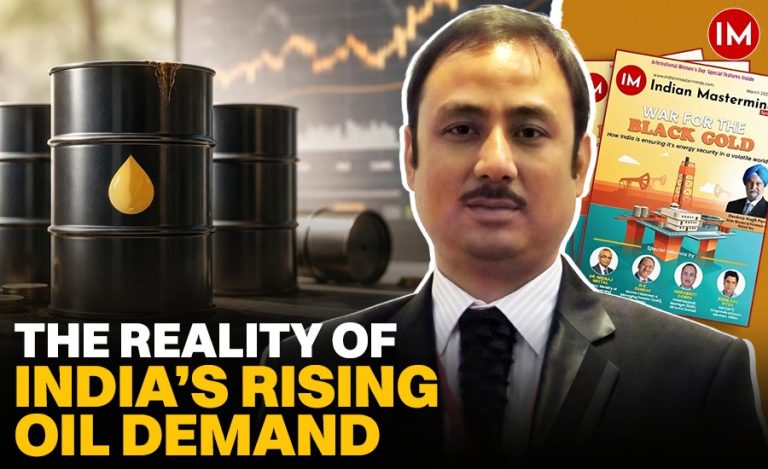
A prolonged conflict in West Asia has disrupted global energy supply chains. The blockage of the Strait of Hormuz for over a month has choked one of the world’s most critical oil routes. Compounding the crisis, Russia has halted supplies for the next four months. The result is a tightening noose around global fuel availability—and India, heavily dependent on imports, is inevitably affected.
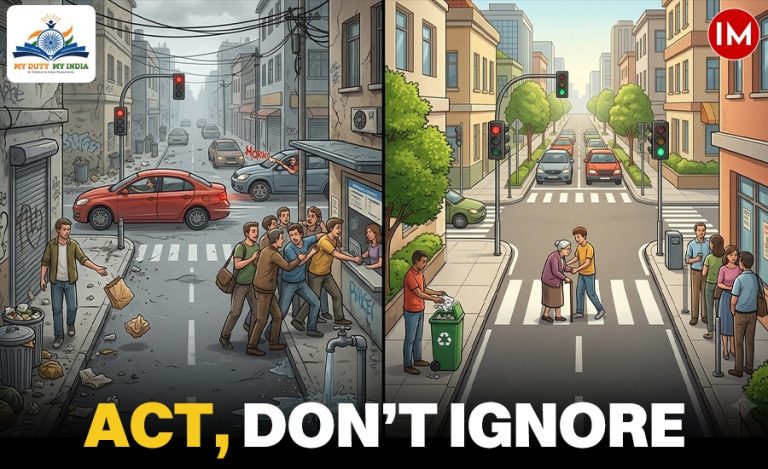
This is not just a government problem. It is a national moment. The question is not only what the government will do but also what we, as citizens, are willing to do. Supporting the nation in such times is not optional; it is a fundamental duty.
Small Changes, Big Impact
This is not a moment for panic—it is a moment for participation.
The strength of a nation lies not just in its reserves, but in the resolve of its people. Can we rethink how we consume energy? Can we consciously reduce our dependence on scarce fuel resources?
Reducing unnecessary travel can make a significant difference. Not every outing requires a private vehicle. Carpooling, using public transport, or even walking or cycling for short distances are not just environmentally sound choices—they are patriotic ones in times like these.
Re-Prioritising Everyday Habits
We can also rethink how we use energy within our homes.
Minimising electricity wastage—switching off appliances when not in use, opting for energy-efficient devices, and avoiding excessive air-conditioning—can collectively reduce the national energy burden.
In kitchens across India, a quiet revolution is possible. Where feasible, households can explore alternatives to LPG or kerosene by using electric induction cooktops, solar cookers, or community-based biogas systems. Rural areas, in particular, can benefit from gobar gas plants, which reduce dependence on fossil fuels while promoting sustainable waste management.
Available Solutions for a Sustainable Shift
Renewable energy is no longer a distant dream—it is a practical necessity.
Rooftop solar panels, solar water heaters, and small-scale wind energy solutions can significantly cut reliance on conventional fuels. Even if every household cannot adopt them immediately, awareness and gradual transition can create a powerful cumulative impact.
Industries and businesses also have a crucial role to play. Optimizing logistics, reducing fuel-intensive operations, and embracing energy-efficient technologies can ease the strain on national resources. Offices can encourage remote work where possible, reducing daily commuting fuel consumption.
Leading by Example
India is a nation that looks up to its leaders.
That is why celebrities—especially politicians—carry a greater responsibility. They cannot merely preach; they must lead by example. When public figures adopt restraint and responsible consumption, the nation follows.
Patriotism Redefined
Beyond all these measures lies a deeper shift—one of mindset.
This is a time to distinguish between need and excess. Do we really need that extra drive, that unnecessary trip, that avoidable consumption? Or can we, for a few months, choose restraint over convenience?
Patriotism is often imagined as sacrifice on the battlefield. But in reality, it is just as much about discipline in everyday life. It is about choosing the collective good over individual comfort.
Our Bharat Mata has given us sustenance, identity, and opportunity for generations. Today, she asks for something far simpler—awareness, responsibility, and participation.
A Moment That Will Define Us
History has shown that when Indians come together with a shared purpose, no crisis is insurmountable.
This fuel crisis, too, shall pass. But when it does, the question we must ask ourselves is: did we merely endure it, or did we rise to meet it? Did we complain, or did we contribute?
Because in the end, a nation is not defined by the challenges it faces but by how its people respond to them.
Perhaps years from now, this period will not just be remembered as a time of shortage, but as a time when citizens rediscovered the power of collective responsibility. Rediscovered their duty towards the nation—a Fundamental Duty.