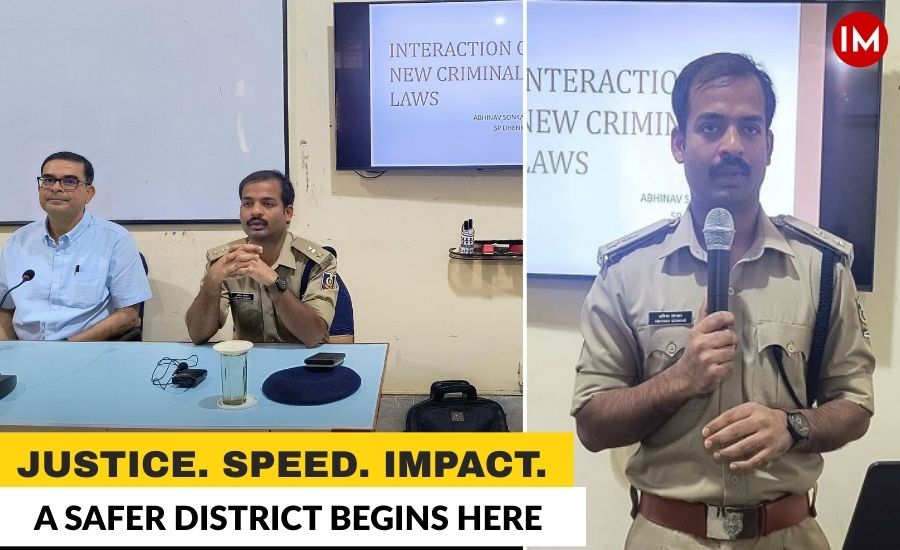
In a district where safety is not just a law-and-order concern but a deeply human issue, a quiet yet determined transformation is underway. From police stations to school corridors, from courtrooms to community meetings, the effort is singular and focused – to ensure that women and children feel safe, heard, and supported. Leading this mission is IPS Abhinav Sonkar, a 2019-batch officer of the Odisha cadre, currently serving as the Superintendent of Police (SP) of Dhenkanal.
With clarity of purpose and a people-first approach, SP Sonkar has placed women’s and children’s safety at the very core of policing in the district. His mission is clear: to empower and uplift the weaker sections of society through crime prevention, victim support, and speedy justice. Under his leadership, Dhenkanal Police has moved beyond reactive policing to a proactive, preventive, and compassionate model of law enforcement.
Indian Masterminds interacted with IPS Abhinav Sonkar to gain insights into his UPSC journey and the impactful initiatives he has undertaken to strengthen women and child safety in Dhenkanal.
The Officer Behind the Mission: UPSC Journey and Background
Born on 20 Jan 1993, Mr Sonkar hails from Uttar Pradesh. He holds a B.Tech degree, which has provided a strong analytical foundation for his administrative role.
His UPSC journey was marked by perseverance. “There are emotional highs and lows throughout the journey,” he recalls.
He cleared the Civil Services Examination in 2018 on his third attempt, joining the 2019 IPS batch. “The main mantra was persistence,” he says simply. He was formally confirmed in the IPS on 26 August 2021.
Professional Career and Key Postings
Since joining the service, he has held significant field postings:
- SP, Koraput: Where he engaged in civic outreach and public engagement, including during the 2024 elections
- SP, Dhenkanal: Appointed in late September 2024, where he has focused intensively on women and child safety
- In Dhenkanal, his leadership reflects a balance of firm law enforcement and compassionate policing.
A Two-Pillar Strategy: Prevention and Deterrence
Explaining the philosophy behind his initiatives, he outlines a clear framework.
“There are two aspects to address regarding safety and preventing deaths. First, you have to take preventive measures. Second, there are deterrent measures, which mainly come from convictions,” he says.
The entire strategy in Dhenkanal is built on these two pillars – creating a safe environment to prevent crimes and ensuring swift punishment to deter offenders.
Creating a Security Blanket: Focus on Crime Prevention
“The first focus is the prevention of crimes,” SP Sonkar emphasizes. To achieve this, a multifaceted approach has been devised, combining institutional reforms, field-level action, and community participation.
“In prevention, we ensure an overall security blanket so that women feel a safe environment. By feeling safe, they can exercise their normal freedom – their human freedom,” he explains.
Mahila Shishu Desks: A Safe Space at Every Police Station
One of the most crucial components of this approach is the ‘Mahila Shishu Desk’, established at every police station in the district – an initiative that exists across the district and has been strengthened and closely monitored under IPS Sonkar.
These desks are staffed by women officers and serve as the first point of contact for women and children in distress. “They can go there and voice their concerns. A woman officer is deployed there,” he says.
The desks assist in:
- Handling distress calls
- Counselling victims
- Helping with FIR registration
- Mediating family disputes when required
Serious cases, including rape and POCSO cases, are personally monitored at the SP office level. Victims are ensured compensation under the government compensation scheme, and where needed, psychological counselling is arranged to support recovery and confidence.
Anti-Eve-Teasing Drives and Hotspot Policing
The second major preventive initiative focuses on anti-eve-teasing drives. “We’ve identified hotspots where such incidents happen frequently,” Mr Sonkar says.
Based on data analysis and ground intelligence:
- Police patrolling has been significantly increased
- Suspicious individuals are identified and verified
- Police presence is enhanced during specific vulnerable time periods
A key innovation here is women-led patrolling.
“Our idea is that women conduct the patrolling, especially in places where women must be able to exercise their fundamental rights freely,” he explains.
Preventive legal action is also taken against known anti-social elements using provisions under CrPC and the current NSS, even before an incident occurs.
Police Taking the First Step: FIRs Without Fear
Recognizing that many women hesitate to approach police or courts, SP Sonkar introduced a victim-sensitive approach.
“We have generally observed that women often don’t come forward to file an FIR themselves. They feel the issue has been resolved and don’t want to get involved in court proceedings,” he says.
To address this –
- Police officers themselves register FIRs based on police reports
- Investigating officers act as complainants when they are witnesses
“Instead of asking the victim to file a report, we file a police complaint ourselves and start the investigation,” he explains.
This has ensured that crimes do not go unreported and offenders are not let off due to fear or hesitation.
Community Policing Through ‘Ama Police’ (Our Police)
Community trust forms the backbone of SP Sonkar’s policing model. Under the “Ama Police” (Our Police) initiative, all police stations actively engage with local stakeholders.
“These programs aim to sensitize the community and encourage cooperative safety measures,” he shares.
Through awareness programs, outreach activities, and regular interaction:
- Women are encouraged to voice concerns
- Feedback is used to shape policing policies
- Confidence-building measures strengthen police–public relations
Safety Begins Early: Outreach in Schools and Colleges
Understanding the vulnerability of young girls, Dhenkanal Police has reached out to schools and colleges across the district.
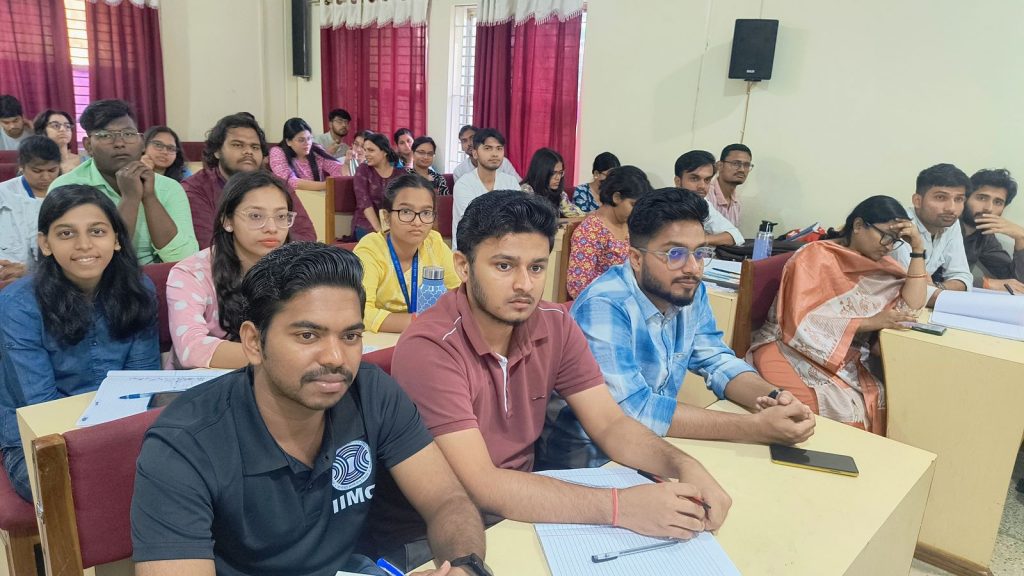
“We have requested educational institutions to display helpline numbers prominently,” SP Sonkar says.
This ensures –
- Easy access to support resources
- Awareness of help mechanisms
- Immediate reporting without fear
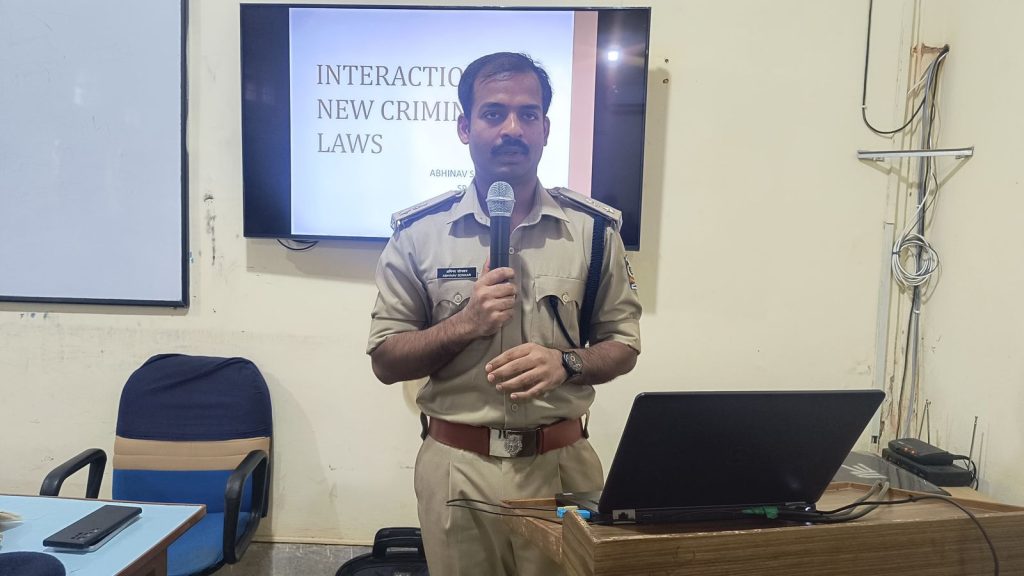
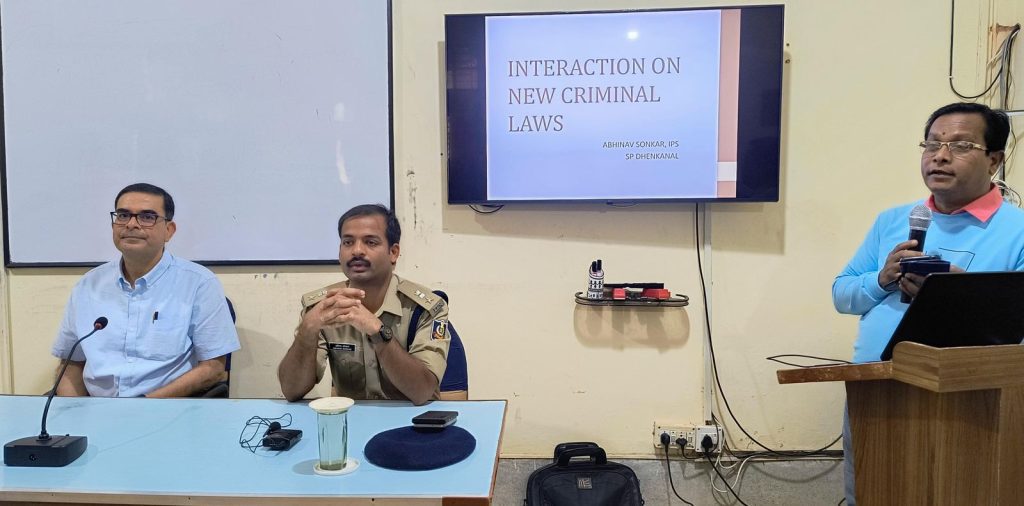
He has also engaged directly with students, offering insights on new criminal laws and legal rights.
Special Drives for Missing Women and Girls
A particularly impactful initiative has been the focused drives to trace missing women and girls.
- FIRs and missing person reports are promptly registered
- Special drives are conducted every two to four months
“This month, in January, we have rescued and reunited more than two hundred women and girls with their families,” he reveals.
Speedy Justice: The Deterrence Factor
“The second focus is delivering justice to the victims by ensuring punishment to the offenders,” he states.
To ensure deterrence:
- Charge sheets are filed within 60 days in women-related cases
- Sexual violence and POCSO cases are fast-tracked
- Public prosecutors are sensitized and briefed in advance
- Witnesses are guided and prepared before trials
“Time is a critical factor. Delays can discourage victims or weaken their resolve,” he explains.
These efforts have already resulted in multiple convictions in rape, POCSO, and other women-related cases in Dhenkanal.
Measurable Impact and Public Confidence
The impact of these initiatives is visible on the ground. “I spoke to young college girls a few months ago. They said these things have had an impact,” IPS Sonkar says.
He stresses that initiatives must be target-oriented, not symbolic. “It’s not just about implementing something. We must know whether it’s achieving the target,” he adds.
Women from all walks of life, he notes, have spoken very highly of these efforts.
A Model of Policing with Purpose
Through prevention, participation, and punishment, IPS Abhinav Sonkar is reshaping the way policing addresses crimes against women and children. His approach ensures that safety is not enforced through fear, but built through trust, visibility, and justice.
In Dhenkanal, the uniform no longer represents authority alone – it represents assurance. And at the heart of this transformation stands an officer driven by persistence, purpose, and an unwavering belief that true safety begins when people feel protected enough to live freely.